Blurring the Lines of Artistic Creation
AI audio company ElevenLabs has released a new 13-hour audiobook version of the “Odyssey” narrated by an AI version of actor Sir Michael Caine’s voice. The company is licensed to use it. In other words, it sounds like Michael Caine, but it isn’t. The narration by “Caine,” along with other voices, music, and sound effects is all produced by a wizardry as potent and deceptive as that of the witch Circe, whom Odysseus encounters on the island of Aeaea during his long, ill-fated journey home. It’s all illusion, all artificially generated.Of course, ElevenLabs has presented this all as a very good thing. “For centuries, people have passed down stories like The Odyssey through voice and written text,” said Jack McDermott, head of marketing at ElevenLabs. “This new production builds on that tradition. It combines human creativity and taste with AI audio tools that turn an ancient story into an immersive audiobook for today’s readers.”
And Caine added, “By bridging classical storytelling with digital innovation, this epic is reimagined for modern audiences through ElevenReader.”
AI Cannot Replicate the Human Soul
But therein lies the problem. Because Caine himself wasn’t involved—beyond licensing the use of his voice—this telling of the “Odyssey” lacks the rawness, resonance, and reality of a real human voice, and it forces us to ask important questions about the nature of acting, storytelling, and art in the age of artificial intelligence.Art, including storytelling, is about communicating a vision, insight, and emotional experience from one person to another. An audiobook narrator, even if he did not author the story, enters intimately into that artistic exchange. He lends his voice to the characters, infuses it with his own emotion and intelligence, so that the hearer can more fully experience the original artistic vision.
The narrator, like the actor, is thus not an inert tool on the stage, screen, or behind the microphone. The narrator is a living participant and co-creator of the drama, beauty, emotion, and philosophical import of a great work of art.
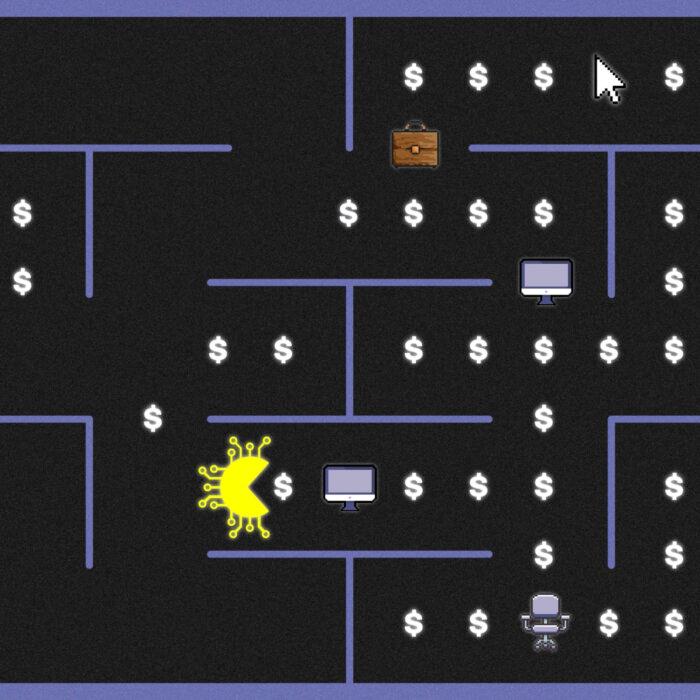

Needless to say, AI cannot fulfill that role. Even if it can sound as though it has emotion or as though it recognizes the meaning behind the words, it doesn’t. AI did not feel the crushing weight of sorrow alongside Odysseus when he sat weeping on the shore of Calypso’s island, his eyes on the haze of the horizon, yearning for the touch of a familiar island beneath his feet and the sound of a familiar voice in his ear. AI did not experience the thrill of Odysseus’s narrow escape from Scylla and Charybdis or the cyclops, nor his triumph when he flung off the ragged robes of the beggar and stood before the stricken suitors tall, noble, and kingly, their deaths mirrored in his terrible gaze.
And so a trick or deception is being played upon the listener. I suggest that this deception disrupts the transmission of the artistic experience in crucial ways. It falsifies the artistic exchange and infringes upon the sacred communication of meaning from one intelligence to another, via the medium of a third intelligence, the actor or narrator.

Industry Backlash
Beyond this, of course, there are practical considerations. As Jazz Tangcay of Variety asks, given the availability of human recordings of the poem, “did the world need an AI version [of the ‘Odyssey’]?” Tangcay goes on to cite unfavorable early reviews of the recording: “One reader wrote, ‘Every other easily spoken human was unavailable or what?’ Another said, ‘I don’t get why this was necessary. He’s no longer acting but as far as I know, he hasn’t lost his voice, right? He could have done this in his PJs for all anyone would care.’”Then there are the commercial and vocational aspects. AI audio recordings take work from real human beings with real voices. As Smithsonian magazine reports, more than 400 entertainment industry leaders signed an open letter in 2025 asking U.S. lawmakers to bolster AI and copyright laws. Actress Cate Blanchett has launched a tool called the Human Consent Registry that provides a record of permission or non-permission for AI tools to use a person’s likeness or voice.
There have also been concerns about arrangements in which AI companies use recordings of human narrators to train their AI models—without consent. For a period of time, Spotify allowed Apple to train its AI models on Spotify’s audiobook files (read by real people). Narrator Andy Garcia-Ruse told WIRED magazine, “It feels like a violation to have our voices being used to train something for which the purpose is to take our place.” The pushback against the policy led Spotify and Apple to pause their agreement. But for how long?
Of course, in the case of ElevenLabs’ “Odyssey,” Caine gave his consent for the use of his voice. But it still sets a worrying precedent. Other celebrities may begin to want the easy money they can earn (with very little work) by signing away the rights to their voices. While that doesn’t threaten the livelihoods and work of celebrities (though it may), it does so for the less- famous professionals in the narration business. And even if, somehow, narration as a career survives the AI boom, the world will have lost another little bit of its humanity.
Do we really want—literally—to give up our voices to the machine, to let it take from us one of our most valuable possessions?