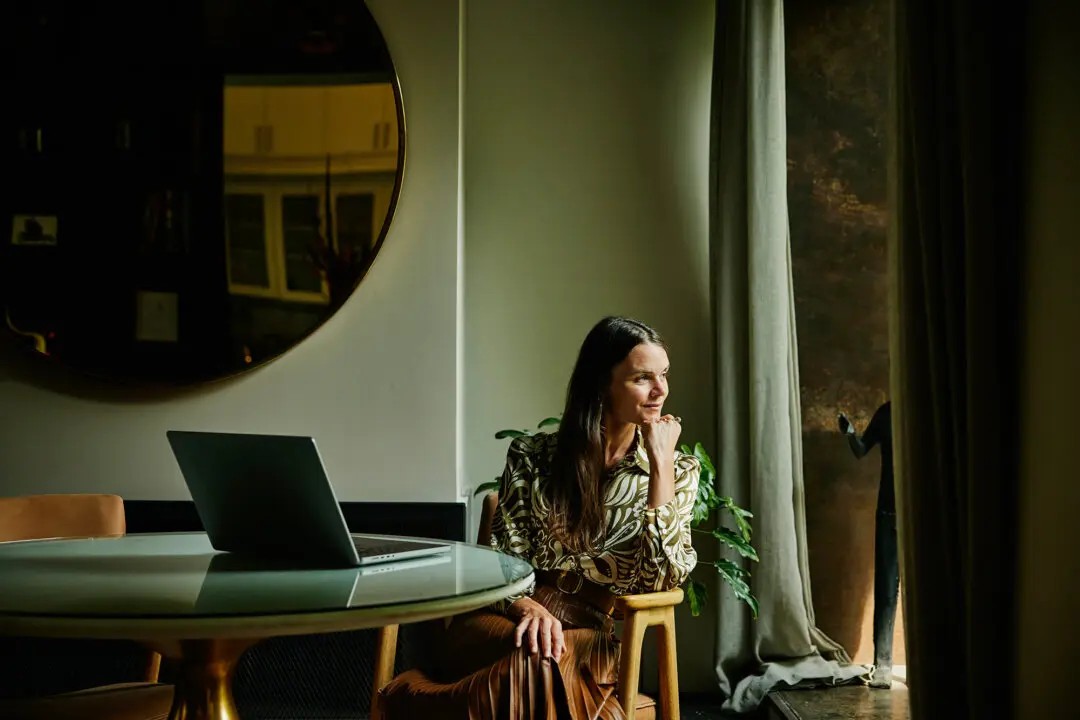
The water inundates the tea leaves, vitalizing and awakening them, and they release their aroma in a spiral of steam. The tea steeps for exactly two minutes before it is removed. The tea drinker then picks up the cup, wrapping it in both her hands, fingers laced around the smooth curve of the mug. She carries the tea to the same chair she occupies every morning to watch the sun emerge from below the horizon.
This ritual of tea-making and sunrise-watching might seem like an insignificant little habit. But is it really meaningless? Or does ritual itself—however small it may be—define human life in important ways?
I would suggest that ritual sustains the rhythms of human life on the personal and societal planes and gives access to a dimension of ourselves—and of reality itself—that is essential to our true flourishing.

What Is Ritual?
For our purposes, I would define ritual like this: Ritual is the precise repetition of physical actions, processes, gestures, or words with an awareness of the significance of those actions as bearers of meaning—whether that meaning be symbolic, spiritual, or simply an embodiment of the goodness in creation.To make this more concrete, let’s consider an example. I heard a true story recently in which a dying man asked his closest friend to make sure his wife was alright after he passed on. The dying man’s friend promised to do so, and for the next 12 years, until his own death, he called the widow every Saturday at 10 a.m. to check in with her. This was more than just a habit; it was an activity that had risen to the level of ritual because of (a) its precise repetition and (b) the meaning that suffused it. The phone call was not merely a phone call; it was an expression of the friendship between the dead man and his friend and the love between the deceased and his widow. It was a memorial and a kind of homage to the transcendent realities of memory, love, and friendship. It also linked together those three people in a bond that even death couldn’t break.
Ritual layers our actions and the physical world itself with meaning—or rather, it taps into the meaning that is already there. It grounds us in the present through mindfulness and intentionality—the precise actions, the predictability, and the steadied breathing—and it links us to the past through tradition, memory, and repetition. In this way, it helps give us identity, stability, and a compass in the midst of a tumultuous life and an era of immense change. Ritual imposes meaningful patterns on the days, weeks, and years that allow us to better make sense of our lives. A beautiful passage in Antoine de Saint-Exupéry’s “The Little Prince” describes it this way:
“It would have been better to come back at the same hour,” said the fox. “If, for example, you came at four o’clock in the afternoon, then at three o’clock I shall begin to be happy. I shall feel happier and happier as the hour advances. At four o’clock, I shall already be worrying and jumping about. I shall show you how happy I am! But if you come at just any time, I shall never know at what hour my heart is to be ready to greet you. ... One must observe the proper rites.”
“What is a rite?” asked the little prince.
“Those also are actions too often neglected,” said the fox. “They’re what make one day different from other days, one hour from other hours.”
Entering In
Rites or rituals not only differentiate time, but they also remind us of what matters. Even more than that—they allow us to enter into and embody that which matters. We might say that ritual draws out and completes the latent meaning that lies within experience and the physical world. It helps us see beauty and purpose in the otherwise mundane. Ritual interprets experience and allows us to become intertwined with meaning in a very tangible way (which is part of why the physical aspects of ritual are so important).The careful steeping of tea. The playing of a favorite record. The smoking of a favorite pipe. The patient preparation of a meal to be shared with friends. These are all examples of everyday rituals that, to a greater or lesser extent, participate in the overall importance of patterned and symbolic actions rooted in the real and concrete. Their deep appeal has to do, I think, with our intuitive grasp of the interconnectedness of the physical and spiritual, the way the physical is constantly giving expression to spiritual values, if we are willing to pay attention and to participate.
There is something almost pre-rational (although not irrational) about ritual actions.
From the father and son who always fish the same creek (even when the fish aren’t biting) to the grandest of liturgical celebrations, ritual is essential to genuine human life and culture. Without it, we lose touch with our very nature—to be embodied souls, matter and spirit—and with the sacramental nature of reality itself.
At its best, ritual hails a universe of mystery and meaning and whispers to us of the eternal.
By recovering a sense of ritual, we can begin to recover ourselves—and the world.