Its lesson? It’s one thing to declare freedom, it’s quite another deciding what to do with it.
Holding the Union Together
A decade after the Declaration was written, patriot James Madison laments that states once united in breaking free of Britain, are now divided. Dangerously for the union, the states toyed with primacy on questions of foreign policy, defense, and trade. To him, that’s the crude equivalent of children, not parents, calling the shots on a family’s earnings, finances, and security.
When America’s first ambassador to Britain, John Adams, requests fairer tariffs, Britain’s response is smug: In the absence of a strong federal government to represent it globally, America’s in no position to ensure fairness. Britain and the world will keep exploiting the edge that America’s states want over each other at the expense of the union. Self-interest will govern national sovereignty, England hopes.
Back home, Madison, who’d go on to become president, wonders how self-interest can shape national sovereignty if a nation has no sense of self in the first place. So, with quiet support from the likes of Adams, George Washington, Thomas Jefferson, and Benjamin Franklin, he convenes a constitutional convention; a referendum on the Articles of Confederation of 1777.

We, the People
Through riveting fireside chats and speeches here, authors of the Constitution warn audiences, as much as themselves, not to make a fetish of freedom.During one heated argument, Franklin reminds the gathering of their divine mandate and need to count on divine providence. He’s hinting that human rights (life, free speech, dignity, equality) are derived not absolute. When Washington is on his knees, alone in his room, hands folded, head bowed, eyes closed, he wordlessly demonstrates who these rights are derived from.
Through the exceptional text they eventually endorse, the delegates tell their own constituents that human freedoms are relative, lying within a hierarchy of freedoms. If that hierarchy crumbles, all freedoms it protects crumble.
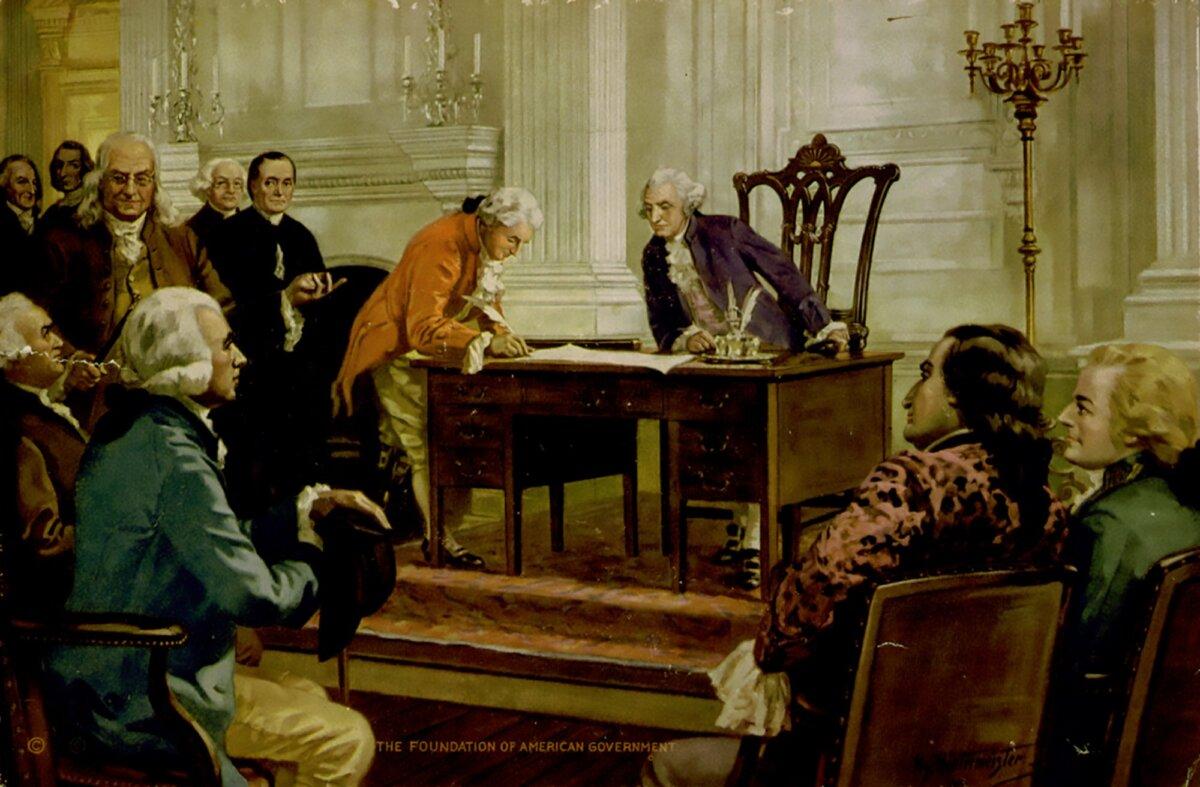
Here, one delegate says, “The business of government is compromise.” True, but principled balance, not unprincipled compromise counts.
Rightly, delegates rely on truth and justice as their compass, to embed checks and balances between upper and lower houses of Congress, and between legislative, executive, and judicial branches. They seek equilibrium between votes-per-state based on population and regardless of it. They discuss who in public office must be appointed, and who elected.
Yes, all delegates are representatives. But Madison’s unobtrusive steering of the convention hints at what representation means. It means being mindful of the ordinary voter, who hasn’t time or money to lobby for himself or his cause.
In things that matter most to the union, it means being American, not merely Virginian, Georgian, or Pennsylvanian. Delaware’s John Dickinson pleads, “Some of us act as though this is some debating contest, it is not. The life of the union is at stake.”
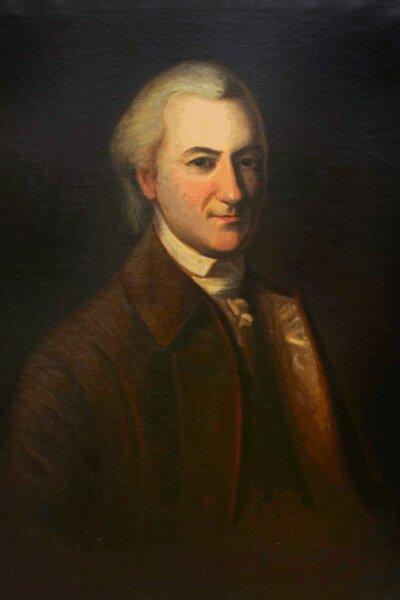
Not everyone championing state sovereignty on state-level issues is a separatist, and not everyone championing a strong federal government is a nationalist. The men here show that the centrifugal and centripetal forces in a democracy can be complementary, not mutually exclusive.
Judiciously, older, wiser colleagues, Washington and Franklin, cajole the younger Madison to cede some of his idealism if he wants results. Democracy, they suggest, is messy because it accounts for a level of pettiness, short-termism, and one-upmanship. Madison learns quickly enough that it’s within and with contradictions, not without them, that democracy thrives.
Drawing From Traditional Sources
No, nations don’t have to create everything from scratch. They can export ideas they’ve imported and refined.Power may well be associated with a raw display of that power, military or otherwise. But real authority (and the respect it commands) flows from restraint. A nation that can’t self-govern loses respect in the community of nations. So, delegates here prove that it’s by cleaving to their better selves that they rise above squabbling to back the noblest causes, not bereft of imperfections but transcending them.
The opening shot shows Madison purposefully lifting a quill, dipping it in ink, removing excess ink on the inkpot rim, before putting quill to paper. You see him lighting a candle before an evening’s stretch of reading, research, and reflection. The filmmakers are saying, democracy thrives not when citizens speak and write but do so with enough thought and care for other citizens.
Here, state representatives robustly champion their states, but they’re respectful when it comes to federal matters. It’s why Madison confesses his fondness for the Preamble’s turn of phrase, “Not we the states, but we the people.”
This is a reminder, if one was needed, that the point of government, federal or state, is to serve the people. Anything less is realpolitik posturing as principle.