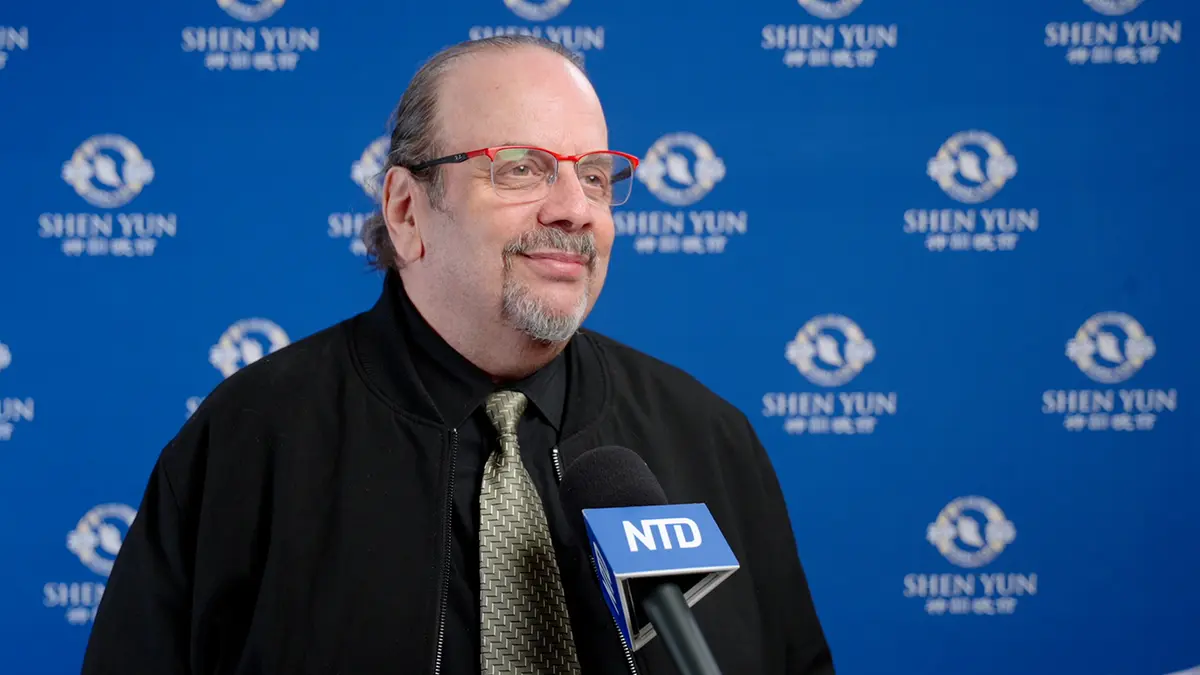
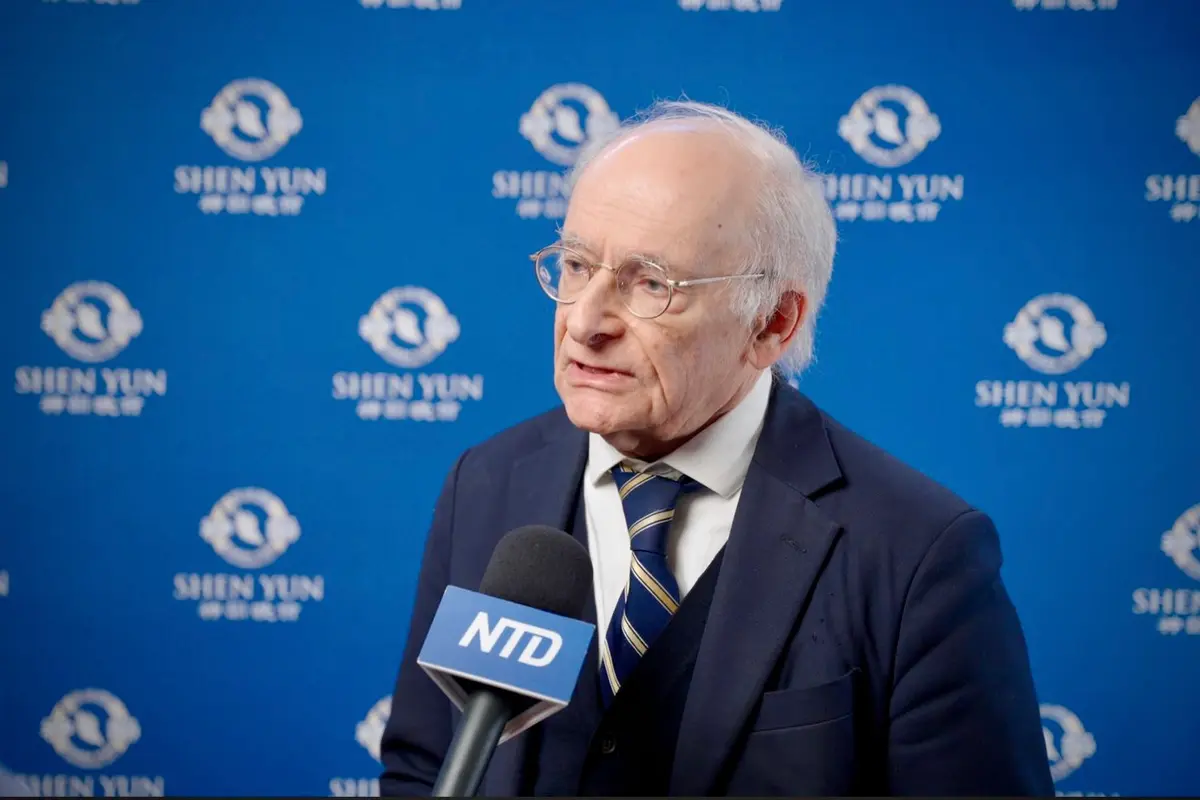
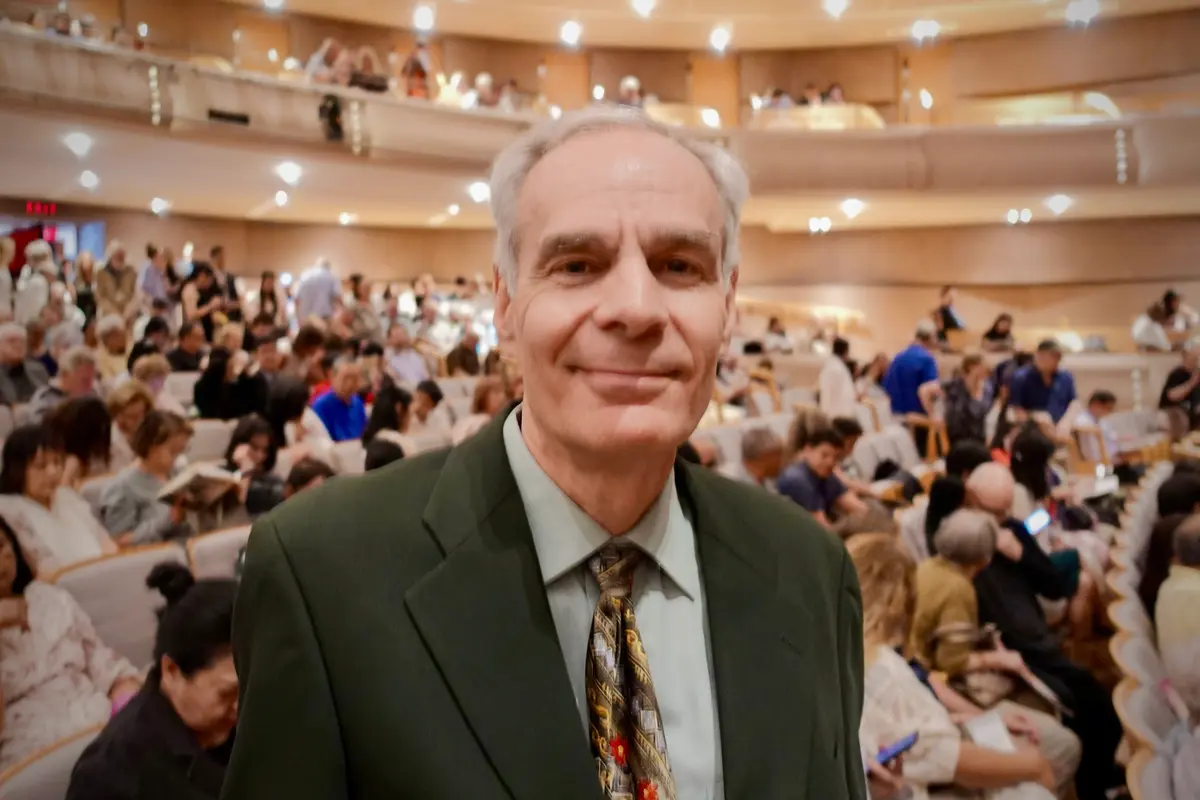
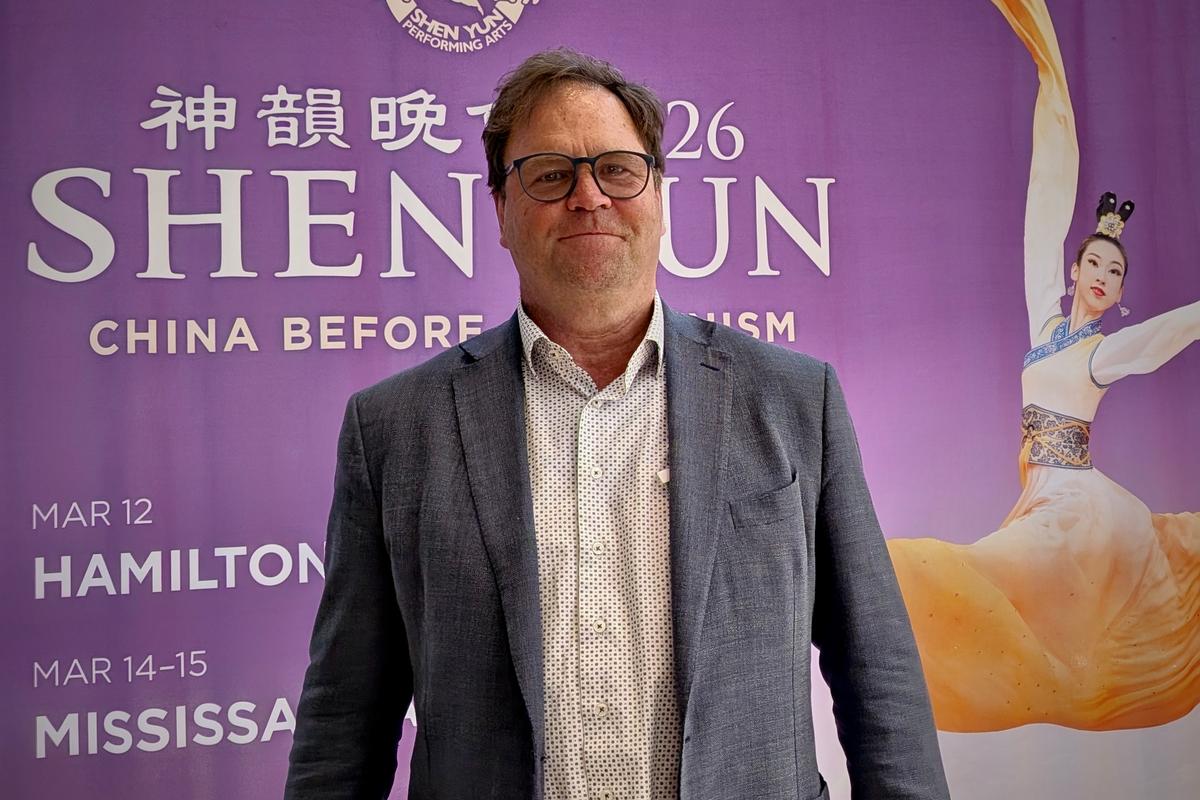
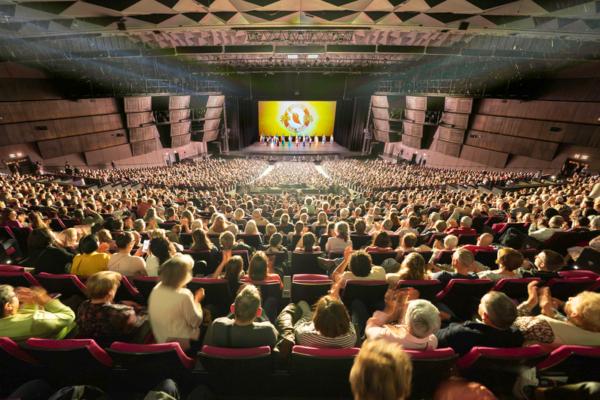
“They’re supremely talented,” he exclaimed. “They’re beautifully talented, and I know everybody loves it, but coming from a dance background, you really appreciate the technique and how they project in their face and the expression. It’s very beautiful.”
According to the company’s website, the classical Chinese dance seen in China today is heavily mixed with military and modern styles. Only at Shen Yun can the audience experience it in its purest form, preserved as it was passed down through generations.
Mr. Santa Maria especially admired that, regardless of how difficult a technique is, Shen Yun’s dancers executed each flawlessly with seemingly effortless grace.
“A lot of the jumps, their extension—which means how they can stretch and lift their legs up here and there or in the middle of their jumps—they’re very flexible, but they’re very disciplined,” he commented.
However, due to Shen Yun’s focus on reviving traditional culture and presenting the truth of events under communist rule in present-day China, it is currently forbidden by the regime from performing in China.
Upon learning this, Mr. Santa Maria lamented the loss. Originally from Cuba, he understands first-hand the hardships of living under a communist regime.
“I love [the performance], and it’s a shame that people in China don’t get to see this. It’s sad for them,” he expressed. “I came from Cuba—that was communist, and we had to leave because of it. [The regimes] don’t want any other philosophy, even if it’s just an artistic philosophy.”
Given the chance to meet the performers, Mr. Santa Maria would like to tell them: “God bless you.”
“I wish I was 25 again. I'd try to join [them,] but they’re wonderful. As a professional dancer, you understand the discipline it takes, not only to be able to do those things, but to [tell the story.] …They had to play that part, but still, their technique has to be perfect. People don’t understand how wonderful that is.”