Yin Xiuxian’s father was detained in a labor camp at the time Yin was born—not because he had committed a crime, but because he refused to give up his faith in Falun Dafa while living in communist China.
Three days after Yin was born, police barged into their home and threatened to also arrest his mother, Zhang Wanxia, if she didn’t renounce her faith. Before Yin turned 2, they followed through—a group of police raided the house and dragged his mother away from her crying son to illegally detain her. She was kept at a brainwashing center for more than six months.
Later, in September 2003, Zhang was illegally sentenced to two years of forced labor. Because she refused to renounce her faith, her sentence was extended by one month beyond her initial term. At the labor camp, she suffered brutal persecution, including 15 days of sleep deprivation and prolonged torture, including being hung up by handcuffs.
Yin’s childhood was marked by family separation. He stayed with his paternal grandparents and remembered them living under constant fear and anxiety due to the Chinese authorities’ persistent harassment. They never knew when his parents might not return home that day or when the next home raid might occur.
Yin told The Epoch Times that what happened on his seventh birthday epitomizes what his childhood was like. Back then, he was still too young to understand why his family was persecuted by Chinese authorities. That morning, Yin excitedly asked his father if he could please buy him a birthday cake—a big one if possible. His father agreed, and that evening Yin waited for his father to come home from work.
And waited. And waited.

Falun Gong, also known as Falun Dafa, is a spiritual discipline and meditation practice that teaches the principles of truth, compassion, and forbearance. Introduced to the public in China in the early 1990s, the practice spread largely by word of mouth, gaining between 70 million and 100 million practitioners by the end of the decade.
On July 20, 1999, the Chinese Communist Party (CCP)—which criminalizes religious activity that is outside of state control—declared the practice banned and immediately carried out nationwide arrests of practitioners. In the following decades, The Epoch Times and human rights organizations have documented cases of illegal detention, forced labor, torture, brainwashing, and even live organ harvesting from Falun Gong practitioners by the Chinese regime. That persecution continues unabated.
The Performance the CCP Tries to Censor
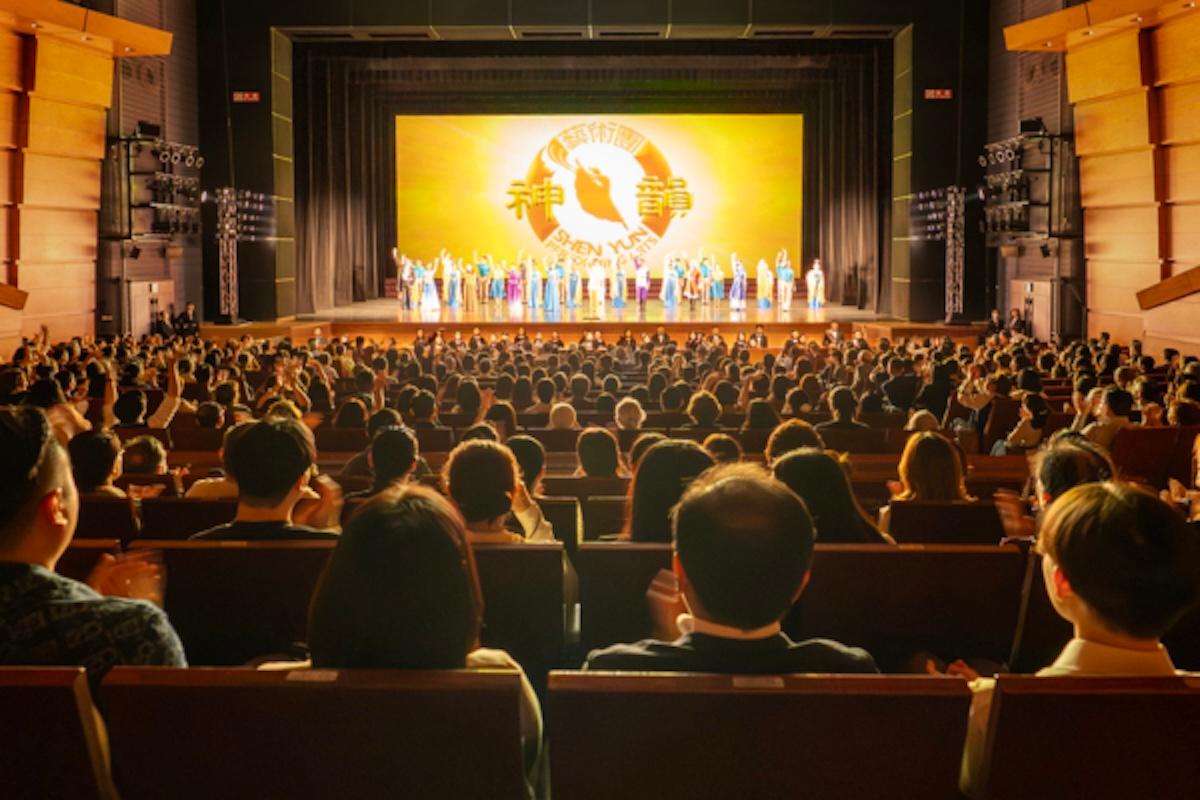
Founded in 2006, Shen Yun is the world’s premier classical Chinese dance company, performing for nearly 1 million audience members annually. Its mission is to revive 5,000 years of Chinese civilization through its music and dance performances.Its two-hour performances include more than a dozen vignettes, many of which bring historic figures and legends to life on stage through the company’s patented animated backdrop, world-class dancers, and live orchestra blending Eastern and Western instruments. That historical culture alone is one the CCP has worked to erase—burning books and razing temples during the Cultural Revolution—but a perusal of Shen Yun’s program reveals more things the regime undoubtedly considers sensitive, though embraced by the rest of the world.
“I had no dance foundation,” he said. “But I wanted to speak up for those who couldn’t in China, and I knew there was nothing to lose in trying.”
In 2017, Yin and his mother had the chance to come to the United States. Today, Yin is a classical Chinese dance major at Fei Tian College and has had the opportunity to tour with Shen Yun on a practicum.
Free to Speak Truth to Power
Yin’s father came to the United States and saw his son perform on stage for the first time. “I never thought this could happen,” he said.One year, Yin was cast as the lead in a dance story about the persecution. It told the story of a police officer in China who discovers his sister is a Falun Gong practitioner when authorities come to arrest her for her faith.

“Because I grew up in that environment, I could understand what that felt like, the pressure these people were under,” Yin said. It was an environment where citizens were constantly bombarded with propaganda slandering Falun Gong, whether it be through state media or even school textbooks, he said. Speaking the truth about Falun Gong—that it is a peaceful practice that teaches people truth, compassion, and forbearance—was a terrifying act of courage.
“These stories they show on stage, those are our own stories,” Yin’s father said. “It’s what we or our families and friends experienced; these are all true stories.”
For example, some of the stories touch on family separation, the CCP’s crimes of live organ harvesting from Falun Gong practitioners, and the hope and faith that lives on in people despite the persecution.
The Yins said the gratitude and relief they had in the United States when experiencing the freedom to express their beliefs was immeasurable.
“In China, you live in constant fear of arbitrary detention. Not in America. I can protest, I can go to parades to represent Falun Gong, and the police even protect us. You'd never see such a thing in China,” Yin’s father said.
Yin said that one goal of Shen Yun is to show people the truth about the CCP’s persecution of Falun Gong. But more broadly, Shen Yun’s mission is to revive traditional culture, a culture the CCP has tried to erase since it took power less than a century ago.