





Likely, no one has ever told you that the fine lines appearing around your mouth might have more to do with what’s happening in your gut than on your face—or that the dullness no serum can fix may stem from stress that your body never fully processed. Dermatology has a product for just about every skin problem, but few solutions address the underlying causes.
After three decades of practicing as an integrative psychiatrist and physician, trained in both Western medicine and classical Chinese medicine, I’ve arrived at a conclusion that may surprise you: Most skin aging can be significantly delayed.
The Scaffold Beneath the Surface
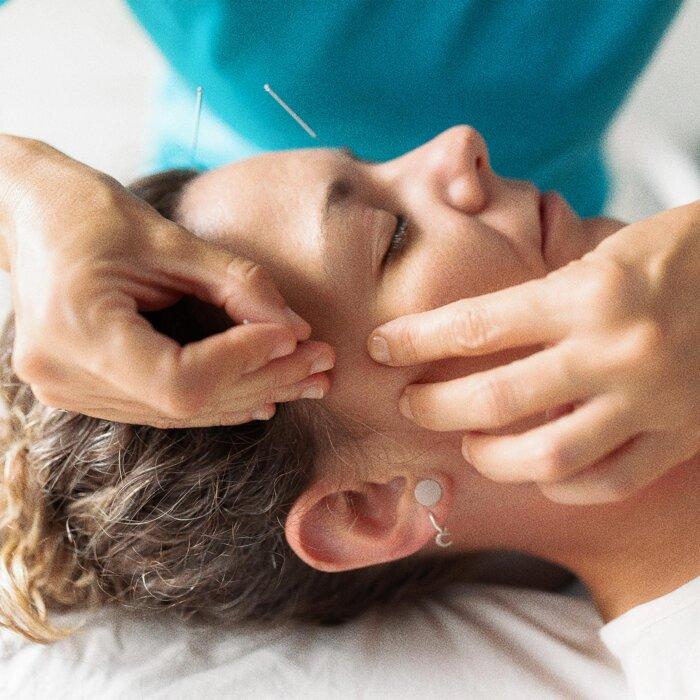
Most people are aware that collagen breaks down with age. What they may not know is how much that breakdown is accelerated through structural stress—how the collagen moves, holds tension, and carries the body through space.The lymphatic system compounds this issue. Unlike the heart, the lymphatic system has no pump. It depends entirely on movement, breathing, and muscle contractions to circulate. When the fascia weakens, lymph can stagnate, which often occurs in people who are sedentary, stressed, or dehydrated. As a result, metabolic waste accumulates in facial tissues, producing puffiness, dullness, and loss of definition that most people attribute simply to the passage of time.
What’s Happening In Your Blood
The most underappreciated aspect of skin aging is biochemical, and much of it happens years before the signs of aging appear on the face.

Your Gut Talks to Your Skin—Constantly
Emerging science on the gut–skin axis has confirmed what traditional medicine has long known: Intestinal health and skin health are inseparable. When the gut microbiome is disrupted—whether by antibiotics, processed foods, or chronic stress—systemic inflammation emerges, often manifesting in the skin. Rosacea, eczema, acne, and accelerated aging are frequently downstream manifestations of gut dysfunction that have never been properly addressed.Kryptopyrrole Disorder
Kryptopyrrole disorder is an underrecognized condition that causes the body to chronically deplete two nutrients essential for skin health: zinc and vitamin B6. Zinc is required for collagen synthesis, wound healing, and ultraviolet light protection; vitamin B6 is critical for cellular repair and anti-inflammatory regulation. People with undetected kryptopyrrole disorder age faster, heal more slowly, and are more susceptible to inflammatory skin conditions—and a simple urine test can identify it. However, the research base is still emerging, and practitioners vary in their interpretations of the results.Hormonal Decline Goes Far Beyond Estrogen
A full battery of hormones—dehydroepiandrosterone (a hormone the body naturally produces in the adrenal gland), growth hormone, pregnenolone, and thyroid hormones—declines through midlife, with powerful effects on skin thickness, moisture, and regeneration. Addressing the full hormonal picture often produces changes in skin quality that patients describe as more significant than anything they have received from a dermatologist.Sleep
Skin cells are among the most metabolically active in the body. Because they turn over continuously, they are acutely sensitive to anything that impairs cellular energy production, whether it’s chronic low-grade infection, environmental toxins, nutrient depletion, or the relentless blue-light environments that most of us now inhabit.
What the Face Is Actually Recording
Here is the truth that few dermatologists raise in consultation but that an avid observer of the human face recognizes: The face records your emotional life.Beyond the biochemistry, something subtler is happening. A blood panel cannot identify grief that hasn’t resolved, anger held in the jaw for years, anxiety that tightens the forehead, or the loneliness that dulls the complexion. The face holds what the mind cannot fully process—and it shows, with a precision that no aesthetic procedure can fully correct.
Beneath the Surface
Skin aging, viewed holistically, is not merely a dermatological problem. It is a whole-person issue reflected in the face.The good news is that most of its drivers are addressable through structural care, targeted biochemical correction, sleep and energy optimization, and attention to emotional health. Much of the work to reverse skin aging requires fewer prescriptions or procedures than the medical and cosmetic industry may suggest. What’s most critical is the willingness to look beneath the surface—pun intended.