Hospitals across the United States face a critical intravenous (IV) fluid shortage after Baxter International’s North Cove plant in North Carolina, one of the nation’s largest suppliers, was significantly affected by the storm surge and flooding caused by Hurricane Helene.
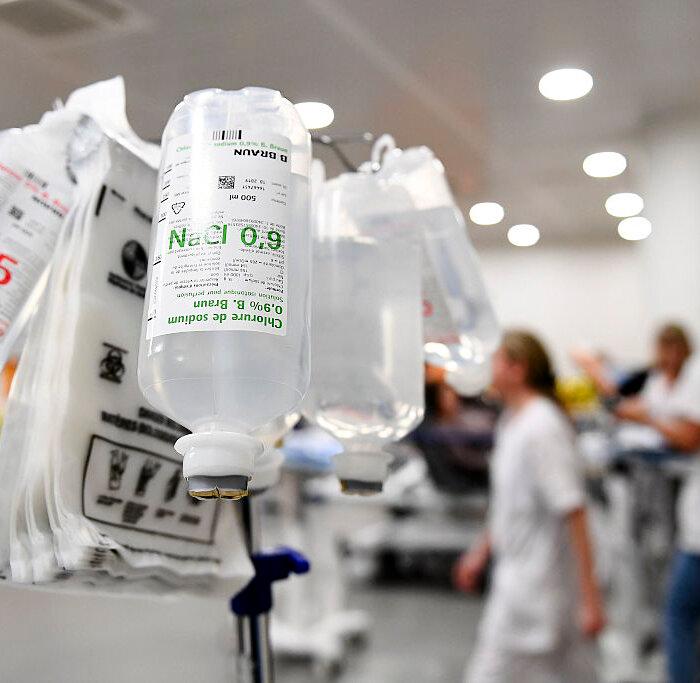
IV fluids are a staple in the hospital setting. They provide hydration and nutrients, especially for those who are unconscious, fasting (as part of surgery needs), or unable to drink. They are life-saving in cases of severe dehydration, blood loss, or shock, common in trauma care. Patients with chronic conditions, like cancer or kidney disease, also rely on IV fluids for hydration and medication delivery.
There is still no immediate timeline for when Baxter International’s North Carolina plant will return to full capacity after Hurricane Helene forced it to shut down. However, repairs and engineering certification efforts are in progress.
Who Could Be Affected
The U.S. Food and Drug Administration (FDA) lists nine fluid solutions in shortage. These include dextrose solutions for hydration and energy, saline for replacing lost fluids, medicine dilution, and sterile water for preparing injections or irrigating wounds.“A shortage could mean treatment delays, using less effective methods, or putting [patients] at risk for complications from being dehydrated,” said Dr. Raj Dasgupta, chief medical advisor for Fortune Recommends, told The Epoch Times via email.
However, some doctors disagree.
“With smart decisions by health care providers, this shortage does not have to negatively impact patient care, and may actually improve care, decrease cost, and encourage patients to eat and drink sooner, which will allow them to be discharged home sooner,” Dr. Jared Ross, an experienced emergency physician, told The Epoch Times.
Patients Taking IV Medications
Patients needing IV-administered medications, such as certain antibiotics, chemotherapy, and treatments for severe nausea (common in cancer patients and pregnant women), are likely going to be the most affected because these medications need IV fluids for their administration, Dasgupta said.Some medications typically given with IV fluids have oral alternatives; others can be administered with a slow IV push.
However, this doesn’t apply to all.
Most IV chemotherapy must be administered this way and is not offered in oral or pill form. “Certain drugs are administered via IV because it is the most effective for absorption,” Karen Selby, an oncology nurse and patient advocate with The Mesothelioma Center, told The Epoch Times.
Dialysis Patients
Patients on peritoneal dialysis (PD) typically receive supplies to perform treatments at home. The current shortage may reduce their usual supply, potentially limiting dialysis sessions or requiring a switch to hemodialysis.A person who stops dialysis can have a buildup of toxins and waste products in their body. Their kidneys will continue to fail, and they will eventually die.
Babies and Children
Babies and children are more vulnerable to dehydration, and conditions like diarrhea, vomiting, fever, or infection can lead to rapid fluid loss.Breastfed babies should continue to be offered breast milk frequently, while those on formula or who can drink should be given small, frequent feedings or sips. However, maintaining adequate hydration through oral intake may not be enough, and children with severe dehydration need IV fluids to replenish lost fluids and electrolytes.
Children who can hydrate orally should be given oral hydration. For example, Children’s Minnesota stated, “During the shortage, we will be prioritizing IV fluids for children who are critically ill or unable to drink fluids. For those who can drink on their own, oral hydration is actually safer and more effective.”
ICU, Trauma, and Surgical Patients
“Patients who tend to need IV fluids the most are those in the intensive care unit (ICU), surgical, and trauma patients,” Dasgupta said.Fluid loss during surgery can result from blood loss, suctioning, irrigation, and evaporation, especially when the abdominal cavity is open. Since patients undergoing surgery are unconscious and can’t drink, they need IV fluids to replenish lost fluids and stay hydrated.
An IV is also needed to provide nourishment, deliver anesthetics and other medications, and prevent side effects and complications like shock and hypotension.
The Shortage Status in Hospitals
In a letter released on Oct. 9, the U.S. Department of Health and Human Services (HHS) urged all health care systems to conserve these products “regardless of whether they have experienced a disruption in their supply,” as shortages are expected nationwide.Nounou shared that in his facility, providers receive alerts when ordering IV fluids to encourage them to consider whether they need to prescribe the fluids.
“We are being more selective about who ‘routinely’ gets IV fluids and the amounts of fluids administered,” Nounou told The Epoch Times.
“[We use] oral medications over IV when the patient can tolerate oral medications. Many medications, such as corticosteroids and certain antibiotics (macrolides and fluoroquinolones), have equal absorption when given orally or in an IV,” said Ross.
Some medications typically administered with an IV line, called IV piggyback, can also be done via IV push [delivered directly to the vein], explained Ross. Patients scheduled for surgery will likely receive anesthesia via IV push. Similarly, those requiring pain medications or antibiotics can expect them to be administered through IV push rather than IV infusion.
While an IV line—a slender, flexible tube inserted into a vein—will still be used, it won’t involve a continuously infusing IV bag. Instead, nurses will administer medications directly at intervals through the IV line as needed.
Leonora Corcolon, a nurse at Hendrick Medical Center in Texas, recalled being unexpectedly given medication in a Ziploc bag with two small saline vials and instructed to administer it via IV push instead of the usual prepared IV bag for hanging.
However, not all treatments have a workaround.
“IV fluids are used for a wide range of medical purposes. ... Some of these, like dehydration, can sometimes be managed with alternative oral treatments. However, others cannot, like surgeries and cases when patients have trouble breathing from conditions such as the flu, COVID-19, and RSV. IV fluids in these patients are essential to keep them hydrated and prevent their blood pressure from dropping dangerously low,” explained Jamie Winn, a doctor of pharmacy and medical director at Universal Drugstore.
Certain IV medications, like antibiotics and chemotherapy, must be given intravenously due to the need for precise dosing or poor absorption when taken orally. Additionally, minerals such as potassium and magnesium require slow IV infusion over 30 to 60 minutes and can’t be given as a rapid IV push.
Some workarounds may also carry some risks.
One post-anesthesia care unit nurse said that an IV push of antibiotics carries such a risk, expressing, “Some of these medications can have scary side effects if given too quickly. Anaphylaxis, permanent hearing loss, and even cardiac arrest. I’m worried how this will affect people.”
However, Ross disagrees. “There is no difference in adverse event rates for IV push versus IV piggyback.”
He added that administering medications via IV push offers advantages like requiring less equipment, saving costs, and creating less waste.
“Given these benefits, there has been a significant effort in the last five to 10 years, well before this shortage, to administer medications via IV push, including common antibiotics (ceftriaxone, cefazolin) and seizure medications (levetiracetam),” he added.
One drawback of IV push medications is that they may need to be administered more frequently than IV infusions, explained Ross, meaning nurses need to give doses more regularly.
What Patients Can Do
“Because of these possible shortages, anyone with elective or nonemergency surgeries may want to postpone their surgery. They can also contact their health care provider to ensure they have adequate supplies of IV fluids prior to their procedure,” said Winn.Nounou also advises patients about to undergo a procedure to hydrate up to four hours before surgery because they may not receive IV hydration and only be given fluids. This has some exceptions, but is a general rule.
“Patients can talk to their doctors about other hydration options if they normally rely on IV fluids. There isn’t much individuals can do to prevent the shortage, but being aware of the situation and understanding that there may be treatment delays can help them be prepared for what to expect,” said Dasgupta.