



Symptoms
If you have mild anemia, you may not have any symptoms. Symptoms of anemia may develop quickly or slowly, depending on the cause of your anemia. General symptoms that are the same for many types of anemia include:- Weakness
- Paleness
- Tiredness
- Chills
- Shortness of breath
- Headache
- Dizziness and fainting
- Bleeding
- , or yellowing of the skin
Diagnosis
How will your doctor know you have anemia?
To diagnose anemia, your doctor may ask you questions about your risk factors and order blood tests or other diagnostic tests. Your doctor may also ask about your medical history, what you eat, and whether other people in your family have been diagnosed with anemia. Your doctor may also do a physical exam to look for symptoms of anemia, such as a pale tongue or brittle nails. If you have anemia, your doctor may ask you to visit a hematologist (a doctor who specializes in blood diseases).


Blood tests
- Red blood cell levels that are higher or lower than normal could be a sign of anemia. Red blood cells carry oxygen from your lungs to the rest of your body.
- Hemoglobin levels that are higher or lower than normal may be a sign of anemia. Hemoglobin is an iron-rich protein in red blood cells that carries oxygen.
- Hematocrit levels that are too low may be a sign of anemia. is a measure of how much space red blood cells take up in your blood.
- Mean corpuscular volume (MCV) levels that are higher or lower than normal may be a sign of anemia. MCV is a measure of the average size of your red blood cells.
Blood test results
The table below shows some normal ranges for adults for different parts of the complete blood count (CBC) test. Some of the normal ranges differ between men and women. Other factors, such as age, high altitude, and race, also may affect normal ranges. Talk to your doctor about your results and whether they are outside an acceptable range based on your individual needs.| Red blood cell (varies with altitude) | |
| Normal Range Results* | Adult men: 5 to 6 million cells/mcL Adult women: 4 to 5 million cells/mcL |
| Hemoglobin (varies with altitude) | |
| Normal Range Results* | Adult men: 14 to 17 gm/dL Adult women: 12 to 15 gm/dL |
| Hematocrit (varies with altitude) | |
| Normal Range Results* | Adult men: 41% to 50% Adult women: 36% to 44% |
| Mean corpuscular volume | |
| Normal Range Results* | 80 to 95 femtoliter† |
Bone marrow tests
- Aspiration is usually done first. During this procedure a small amount of bone marrow fluid is collected through a needle.
- Biopsy tests involve collecting a small amount of bone marrow tissue through a larger needle.
Bone marrow tests may require you to go to the hospital or a surgery center. Sometimes, however, they can be done in the doctor’s office or clinic. You will be awake for your test and may be given medicine to relax you during the test. You will lie on your side or stomach. Your doctor will clean and numb the top ridge of the back of a hipbone, where the needle will be inserted. You may feel a brief, sharp pain when the needle is inserted and when the bone marrow is aspirated. The bone marrow samples will be studied in a laboratory.
- Fever
- Redness
- Swelling
- Discharge at the needle injection site
Other diagnostic tests
- Colonoscopy looks for bleeding or other problems such as tumors in your colon. For this test, you will be given medicine to help you relax, and a small camera will be put into your colon to view the colon directly. Your doctor may also check your stool for blood.
- Endoscopy looks for bleeding in the esophagus, stomach, and the first part of the small intestine. This involves inserting a tube with a tiny camera through your mouth down to your stomach and upper small intestine.
- tests look for changes in the genes that control how your body makes red blood cells.
- Urine tests check whether your kidneys are working properly. They can also tell whether there is any bleeding in your urinary tract, which is the body’s drainage system for removing urine.
Causes and Risk Factors
What causes anemia?
- Age: As you age, your chances of developing anemia increase.5
- Blood loss: Any condition that causes you to lose a lot of blood increases your risk of anemia. While this can include blood lost during the menstrual cycle, anemia due to bleeding too much from your menstrual cycle is not normal. See your doctor if your periods are heavy (you need to change your tampon or pad after less than 2 hours or you pass clots the size of quarters or larger). Bleeding can also lead to anemia if you have other risk factors. These include bleeding due to inflammation in the stomach or bowels, or bleeding from surgery, a serious injury, or donating blood often.
- Family history: If you have a family history of types of anemia, you may have an increased risk.
- Lifestyle habits: People who do not get nutrients like iron, vitamin B12, and folic acid to make healthy red blood cells have a higher risk of anemia.2 Drinking too much alcohol also raises your risk of anemia.
- Other health conditions: Chronic (long-term) kidney disease, from an infection, cancer, or an disease can cause your body to make fewer red blood cells. Certain medicines or treatments such as chemotherapy for cancer can also raise your risk of anemia.
Can you prevent anemia?
You can take steps to prevent some types of anemia. Your doctor may recommend eating more foods rich in iron or vitamin B12, such as leafy vegetables, meat, milk, and eggs. Your doctor may also talk to you about iron or vitamin B12 supplements. If you are a strict vegetarian or vegan, talk to your doctor about how to get all the nutrients you need in your diet.
Treatment and Management
Your treatment for anemia will depend on its cause and how serious it is. People who have mild anemia may not need treatment. If your anemia is caused by medicines or another health condition, your doctor may change your treatment to manage or stop your anemia.
Medicines
Dietary supplements
- Iron supplements can increase the iron in your body. This may help treat iron-deficiency anemia. Iron supplements are generally not given to people who do not have iron-deficiency anemia because too much iron can damage your organs.
- Vitamin B12 supplements or shots can help treat vitamin B12–deficiency anemia.
Procedures
Blood transfusion
A blood transfusion is a common, safe medical procedure in which healthy blood is given to you through an intravenous (IV) line that has been inserted in one of your blood vessels. Blood transfusions replace blood that is lost through surgery or injury, or they provide blood it if your body is not making it properly.Most of the blood used for transfusions comes from whole blood donations given by volunteer blood donors. A person can also have their own blood collected and stored a few weeks before surgery in case it is needed.
After a doctor determines that you need a blood transfusion, he or she will test your blood to make sure that the blood you are given is a good match. Blood transfusions usually take 1 to 4 hours to complete. You will be monitored during and after the procedure.
- Fever
- Heart or lung problems
- Alloimmunization (when the body’s natural defense system attacks donor blood cells)
- Rare but serious reactions that occur when donated white blood cells attack your body’s healthy tissues
Blood and bone marrow transplant
A bone (or blood) marrow transplant, also called a hematopoietic stem cell transplant, replaces faulty blood-forming stem cells with healthy cells.Blood or bone marrow transplants are usually performed in a hospital. Often, you must stay in the hospital for one to two weeks before the transplant to prepare. You also will receive special medicines and possibly radiation to destroy your abnormal stem cells and to weaken your immune system so that it won’t reject the donor cells after the transplant.
On the day of the transplant, you will be awake and may get medicine to relax you during the procedure. The stem cells will be given to you through an IV (intravenous catheter). The stem cells will travel through your blood to your bone marrow, where they will begin making new healthy blood cells.
Your doctor will keep watching your recovery, possibly for up to one year. After the transplant, your doctor will check your blood counts every day to see if new blood cells have started to grow in your bone marrow. The length of your recovery will depend on many factors. Before you leave the hospital, you will get detailed instructions on how to prevent infection and other complications.
- Nausea
- Vomiting
- Diarrhea
- Tiredness
- Mouth sores
- Skin rashes
- Hair loss
- Liver damage
Surgery
Surgery may be needed to stop internal bleeding.Anemia and healthy eating habits
Healthy eating habits are essential for everyone. It is important to eat healthy to ensure your diet has iron-rich foods, as well as foods that contain vitamin B12.
How anemia may affect your health
- Heart problems, including an irregular heartbeat, a larger than normal heart, and heart failure
- Infections
- Pregnancy complications
Anemia in Pregnancy
Anemia, especially iron-deficiency anemia, is common during pregnancy. Your body makes more blood to support your baby’s growth during this time. As a result, you need more iron and other nutrients, and to help you get them, you will be asked to take prenatal vitamins. If you don’t get enough of these nutrients while pregnant, you may feel weak or more tired than usual.Because all women are at risk for anemia during pregnancy, your doctor will do blood tests to check for the condition at different stages in your pregnancy.
- Preterm labor
- Increased blood loss during delivery
- Low birthweight
- Anemia and developmental delays in your baby
Iron-Deficiency Anemia
What is iron-deficiency anemia?
Iron-deficiency anemia is a type of anemia that develops if you do not have enough iron in your body. It is the most common type of anemia.
What are the symptoms of iron-deficiency anemia?
- Fatigue
- Dizziness or lightheadedness
- Cold hands and feet
- Pale skin
What causes iron-deficiency anemia?
Blood loss
When you lose blood, you lose iron. Blood loss can happen in many ways:- Bleeding in your (GI tract) from an inflammatory bowel disease, ulcer, colon cancer, or a or other GI disorders such as celiac disease.
- Traumatic injuries or surgery
- Heavy menstrual periods or bleeding during childbirth
- Regular use of medicines such as aspirin or nonsteroidal anti-inflammatory drugs (NSAIDS), such as ibuprofen and naproxen that can lead to GI tract bleeding
- Urinary tract bleeding
Problems absorbing iron
Certain conditions or medicines can decrease your body’s ability to absorb iron and lead to iron-deficiency anemia. These conditions include:- Certain rare conditions that block your intestines from absorbing iron or make it harder to stop bleeding
- Endurance sports, which can make athletes lose iron through their GI tracts and through the breakdown of red blood cells
- Intestinal and digestive conditions, such as celiac disease, ulcerative colitis, Crohn’s disease, and Helicobacter pylori infection
- Surgery on your stomach and intestines, including weight loss surgery
Other medical conditions
Other conditions that may cause iron-deficiency anemia include:- Kidney disease: People who have kidney disease do not make enough of a substance called erythropoietin. Your body needs erythropoietin to make red blood cells. Your doctor may prescribe erythropoietin if you have kidney disease.
- Long-lasting conditions that lead to inflammation: These include congestive heart failure or obesity. They can make it hard for your body to regulate and use your body’s iron.
How do you prevent iron-deficiency anemia?
- Good sources of iron include beans, dried fruits, eggs, lean red meat, salmon, iron-fortified breads and cereals, peas, tofu, and dark green leafy vegetables.
- Vitamin C-rich foods such as oranges, strawberries, and tomatoes help your body absorb iron.
- Ensure that toddlers eat enough solid foods that are rich in iron.
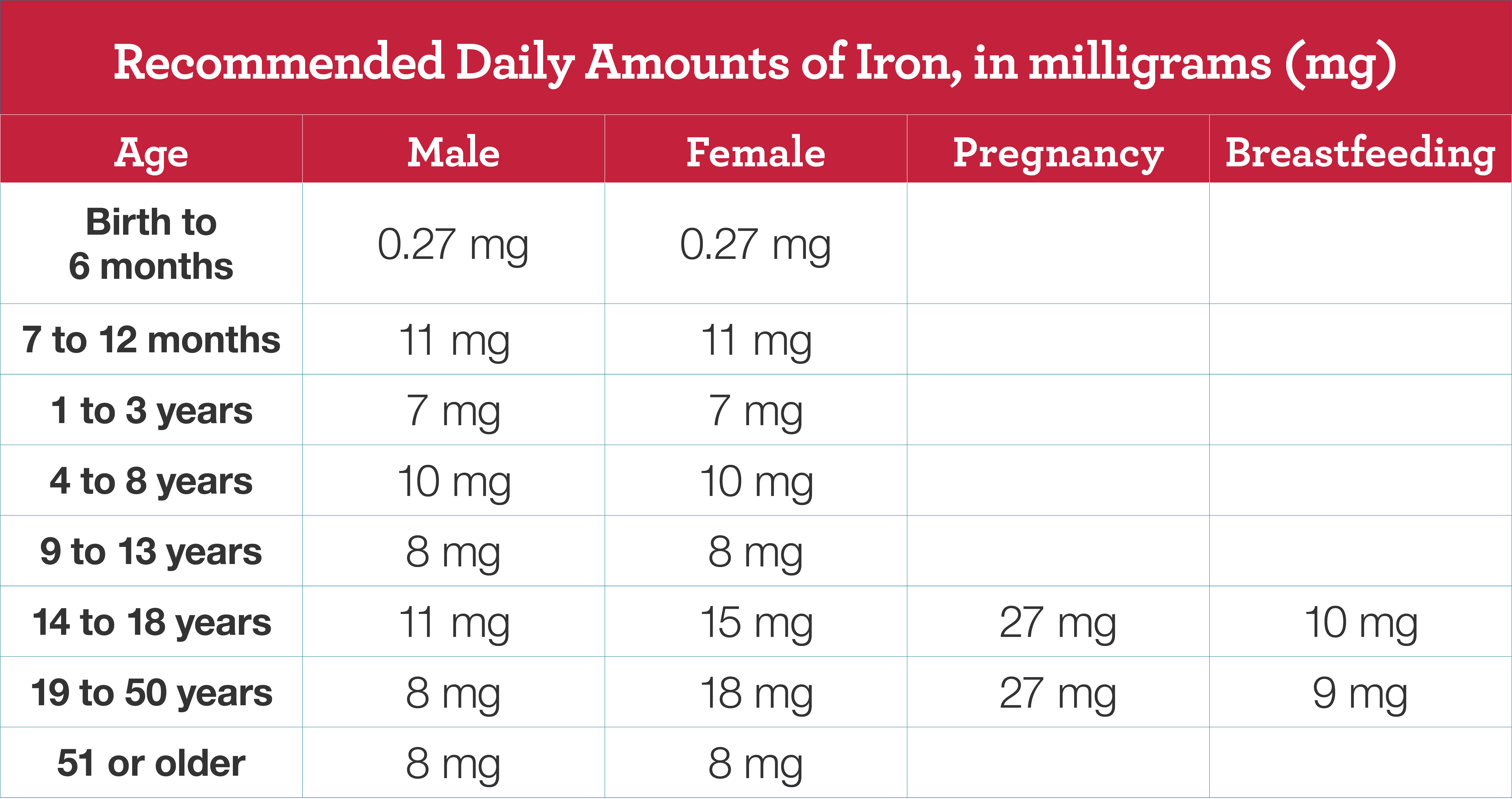
How much iron do I need each day?
The recommended daily amounts of iron depend on your age, your sex, and whether you are pregnant or breastfeeding.
Recommended daily iron intake for children and adults
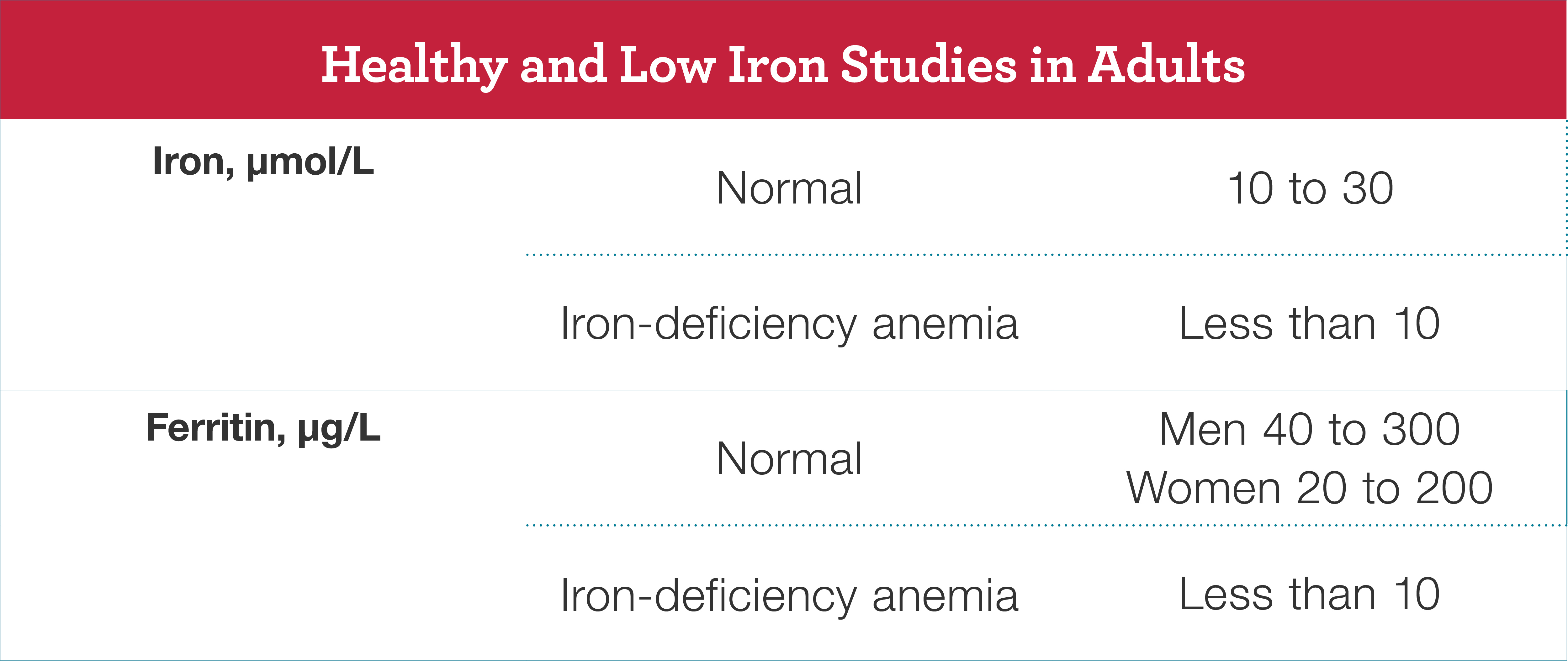
How is iron-deficiency anemia diagnosed?
How is iron-deficiency anemia treated?
- Iron supplements, also called iron pills or oral iron, help increase the iron in your body. This is the most common treatment for iron-deficiency anemia. It often takes three to six months to restore your iron levels. Your doctor may ask you to take iron supplements during pregnancy. Talk to your doctor if you have side effects such as a bad metallic taste, vomiting, diarrhea, constipation, or upset stomach. Your doctor may suggest taking your supplements with food, lowering the dose, or trying a different type of iron supplement.
- Intravenous or IV iron is sometimes used to put iron into your body through one of your veins. This helps increase iron levels in your blood. It often takes only one or a few sessions to restore your iron levels. People who have serious iron-deficiency anemia or who have long-term conditions are more likely to receive IV iron. Side effects include vomiting or headaches right after the treatment, but these usually go away within a day or two.
- Medicines such as help your bone marrow make more red blood cells, if this is causing your iron deficiency. These medicines are usually used with iron therapy in people who have both iron-deficiency anemia and another chronic (long-term) condition such as kidney disease.
- Blood transfusions quickly increase the amount of red blood cells and iron in your blood. They may be used to treat serious iron-deficiency anemia.
- Surgery may be needed to stop internal bleeding.
What happens if iron-deficiency anemia is not treated?
Undiagnosed or untreated iron-deficiency anemia may cause serious complications such as fatigue, headaches, restless legs syndrome, heart problems, pregnancy complications, and developmental delays in children.
Iron-deficiency anemia can also make other chronic conditions worse or cause their treatments to work poorly.
Vitamin B12–Deficiency Anemia
What is vitamin B12–deficiency anemia?
You can get vitamin B12 deficiency if you can’t absorb vitamin B12 due to problems with your gut or if you have pernicious anemia, which makes it difficult to absorb vitamin B12 from your intestines. Without enough vitamin B12, blood cells do not form properly inside your bone marrow, the sponge-like tissue within your bones. These blood cells die sooner than normal, leading to anemia.
What are the symptoms of vitamin B12–deficiency anemia?
If you have vitamin B12–deficiency anemia, you may have the typical symptoms of anemia at first, such as fatigue, paleness, shortness of breath, headaches, or dizziness. If left untreated, you may start to notice brain and nervous system symptoms. This is because vitamin B12 is also needed for your brain and your nerves to work properly.
- Tingling feelings or pain
- Trouble walking
- Uncontrollable muscle movements
- Confusion, slower thinking, forgetfulness, and memory loss
- Mood or mental changes, such as depression or irritability
- Problems with smell or taste
- Vision problems
- Diarrhea and weight loss
- Glossitis, which is a painful, smooth, red tongue
What causes vitamin B12–deficiency anemia?
You can develop vitamin B12–deficiency anemia if you do not eat enough food with vitamin B12, such as if you follow a strict vegetarian or vegan diet. But this is rare. In the United States, vitamin B12–deficiency anemia is most often due to other risk factors.
- Lack of intrinsic factor: Intrinsic factor is a protein made in the stomach, which helps the body absorb vitamin B12. People who have pernicious anemia do not produce intrinsic factor. Pernicious anemia is more common in people with northern European or African ancestry. You may develop vitamin B12–deficiency anemia if your body is not able to absorb enough vitamin B12 from the foods you eat. Older adults are more likely to have digestive problems that make it harder to absorb vitamin B12.
- Lifestyle habits: Drinking too much alcohol can make it harder for your body to absorb vitamin B12. For men this is more than two drinks in a day. For women, it’s more than one drink in a day.
- Medicines: Taking certain medicines can make it harder for your body to absorb vitamin B12 over time. These include some heartburn medicines and metformin to treat diabetes.
- Medical conditions: Some medical conditions can raise your risk of vitamin B12–deficiency anemia. These include:
- Autoimmune diseases, such as celiac disease, type 1 diabetes, and thyroid diseaseexternal link
- Chronic pancreatic disease
- Genetic conditions, such as Imerslund-Gräsbeck syndrome, inherited intrinsic factor deficiency, and inherited transcobalamin deficiency
- Intestinal and digestive conditions, such as ulcerative colitis, Crohn’s disease, and Helicobacter pylori infection
- Vitiligoexternal link
- Stomach surgery: Surgery on your stomach or intestines, such as weight-loss surgery or gastrectomy, can make it harder for your body to absorb vitamin B12.
How do you prevent vitamin B12 deficiency?
If you are otherwise healthy, maintaining a normal diet enriched in vitamin B12 is important.
- Lean red meat and chicken
- Fish, such as catfish and salmon; and seafood, such as clams and oysters
- Milk, yogurt, cheese, and fortified vegan milk substitutes
- Fortified cereals
- Eggs
How much vitamin B12 do you need each day?
Recommended daily vitamin B12 intake for children and adults
| Recommended Daily Amounts of Vitamin B12, in micrograms (mcg) | |||
| Age | Male or Female | Pregnancy | Breastfeeding |
| 1–3 years | 0.9 mcg | ||
| 4–8 years | 1.2 mcg | ||
| 9–13 years | 1.8 mcg | ||
| 14–18 years | 2.4 mcg | 2.6 mcg | 2.8 mcg |
| 19–50 years | 2.4 mcg | 2.6 mcg | 2.8 mcg |
| 51+ years | 2.4 mcg (mostly from fortified foods or a supplement) |
How is vitamin B12–deficiency anemia diagnosed?
| Healthy and Abnormal Blood Levels in Adults | ||
| Hemoglobin, g/dL | Normal | Men: 13 or higher Women: 12 or higher |
| Anemia | Men: 12 or lower Women: 11 or lower | |
| Vitamin B12, pg/mL | Normal | 400 or higher |
| Vitamin B12-deficiency | 200 or lower (although levels may be normal in some cases) |
How is vitamin B12–deficiency anemia treated?
If your doctor diagnoses you with vitamin B12–deficiency anemia, your treatment will depend on the cause and seriousness of your condition. Some people need lifelong treatment.
- Vitamin B12 medicine can be prescribed by your provider for you to take by mouth or as a nose spray or a shot. These supplements can help increase the levels of vitamin B12 in your body. For serious vitamin B12–deficiency anemia, your doctor may recommend vitamin B12 shots until your levels are healthy.
- Blood transfusions to treat serious vitamin B12–deficiency anemia in combination with vitamin B12 treatment.
Some symptoms may take months to improve, depending on how serious they are. Some symptoms related to the brain or the nerves, such as numbness and tingling, may not go away even with treatment.
What happens if vitamin B12–deficiency anemia is not treated?
Hemolytic Anemia
What is hemolytic anemia?
Hemolytic anemia is a blood condition that occurs when your red blood cells are destroyed faster than they can be replaced. Hemolytic anemia can develop quickly or slowly, and it can be mild or serious.
What are the symptoms of hemolytic anemia?
How is hemolytic anemia diagnosed?
What causes hemolytic anemia?
- conditions
- Bone marrow failure
- Complications from blood transfusions
- Infections
- blood conditions such as sickle cell disease or thalassemia
- Some medicines
How is hemolytic anemia treated?
- Blood transfusions
- Medicines
- Surgery to remove your spleen
- Blood and bone marrow transplants
What happens if hemolytic anemia is not treated?
Aplastic Anemia
What is aplastic anemia?
Despite its name, aplastic anemia, or bone marrow failure, is more than anemia. Aplastic anemia is a rare but serious blood condition that occurs when your bone marrow cannot make enough new blood cells for your body to work normally. It can develop quickly or slowly, and it can be mild or serious. At this time, there is no way to prevent aplastic anemia.
What are the symptoms of aplastic anemia?
- Fatigue
- Infections that last a long time
- Easy bruising or bleeding
How is aplastic anemia diagnosed?
What causes aplastic anemia?
You can also inherit the condition, in rare cases.
How is aplastic anemia treated?
- Blood and bone marrow transplants, which may cure aplastic anemia in some people
- Blood transfusions
- Medicines to stop your immune system from destroying the stem cells in your bone marrow
- Medicines to help your body make new blood cells
- Removing or staying away from toxins in your environment
