Some may wonder how acupuncture remains relevant despite the significant changes in diseases and health care practices over the past millennia. One acupoint that exemplifies this enduring relevance is Heavenly Well (Tian Jing, TE10). This particular point on the Triple Energizer meridian has a wide range of functions. While its role in acupuncture has evolved over the years, it continues to be a valuable tool in traditional and modern healing practices.
An Ancient Acupoint With Deep-Rooted Functions
Tian Jing was first recorded in the “Ling Shu,” one of the foundational texts of traditional Chinese medicine. As a He-Sea point, it plays a critical role in regulating energy as it moves deeper into the body and connects with its associated organs. This point is well-known for calming the spirit, clearing pathogenic heat, and dissipating nodules. These properties make it especially effective for treating scrofula and goiter.Modern data-mining research has revealed that Tian Jing was historically the most frequently chosen acupoint for treating scrofula and was one of the top choices for dormant papules. Moreover, since the Triple Energizer meridian travels to the head, Tian Jing is beneficial for addressing disorders affecting this region. Due to its location, it is also highly effective in treating arm pain and mobility issues.
Modern Research Supports Ling Shu’s Effectiveness
Given the significant advancements in modern medicine for treating tuberculosis and scrofula, one might expect Tian Jing to become less relevant. However, the versatile benefits of Tian Jing have helped it remain important as acupuncture becomes increasingly integrated into contemporary medical practices. It is now frequently included in treatment protocols aimed at improving arm mobility, and research supports its effectiveness in this regard.A clinical study assessed the effects of acupuncture on post-stroke upper limb spasticity, a condition where the increased muscle tone or tightness in the muscles of the arms and hands results in difficulty with voluntary movement and coordination. The researchers compared an acupuncture group with an electro-stimulation group at various acupoints, including Tian Jing. Both groups also underwent standard medical care and rehabilitation training for three weeks.
The results showed that both treatments significantly improved spasticity, motor function, and daily living ability. Notably, the acupuncture group demonstrated superior scores on daily living ability. The total effective rates were 93.3 percent in the acupuncture group and 86.7 percent in the electro-stimulation group, reinforcing the effectiveness of acupuncture, particularly for mild-to-moderate spasticity.
How to Locate and Stimulate Tian Jing
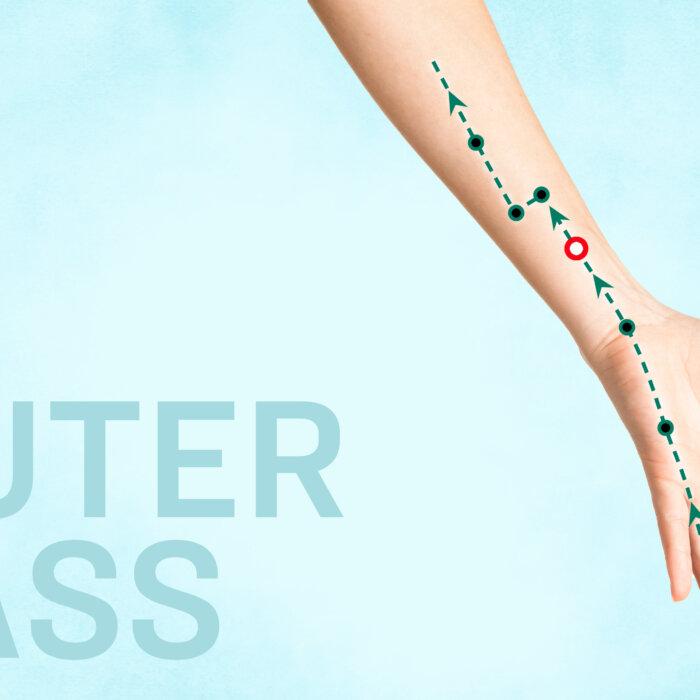
To find Tian Jing, bend your elbow to 90 degrees. The point is located in a small dip or hollow just above the bony prominence of your elbow (the olecranon). The distance from the olecranon to Tian Jing is about the width of your thumb, a measurement known as “cun” in traditional Chinese medicine.Activating Tian Jing for maximum benefit is easy:
- Press firmly for three to five seconds, relax for three seconds, and repeat for one to three minutes on each side.
- Massage in circular motions with your index finger or thumb for one to three minutes on each side.
- Use an herbal patch overnight for added convenience.
- Advanced techniques include acupuncture, cupping, or moxibustion, which should be performed by a trained TCM professional.
Precautions to Keep in Mind
Avoid using this acupoint if you have injuries in the region. If applying an herbal patch, ensure that it does not contain aggressive artificial ingredients, particularly if you have sensitive skin.A Simple Yet Powerful Tool for Self-Care
Due to its unique nature and broad range of benefits, Tian Jing is a valuable acupoint for improving arm mobility, relieving spasms, and regaining control over the limbs. Regularly stimulating this point can also serve as a preventive measure, helping to expel pathogens and maintain the smooth flow of qi (vital energy) in the body. By incorporating Tian Jing into your wellness routine, you can tap into ancient wisdom and modern research to support your overall well-being.TCM expert Shihhsiang Hung reviewed this article for accuracy and clarity.

Views expressed in this article are the opinions of the author and do not necessarily reflect the views of The Epoch Times. Epoch Health welcomes professional discussion and friendly debate. To submit an opinion piece, please follow these guidelines and submit through our form here.