
Asthma is a chronic respiratory condition characterized by inflammation of the airways, which can lead to temporary narrowing of the airways, making it difficult for individuals with this condition to breathe. Almost 25 million people in the United States have asthma, accounting for more than 7 percent of the total population. Each year, more than 3,500 people die from asthma.
What Are the Symptoms and Early Signs of Asthma?
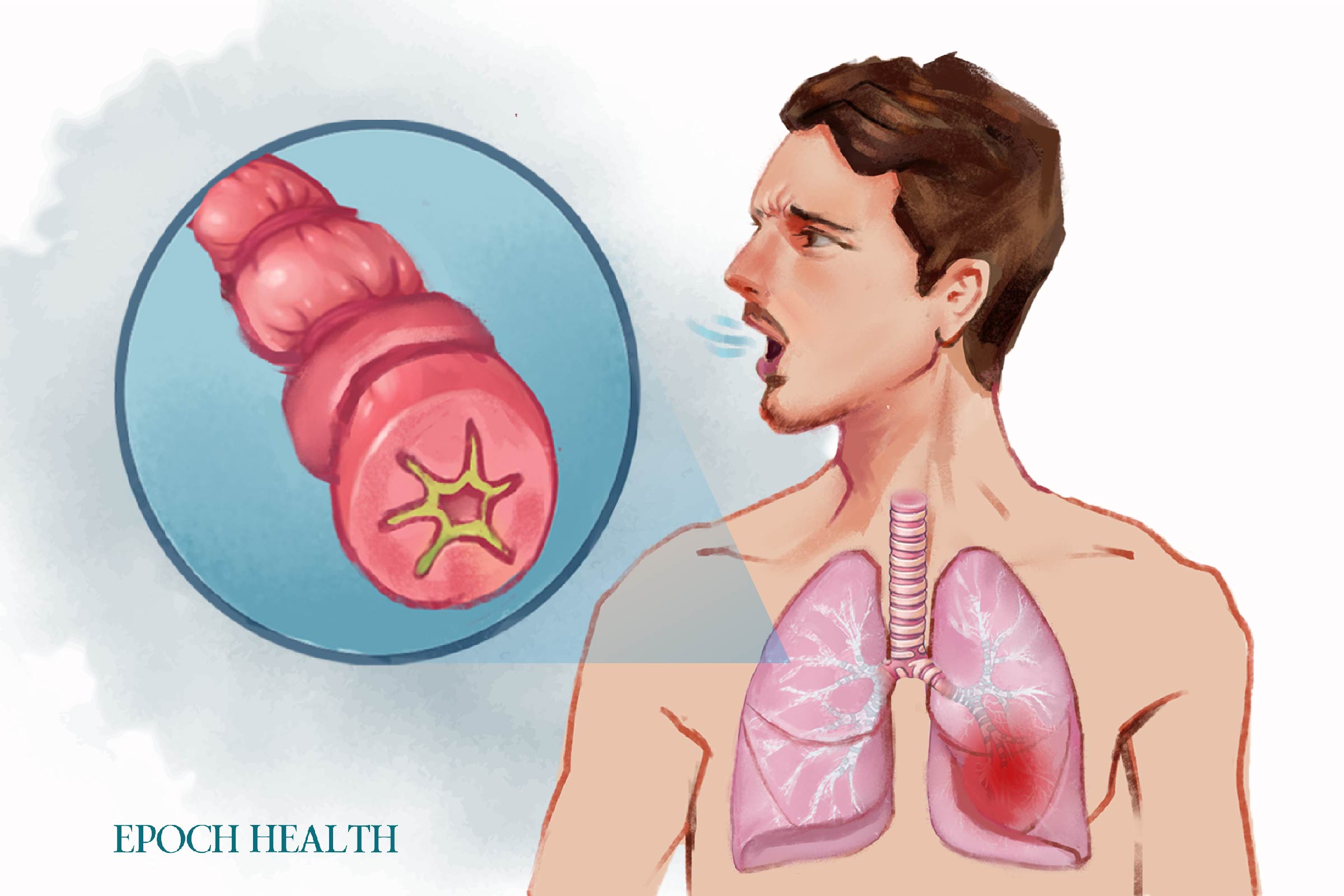
An asthma episode, also known as an asthma attack, exacerbation, or flare-up, refers to a sudden and severe worsening of asthma symptoms. It involves bronchial muscle contraction, swelling of the airway walls, and increased mucus. The resulting airway obstruction limits the passage of air in and out of the lungs.
Warning Signs
Asthma attacks typically take place with warning signs, which vary among individuals and may be mild or unrelated to asthma. These signs can appear 24 to 48 hours before the actual attack and can be treated as early asthma symptoms, and should be addressed promptly.Frequent warning signs may include an itchy chin, persistent cough at night, a sore or scratchy throat, nighttime awakenings, a runny or stuffy nose, mood swings, itchy or watery eyes, and eczema flare-ups.
Common Symptoms
Asthma symptoms differ among individuals, and asthma attacks can vary in duration, lasting from minutes to days. The onset of an asthma attack may be sudden or develop gradually over several hours or days. The typical symptoms include:- Cough: A recurring cough may be a symptom of asthma, but not everyone with asthma experiences coughing. The cough is typically dry, though people with uncontrolled asthma may produce thick, clear mucus.
- Shortness of breath: Experiencing difficulty breathing or breathlessness is a common symptom of asthma. Individuals may find it challenging to inhale deeply or exhale fully, and severe breathlessness can impact activities such as talking, eating, or sleeping.
- Chest tightness: Chest tightness in asthma feels like there is a heavy weight or a tightening band on the chest, or it may manifest as a dull ache or a sharp, stabbing pain, making it challenging to breathe deeply. This is often due to air trapped in the lungs that cannot be exhaled.
- Wheezing: Wheezing refers to a high-pitched whistling sound that occurs primarily during exhalation from the airways.
- Other symptoms: These may include phlegm production, difficulty sleeping due to breathing problems, or an irregular breathing pattern.
Emergency Symptoms
If the following symptoms appear, dial 911:- Cyanosis, a bluish, gray, or dusky hue in the face, lips, and nail bed
- Reduced alertness, including serious drowsiness or confusion during an asthma attack
- Intercostal retractions, or the inward movement of skin between the ribs with each breath
- Difficulty walking or speaking
- Temporary breathing pause
- Rapid heartbeat or pulse
- Nostril flaring during breathing
- Severe anxiety due to breathing difficulty
- Ineffectiveness of quick-relief medications
What Causes Asthma?
Asthma involves inflammation and narrowing of the bronchial tubes, restricting airflow and causing breathing difficulties. The muscles around the airways, which also house mucous glands, are usually relaxed, but they become sensitive and inflamed in people with asthma. Exposure to triggers further tightens these muscles, leading to swelling of the airway lining and mucus accumulation, and resulting in challenging breathing and asthma symptoms, commonly known as an asthma attack.
The underlying causes behind the condition are complicated and not completely understood. However, it is generally believed that the onset of asthma is influenced by a combination of various susceptibility genes and environmental factors, reflecting a multifactorial development process.
Scientists have identified over 100 genes linked to asthma. Many of these are believed to involve a group of cells called T-helper cells type 2 (TH2), and they might have a role in causing inflammation. The way genes interact with one another and changes in gene activity may also contribute to the disease’s development. Genetic variations further influence how individuals respond to treatment.


Certain activities, environmental factors, or conditions can exacerbate asthma symptoms. These are considered triggers, and different people may have different ones. Triggers can be either allergic or non-allergic. Sometimes, asthma symptoms may be caused by a combination of allergic and non-allergic triggers.
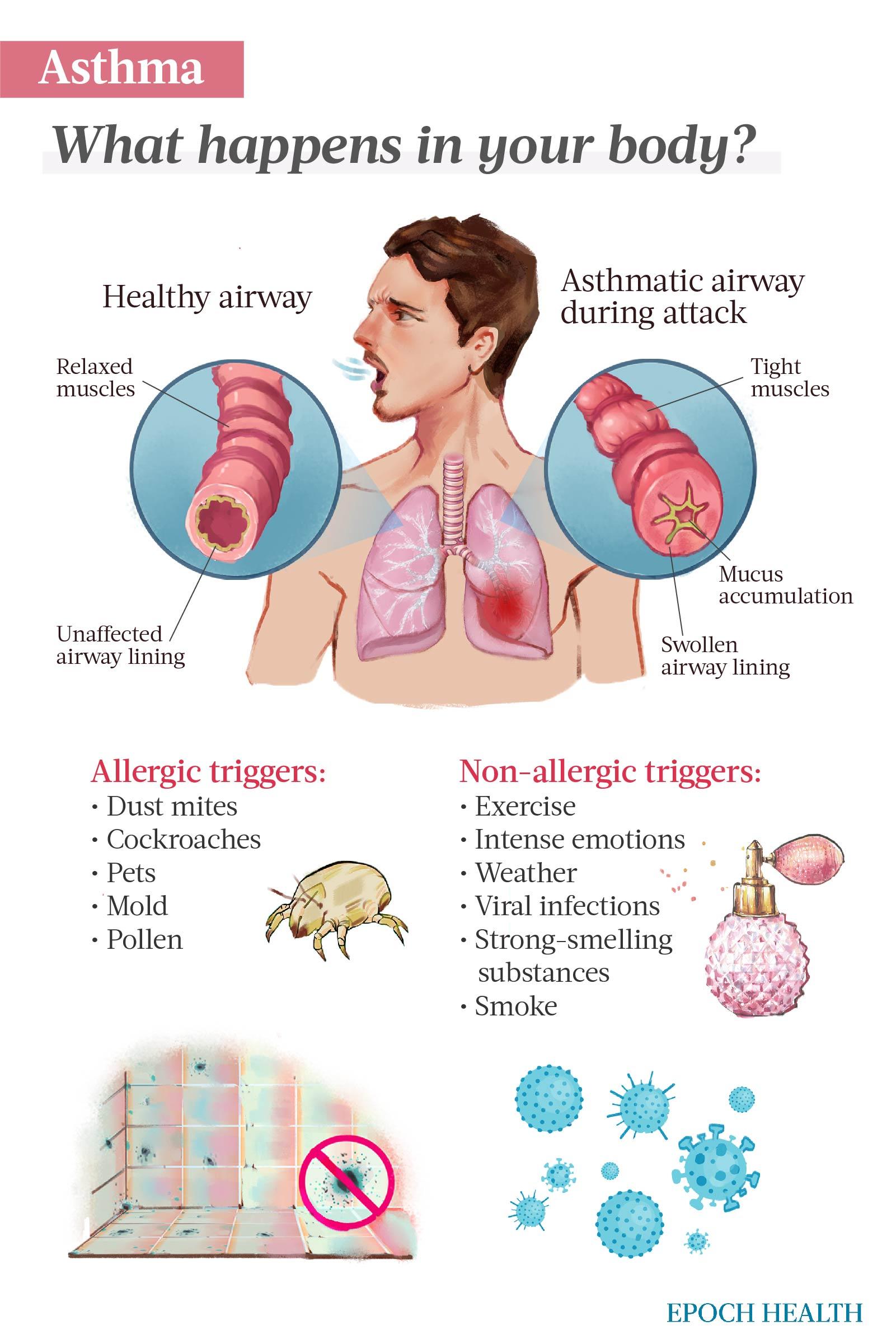
Exposure to triggers can lead to an asthma attack, characterized by tightened muscles around the airways, swelling of the airway lining, and difficulty breathing. Illustrations by The Epoch Times, Shutterstock
What Are the Types of Asthma?
Based on the triggers and age of onset, there are several types of asthma, including:
- Allergic asthma: Allergic asthma, also known as atopic asthma, is asthma that is triggered by allergens such as mold, pollen, pets, cockroaches, and dust mites. These inflammatory triggers initiate an allergic reaction and can lead to inflammation of the lung airways or contraction of the airway muscles. Approximately 80 percent of individuals with asthma also experience allergies. Allergic asthma may be exacerbated by elements that induce non-allergic asthma, including viral respiratory infections, physical activity, and changing weather conditions.
- Non-allergic asthma: Non-allergic asthma is induced by factors that are not allergens. Also known as symptom triggers, they typically don’t induce swelling, but can activate sensitive airways, especially if inflammation is already present. Examples include exercise, intense emotions, weather, viral infections, smoke and other air pollutants, chemical fumes, and strong-smelling substances.
- Seasonal asthma: Some individuals experience seasonal asthma triggered by factors such as hay fever or cold weather. Despite asthma typically being a long-term condition, periods of being symptom-free are possible when specific triggers are not present.
- Childhood asthma: There are almost 4.7 million children with asthma in the United States. Approximately 66 percent of asthma cases are diagnosed in children, and nearly 50 percent of children with asthma experience decreased symptom severity or the disappearance of symptoms during early adulthood. Nonetheless, there is a possibility of it resurfacing later in life.
- Adult-onset asthma: Adult-onset asthma can manifest without prior signs, with individuals sometimes successfully avoiding triggers for years. Exposure to triggers in adulthood or viral infections can unveil asthma symptoms in such cases.
- Occupational asthma: Occupational asthma is directly linked to one’s job, especially if asthma symptoms begin in adulthood and improve on non-working days. Approximately 11 million U.S. workers across various industries are exposed to substances known to cause or worsen occupational asthma.
- Exercise-induced bronchoconstriction: Exercise-induced bronchoconstriction (EIB), a type of non-allergic asthma, is the updated term for what was previously referred to as exercise-induced asthma. Symptoms occur when airways narrow during physical activity. While up to 90 percent of individuals with asthma also experience EIB, not everyone with EIB has asthma. EIB is also observed in many professional athletes.
- Difficult asthma: Approximately 17 percent of individuals with asthma have difficult-to-control asthma. Difficult asthma is characterized by experiencing symptoms three or more times a week, or waking up at night due to asthma one or more times a week. Roughly 4 percent of individuals with asthma experience severe asthma, which is a subtype of difficult asthma resistant to typical treatments.
- Asthma-COPD overlap syndrome: Chronic obstructive pulmonary disease (COPD) encompasses various lung conditions resulting in breathing difficulties and airflow obstruction, including severe asthma, emphysema, and chronic bronchitis. Asthma-COPD overlap syndrome occurs when an individual has asthma and COPD simultaneously, which is serious and potentially life-threatening.
Who Is at Risk of Asthma?
Those who are more likely to develop asthma include:
- Boys: Boys are more likely to have asthma in childhood, with a male-to-female ratio of two to one. At puberty, the asthma gender ratio becomes one to one.
- Women: Beyond puberty, asthma is more prevalent in females. Instances of adult-onset asthma after the age of 40 are primarily found in women, which may be attributed to hormonal changes.
- People with a family history of asthma: People are three times more likely to develop asthma if one of their parents has the condition. In addition, the shared environment in which the entire family lives may contribute to the development of asthma.
- People of certain races or ethnicities: African Americans and Puerto Ricans face a higher risk of asthma compared to people of other racial or ethnic backgrounds.
- People living in developed countries: Approximately 15 to 20 percent of individuals in developed nations are suffering from asthma, while the condition affects 2 to 4 percent of the population in developing countries.
- Children with certain medical conditions: Children with allergic rhinitis or eczema are at an increased risk of developing asthma. Additionally, those with a food allergy are reported to be four times more likely to have asthma compared to children without a food allergy. Children with a history of bronchiolitis or croup may also be more at risk of developing asthma.
- Premature babies: Premature birth before 37 weeks of gestation increases the risk of asthma, especially if the baby requires a ventilator after birth. Additionally, low birth weight, which is common among premature infants, is another factor associated with an increased risk of asthma.
- People having occupational exposures: In the workplace, over 300 substances have the potential to induce asthma, including dust particles, chemical fumes, and vapors.
- People with obesity: Excess weight around the chest area can compress the lungs, making inhalation more challenging. In addition, fat tissue produces inflammatory substances that may impact the lungs and influence asthma.
- Those with low vitamin levels: There is a connection between low vitamin D levels and children experiencing wheezing, allergic rhinitis, and asthma. Asthma has also been linked to diets that are deficient in vitamins C and E, as well as omega-3 fatty acids.
- Children not exposed to bacteria: The hygiene hypothesis proposes that overly clean household environments reduce exposure to bacteria, preventing the immune system from properly developing, and potentially contributing to the onset of asthma.
- People exposed to smoke: Both smoking during pregnancy and exposing a child to smoke significantly raise the risk of the child developing asthma or respiratory issues. Smoking is also a contributing factor to the onset of asthma in adults.
How Is Asthma Diagnosed?
Your doctor will use a combination of medical history, physical examination, and lab tests to diagnose asthma. These tests include:
Lung Function Tests
Lung function tests, also known as pulmonary function tests, assess the effectiveness of your lungs and their overall functionality. The ones typically used for asthma diagnosis are:- Spirometry, which involves blowing hard into a tube connected to a small device, evaluates the volume and speed of air exhaled from your lungs. Peak expiratory flow (PEF) tests measure the speed of exhalation with the maximum effort and can be done with a spirometer. In respiratory flare-ups such as asthma, the larger airways in your lungs gradually narrow, reducing the speed of air leaving your lungs, which can be monitored using a peak flow monitoring test. This measurement is crucial for assessing the level of asthma control.
- Lung volume test, also known as body plethysmography, is the most accurate method for determining the total air capacity of your lungs. It can also measure the residual air in your lungs after exhaling as much as possible.
- Exercise tests, such as the six-minute walk test and cardiopulmonary exercise test (CPET), assess lung function during physical activity.
Other Tests
- Fractional exhaled nitric oxide (FeNO) tests measure the amount of nitric oxide in your breath. Elevated nitric oxide levels may indicate inflammation in the airways of your lungs, potentially causing breathing difficulties. This test can be helpful when the diagnosis of asthma is unclear.
- Chest X-rays involve using electromagnetic energy to create images of internal tissues, bones, and organs on film, serving as a diagnostic test.
- Allergy tests are performed if you have a history of allergies to identify specific allergens that trigger immune system reactions.
- Arterial blood gas tests are typically performed in individuals experiencing a severe asthma attack. This blood test includes the person’s oxygen level and, importantly, how well they are releasing carbon dioxide.
What Are the Complications of Asthma?
The complications of asthma include:
- Permanent lung function changes: Especially without proper treatment, changes take place in the airways, including thickening of the basement membrane, which is below the airway’s thin muscle layer, along with enlargement of smooth muscle, and a buildup of collagen that makes the airway less flexible and more narrow at the baseline. The disruption of the epithelial lining of the airways impairs the normal clearance of mucus and normal local immune function.
- Gastroesophageal reflux disease (GERD): Increased pressure on the abdomen from the work of breathing or coughing can cause stomach contents to move into the esophagus, pharynx, or respiratory tract. Likewise, reflux itself may aggravate asthma for some people. Some asthma medications can also worsen GERD.
- Sinusitis: The tissue lining the sinuses becomes swollen or inflamed, often due to an inflammatory reaction or infection from a virus, bacteria, fungus, or GERD.
- Mental issues, including stress, anxiety, and depression
- Delayed growth in children
- Underperformance at work or school
- Adverse effects, resulting from prolonged use of certain medications for severe asthma management, particularly corticosteroids
- Fatigue
- Poor sleep
- Pneumonia
- Persistent cough
- Death
What Are the Treatments for Asthma?
While there is no cure for asthma, effective treatment and management strategies can help control symptoms. The treatment goals for asthma include controlling airway swelling, minimizing exposure to triggering substances, and enabling individuals to engage in normal activities without experiencing asthma symptoms.
Your doctor will collaborate with you to develop a treatment plan known as an asthma action plan. It should include instructions for taking medicines during stable conditions and a list of asthma triggers and ways to avoid them, along with guidance on recognizing worsening symptoms, what actions to take, and when to contact a health care provider.
Components of successful treatment may include:
1. Ongoing Monitoring
Objective measures of lung function, such as spirometry and peak expiratory flow rate, are employed to assess the severity of asthma and track the progress of treatment.2. Medications
Medications for asthma treatment focus on short-term relief, maintenance, or control, along with allergy prevention.Quick-Relief Medicines
Also known as short-term relief medicines or rescue medicines, they are taken to address symptoms such as coughing, wheezing, and difficulty breathing, particularly during an asthma attack. They may also be used just before physical activity to prevent asthma symptoms. These medicines include:- Short-acting beta2-agonists (SABAs): Beta2-agonists, a type of bronchodilator, are prescribed for asthma treatment. SABAs, such as albuterol and levalbuterol, are administered through inhalation to help expand the airways, allowing for improved airflow during an asthma attack. Their possible side effects may include tremors and a rapid heartbeat. These rescue inhalers should be used no more than twice a week for shortness of breath, and overuse indicates poorly controlled asthma, which can be life-threatening.
- Oral corticosteroids: These steroid hormone medicines are used for severe asthma attacks to reduce swelling in the airways.
- Short-acting anticholinergics: These medicines, such as ipratropium, can rapidly widen the airways and are often used in combination with SABAs like albuterol. While potentially less effective than SABAs, they can be an alternative for individuals experiencing side effects from SABAs.
Control Medicines
Also known as maintenance medicines, they are taken to prevent symptoms in individuals with moderate to severe asthma. It is crucial to take them daily, even when feeling well, to be effective. These medicines include:- Corticosteroids: Taken in pill or inhaled form, these medicines can reduce inflammation in the body. Higher doses in pill form can result in a higher risk of cataracts and osteoporosis. Side effects of the inhaled form include a hoarse voice and thrush, a type of mouth infection. This is minimized by rinsing the mouth after each spray.
- Biologics: They are prescribed for severe asthma and can be injected just under the skin. One example is benralizumab.
- Leukotriene modifiers: These tablets can reduce swelling and keep airways open.
- Inhaled mast cell stabilizers: They can prevent swelling in airways triggered by allergens. One example is cromolyn.
- Inhaled long-acting bronchodilators: Examples include long-acting beta2-agonists (LABAs).
- Combination therapies: Combination therapies involve the use of both inhaled steroids and long-acting bronchodilators.
Allergy Medications
Allergy medication may be suggested to treat symptoms of allergic asthma.- Subcutaneous immunotherapy: Allergy shots, a highly effective form of allergy immunotherapy, involve injecting a very small amount of allergen extract into the skin of the arm, every one to four weeks, to reduce the body’s response to allergens.
- Sublingual immunotherapy: This method involves dissolving a tablet under the tongue daily, months before allergy season. This is currently restricted to a few allergens such as certain grass and ragweed pollen, and it is not recommended for severe or uncontrolled asthma. However, this method shows promise as a future therapy.
3. Bronchial Thermoplasty
Bronchial thermoplasty is an interventional bronchoscopic procedure for treating severe, uncontrolled asthma. It is considered when other treatments prove ineffective. The procedure involves using a bronchoscope with a camera to guide the insertion into the airways, where heat is applied by using a device that sends focused radio-frequency waves to the airways. This process aims to reduce airway narrowing by thinning the muscles, potentially improving asthma symptoms.4. Patient Education
Patient education is a collaborative effort involving the patient, family members, and the doctor. It aims to empower individuals with a deep understanding of their medications, strategies for symptom prevention, early recognition of asthma attacks, and knowing when to seek medical assistance.How Does Mindset Affect Asthma?
Although asthma is a medical condition with physiological components that require appropriate medical treatment, mindset can still influence the condition in several ways:
- Stress management: Emotions such as stress and anxiety can contribute to the exacerbation of asthma symptoms. Managing stress to positively impact asthma control can be achieved through the right mindset.
- Placebo effect: A positive mindset and belief in the effectiveness of treatment can contribute to the placebo effect, where individuals may experience symptom improvement due to psychological factors. According to one study, most people with mild, persistent asthma didn’t show a significant difference in their response to daily maintenance inhalers or a placebo. Research exploring the placebo response in asthma may provide intriguing insights into the present approach to treating and diagnosing asthma.
- Adherence to asthma action plans: A positive mindset and understanding of the importance of adhering to prescribed treatment plans, including taking prescribed medications, can contribute to better asthma management.
- Improved treatment outcomes: Certain mindsets may lead to better treatment experience and outcomes. One study found that oral immunotherapy, which aims to desensitize individuals to food allergens, may cause expected treatment-related allergic reactions, creating anxiety and potentially leading to discontinuation of treatment. However, promoting the mindset that those symptoms are anticipated and indicate desensitization enhances the patients’ treatment experience and outcomes.
- Better lifestyle choices: Mindset can influence lifestyle choices that may impact asthma. For instance, a positive mindset may encourage individuals to engage in regular physical activity, maintain a healthy diet, and avoid known asthma triggers.
What Are the Natural Approaches to Asthma?
Several natural approaches have been used to treat asthma. However, it is important to note that the scientific evidence supporting their efficacy is usually limited, and it is advised that you consult your doctor before adopting any of them.
1. Medicinal Herbs and Herbal Decoctions
One systematic review involving 29 studies with a total of 3,001 participants discovered that the addition of herbal medicines to regular treatments showed better results in managing asthma compared to using medications alone.Several herbs and decoctions in particular have demonstrated their effectiveness in treating asthma, although more research is required.
Ginkgo Biloba
Ginkgolide B, the primary active compound in ginkgo extracts, is recognized as an inhibitor of platelet-activating factor (PAF), which plays a significant role in the development of asthma. Recognized for its anti-inflammatory properties and therapeutic applications, ginkgolide B also demonstrated its effectiveness in inhibiting T-helper 2 cytokines such as interleukin-5 and interleukin-13 in one mouse model, suggesting its potential usefulness in asthma treatment.In another study involving asthma patients treated with a combination of fluticasone (a corticosteroid medicine) and ginkgo extracts, the extracts demonstrated the potential to reduce inflammatory cell infiltration in the airways of asthma patients, which led to relief in airway inflammation. The findings suggested that ginkgo extracts could serve as a supplementary therapy alongside glucocorticosteroids for asthma.
Solanum Xanthocarpum and Solanum Trilobatum
Wild eggs plant (Solanum xanthocarpum) and purple fruited pea egg plant (Solanum trilobatum) have been widely used in Indian traditional medicine to address various medical conditions, including bronchial asthma. In one study, a single 300-milligram dose of either herb showed significant relief from bronchospasm in asthmatic patients, supporting the traditional belief in their efficacy in treating bronchial asthma. This relief may be attributed to bronchodilation, reduction in bronchial mucosal edema, or reduction in airway lumen secretions.Dried Ivy Leaf
As per one review of three studies involving children suffering from chronic bronchial asthma, different preparations containing ivy leaf extracts had beneficial effects on the participants’ respiratory functions. Specifically, the ivy leaf extract drops in one study showed significant improvement compared to the placebo in reducing airway resistance.Wenyang Tonglulo Decoction
One of the main ingredients of the Chinese herbal Wenyang Tonglulo decoction is the herb ephedra (Ephedra sinica), which has been used in traditional Chinese medicine to treat bronchial asthma. In one older study comparing Wenyang Tongluo with the standard treatment using oral salbutamol (albuterol) and beclomethasone dipropionate aerosol, both groups had similar short-term effectiveness after eight weeks of treatment. However, in the long-term follow-up one year after treatment withdrawal, the Wenyang Tonglulo group showed a significantly higher cure rate (26.47 percent) compared to the standard treatment group (5.88 percent).Pingchuan Formula
The Chinese herbal Pingchuan formula, which is composed of herbs such as ephedra, licorice, Zanthoxylum, radish seeds (Raphani semen), and earthworm, has demonstrated effectiveness in controlling asthma attacks by reducing airway inflammation, muscle spasm, and mucus secretion.2. Propolis
Propolis, or “bee glue,” is a natural substance created by bees to protect their hives and fight infections. Enriched with flavonoids, terpenoids, and phenolics, propolis is recognized for its antioxidant, antimicrobial, and anti-cancer properties. When used clinically as a supplement or adjunct therapy, propolis is considered safe and has been shown to alleviate various pathological conditions in asthma. However, it has been noted that the chemical composition of propolis changes with geographical locations, climates, and bee species.In one clinical trial involving adults with moderate asthma, the group receiving propolis experienced significant improvement in asthma control test scores and notable enhancements in forced expiratory volume and expiratory flows, compared to the placebo group. In another study involving mice with asthma, using propolis from a type of stingless bee in the treatment helped reduce the impact of the condition by preventing inflammatory cells from moving to the air sacs and limiting the overall spread of allergic inflammation throughout the body.
3. Breathing Exercises
One study involving almost 200 participants showed that incorporating breathing exercises into standard care enhanced quality of life in cases of incompletely controlled asthma.Papworth Method
The Papworth method, taught by physiotherapists, emphasizes slow and steady diaphragmatic breathing through the nose. According to one study, this method seems to improve respiratory symptoms, dysfunctional breathing, and mood in asthma and dysfunctional breathing patients compared to standard care. The study also recommended further controlled trials for confirmation.Buteyko Method
The Buteyko method focuses on raising awareness of breathing and normalizing ventilation by reducing tidal volume and respiratory rate. Buteyko suggested chronic overbreathing was one factor contributing to the worsening of asthma. Patients are encouraged to breathe through symptoms and use symptomatic control medication only if symptoms persist.In one study involving patients with asthma, the group using the Buteyko method experienced symptom improvement and a small increase in bronchial volume, despite the significant reduction of standard treatment medicines. Another study also provided evidence for the efficacy of the Buteyko breathing technique in enhancing respiratory outcomes and fostering asthma control in school-age children with bronchial asthma.
Deep Diaphragmatic Breathing
In an earlier study involving asthmatic adults, one group received deep diaphragmatic breathing training for 16 weeks, which led to notable decreases in medication use and asthma symptom severity, accompanied by a substantial increase in physical activity time. However, a follow-up at two months revealed some participants had reverted to previous medication levels and sedentary habits.4. Aromatherapy
Some individuals using essential oils may experience worsened asthma symptoms, as these oils contain volatile organic compounds that can act as triggers for asthma attacks. However, a couple of essential oils have anti-inflammatory properties and could have the potential to improve asthma symptoms, including:- Lavender essential oil: Lavender essential oil reduced inflammation and excess mucus production in a mouse model of asthma.
- Bergamot essential oil: In one mouse model, bergamot essential oil successfully reduced inflammation in the airways, lowered inflammatory factors, and decreased asthma-related cytokines.
5. Hypnotherapy
Hypnosis has shown promise in treating asthma by possibly reducing symptom severity, managing emotional states that worsen airway obstruction, and decreasing airway obstruction and hyper-responsiveness. It appears more effective in susceptible individuals, especially when administered over multiple sessions by experienced practitioners, with benefits observed in children in particular. Despite these findings, more extensive randomized controlled studies are required to further establish the efficacy of hypnosis in asthma treatment.6. Soy Isoflavone Supplement
Soy isoflavones are compounds found in soybeans that belong to the family of phytoestrogens, which are plant-based compounds with estrogen-like effects. In a study involving 386 individuals with poorly controlled asthma, the use of soy isoflavones led to a notable decrease in the number of severe asthma exacerbations in participants with a specific genetic makeup linked to high production of plasminogen activator inhibitor 1, which is a factor associated with asthma severity.7. Mindfulness and Meditation
Mindfulness-based stress reduction (MBSR), training designed to lower stress and regulate emotion, has the potential to improve asthma symptoms. In one randomized controlled trial, 32 percent of participants in the MBSR group achieved a clinically significant improvement in asthma control, compared to 12 percent of participants in the control group.A systematic review of four studies involving over 200 asthma patients also suggested that there is limited evidence of the potential benefits of meditation in improving the quality of life for these patients. Further well-designed trials are necessary to confirm or challenge these findings.
8. Yoga
One meta-analysis of 15 research papers examined the use of yoga as a complementary therapy for managing mild to moderate asthma and found a moderate level of evidence supporting its use. In another meta-analysis involving 15 studies with a total of over 1,000 participants, the researchers discovered moderate-quality evidence suggesting that yoga likely results in slight improvement in the asthma patients’ quality of life and symptoms, as well as a reduction in medication usage. Furthermore, there is substantial evidence indicating that yoga can alleviate stress, which can be a trigger for some asthma patients.How Can I Prevent Asthma?
Although asthma cannot be prevented, you can follow your asthma action plan to effectively manage your condition and minimize the risk of asthma attacks.
You should:
- Identify your triggers and minimize exposure to them.
- Adhere to your prescribed allergy and asthma medications.
- Monitor your breathing regularly with a home peak flow meter to detect signs of impending attacks.
- Use your quick-acting medicine at the onset of symptoms.
- Pay attention to an increasing reliance on quick-relief inhalers, as it may indicate inadequate asthma control.
- Keep your home environment clean and completely smoke-free.
- Manage stress with relaxation and breathing techniques.
- Maintain a healthy lifestyle, with regular exercise, a diet rich in fruit and vegetables, and good-quality sleep.