
9 Signs of Kidney Disease
Over 35 million adults in the United States, accounting for 14 percent, are affected by chronic kidney disease (CKD). However, over 90 percent of people with mild kidney disease are unaware of their condition, even when more than half of kidney function is lost. The kidneys play a crucial role in detoxifying the body, so how can one identify potential kidney problems? If you experience the following symptoms, special attention is warranted:- Fatigue: Fatigue includes tiredness, weakness, and a loss of appetite.
- Edema: Edema means swelling commonly observed in areas such as eyelids and ankles, possibly accompanied by increased body weight.
- High blood pressure: Kidney damage can lead to hypertension. Patients with kidney disease should regularly monitor their blood pressure.
- Anemia: Reduced secretion of erythropoietin (EPO) by the kidneys can result in anemia.
- Decrease in urine output: Oliguria is defined as daily urine output of less than 13.5 ounces (400 millimeters), while anuria is defined as less than 3.4 ounces (100 millimeters). These conditions indicate that the kidneys cannot effectively excrete metabolic waste, disrupting the internal balance.
- Blood in urine: The presence of red or blood-tinged urine—hematuria—is an early sign of kidney disease. Timely medical attention is necessary to identify the cause and take appropriate measures.
- Foamy urine: Increased foaming in the urine, or proteinuria, may indicate a large amount of protein, serving as a warning sign of abnormal kidney function. If bubbles persist for 10 minutes and there is viscous material after flushing the toilet, it may indicate proteinuria.
- Itchy skin: In the advanced stages of kidney disease, the inability to eliminate uremic toxins can lead to itchy or darkening skin.
- Shortness of breath: Patients in the advanced stages of kidney disease may experience symptoms such as pulmonary edema and arrhythmia, resulting in shortness of breath.
Primary Functions of the Kidneys
The kidneys are vital detoxification organs, with the fundamental functional units being nephrons. Each kidney comprises approximately 1 million nephrons, further divided into renal corpuscles and renal tubules. The following are the functions of the kidneys:- Blood filtration: Normally, blood enters the renal corpuscles for filtration. Subsequently, the filtered blood moves to the renal tubules, where reabsorption occurs (reclaiming essential components such as water and glucose) and secretion occurs (releasing waste products from the bloodstream into the renal tubules). The remaining liquid becomes urine, which is then expelled from the body.
- Regulation of blood pressure, electrolytes, and acid–base balance: The kidneys also play a crucial role in regulating blood pressure, electrolyte balance, and the acid–base balance of the blood, as well as managing the body’s internal fluid levels. Daily, the kidneys can filter approximately 47.5 to 52.8 gallons (180 to 200 liters) of liquid, with the majority being reabsorbed. Only 33.8 to 67.6 fluid ounces (1 to 2 liters) are left to form urine, which is expelled.
- Secretion of active vitamin D and hormones: The kidneys also secrete an active form of vitamin D to help maintain calcium balance in the bones. Additionally, they produce EPO, a hormone that stimulates the bone marrow to produce red blood cells.
Why Is Early-Stage Kidney Damage Difficult to Detect?
Chronic kidney disease results when the kidneys sustain damage for over three months, resulting in an inability to restore normal structure or function. However, discerning the early stages of kidney damage is often challenging. This is mainly because nearly every organ possesses a “safety margin,” also called “reserve capacity.”For example, the liver must only maintain 25 percent to 30 percent functionality to operate normally. This means that as long as liver damage stays below 70 percent, an individual may live a full life until reaching a natural lifespan.
The lungs, too, function adequately at just 50 percent capacity. Patients who undergo lung surgery and have half of their lungs removed can still lead healthy lives.
Stages of Kidney Disease
In medicine, kidney function is assessed using the glomerular filtration rate (GFR), which measures the amount of filtration by both kidneys in a given unit of time. The normal GFR range is 100 to 120 ml/min/1.73m². Based on severity, kidney disease is categorized into the following five stages:- Stage 1 (GFR >90): Kidney function is normal but may be accompanied by proteinuria, hematuria, etc.
- Stage 2 (GFR 60 to 90): This is mild chronic kidney damage, potentially accompanied by proteinuria, hematuria, etc. Kidney function is typically above 60 percent of that of normal people. It is necessary to monitor kidney function, especially for those with diabetes and hypertension, and regular checks every six months are recommended.
- Stage 3 (GFR 30 to 60): This indicates moderate chronic kidney damage.
- Stage 4 (GFR 15 to 30): This is severe chronic kidney damage. Kidney function is around 15 percent to 60 percent that of normal people. Aggressive treatment is needed to slow down deterioration.
- Stage 5 (GFR <15): Stage 5 is end-stage kidney disease. Kidney function drops to approximately 15 percent or below that of normal people. Dialysis or kidney transplantation becomes necessary at this stage.
Dietary Guidelines for Each Stage of Kidney Disease
The following are dietary guidelines dependent on the severity of kidney disease:- Stages 1 and 2: If your kidney function is above 60 percent, follow a diabetes-friendly diet.
- Stages 3, 4, and 5: If your kidney function is below 59 percent, follow a diet that limits phosphorus, potassium, and protein intake. Foods to avoid are bananas, kiwi, starfruit, bread, cake, nuts, legumes, milk, whole grains, sports drinks, organ meats, and hot pot broths.
- People on dialysis: Limit phosphorus and potassium intake while maintaining normal protein intake.
7 Major Factors in Kidney Damage
When the kidneys cannot maintain adequate functionality due to diseases or damage, waste, toxins, and excess fluids can accumulate in the bloodstream. This gradual decline in kidney function ultimately leads to the need for dialysis. The following factors can harm your kidneys:- Diabetes: Diabetes is a primary cause of end-stage kidney disease globally. Poor blood sugar control can lead to diabetic nephropathy, ultimately progressing to the need for dialysis.
- Hypertension: Damaged small blood vessels in the kidneys impair the ability to filter toxins from the blood.
- Kidney diseases: Some kidney diseases include chronic nephritis (glomerulonephritis), kidney stones, and polycystic kidney disease. If untreated, kidney stones can lead to kidney swelling over time. Polycystic kidney disease, a genetic disorder, puts more than half of affected individuals at risk of requiring dialysis after age 60.
- Gout: Elevated blood uric acid, often associated with gout, can lead to the deposition of uric acid crystals in the joints, causing inflammation. When these crystals deposit in the kidneys, they can harm the organs.
- Overusing pharmaceuticals: The misuse of medications with kidney toxicity, particularly nonsteroidal anti-inflammatory drugs (NSAIDs), can damage the kidneys. Excessive use of NSAIDs by people with diabetes or kidney disease can accelerate kidney deterioration.
- Excessive dietary phosphorus intake: While phosphorus is a legal food additive, an excess intake can disrupt hormone regulation of phosphorus, calcium, and vitamin D. This disruption can lead to disturbed mineral metabolism, vascular calcification, and damage to the renal tubules, impairing kidney function.
- Exposure to heavy metals and toxic chemicals: Exposure to toxic heavy metals, such as cadmium, mercury, and lead, can harm the kidneys, as these substances tend to accumulate in the organs and are not easily eliminated through urine.
Toxins and Heavy Metals
Tobacco contains heavy metals like cadmium and lead, which can harm the renal tubules. Nicotine, with its vasoconstrictive properties, raises blood pressure and impairs blood flow to the kidneys, thus reducing renal blood flow and glomerular filtration rate. Studies have indicated that individuals who both smoke and engage in heavy alcohol consumption face a fivefold risk of developing chronic kidney disease compared to the general population.Melamine, widely used in heat-resistant plastic products and kitchenware, is toxic to the kidneys. Although most of it can be excreted through urine after entering the body, melamine can damage renal tubules, increasing the risk of stone formation and early kidney damage, and may even lead to kidney failure. Therefore, using melamine tableware to serve hot food is not recommended.

3 Categories of Kidney-Friendly Foods
The following types of foods promote kidney health:- Healthy fats: Good fats can contribute to the repair of glomeruli in the kidneys. Examples include fish oil, olive oil, and camellia oil. When supplementing with fish oil, choosing small fish, such as sardines, is advisable. This is because larger fish may contain heavy metals, which could harm kidney health.
- High-quality proteins: Foods rich in quality proteins include fish (seafood), meat (pork, chicken), eggs, dairy, and legumes (tofu, soy milk).
- Low-protein, high dietary fiber: A diet high in dietary fiber can reduce the risk of diabetes and aid in the elimination of fat-soluble toxins from the body.
3 Detoxification Methods for Chronic Kidney Disease
The following methods will help you detox and fight kidney disease:- Hydration: It is recommended to drink plenty of water, ideally around 3 percent to 4 percent of your body weight. For a person weighing 132 pounds (60 kilograms), daily water intake should range from 61 to 81 fluid ounces (1,800 to 2,400 milliliters). Research has shown that increased water intake may protect kidneys in individuals with CKD or those at risk. Adequate hydration helps prevent kidney stones and can slow the growth of kidney cysts in individuals with polycystic kidney disease.
- Exercise and sweating: Engaging in physical activity that induces sweating helps eliminate toxins through the skin.
- Intestinal detoxification: This can be achieved by using activated charcoal and incorporating dietary measures such as increasing dietary fiber and consuming probiotics.
4 TCM Methods for Kidney Nourishment
TCM addresses kidney health with the following four methods.1. Swallow Saliva
Saliva has been regarded as the “golden fluid and jade liquid” since ancient times. In the context of bodily fluids, saliva is associated with the kidneys. Swallowing saliva is believed to nourish the kidney essence—essential substances and energy stored in the kidneys.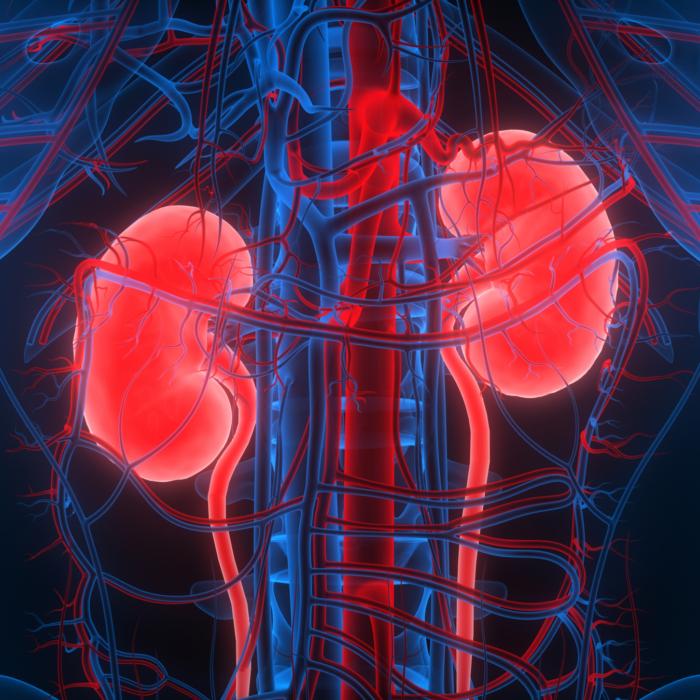
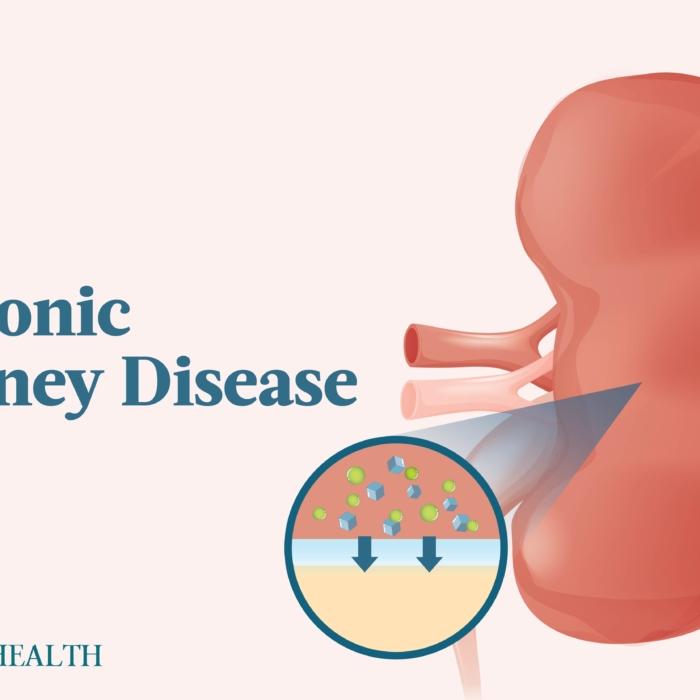
Here are two simple methods for saliva nourishment:
Sit on the bed in the morning and press your tongue against the roof of your mouth for a few minutes. Once your mouth is filled with saliva, perform the rinsing motion and then slowly swallow the saliva.

2. Practice the Abdominal Breathing Method
In TCM, it is believed that the kidneys govern the assimilation of qi. This refers to the kidneys’ role in absorbing the natural and clear qi taken in by the lungs. They also help maintain the depth of inhalation and prevent shallow breathing.According to the organ theory in TCM, the kidneys are not merely anatomical organs but also the focal point of an energy system. The energy of the kidneys flows through a meridian within the body known as the “Zu Shao Yin Shen Jing,” or the kidney meridian.
The kidney meridian travels straight from the kidneys, passing through the liver and diaphragm muscles, entering the lungs, running along the throat, and reaching both sides of the base of the tongue. Therefore, practicing the abdominal breathing method facilitates the descent of lung qi from top to bottom, nourishing kidney qi. This aligns with the Five Elements theory in TCM that associates the lungs (metal) with the kidneys (water) generation.
In Chinese philosophy, the Five Elements theory posits that both the human body and elements in nature possess characteristics of “metal, wood, water, fire, and earth,” with interaction of generation and control between one another. According to TCM’s observation and understanding of the characteristics of the Five Elements, each organ is associated with a specific element: the heart with fire, lungs with metal, liver with wood, spleen with earth, and kidneys with water.
- Step 1: Breathe deeply and slowly.
- Step 2: Inhale through the nose and exhale through the mouth.
- Step 3: Maintain a breathing cycle of approximately 15 seconds: Inhale deeply (expand the abdomen) for three to five seconds, hold for one second; then exhale slowly (contract the abdomen) for three to five seconds, and hold for one second.
- Step 4: Practice for five to 15 minutes per session, slowly progressing to 30 minutes.
- Step 5: For healthy individuals, extend the breath-holding time and try to slow down and deepen the breathing rhythm. Breath-holding may be omitted for those with health concerns, but ensure complete inhalation and exhalation. Practice once or twice daily. If there is saliva secretion during the breathing process, slowly swallow it to nourish the kidney essence.
3. Press the Yongquan Acupoint
The Yongquan acupoint (KI1) on the sole of the foot is a crucial acupoint along the kidney meridian. Regular massage of this acupoint can nourish kidney qi and enhance kidney function.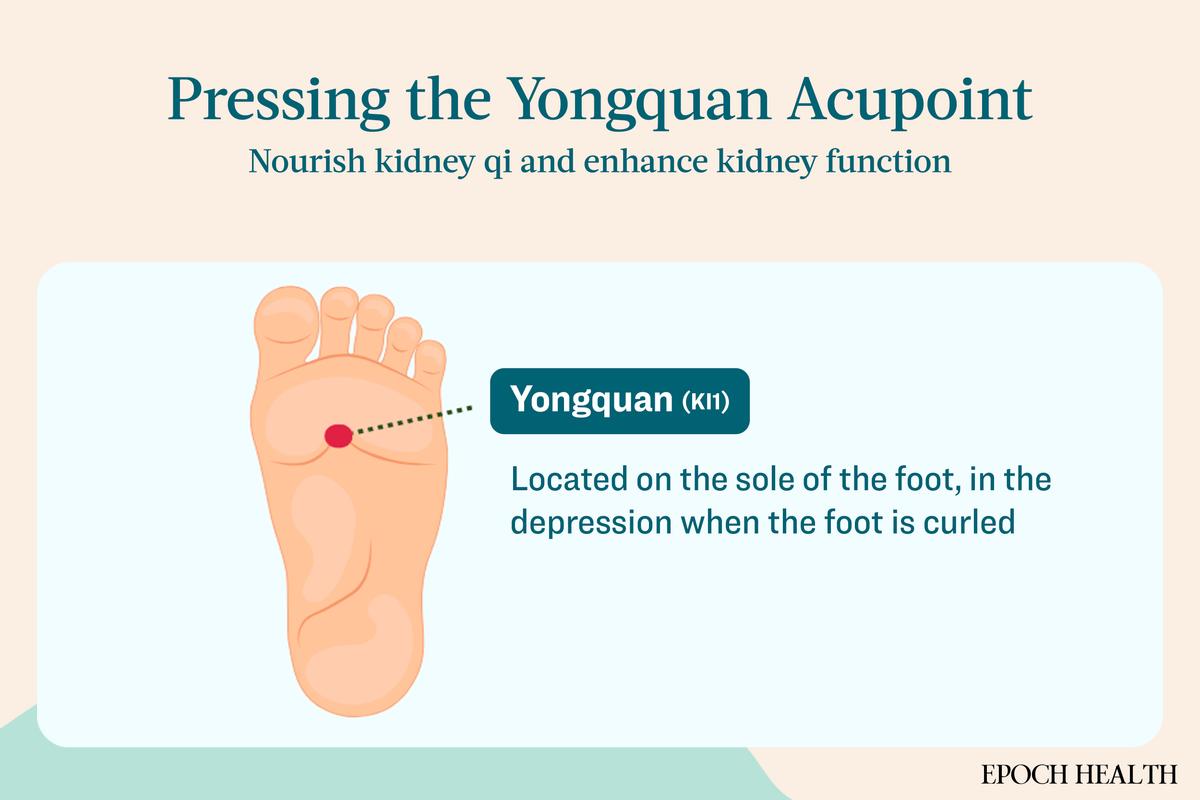
4. Press the Shenshu Acupoint
The Shenshu acupoint (BL 23) is located in the spinal area, below the spinous process of the second lumbar vertebra, approximately 1.5 inches bilaterally from the midline (about the width of two fingers when held together).- Tinnitus.
- Deafness.
- Lower back pain.
- Cold feet.
- Nighttime incontinence.
- Frequent urination.
- Nocturia.
- Impotence.
- Premature ejaculation.
- Irregular menstruation.
- Abnormal vaginal discharge.
- Infertility.