Scoliosis is a common condition that poses various health risks, including a higher likelihood of spinal pain, chronic pain, and reduced cardiopulmonary function. It not only affects the physical quality of life but may also lead to psychological issues such as a low sense of self-worth and self-esteem.
What Is Scoliosis?
Medically, scoliosis is diagnosed when the spine curves outward by more than 10 degrees. While it can affect individuals of any age, it typically begins between the ages of 10 and 15. The prevalence of scoliosis is considerable. As people age, the likelihood of developing scoliosis increases due to the onset of various degenerative spinal conditions.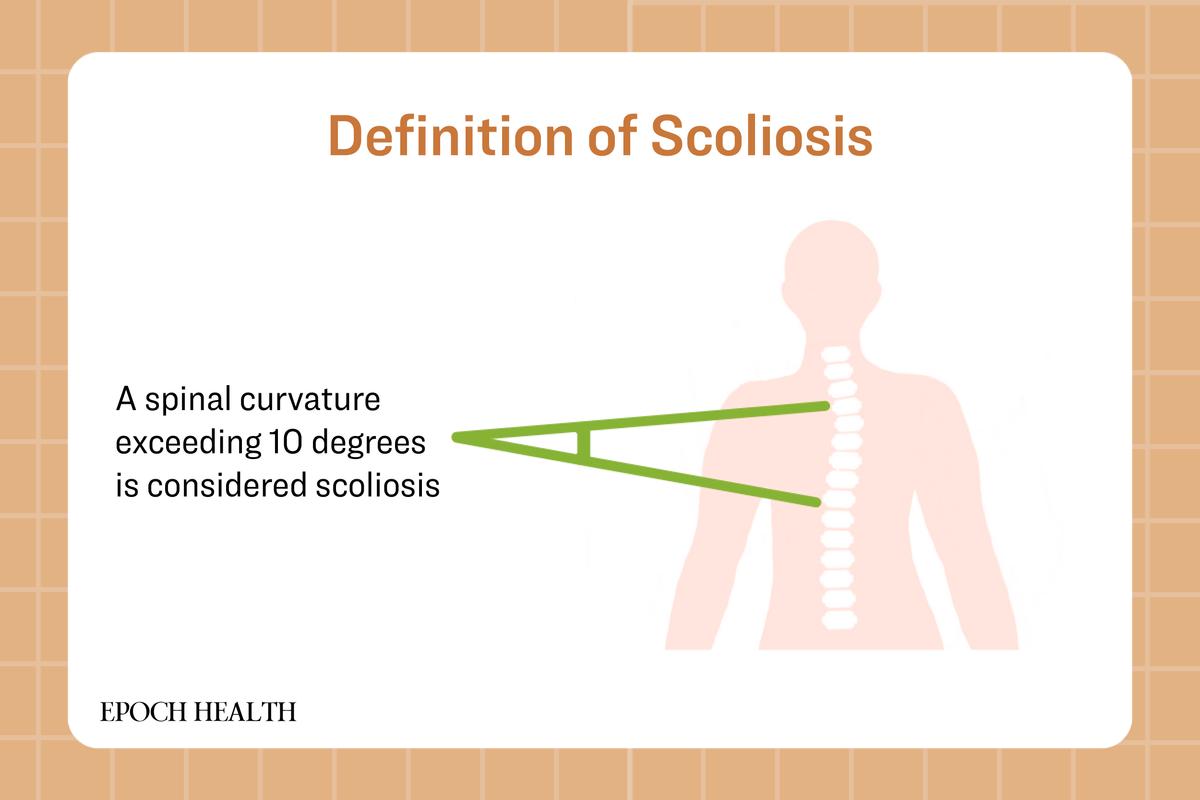
Classification and Causes of Scoliosis
Scoliosis can be classified into two main types: structural and non-structural (functional) scoliosis. The key difference between these types is that structural scoliosis is accompanied by spinal rotation, while non-structural (functional) scoliosis typically does not involve vertebral rotation. Most health-affecting scoliosis cases are structural, and the greater the curvature angle, the broader the impact.Non-Structural Scoliosis
Non-structural scoliosis, also known as functional scoliosis, mainly occurs due to posture imbalance caused by various factors. This type of curvature typically does not involve vertebral rotation and disappears when the body bends forward or lies flat, making it temporary. Straightening the spine is possible by addressing the underlying causes of body imbalance. Such temporary curvatures often occur when the body tilts to one side to avoid pain, such as in cases of acute disc herniation causing severe pain, other inflammatory issues, or leg length discrepancies.Structural Scoliosis
Structural scoliosis not only involves spinal curvature but also vertebral rotation. This three-dimensional vertebral deformity is permanent—even with appropriate treatment, the curvature will not completely straighten. Moreover, once the degree of curvature reaches a certain point, the scoliosis will continue to worsen over time.1. Congenital Scoliosis
The occurrence rate of congenital scoliosis is approximately one in ten thousand and occurs during embryonic development. Due to incomplete spinal development in the womb, some vertebrae do not form completely during the growth process.2. Neuromuscular Scoliosis
Neuromuscular scoliosis primarily results from pathological changes in the brain, spinal cord, and muscles, leading to an inability to maintain balance and posture. Severe cases may result in the inability to perform daily activities independently. This type of scoliosis tends to be more severe and progressive, posing greater health risks and higher mortality rates.3. Degenerative Scoliosis
A study focused on elderly patients with an average age of 70.5, found that 68% had scoliosis, indicating a high occurrence of scoliosis was observed among healthy seniors.4. Syndromic Scoliosis
Syndromic scoliosis is mainly associated with systemic diseases, which may be genetic or non-genetic. Conditions that can cause scoliosis include Marfan syndrome, Ehlers-Danlos syndrome, Beale’s syndrome, Down syndrome, Prada-Willi syndrome, Retts syndrome, and neurofibromatosis.5. Idiopathic Scoliosis
Idiopathic scoliosis is characterized by spinal curvature without any abnormalities in the bone structure and no apparent pathological changes in the nerves or muscles. This type of scoliosis typically does not cause pain. However, the degree of curvature tends to worsen rapidly during the adolescent growth spurt and is the most common type of scoliosis, accounting for approximately 80 percent of scoliosis cases.3 Major Types of Scoliosis Curvature
Scoliosis can be classified based on the shape of the curve: C-shaped and S-shaped. When viewed from the direction of the curve, a curve that protrudes to the right is called dextroscoliosis, and a curve that protrudes to the left is called levoscoliosis.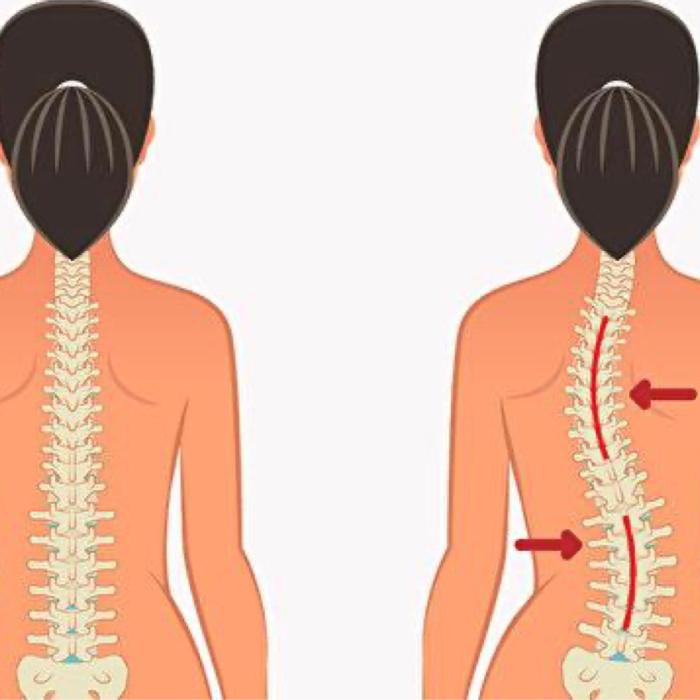
Additionally, scoliosis can be categorized into three types based on the location of the curve:
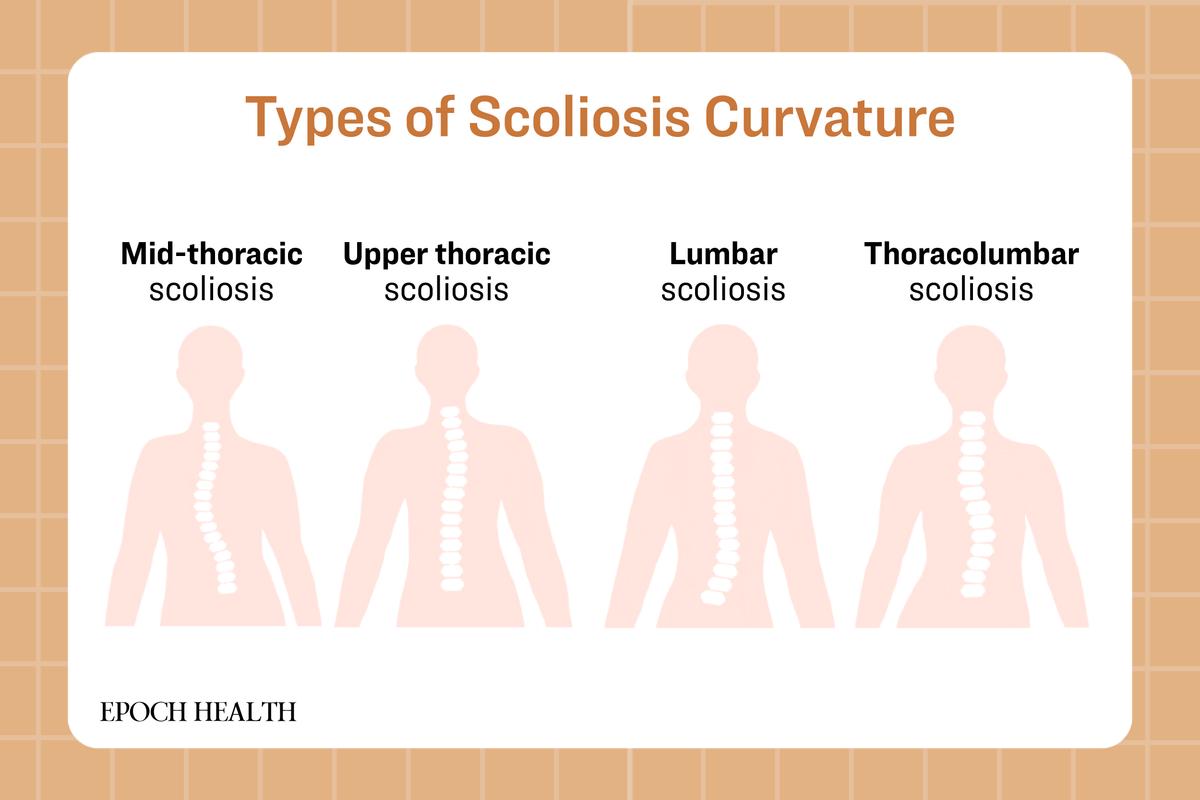
1. Thoracic scoliosis
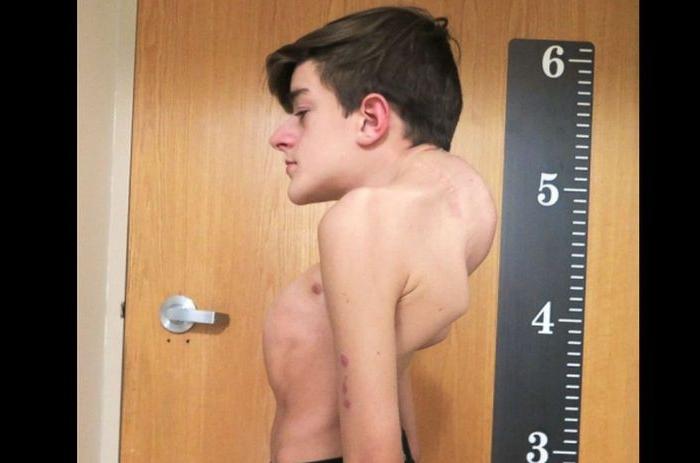
a. Mid-thoracic scoliosisThis is the most common location for scoliosis, with the thoracic spine curving to the right in most cases. When the middle thoracic spine curves, it is often accompanied by a rotation of the ribs, resulting in deformities in the chest from both the front and back. As a result, in addition to a hump appearing on the back, there may also be asymmetry in the size of the chest.
2. Lumbar Scoliosis
Most cases of lumbar scoliosis tend to curve to the left and are often accompanied by thoracic scoliosis. The apex of the curvature typically occurs between the first and third lumbar vertebrae. This type of scoliosis often results in pelvic tilt and offset, leading to potential leg length discrepancies.3. Thoracolumbar Scoliosis
In this type of scoliosis, the apex of the curvature is typically found between the lower thoracic vertebrae and the upper lumbar vertebrae, and it can occur on either the left or right side. The pelvis tilts noticeably toward the concave side of the curve, resulting in a significant height difference between the two sides of the pelvis. In terms of posture, this leads to a visibly indented waistline on one side and a greater lateral deviation between the body and the pelvis.In the next article, we will introduce methods for treating and preventing scoliosis. Stay tuned.