Rosacea, a common skin condition marked by redness and facial rash, could be associated with greater health risks, including skin cancer.
What Is Rosacea?
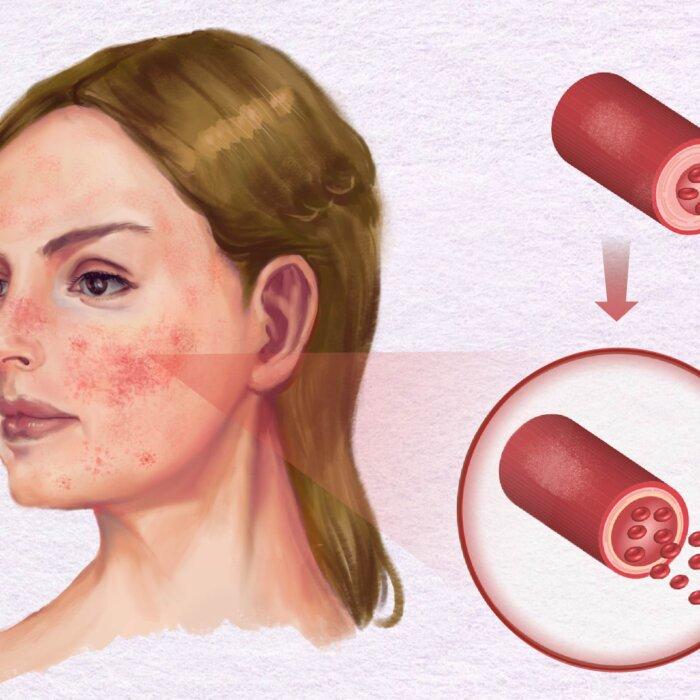
Rosacea is an inflammatory skin disease typically affecting the cheeks, nose, chin, and forehead. It can cause long-term flushing or redness in those areas, but in severe cases, it can enlarge the blood vessels and create small, pus-filled bumps. Symptoms may flare up for weeks to months before going into remission.Rosacea is often mistaken for acne, dermatitis, or other skin conditions. Although there is no cure, health care professionals have identified specific triggers to avoid that can help prevent flare-ups. These include sun or wind exposure, hot drinks, spicy foods, alcohol, extreme temperatures, heavy exercise, stress, harsh cosmetics, and drugs that dilate blood vessels, such as blood pressure medications.
The Rosacea–Cancer Connection
In the retrospective study, researchers analyzed electronic medical records from nearly 22 million patients. Of those, 132,388 had rosacea, and almost 70 percent were women. The average age of the rosacea patients was 55 years.The research team found that patients with rosacea were more likely to be diagnosed with multiple health conditions than patients without it. For example, rosacea patients were twice as likely to be diagnosed with vascular disease and significantly more likely to be diagnosed with heart disease and Type 2 diabetes. Nearly half of the patients with rosacea were also diagnosed with some type of metabolic disease.
The study authors pointed out that past research has suggested that up to 72 percent of rosacea patients suffer from eye conditions, including corneal ulcers. They theorized that the higher number of ophthalmologic diseases in their study sample (fourfold higher than non-rosacea patients) could be explained by the high prevalence of ocular rosacea. Joint diseases were also more prevalent among individuals with rosacea.
Of highest concern, approximately 10 percent of the rosacea patients also had skin cancer. People with rosacea were at six times the risk of malignant melanoma than people without it. They also experienced higher mortality rates as a result of melanoma than skin cancer patients who did not have the inflammatory skin disease. The association between rosacea and skin cancer was only found in white populations.
No Cure, Better Treatment Strategies Needed
While there is no cure for rosacea, “these findings underline the importance of interdisciplinary cooperation in the treatment [sic] rosacea,” the research team wrote.Conventional medications, such as gels and creams, are available to help reduce inflammation. Antibiotics or acne medications can also be taken orally to treat the pustules associated with the skin condition. In extreme cases, laser treatment can help improve the look of enlarged or swollen blood vessels while also helping clear redness.