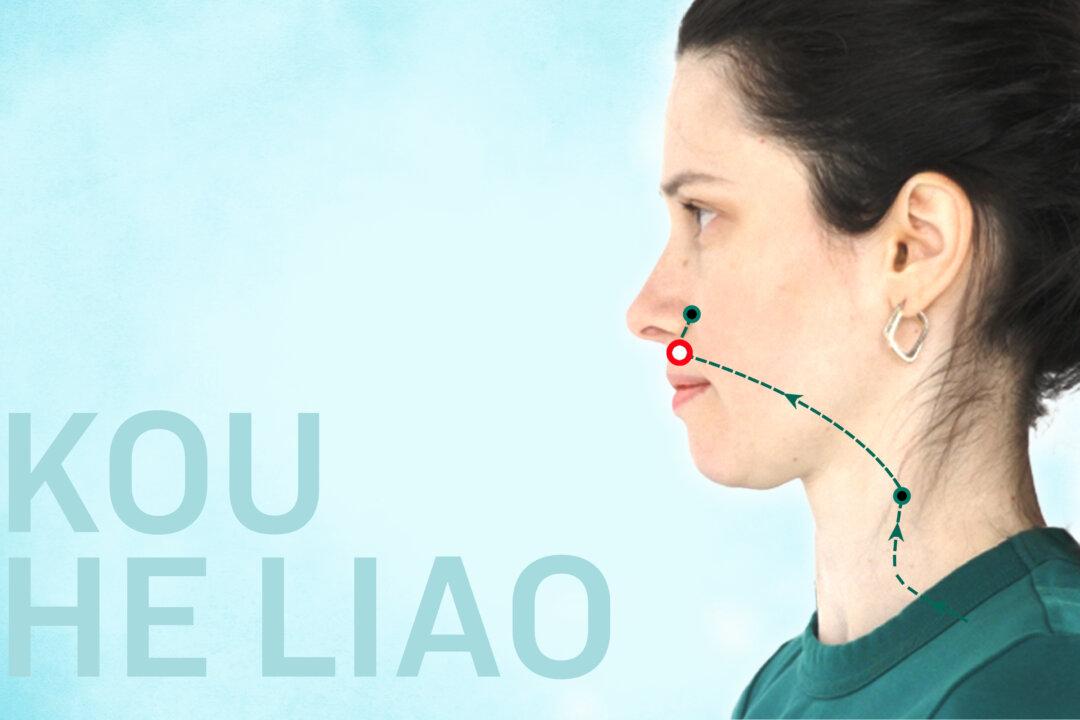
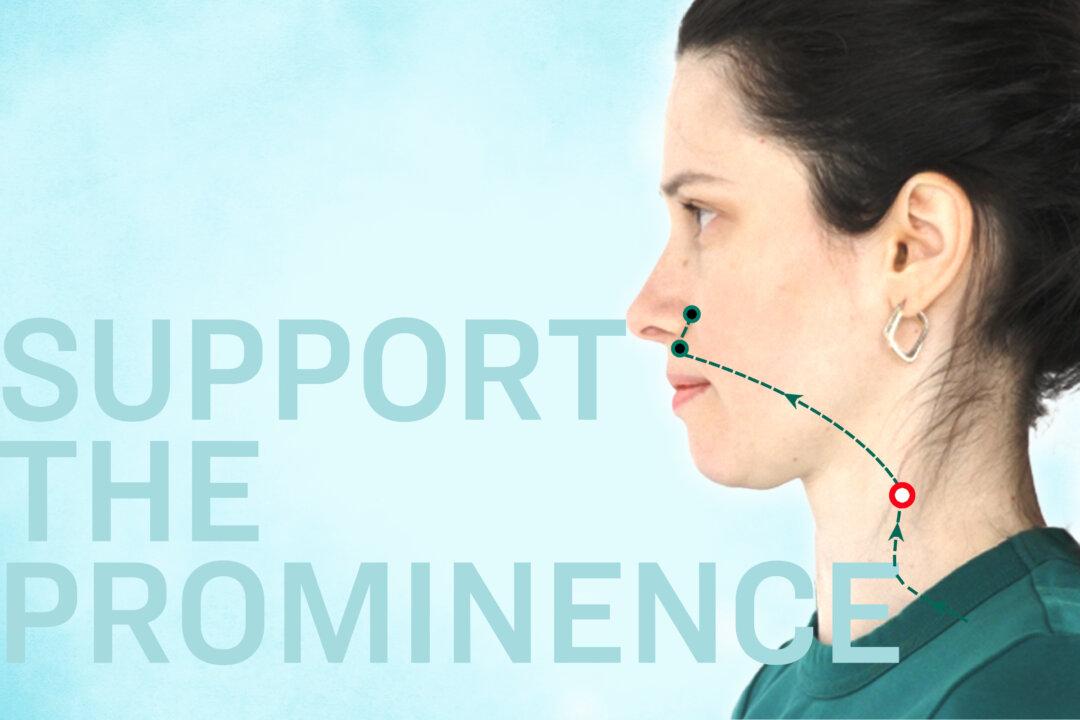
If asked to imagine an older adult, many of us instantly picture someone in glasses. It’s not an unusual association—after all, age-related vision decline is common. But traditional Chinese medicine (TCM) presents a more optimistic perspective that visual deterioration doesn’t have to be inevitable. One acupoint in particular, Four Whites (Si Bai, ST2), might challenge the narrative. Situated just below the eye, this acupoint has been part of TCM eye care for centuries and continues to hold strong clinical value.
An Ancient Acupoint With a Modern Mission
Si Bai was first recorded in “Ling Shu” (“Spiritual Pivot”), one of TCM’s foundational texts. It sits along the Stomach meridian and follows the core TCM idea of treating where the meridian (energy pathways) travels. Located directly under the eye socket, Si Bai is trusted for a range of eye-related issues. It’s also known for clearing pathogenic wind from the area, in TCM terms, which translates to reducing inflammation or irritation.Fun fact: Si Bai is one of the six points taught in guided eye-care routines in public elementary schools across China, where students stimulate these points daily to maintain vision and cultivate self-care habits.
What Si Bai Can Help You With
Si Bai’s functional range spans from mild discomfort to more serious conditions. It’s a go-to for preventing vision deterioration, especially in those who spend long hours on screens or reading, or older adults hoping to delay the need for corrective lenses. Specifically, it’s known to help with myopia and even color blindness. Si Bai can provide significant relief for day-to-day eye issues such as puffiness, redness, or itching.However, more than an eye care tool—thanks to its facial location and nerve access—it also serves as a powerful supporting point in treating facial paralysis and trigeminal neuralgia.
What Research Shows
Modern medicine has begun to take notice of Si Bai. In a recent animal study, researchers used electroacupuncture at the Si Bai and another acupoint to investigate its effect on brain activity. The results were clear: electroacupuncture significantly increased activation in parts of the brain linked to sensory and motor control, particularly in excitatory neurons responsible for transmitting signals. The findings suggest a biological explanation for Si Bai’s effectiveness in conditions like facial paralysis or neuralgia.In another study analyzing high-quality randomized controlled trials for peripheral facial paralysis, Si Bai repeatedly appeared in the most effective treatment protocols. Its location allows direct access to facial nerves, making it one of the most impactful points in facial acupuncture strategies.
How to Locate and Stimulate Si Bai
To find Si Bai, look straight ahead and locate the point directly below your pupil in a natural dip on the infraorbital bone, that bony ridge right below your eye socket. You’ll know you’ve found the right spot if it feels slightly sore or tender when pressed. These “ashi” points—sore to touch—are a tell-tale sign the body is signaling the presence of an acupoint.To activate Si Bai
- Firm pressure: Press firmly for three to five seconds, then relax for three seconds. Repeat for one to three minutes on each side.
- Circular massage: Massage in small circles with your index finger or thumb for one to three minutes on each side.
- Herbal patch: Apply an herbal patch overnight for longer activation.
Precautions
Do not use this point if you have injuries around the eyes or are healing from recent facial procedures. If using herbal patches, opt for those free from aggressive or synthetic ingredients, especially if you have delicate or reactive skin. Always skip moxibustion here—it’s far too close to the eyes for that kind of heat-based therapy.Give Your Eyes—and Yourself—a Break
Si Bai is easy to find and even easier to incorporate into your daily routine. Whether it’s a lunch break reset or a few minutes before bed, stimulating this point offers more than eye relief—it offers a quiet moment of self-care. If someone in your life is buried in textbooks or staring at a screen all day, share this simple tool with them. It’s one small action that can yield big results for their eyes and overall well-being.TCM expert Shihhsiang Hung reviewed this article for accuracy and clarity.