



Recent research suggests that various forms of passive heat can produce effects similar to those of exercise. Although the benefits of exercise surpass those of passive heat, the therapy may be a helpful addition to a fitness regimen for some people.
Effects Similar to Mild-to-Moderate Exercise
A clinical trial from the University of Oregon, published in the American Journal of Physiology, investigated the effects of hot baths and saunas. The participants were assigned to one of three groups: hot water immersion, traditional sauna, or far infrared sauna.The authors determined heat-induced sweat loss by measuring body weight before and after each session of passive heat. They assessed effects on the cardiovascular system and immunity by testing blood samples and measuring heart rate, blood pressure, and heart output.
“Our research, and that of others, are showing that both hot tubs and saunas, when done correctly and consistently, are associated with improved health,” corresponding author Christopher Minson of the Bowerman Sports Science Center at the University of Oregon, told The Epoch Times in an email.
How Passive Heat Is Like Exercise
Passive heat produces a rise in skin and body core temperatures, which triggers sweating and dilation of blood vessels in the skin to cool the body, the clinical trial authors stated. To offset the widespread dilation of vessels in the skin, the heart’s output can increase to double its resting output. These heat-regulatory mechanisms and cardiovascular responses are similar to what happens during moderate aerobic exercise.

Passive heat stress has effects on the immune system that resemble those in exercise. Each session of exercise causes a temporary increase in inflammation that triggers the body’s anti-inflammatory response. This reduces chronic low-level inflammation and leads to beneficial effects on heart and metabolic health.
Types of Passive Heat
Hot tubs and different types of saunas offer a variety of choices for heat therapy.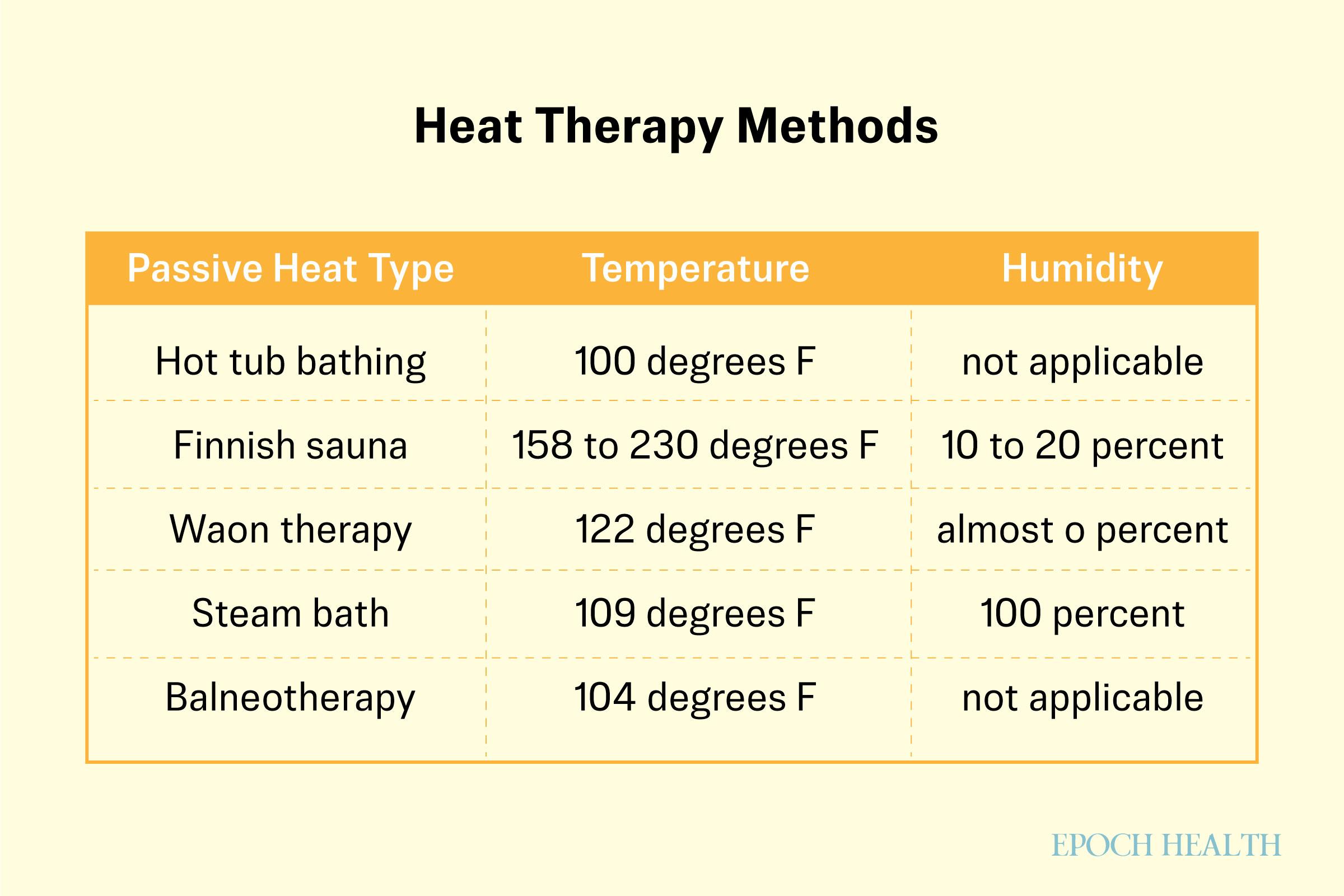
Benefits of Passive Heat
Passive heat therapy produces a range of health benefits.Extends Years of Good Health
Health span denotes the part of life when a person experiences optimal health with only minimal physical or mental limitations. Consequently, it permits the enjoyment of a high quality of life without the burden of chronic illnesses or disabilities.Helps Protect the Brain
A review published in Frontiers in Physiology indicates that passive heat may offer a significant benefit to people with neurodegenerative conditions, which are associated with misfolding and aggregation of damaged proteins in the brain. The authors found that passive heat can increase the expression of heat shock proteins, substances that reduce or prevent the toxic effects of protein aggregation and improve neuromuscular function. Heat therapy may also improve cerebral blood flow, muscle function, and markers of metabolic health. It’s possible that all the above effects could slow the progression of Alzheimer’s disease and Parkinson’s disease.Improves Exercise Performance
Athletes engage in warm-up before exercise because it has been suggested that an increase in muscle and core temperature is important in task readiness. However, a lengthy transition period between a warm-up and exercise session causes a decrease in muscle and core body temperature, which reduces performance.Precautions and How-Tos
Engaging in any type of passive heat is not recommended for everyone, so it is important for people to check with their doctors before trying it, Dr. Elizabeth Ranft, a family medicine physician, told The Epoch Times in an email. Also, if they feel any kind of distress during a session, they should stop and not engage in it again until consulting with their physicians.- Unstable coronary artery disease
- A recent heart attack
- Uncontrolled high blood pressure
- Severe heart valve disease
- An active infection, fever, or hives
- Orthostatic hypotension, which is low blood pressure that occurs when standing after sitting or lying down
To initiate a passive heat program, she recommends sitting in a Finnish sauna for 10 minutes and gradually increasing the session time by five minutes until reaching 20 to 30 minutes. While Finnish saunas typically have low humidity, sessions can be interspersed with brief periods of higher humidity by throwing water over the rocks. Most studies recommend four to seven sessions a week, she said.
“As always, exercise will provide the best benefits over any form of heat therapy,” Ranft said. “However, for those individuals who cannot exercise or who want to supplement their exercise routine, heat therapy is a great option with proven health benefits.”


