While dandelions are often perceived as unwelcome and notoriously difficult to eradicate, it’s time to uncover their hidden potential. Contrary to their reputation, these plants boast remarkable nutritional benefits.
Loaded With Vitamins and Minerals
Despite its common classification as an invasive weed, dandelion is actually recognized as an herb, offers a wealth of essential vitamins and minerals, and can even be used medicinally.Potassium
Dandelion contains potassium, a valuable mineral that plays a vital role in several physiological functions. Potassium is closely linked to the maintenance of healthy blood pressure levels and cardiovascular health. By incorporating potassium-rich foods like dandelion into your diet, you may experience an indirect impact on blood pressure regulation, especially if you have had previously elevated levels.Vitamins A and C
Dandelion leaves are an excellent source of essential vitamins A and C, well known for their potent antioxidant properties. Vitamin A is necessary to maintain healthy vision, promote skin health, and support immune function. Vitamin C contributes to collagen synthesis and boosts immune function.Calcium
Calcium, an essential mineral for strong bones and teeth, is present in dandelion leaves in moderate quantities. Although the amount may be modest, incorporating dandelion into a well-rounded diet can still contribute to your overall calcium intake.Iron
Dandelion contains iron, an essential mineral involved in oxygen transport, energy production, and immune function.Magnesium
Magnesium plays a critical role in various biochemical processes within the body, such as nerve function, muscle contraction, and energy production. In fact, a serving of 3.5 ounces of dandelion contains about 36 milligrams of magnesium, providing a noteworthy contribution toward meeting your magnesium needs. According to the National Institutes of Health (NIH) Office of Dietary Supplements, the daily recommended magnesium intake is 420 milligrams a day for men over 30 and 320 milligrams a day for women in the same age range.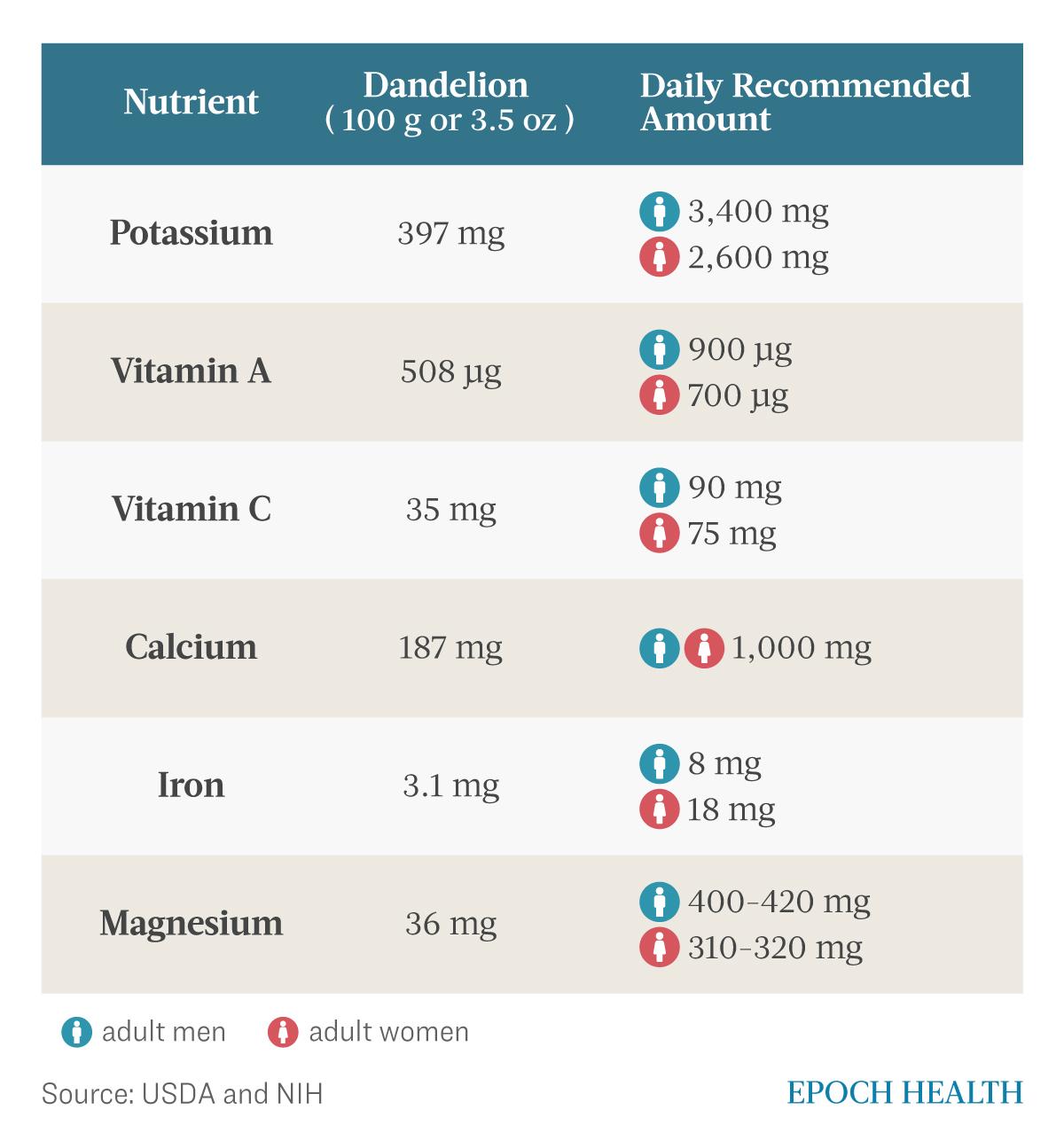
Medicinal Benefits of Dandelion
Dandelions have a long history of medicinal applications, having been used to address a wide range of health issues. The herb’s notable health benefits include the following.Diuretic Powers
Dandelion possesses diuretic properties and has earned the nickname “pissenlit“ (literally, ”pee in bed“) in French due to its effects. This natural ”water pill” stimulates urine production, alleviating water retention by effectively reducing excess fluid accumulation.Potential Weight Loss Aid
Some research indicates that compounds found in the dandelion plant may enhance carbohydrate metabolism, potentially supporting weight loss efforts. For example, a recent comprehensive review of studies found that dandelion extract exhibited anti-obesity effects in an animal model, while another study observed its positive impact on animal lipid profiles.Anti-Inflammatory and Antibacterial Properties
There is emerging evidence that dandelion has anti-inflammatory and antibacterial properties; however, since this research was in animal models, further research is necessary to understand and validate these effects comprehensively.Other Potential Advantages
“Dandelions may improve heart health by reducing LDL (bad cholesterol) and improving HDL (good cholesterol) levels,” Emily Feivor, a registered dietitian at Northwell Long Island Jewish Forest Hills in New York, told The Epoch Times.How to Include Dandelion in Your Diet
Regarding dandelion supplements, Feivor underlined that, currently, there is no officially recommended dosage. However, she highlighted the importance of ensuring the product undergoes third-party testing to guarantee its safety and purity.As for obtaining fresh dandelion greens, Feivor recommended farmers’ markets during the greens’ season or local grocery stores. Nevertheless, if you gather them from nature, “you want to be sure that the area you’re picking from is free from chemical or pesticide use,” she said.
Leaves
Dandelion leaves are commonly used in salads, stir-fries, and smoothies. Their slightly bitter flavor resembles that of arugula or chicory.Flowers
Dandelion flowers offer a range of possibilities, from being used to make tea or infused into oils, to incorporating them into recipes for jellies, syrups, or as a distinctive battered and fried ingredient. For those willing to do the legwork of collecting dandelion flowers (about one quart) and waiting a few weeks, you can even use them to make dandelion wine.Roots
Dandelion roots can be dried and roasted to create a caffeine-free coffee substitute; however, the preparation process requires some effort and time.Potential Side Effects of Dandelions
While dandelions offer potential health benefits, it’s essential to be aware of possible side effects and who should avoid consuming them. Here are some key considerations to keep in mind.- Allergies: “Dandelion leaves, stems, and flowers are all safe to consume,” Feivor said. However, individuals allergic to related plants in the Asteraceae family, such as ragweed or marigolds, may experience an allergic reaction to dandelions. She added that contact dermatitis, a form of eczema, is one possible symptom for those sensitive to the plant.
- Medication interaction: Dandelion may interact with certain medications, especially diuretics or drugs metabolized by the liver. “Be sure to tell your doctor if you are consuming dandelion regularly, as they may interact with medications,” Feivor said.
Before making significant dietary changes or incorporating new herbs or supplements into your routine, it’s always recommended to consult with a health care professional or a registered dietitian. They can provide personalized advice based on your specific health conditions and medications.