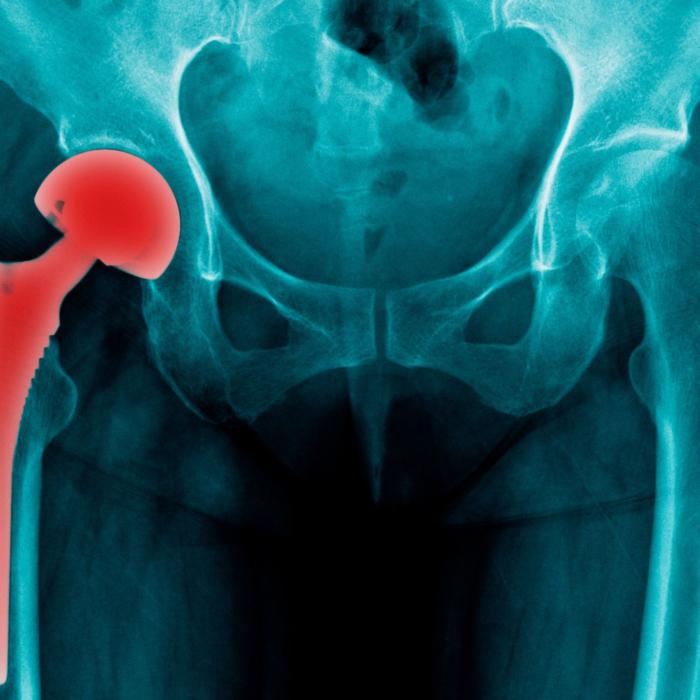
A new study finds that patients undergoing a common type of large joint replacement will experience elevated levels of some metals in their bloodstream, brain, and spinal fluid, raising concerns about the risk of long-term adverse neurological effects.
The Concern: Metals Crossing Into the Brain
The NeuroWear pilot study, recently published in JAMA Network Open, evaluated 103 people with joint implants compared to 108 without.They found that patients with implants had higher metal concentrations in their blood and cerebrospinal fluid (CSF), indicating that metals from the implants—particularly cobalt—can cross into the central nervous system.
Cobalt levels in the cerebrospinal fluid were recorded at 0.03 micrograms per liter for the implant group, while controls measured 0.02 micrograms per liter.
In addition to cobalt, patients with implants showed higher levels of chromium, titanium, niobium, and zirconium in their blood, with some of these metals also detected in their cerebrospinal fluid. Notably, participants with cobalt-chromium-molybdenum implant components exhibited higher metal levels.

According to researchers, these results highlight a critical concern—elevated metal levels may contribute to neurological effects post-surgery.
Given the known neurotoxic potential of cobalt, along with titanium and niobium, this information may be especially important for patients experiencing new or worsening neurological or psychiatric disorders after undergoing joint replacement surgery, according to the study authors. Additionally, they noted, it raises considerations for the future manufacturing of orthopedic implants.
Wear and Tear Degrades Implants Over Time
Metal-containing implants have been used for many years, and there have been significant improvements in the constituents that comprise the implants, Robert Middleberg, a member of the College of American Pathologists Toxicology Committee and a fellow of the American Board of Forensic Toxicology, told The Epoch Times. But like any device under constant movement, “there can be wear and tear over time,” he said.When metal-containing implants degrade, they can release particles into surrounding tissue and the bloodstream—a condition known as metallosis, he noted. Implants are consistently exposed to biological substances, such as blood and joint fluid, which can lead to forms of implant degradation.
Middleberg said the likelihood of adverse effects depends on various factors, including the type of implant (where it is and its chemical constituents), the corrosiveness of the environment, and the biology of the individual. Thus, the health effects of metallosis can be both local and systemic.
The local effects from metallosis are generally associated with local tissue reactions (dermatologic), which are usually related to our immune response to these metals—this can lead to varying degrees of pain and perhaps muscle weakness, Middleberg stated.
According to Middleberg, if metal ions shift from the area around the implant to be transported via the bloodstream to different parts of the body, “there can be organ system-specific toxicities, mainly associated with the heart, kidneys, liver, endocrine system and nervous system.”
Metal Toxicity Can Be Treated
“Very elevated” concentrations of a particular metal can support a diagnosis of metal toxicity from an implant, “especially if consistent with a patient’s signs and symptoms,” Middleberg said.Symptoms of metals toxicity can range from localized pain and inflammation to systemic issues such as neurological problems, hearing loss, vision problems, and organ damage.
According to Middleberg, there are treatments for those experiencing metal toxicity from their implants.
Most Patients Remain Unaffected
Despite the findings, Middleberg said that the vast majority of implant recipients experience no toxic effects.“By far, the majority of people with implants experience no toxic effects from their implants,” he said. “But as with all substances connected with toxicity, some individuals will be more susceptible than others to exposure to components of the implants.”
He also noted that detecting metals in blood or urine doesn’t necessarily indicate toxicity, as people may have been exposed to metals from other sources and can respond differently to the same concentration of metals in their system.