What Is Leg-Binding Sleep Therapy?
Developed by Kimiyoshi Isogai in the mid-20th century, leg-binding sleep therapy involves lightly strapping the legs together to align the bones and joints of the lower limbs.As one Chinese saying goes, “TCM and the I Ching share the same origin,” reflecting their shared focus on yin and yang. The I Ching explores transformation through the fluid dance of yin and yang, movement and stillness, while TCM seeks to align the body’s energies with their natural rise and fall.
An Unexpectedly Positive Experience
I want to share my experience with the leg-binding health method to offer a reference for others.1. Sensations from the First Attempt
I chose to try this method during a cold snap in December, securing the straps above and below the knees and near the ankles as recommended. Due to my O-shaped legs, I felt a certain degree of discomfort in the knee joints and inner ankles after binding, particularly noticeable during sleep at night.2. Remarkable Changes During a Brief Rest: From Discomfort to Warmth and Vitality
I went to bed at 11:00 p.m. and woke up twice due to discomfort, with the second awakening at 4:30 a.m. Despite sleeping for only about five and a half hours, I felt a remarkable warmth throughout my body upon waking, accompanied by an unusually vibrant complexion. My hands and feet were noticeably warmer, I experienced no coldness throughout the day, and I felt no mental fatigue. These unexpected effects clearly highlighted the potential positive impact of the leg-binding health method on overall physical well-being.3. Advice for Trying New Health Practices: Stay Open-Minded
When considering any new health practice, I recommend approaching it with an open mind and starting with moderate application. Evaluating its benefits based on personal experience will help determine if this method aligns well with your health goals.Tips for Effective Leg-Binding
Materials needed: Three fabric or Velcro straps approximately 2 inches wide (available online).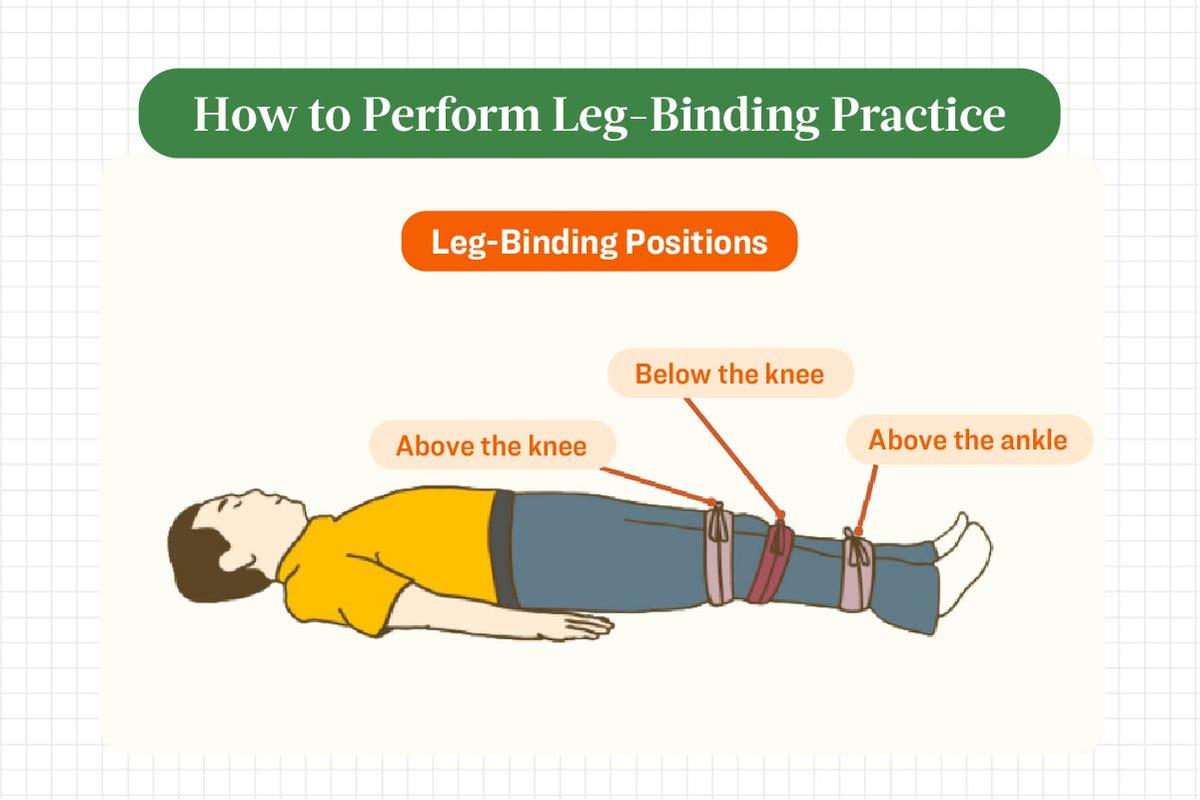
- You may experience localized soreness due to posture adjustments—placing a cloth on the inner side of the ankle can reduce discomfort.
- If you cannot fully straighten your legs, place a pillow behind the knees for support.
Methods to Enhance Effectiveness
- Pre-sleep exercise: Baby hug position. Before securing the strap, perform 20 to 30 knee-to-abdomen exercises to help adjust pelvic position and promote spinal and muscle balance.


- Wear shorts: The body will quickly warm up when strapped above the ankle, so there is no need to worry about feeling cold.
- Side-sleeping technique: Sleep on your side with a slightly bent posture to avoid discomfort from spinal or pelvic rotation.
Health Benefits and Principles of Leg-Binding Sleep Therapy
Sleeping with bound legs helps maintain a good sleeping posture and can bring nine health benefits:- Promotes the body’s energy circulation
- Improves poor blood flow in the lower limbs
- Alleviates cold hands and feet
- Leads to deeper sleep, leaving you refreshed upon waking
- Prevents pelvic rotation during sleep, reducing the risk of lower back pain
- Corrects O-shaped or X-shaped legs
- Boosts metabolism, helping to prevent obesity
- Gives the skin a rosy, radiant glow
- Increases body temperature, aiding in enhancing immunity
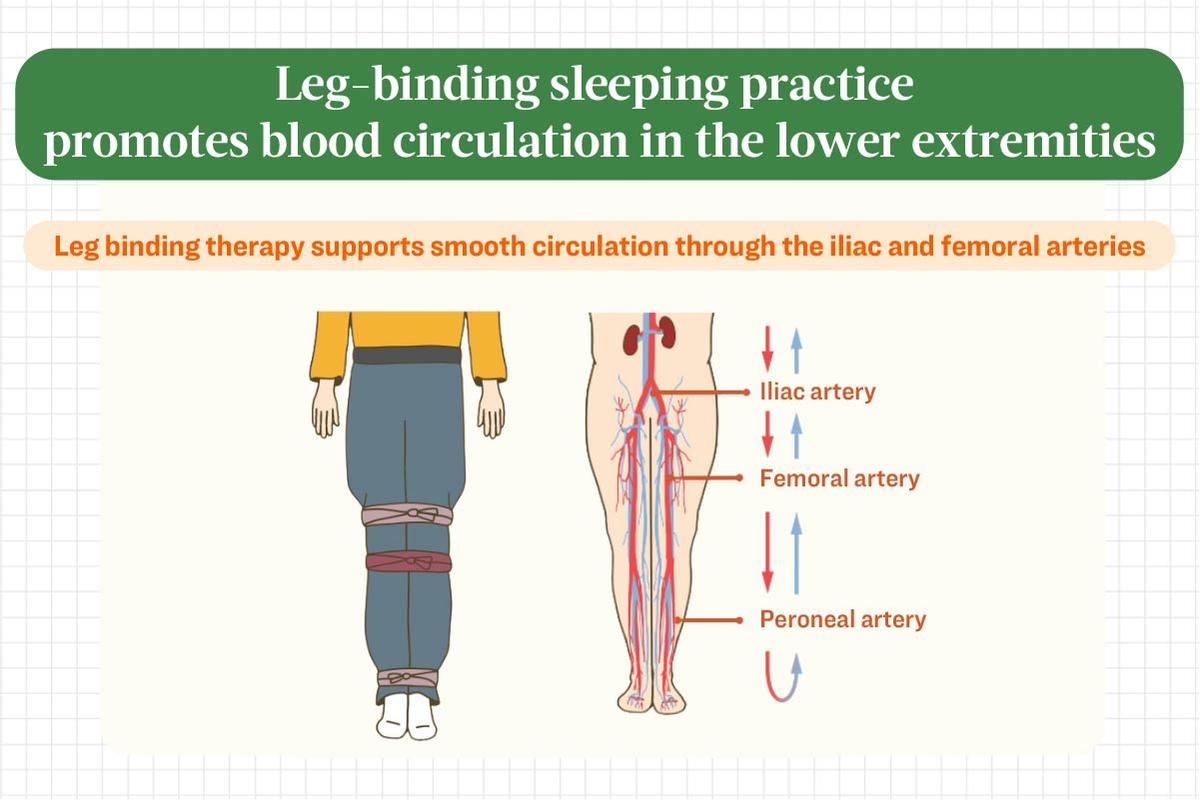
- Enhanced lower limb blood circulation: The strap keeps the iliac and femoral arteries unobstructed, reducing coldness and fatigue from poor nighttime blood flow. Based on my clinical observations, most participants reported effective alleviation of cold hands and feet.
- Qi and blood balance with beauty benefits: In traditional Chinese medicine, warm feet promote qi and blood circulation, helping balance the body’s yin and yang energies, improving sleep quality, enhancing skin radiance, and promoting a healthy weight.
- Facilitates internal cold-hot energy flow: According to the I Ching, the strap’s positioning corresponds to the Tai hexagram (interaction between upper and lower), symbolizing rising yang energy and descending yin energy, fostering healthy balance in the body’s meridians.
The I Ching is a classic Chinese philosophical text that uses the transformations of 64 hexagrams to explain the laws of nature and human affairs. A long horizontal line represents yang, symbolizing daylight, warmth, and so on, while two short horizontal lines represent yin, symbolizing night, coldness, and so on. Yin and yang energies are interdependent and transform into each other.
According to the theory of yin and yang, a balanced state where yin is above, and yang is below is called the Tai hexagram, symbolizing smooth circulation of qi and blood in the body. However, when yang energy becomes excessive in the upper body and yin energy is deficient in the lower body, it forms the Pi hexagram state, where yin and yang become disconnected. This imbalance can easily lead to impaired sleep quality.Contemporary habits of overthinking drive too much blood to the head, causing overheating and excessive yang energy that doesn’t subside. This triggers insomnia or shallow sleep, as stagnant qi and blood in the upper body disrupt circulation, hindering brain relaxation and sleep onset. In such cases, qi and blood become stagnant in the upper body, leading to an overall imbalance in circulation, which further affects the brain’s relaxation and the initiation of sleep.
A Simple Path to Wellness
Leg-binding sleep therapy is an accessible, low-effort practice that aligns body and mind, drawing on centuries-old wisdom to address modern health challenges.Whether you seek better sleep, improved circulation, or a natural way to enhance your well-being, this method offers a holistic solution. Consult a health care professional if you have specific medical conditions before starting.