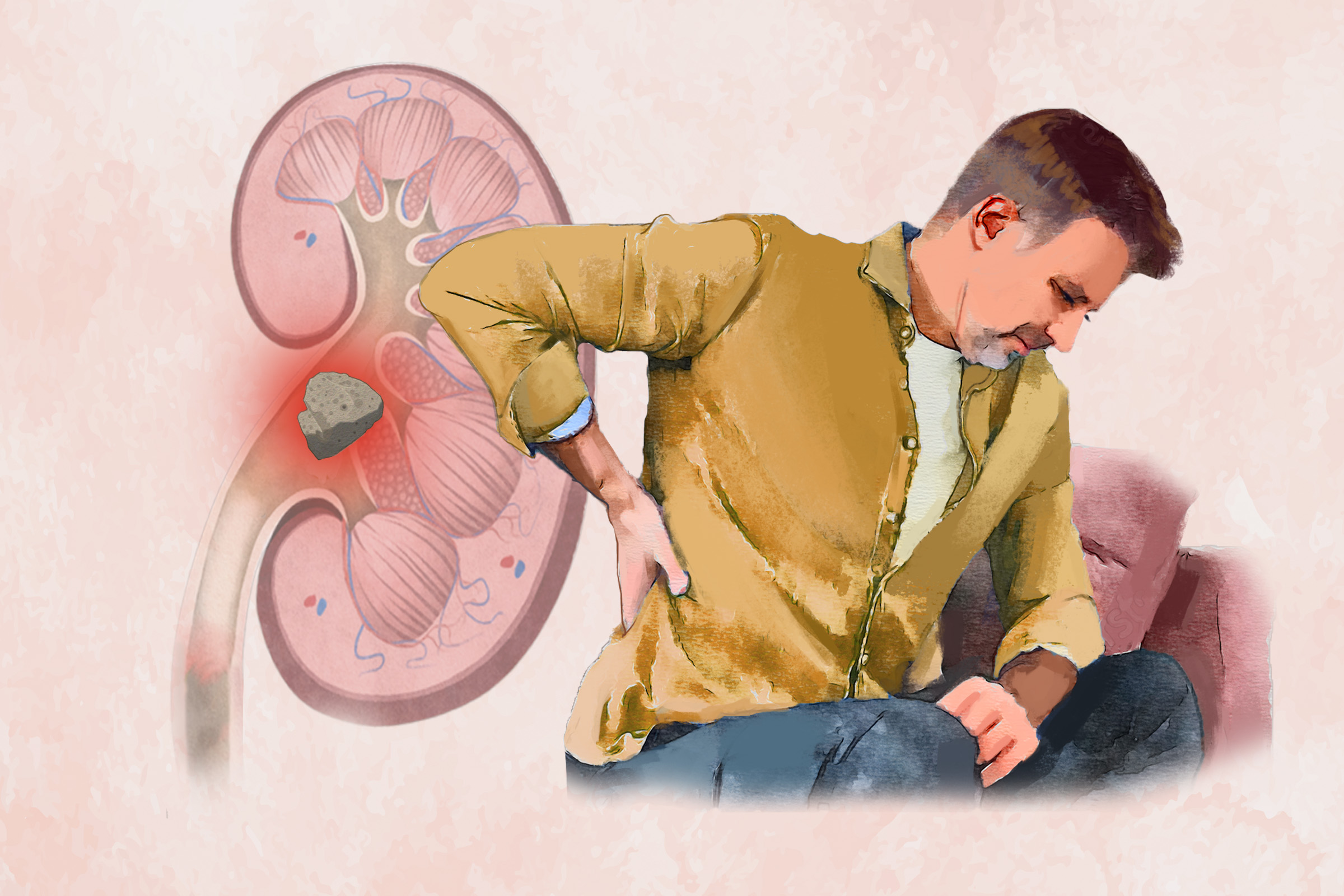

Kidney stones, also known as nephrolithiasis or urolithiasis, are small, hard mineral and salt deposits that form in the kidneys. They cause problems when they become large and travel through the urinary tract. Many people describe kidney stone pain as worse than childbirth or a heart attack.

What Are the Symptoms and Early Signs of Kidney Stones?
- Severe cramping pain in the back, side, lower abdomen, or groin
- Pain that comes in waves and fluctuates in intensity
- Discomfort, pain, or burning during urination
- Frequent or urgent need to urinate
- Nausea and vomiting
- Fever and chills
- Color change or blood in the urine
- Stones or fragments in the urine
- Urinary tract obstruction, causing small or incomplete urination
- Swelling of the kidney
What Are the Types of Kidney Stones?

1. Calcium Stones (80 Percent)
Most kidney stones are calcium stones, and about half are composed of calcium and oxalate (CaOx stones). These are small, shiny, and dense, often resistant. About 5 percent of calcium stones contain phosphate (CaP), which gives them a brittle, crystal-like structure. Mixed stones, a combination of these compounds, comprise the rest of calcium stones, varying in structure depending on the predominant mineral.2. Uric Acid Stones (3 Percent to 10 Percent)
Made mainly of uric acid, these stones are softer than calcium stones and more likely to dissolve with certain treatments. They are dense, look like smooth pebbles, and can be yellow to brown. This category may include purine stones. Uric acid stones occur more frequently in people who are obese and insulin-resistant.3. Struvite Stones (10 Percent to 15 percent)
Also known as triple phosphate stones or infection stones, these are composed of magnesium ammonium phosphate and calcium carbonate-apatite. They are typically brittle, grow rapidly, and can form large, branching structures called staghorn calculi, which may fill the kidney.4. Cystine Stones (<2 Percent)
These are rare, dense stones made from the amino acid cystine. They appear amber-colored and have a waxy, crystalline look. They recur frequently due to the underlying genetic condition, cystinuria.5. Drug-Induced Stones (About 1 Percent)
Some stones are caused by medications. These stones can vary widely in their composition, structure, and hardness. Some medications associated with kidney stones include antibiotics (ciprofloxacin, amoxicillin), antivirals (indinavir, atazanavir), gout treatments, decongestants, antacids, urinary pain relievers (phenazopyridine), and diuretics.What Causes Kidney Stones?
Factors Contributing to Stone Formation
Some kidney stones have a single clear cause, but most result from a combination of factors, including genetics, diet, health conditions, and lifestyle choices. Identifying these factors is key to developing effective treatment and prevention plans.1. Low Urine Volume
Low output results in concentrated urine and may be due to inadequate fluid intake, heavy sweating, hot climates, or chronic diarrhea.2. Excess Urinary Calcium
Calcium in the intestines helps bind oxalate, reducing absorption, but excess calcium in the urine (hypercalciuria) promotes calcium stones. Causes include:- Hormonal Conditions: Overactive parathyroid glands release excess calcium from bones.
- Genetic Disorders: Conditions like Dent’s disease disrupt kidney calcium processing.
- High Vitamin D: Excessive supplementation increases calcium absorption from the gut and urinary excretion.
- Metabolic Conditions: Metabolic acidosis pulls calcium from bones into urine.
- Dietary Factors: High-salt, sugar, or animal protein diets can acidify urine and increase calcium excretion.
- Thick Ascending Limb Defects: Abnormalities in this part of the kidney tubule reduce calcium reabsorption, increasing urine calcium.
- Environmental Toxins: Cadmium exposure can impair kidney function, increasing calcium excretion.
3. Excess Urinary Oxalate
High urinary oxalate (hyperoxaluria) promotes CaOx crystal growth. These crystals can trigger an immune response that may damage kidney tissue and facilitate crystal retention. Causes may include:- Dietary Factors: Oxalates from foods such as spinach, rhubarb, and nuts are more likely to be absorbed when calcium intake is low. Foods that convert to oxalate, such as vitamin C-rich foods consumed in large amounts, can also contribute. Glycine, an amino acid found in meat, fish, eggs, dairy, and legumes, can also convert into oxalate when consumed in large amounts.
- Medical Conditions: Increased intestinal absorption due to malabsorption disorders (e.g., Crohn’s, celiac) disrupts fat digestion, leaving oxalate unbound and more likely to be absorbed.
- Genetic Disorders: Primary hyperoxaluria increases oxalate production independent of diet.
- High Vitamin C: Excessive supplementation may raise oxalate levels, although evidence varies, with possibly no increased stone risk in females.
- Surgeries: Gastric bypass alters nutrient absorption, raising oxalate levels.
4. Low Urinary Citrate
Citrate binds to urinary calcium, preventing crystallization. Low citrate (hypocitraturia) may result from:- Acidosis
- Potassium deficiency
- High-animal protein diets
5. High Uric Acid
High uric acid levels (hyperuricosuria) increase stone risk, especially in acidic urine. Causes include:- Dietary Factors: Overeating purine-rich foods (red meat, seafood, and alcohol) can increase uric acid.
- Genetic Disorders: In Lesch-Nyhan disease, an enzyme responsible for recycling purines is missing.
- Medical Conditions: High cell turnover due to disorders like leukemia can increase uric acid production.
- Metabolic Conditions: Glycogen storage diseases impair renal tubular function, reducing uric acid excretion.
6. High Urinary pH
A normal urine pH range of 6.0 to 7.0 helps maintain balance, but deviations can lead to different types of stones. Alkaline (high pH) urine creates an environment conducive to specific stones, such as calcium phosphate. Causes include:- Renal tubular acidosis (e.g., Sjögren’s syndrome, lupus)
- Carbonic anhydrase inhibitors (e.g., acetazolamide, topiramate, and zonisamide)
- Excess alkali treatment (e.g., overuse of potassium citrate)
7. Low Urinary pH
A pH below 5.5 is considered the main factor responsible for uric acid stones. Acidic urine can arise from factors that increase acid production or disrupt acid-base balance, including:- Metabolic syndrome
- High-animal protein diet
- Potassium excess
8. Obstruction and Slow Urine Flow
When urine flow is blocked or slowed, it can lead to localized supersaturation and changes in urine composition. This may be due to abnormalities in the urinary tract or other causes, such as:- Medullary sponge kidney
- Polycystic kidney disease
- Enlarged prostate
- Strictures (narrowing of the urethra)
- Tumors
9. Urinary Tract Infections
Bacteria like Proteus, Klebsiella, and Pseudomonas, which are involved in urinary tract infections (UTIs), produce urease, raising urine pH above 7.0. Non-urease-producing bacteria like Escherichia coli can reduce citrate, promoting crystal growth.10. Microbiome Imbalance
A disrupted gut microbiome may create conditions that promote stone development by altering metabolite production, toxin levels, and inflammatory responses. Research shows that microorganisms in the gut and urinary tract may influence stone development through several mechanisms, such as:- Oxalate Metabolism: A lack of oxalate-degrading bacteria (e.g., Oxalobacter formigenes) can increase oxalate absorption, leading to hyperoxaluria. Studies show that colonization with O. formigenes may reduce recurrent CaOx stone risk by up to 70 percent.
- Bacterial Imbalance (Dysbiosis): People prone to stones tend to have fewer beneficial bacteria (Prevotella) and more harmful types (Bacteroides).
- Fungi: Some fungi, including Candida species, produce oxalic acid, which may influence oxalate levels in the body, but more research is needed to confirm this.
11. Systemic Conditions
Systemic disorders can affect urine composition, heightening the chance of stone development. These include:- Gout: Gout is linked to metabolic syndrome and is characterized by high uric acid levels, which can lead to uric acid stones or CaOx stones.
- Obesity: This alters urine composition, increasing uric acid levels and lowering urine pH.
- Cystinuria: This is a rare genetic disorder, often starting in childhood, that causes excessive cystine in the urine, leading to cystine stones in the kidneys, ureters, and bladder.

Who Is at Risk of Developing Kidney Stones?
- Age: Kidney stones can occur at any age but are less common in younger adults and children. Risk increases with age, peaking in men between 70 and 79 and women between 60 and 69.
- Sex: Men historically have higher prevalence and recurrence rates, but the gap is narrowing.
- Race: Kidney stones affect all races but with varying prevalence. Non-Hispanic whites have the highest prevalence, followed by Hispanics, blacks, and Asians.
- Genetics: Certain inherited conditions, such as primary hyperparathyroidism, kidney structure abnormalities, and cystinuria, increase susceptibility.
- Family History: Having a family member with kidney stone disease increases the likelihood of developing stones, especially CaOx stones.
- Education and Income: Lower levels are linked to higher susceptibility.
- Diet: High intake of acid-forming foods (e.g., animal protein, salt, and sugars) promotes an acidic urinary environment, contributing to CaOx and uric acid stones. This effect is more pronounced in men than women. Low dietary calcium exacerbates the problem by increasing oxalate absorption and excretion.
- Metabolic Disorders: Metabolic syndrome—characterized by abdominal obesity, high blood pressure, high triglycerides, low high-density lipoprotein (HDL, or “good”) cholesterol, insulin resistance, and high fasting blood sugar—alters urine composition and pH, increasing stone susceptibility. Nonalcoholic fatty liver disease and its advanced form, nonalcoholic steatohepatitis, may also increase risk by affecting oxalate metabolism.
- Digestive Diseases and Surgery: Conditions such as inflammatory bowel disease (IBD) and bariatric surgery increase stone likelihood by disrupting nutrient absorption and altering urine composition.
- Physical Activity: Prolonged sitting is linked to a higher prevalence of kidney stones and can contribute to obesity and metabolic disorders, other key risk factors.
- Pregnancy: Hormonal changes and urinary stasis during late pregnancy and postpartum temporarily increase stone vulnerability.
- Alcohol: Like red meat and seafood, alcohol contains purines that may contribute to uric acid stones. Research is mixed: Moderate beer and wine consumption may be protective, while hard liquor increases susceptibility. Alcohol also promotes obesity, high blood pressure, and dehydration, compounding the likelihood of stones.
- Climate: Kidney stones are more common in hot, arid regions, especially in men, likely due to dehydration and concentrated urine. Staying hydrated, avoiding excessive heat, and maintaining fluid balance can help mitigate this.
- Toxins: Substances like cadmium, trimethyltin (used in PVC manufacturing), ethylene glycol ethers (in silkscreen work), melamine (in furniture and plastics), and N,N-diethyl-meta-toluamide (DEET, a common insect repellent) may raise susceptibility. Using protective equipment and minimizing exposure can help mitigate these effects.
How Are Kidney Stones Diagnosed?
Imaging
After the history and exam, a diagnosis is supported by imaging tests, such as:- X-ray: This is less commonly used today but useful for distinguishing stone types. Calcium stones appear visible, while uric acid stones are invisible.
- Ultrasound: This effectively detects kidney stones but is less accurate for ureteral stones. It also has the advantage of being radiation-free.
- Noncontrast Computed Tomography (NCCT): The preferred method, NCCT detects stones of any size, composition, or location and can identify nonurinary causes of pain.
Tests
Stone composition can be analyzed to determine types and potential causes. Then, other diagnostic tests may be performed.Blood tests detect conditions contributing to stones by measuring stone promoters and inhibitors. A metabolic panel checks serum electrolytes, calcium, creatinine, and uric acid. Parathyroid hormone testing can identify issues like hyperparathyroidism or renal tubular acidosis. Tests may also suggest chronic kidney disease, mineral and bone disorders, or increased bone turnover.
What Are the Possible Complications of Kidney Stones?
- Urinary Obstruction: Stones can block urine flow, causing pressure buildup in the kidney, which may lead to kidney damage and reduced function if untreated.
- Chronic Kidney Disease (CKD) and End-Stage Renal Disease (ESRD): Stone formers have a higher risk of CKD, especially those with noncalcium stones or genetic disorders. This may result from obstruction, inflammation, infections, or treatments. Untreated CKD can progress to ESRD, requiring dialysis or transplantation.
- Osteoporosis and Metabolic Bone Disease: Stone formers often lose excess calcium in urine, causing the body to draw calcium from bones. This weakens bones, increases fracture risk, and can lead to osteoporosis or metabolic bone disease, a group of disorders disrupting normal bone metabolism.
- Nephrectomy: A history of staghorn stones or multiple surgeries increases the likelihood of kidney removal due to irreversible damage.
- UTIs and Sepsis: Struvite stones can harbor bacteria, causing chronic infections and significantly raising the risk of sepsis. Prolonged antibiotics may be necessary to prevent this life-threatening complication.
- Cancer: Stone formers are at greater risk of cancers such as transitional cell carcinoma and, in men, renal cell carcinoma.
- Cardiovascular Events: Kidney stones are linked to a greater risk of cardiovascular events, including heart attack and stroke. Coronary heart disease is more common in male stone formers, while stroke risk is higher in women.
What Are the Treatments for Kidney Stones?
Medical Procedures
Many stones pass naturally, but others require treatment depending on location, size, composition, and patient health. Some of these treatments include:- Stents: Thin, flexible tubes may be used to maintain urine flow and relieve pain or pressure.
- Shock Wave Lithotripsy: This noninvasive procedure uses sound waves to break larger, softer stones into smaller fragments that can pass more easily through the urinary tract. Its success rate ranges from 50 percent to 90 percent. Though it boasts low complication rates and faster recovery times, downsides include the use of antibiotics and possible kidney damage, particularly with repeat procedures, which may be necessary.
- Ureteroscopy: This procedure uses a thin scope to access the ureter or kidney via the urethra and bladder, allowing stones to be removed or broken into smaller pieces. Depending on the location of the stone, the success rate ranges from 50 percent to about 90 percent. While it is highly effective for ureter stones and fewer repeat procedures are typically needed, anesthesia is required, and at least one-quarter of patients experience stent pain.
- Percutaneous Nephrolithotomy (PCNL): The standard treatment for stones >2 centimeters or staghorn stones, PCNL removes stones through a small incision. Nephrolithotripsy may be performed using a nephroscope and laser to break stones into smaller pieces. The success rate is between 70 percent and 95 percent, depending on the stone location. Although it is the most effective procedure, it is the most invasive and has the greatest risk of complications.
- Ultrasonic Propulsion: Ultrasonic propulsion is an emerging therapy that uses ultrasound energy to dislodge and move stones within the urinary tract. Although promising for reducing relapse with minimal risk, it has not yet been approved by the U.S. Food and Drug Administration (FDA) for widespread use.
Medications
Various medications address kidney stone pain, facilitate passage, or dissolve specific stone types. These include:- Pain Medications: Nonsteroidal anti-inflammatory drugs (NSAIDs) are the first-line pain treatment, with opioids as a backup. Intravenous acetaminophen may be as effective as morphine. Relieving kidney pressure and removing stones remains the most effective pain relief.
- Medical Expulsive Therapy: Alpha-blockers (e.g., tamsulosin) and calcium channel blockers are used to aid the passage of small distal ureteral stones, though their efficacy is debated.
- Antibiotics: Antibiotics treat struvite stones and related UTIs, guided by bacterial cultures from urine or stone matrices to target the causative organism effectively.
- Dissolution Therapy: These time-intensive treatments dissolve specific stones and are less effective than other methods. In many cases, potassium citrate, allopurinol, or febuxostat alkalinize urine to dissolve uric acid stones.
- Struvite Stone Treatment: Acetohydroxamic acid, a urease inhibitor, is the only FDA-approved drug for treating struvite stones. However, its use is limited by side effects such as nausea, vein inflammation due to blood clots, rash, and hemolytic anemia.
How Does Mindset Affect Kidney Stones?
By focusing on long-term strategies, such as drinking more water, reducing oxalates, and balancing calcium intake, individuals with a growth mindset are more likely to succeed. Conversely, a fixed mindset can hinder motivation, leaving people feeling resigned to their condition or viewing it as unchangeable.
What Are the Natural Approaches to Kidney Stones?
Recommended Dietary Patterns
There is no universal kidney stone diet. The best approach depends on the stone type and individual health needs. A nutrition professional can help tailor a balanced plan.Only about half of urinary oxalate comes from food, so portion sizes are key. For example, rather than avoiding nutritious high-oxalate foods, consume smaller portions like a tablespoon of chia seeds or a handful of cashews to stay within safe limits.

Cooking methods can significantly lower oxalate levels. Boiling veggies like spinach cuts soluble oxalates by up to 87 percent. Soaking grains, beans, or seeds overnight pulls oxalates into the water, which should be discarded.
- DASH Diet: The Dietary Approaches to Stop Hypertension (DASH) diet reduces kidney stone risk by 40 percent to 50 percent. It emphasizes fruits, vegetables, nuts, legumes, whole grains, and low-fat dairy while limiting sugar, processed meat, and sodium.
- Mediterranean Diet: Known for helping heart health, this diet, with low meat intake and high consumption of plant-based foods, is linked to a lower risk of kidney stones. Research shows following it more closely reduces stone risk.
- Alkaline Diet: This diet promotes consuming 80 percent alkali-forming foods, measured by their potential renal acid load (PRAL), to balance acid and alkali. Acid-forming diets can overburden the kidneys and other buffering systems, leading to acidosis and increased stone risk. Most plant foods are alkalizing, but some (like spinach, tofu, and certain legumes) are not. Choosing carefully can improve urine pH, lowering risk and supporting kidney health. Animal studies show this diet helps prevent CaOx stones by improving metabolic conditions.
Dietary Patterns to Avoid
- Low-Carbohydrate, High-Protein Diet (LCHP): While low-carb diets may lower stone risk, combining it with high protein increases risk. A six-week study showed that following an LCHP diet raises acid load significantly, reduces calcium balance, and may increase bone loss.
- Atkins Diet: A study found that switching to the Atkins diet increased urinary calcium by 61 percent and decreased urinary citrate by 41 percent.
- Vegan Diet: Vegan diets are linked to a higher risk of stones, particularly CaOx. This is likely due to high oxalate content in plant foods and reduced calcium intake from no dairy products. Nutritional deficiencies in vitamins D and B12, omega-3 fatty acids, iron, and zinc are additional concerns.
Natural Remedies and Supplements
- Probiotics: Probiotics like Oxalobacter formigenes and certain strains of Lactobacillus and Bifidobacterium species can break down intestinal oxalate, reducing urinary oxalate levels. Bacillus subtilis can reduce CaOx stone development. Vaginal colonization by various Lactobacillus species can decrease UTI risk by competing with uropathogens. Effectiveness varies with gut microbiota diversity and diet.
- Chanca Piedra (Phyllanthus niruri): Known as “stone breaker,” this plant has traditionally treated kidney stones. A 2018 study found that drinking chanca piedra tea twice daily for 12 weeks reduced stone number and size in 68 percent of participants. A 2019 study showed that chanca piedra extract combined with magnesium and vitamin B6 inhibited CaOx crystallization and adhesion.
- Vinegar: Daily vinegar consumption may prevent recurrence by increasing urinary citrate and reducing calcium excretion. No specific dosage is established. Dilution may protect tooth enamel and avoid throat irritation.
- Lemon Juice: About 2.87 ounces of fresh lemon juice daily may effectively increase urinary citrate, similar to potassium citrate, for calcium stone formers. Using a straw protects tooth enamel.
- Sour Cherry: Research in children showed sour cherry concentrate was as effective as the potassium citrate supplement Polycitra-K in reducing stone number and size. It also increased urine pH and lowered uric acid. Sour (tart) cherry is widely available as a liquid or supplement.
- Potassium Citrate: This over-the-counter alkalizing agent increases urinary citrate but should be used under medical supervision to avoid over-alkalization. Alkaline water carries similar risks. Dietary sources are preferable unless otherwise directed.
- Magnesium: Magnesium citrate, especially combined with potassium (potassium-magnesium citrate), reduces CaOx stone recurrence by alkalizing urine and increasing citrate. Other magnesium forms may be less effective.
- Plants and Nutraceuticals: Clinical trials show benefits for plants like raspberry, pomegranate, stinging nettle, and black cumin, among others. Phytochemicals such as epigallocatechin gallate (EGCG) from green tea and curcumin have also shown promise. These can be consumed as teas, supplements, or in food.
At-Home Monitoring
Proactive at-home monitoring can help manage kidney stone risk. While fluid intake is essential, urine output (at least 2 liters per day) is crucial. Excessive sweating, high temperatures, medical conditions, medications, or other factors can reduce urine volume, leading to concentrated urine and higher risk. Measuring 24-hour volume using a cup or jug helps assess hydration and identify potential health issues.How Can I Prevent Kidney Stones?
Addressing root causes—such as diet, hydration, and metabolic imbalances—significantly reduces recurrence. Lifestyle changes, including weight management, also play a role.
Cost-effective dietary and lifestyle changes are increasingly emphasized for long-term prevention over lifelong medication. Dietary adjustments influence urine chemistry, affecting supersaturation, pH, and stone promoter and inhibitor levels. Tailoring these changes to individual needs, stone type, and lab results can create a less favorable urinary environment for stones. However, medications may be prescribed to prevent recurrence if other methods are insufficient.
General Dietary Recommendations
- Hydrate: Drink 2.5 liters daily (3 liters in the summer) to dilute urine and reduce stone-promoting concentrations.
- Eat Calcium-Rich Foods: Consume 1,000 to 1,200 milligrams of calcium daily from foods like dairy products, leafy greens, seeds, sardines, salmon, and white beans to bind oxalate in the intestine and lower urinary oxalate.
- Reduce Sodium: Limit salt intake to 2,300 milligrams daily (about 1 teaspoon) to lower urinary calcium and increase citrate and urine pH.
- Limit Animal Protein: Keep daily intake to 0.8 to 1.0 grams per kilogram of body weight (1.6 to 2.9 ounces for a 125-pound person; 2.6 to 3.2 ounces for a 200-pound person). This reduces urinary calcium and uric acid while increasing citrate.
- Eat More Fruits and Vegetables: Most produce alkalizes urine, increases citrate, and adds fiber. Every 5 grams of daily fiber intake significantly reduces stone risk.
- Reduce Oxalates: Limit high-oxalate foods or pair them with calcium-rich foods to decrease oxalate absorption.
- Consume Fatty Fish or Fish Oil: Fish oil or fatty fish, like wild-caught salmon, sardines, and mackerel, may decrease urinary calcium and oxalate levels.
- Avoid Ultra-Processed Foods: Avoiding these reduces sodium, sugar, and acidifying effects.
- Moderate Calories: Preventing overeating limits excess calories, sodium, sugar, and animal protein, reducing obesity-related risks.
Lifestyle Modifications
- Exercise: Getting regular exercise reduces inflammation, insulin resistance, weight, and metabolic imbalances.
- Manage Stress: Keeping stress in check reduces cortisol, linked to metabolic disorders and CaOx stone recurrence.
- Get Quality Sleep: Poor sleep increases oxidative stress, inflammation, and uric acid retention, all of which heighten stone risk.
- Avoid Smoking: Avoiding smoking and secondhand smoke exposure reduces oxidative stress and systemic inflammation, protecting kidney function.
- Limit Alcohol: Excessive drinking dehydrates the body and raises stone risk. Beer and wine, in moderation, may be less harmful than spirits but should always be consumed with adequate hydration.