This copy is for your personal, non-commercial use only. Distribution and use of this material are governed by our Subscriber Agreement and by copyright law. For non-personal use or to order multiple copies, please contact The Epoch Times Reprints.
Picky eaters can make mealtimes hectic. Concerns about wasted food and about whether your child is eating enough “good” foods, not too many “bad” foods (or even enough food at all) are common challenges. Ensuing power struggles can make mealtimes a drag. And planning around your child’s preferences can be almost impossible.
There’s good news, however: Some of the behaviors typically displayed by picky eaters, like 2381650refusing new foods and going through food jags (times when your child only wants to eat their favorite food) are normal.
Some of the behaviors typically displayed by picky eaters are normal.
As researchers in nutrition, we have conducted studies with families and have learned several strategies you can use to create happier and healthier mealtimes. This, and other feeding research with young children, has identified five things you can do to reduce mealtime stress and help your “picky eater” have a healthier diet.
1. Shift Your Perception
The first step for exhausted parents is often a shift in perception.
During the preschool years, slowed growth (in comparison to the fast growth seen during infancy and toddlerhood) can impact dietary intake. So can psychological changes like developing a sense of independence.
As agents of their own preferences and actions, preschoolers prefer to feed themselves. They can develop strong opinions toward foods.
(Shutterstock)
By labeling our children as “picky eaters,” we are labeling behaviors that are considered to be developmentally appropriate as non-compliant.
When we view children’s rejection of foods as non-compliant, interactions with our child during mealtimes often become stressful.
Phrases like “you must eat three more bites” become common. This may lead to an escalating cycle of disagreement between you and your child.
In some situations, this escalating cycle of pressure and refusal may also lead you to withdraw your efforts to entice your child to eat, catering to their preferences and allowing poor dietary habits to prevail.
Rather than viewing children as non-compliant, we can recognize this show of independence at mealtimes as completely appropriate for their age. Your child will be discriminating based on newly recognized qualities of foods such as taste, texture, presentation and familiarity.
Focus your attention on fostering your child’s healthy eating without pressuring. Enjoy the time spent together during meals, rather than focusing on your child’s intake.
2. Accommodate, But Don’t Cater to Them
Accommodating your child’s preferences during mealtimes is a win-win: They exert some independence, while also eating the food you have prepared.
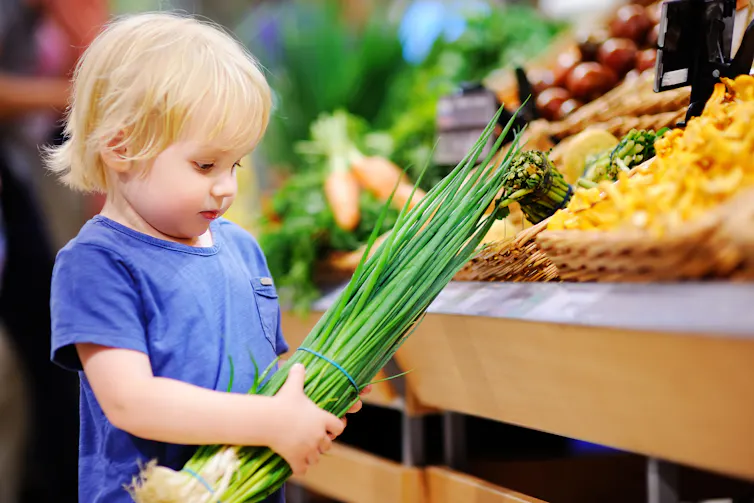
During the meal-planning stages, ask your child what he or she would like to eat for the week or take your child grocery shopping and ask them to pick out a vegetable to try.
(Shutterstock)
Accommodating children’s preferences doesn’t mean you need to eat chicken fingers every night. If you’re serving a spicy Thai dish, consider making a version with less spice for your kids.
Accommodating children’s preferences doesn’t mean you need to eat chicken fingers every night.
Meals that allow preschoolers to serve themselves also work well so that they can negotiate the amount or nature of the food (for example, not including the sauce).
3. Have Children Taste New Foods
Don’t pressure your child to eat foods they don’t like. It is OK if your child doesn’t like broccoli.
It can take between 10 to 15 exposures to get a child to like a new food.
Even if a food has initially been rejected, try and try again (without pressuring). It can take between 10 to 15 exposures to get a child to like a new food.
(Shutterstock)
It is easier to get a child to taste a new food, rather than eat it. So start by offering small portions.
Using rewards such as stickers may improve your kid’s acceptance of new foods and make repeated exposures more fun. Praise your child for trying new foods, but remain neutral if they choose not to eat it.
4. Model Healthy Eating
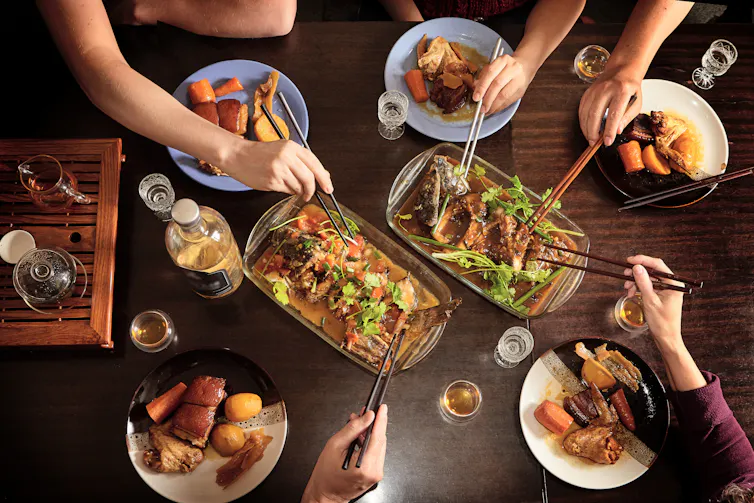
Eating with your child when offering new foods is also important. You can’t expect your child to eat veggies if you don’t eat them either.
(Shutterstock)
Children with parents who model healthful eating habits have been reported to be less “picky,” to be more likely to try disliked vegetables and to eat more fruits and vegetables.
5. Kids Make Great Sous-Chefs
Getting the whole family involved in meal preparation can relieve mealtime stress.
You don’t have to do it on your own. Have your child wash foods while you chop, or set the table while dinner is in the oven.
By giving your child the sous-chef title, you are helping increase their consumption of healthy foods in the short term, and teaching lifelong habits.
Research shows that kids who are involved in preparing meals have more positive attitudes towards food and are more likely to subsequently eat the food that they help to prepare.
(Shutterstock)
By giving your child the sous-chef title, you are helping increase their consumption of healthy foods in the short term, and teaching lifelong habits.
By allowing your child to develop their own taste, preferences and enjoyment of healthful foods, family mealtimes will be more enjoyable in the short-term and your child’s diet will be better over the long term.