As we all know, the SARS-CoV-2 virus mutates quickly. One of those mutations resulted in Omicron this year. While its transmission rate has increased significantly, the pathogenicity has decreased significantly. Scientists hope to study Omicron thoroughly to find better treatment strategies.
Researchers at Boston University took the gene encoding of the spike protein from Omicron (red sequence in chart) to replace the relevant part from the old strain of early 2020 (blue sequence in chart) and create a new virus gene (red-blue mix).
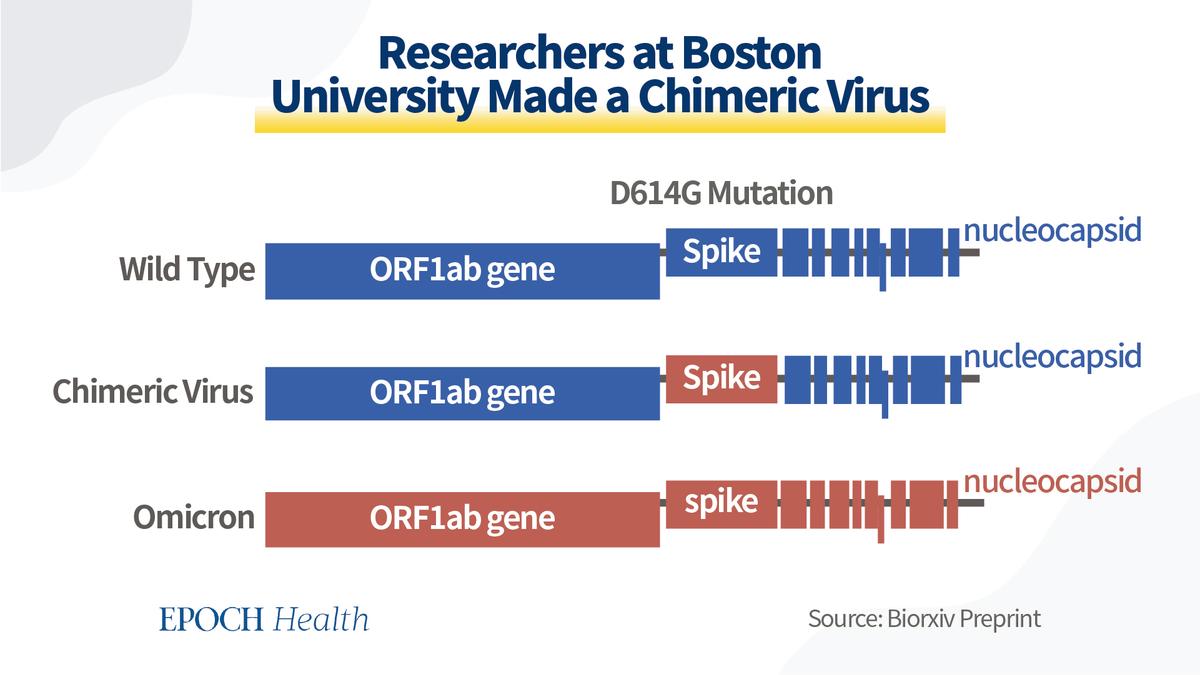
In other words, the new virus is based on the original coronavirus from 2020, but with the spike protein from Omicron.
This is like a donkey and a horse giving birth to a mule; or a donkey and a zebra giving birth to a zebra donkey. The offspring of two different species possesses the characteristics of both species. This mixed new “species” is called a chimeric virus.
New Chimeric Virus ‘Kill Rate’ Claims
To explain this widespread claim, we must first understand the model used in the Boston study.Subsequently, the scientists infected ACE2 transgenic mice with the chimeric virus. Please note both the mice model and the virus are not natural, but man made and chimeric.
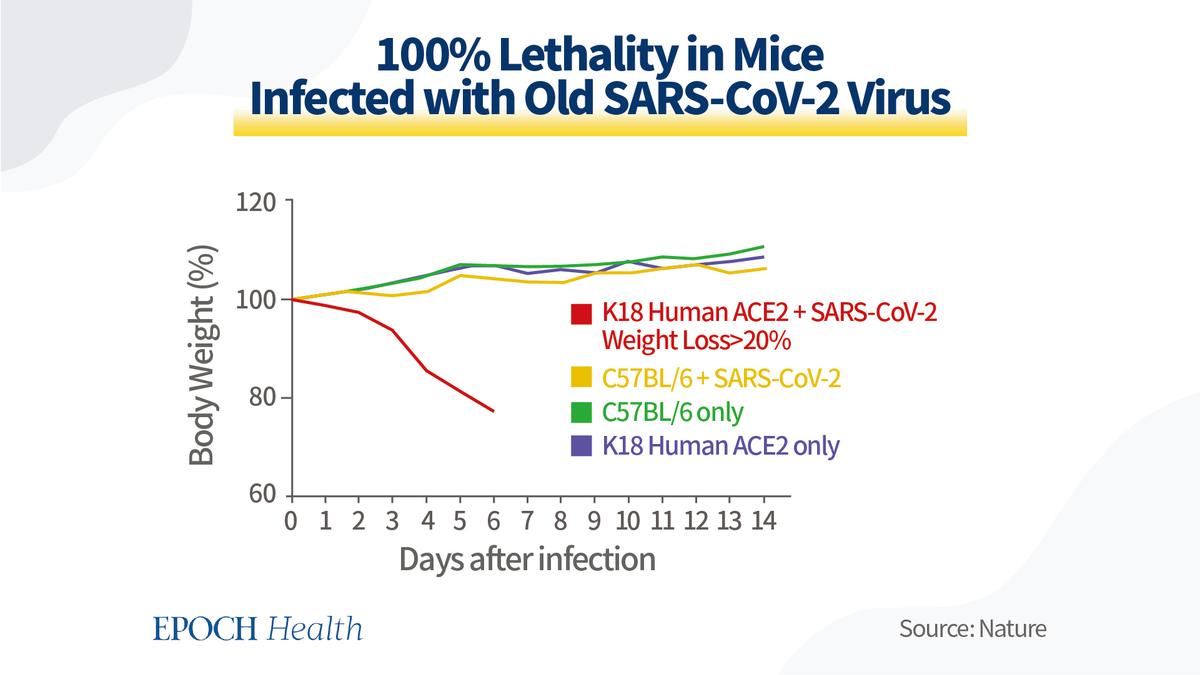
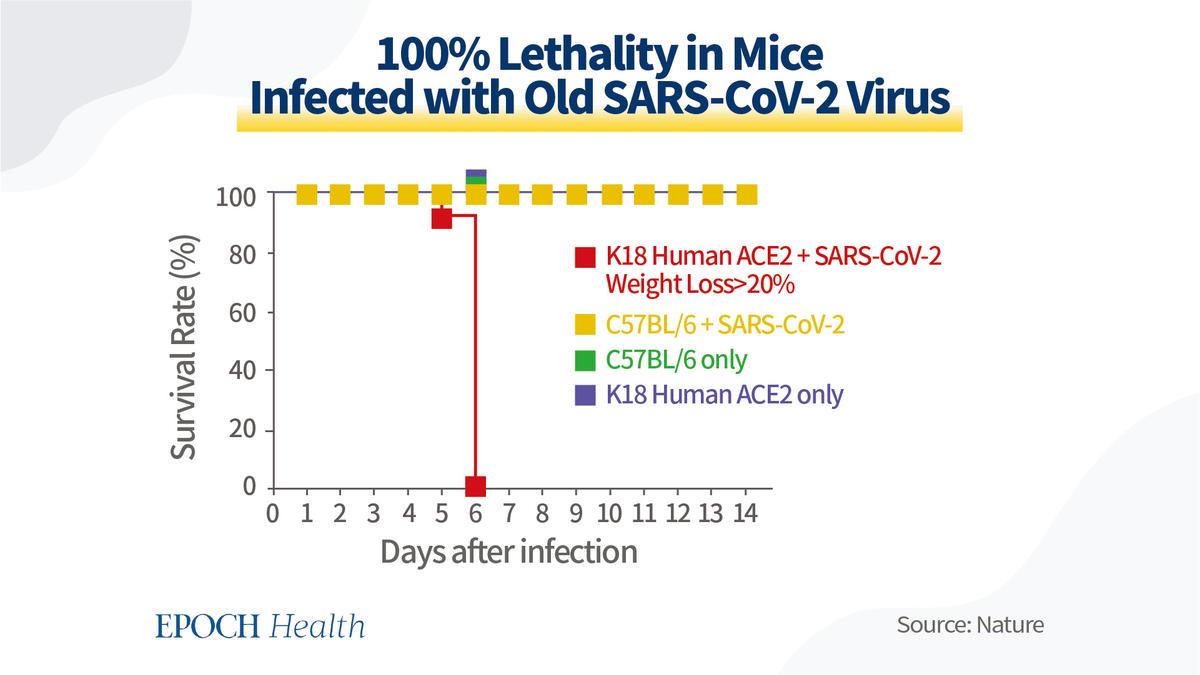
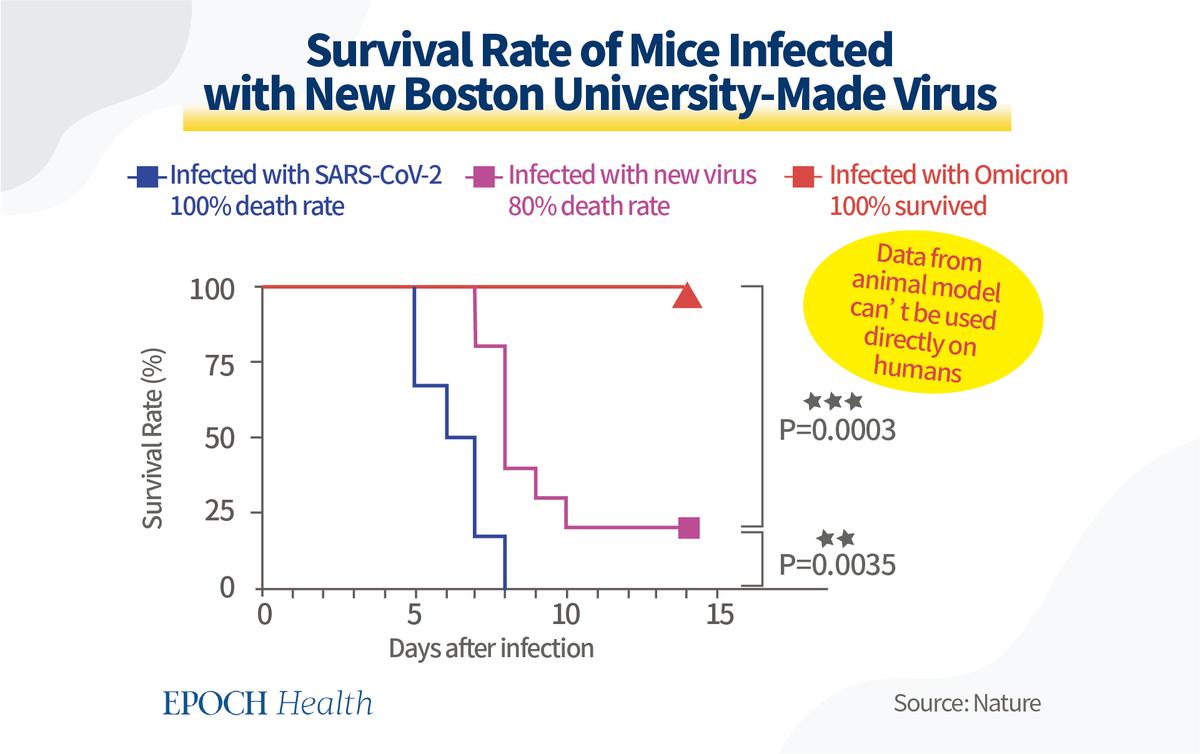
This research result can’t be interpreted as 80 percent of the humans will be killed by the new virus. Animal testing results can’t be directly applied to humans.
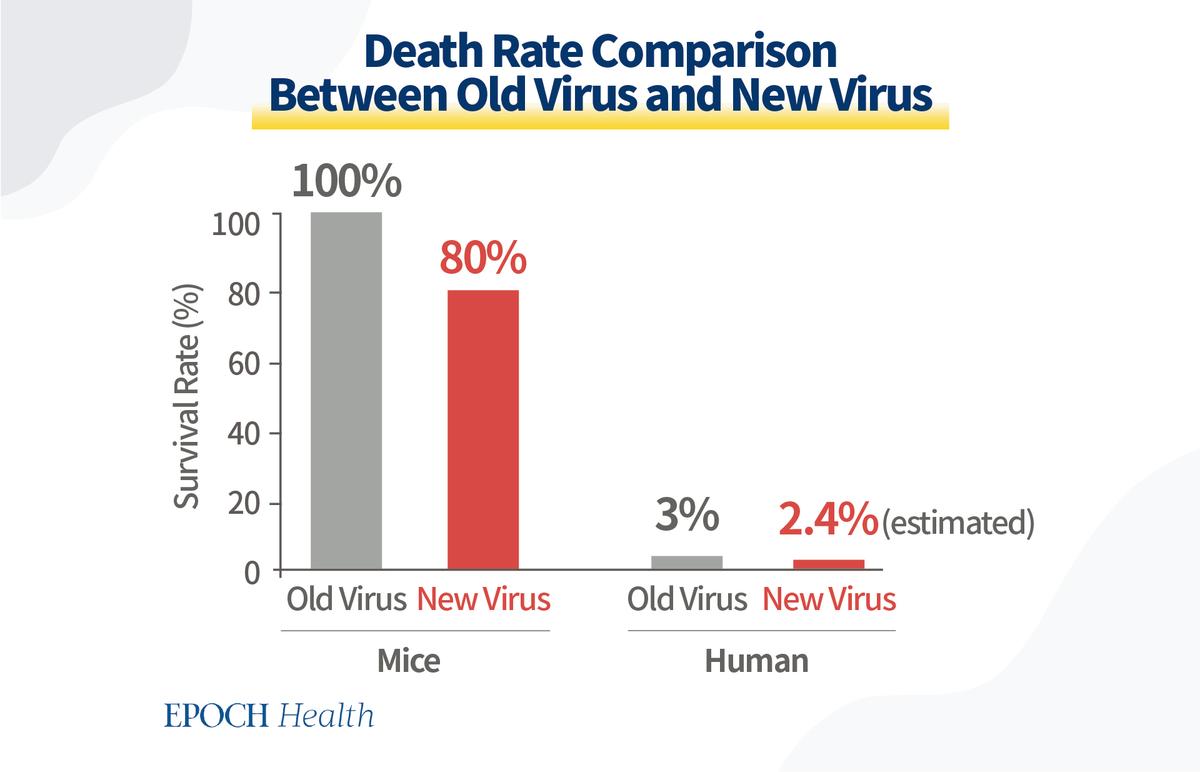
In fact, the mortality rate of the old Wuhan strain of SARS-CoV-2 is only 3 percent in humans, but it was 100 percent in this transgenic mouse model, so the mortality rate is magnified by 33 times from human to mouse.
When translating the 80 percent mortality rate of the transgenic model into humans, it may only be estimated to be 2.4 percent.
In summary, through the scientific deduction method, the Boston University-made recombinant virus has a mortality rate of 2.4 percent in humans.
Gain of Function Research
Meanwhile, I don’t think this type of gain-of-function research should continue.Since 2005, scientists have attempted to use genetic recombination techniques to create recombinant viruses. In other words, they want to artificially create new viruses to help develop vaccines, drugs, etc. It seems that the goal is to bring greater health to humans.
The way genetic engineering technology creates a recombinant virus is like assembling building blocks or puzzle pieces. In creating something new, it may also produce some unexpected viruses that are more virulent, more dangerous to humans.
In parallel, they put the wild-type SARS-CoV virus into a repeated adaptation process in mice, resulting in a more pathogenic, mouse-adapted SARS-CoV virus.
Then they took the part of the bat coronavirus spike protein and replaced the relevant part of the adapted SARS-CoV backbone.
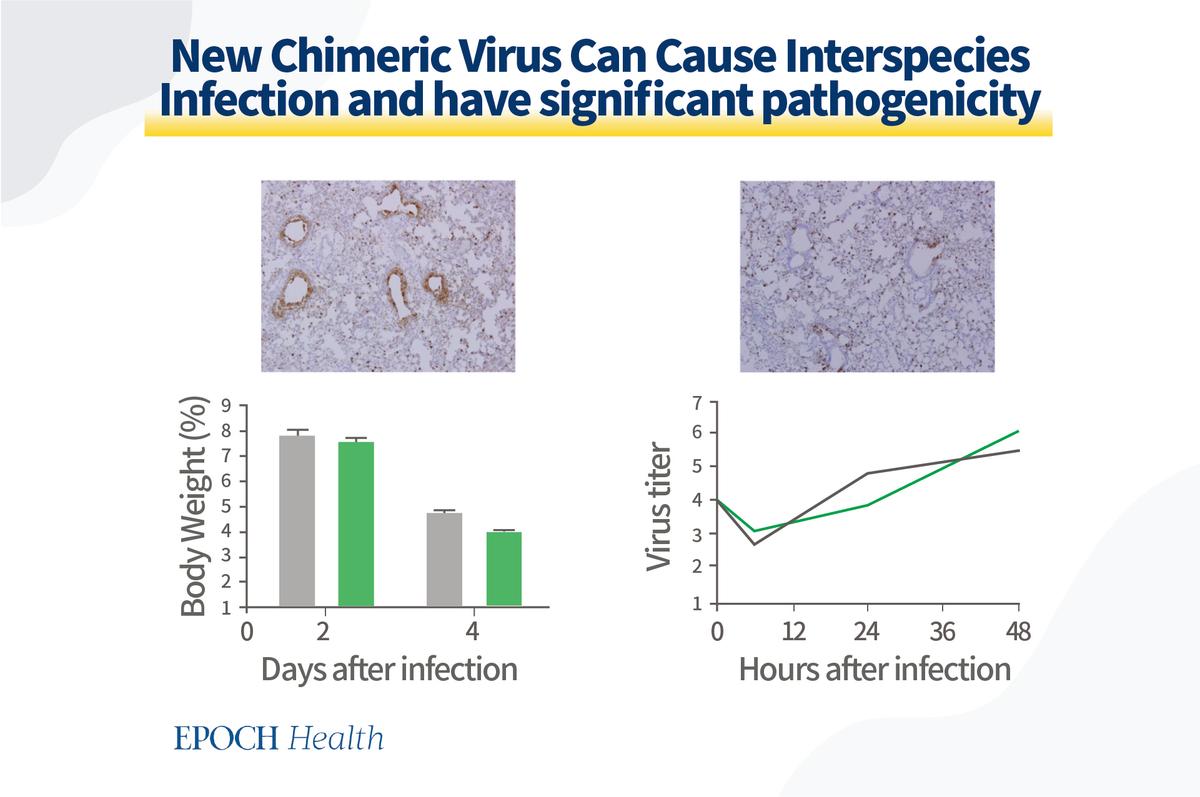
As a result, a novel chimeric virus that binds to the human ACE2 receptor, and thus has the ability to infect people and develop severe disease in the lungs, was created.
That is to say, a wild type bat virus (green, below) incapable of infecting mice or humans then obtained the ability to infect mice with significant pathogenicity, similar to SARS-CoV, and was able to infect humans. Their paper was published in Nature Medicine in 2015 as a new scientific invention, and an honor.
Indeed, manually creating a virus that is harmful to humans–these scientists don’t know what they are doing themselves.
The origin of the SARS-CoV-2 virus has been a controversial subject. The possibility of a lab leak has been one that still needs to be excluded. Now they are making new viruses, hoping to find a solution.
There are ethics considerations to scientific research. Not everything can be modified at will. We know that any species’ genes have the secret code of that species, it is not as simple as a plain protein.
Many developers also believe that there are many unknown and uncontrollable serious risk factors in gene therapy, as if shooting in the dark with no target in sight.
Scientific development can bring tragedy to humans. With the initial intention to cure illnesses, we end up potentially creating more illnesses. Doesn’t it mean that the direction of human scientific research and development has been misguided?
Hippocrates wrote 2,500 years ago, “The natural healing force within each of us is the greatest force in getting well.” Many natural healing methods are often overlooked.
Science and technology do need to develop, but it needs to return to rationality and return to the right path. Only by walking on the right path can sustainable development be achieved, and only then can the human world find the real path to true health.