Correct diet for your thyroid can offer many benefits like reducing the risk of hypothyroidism, which can lead to numerous health complications. But what foods should you be consuming for your thyroid? Well, we are about to tell you, but first it’s important to understand just how important the thyroid truly is.
Our thyroid is often overlooked unless a doctor raises concerns about it. Although you may not think about it much, it plays a major role in producing hormones and regulating our metabolism. When this process is thrown off, it can cause hypothyroidism (underactive thyroid).
Hypothyroidism and Diet
Just as our body requires nutrients for it to function properly, so does the thyroid. This is why diet is so important for proper management of hypothyroidism.There are certain types of food that are best for hypothyroidism. They are iodine-rich and selenium-rich foods. Before we outline foods for hypothyroidism, let’s discuss the importance of iodine and selenium in your diet.
Iodine is required for the normal functioning of the thyroid, so when the thyroid is under-performing, boosting iodine can help it. Iodine-rich foods may aid in symptoms associated with hypothyroidism and assist your metabolism. Selenium is also highly beneficial for your thyroid as it aids in the production of hormones making your thyroid not have to work as hard.
Table: Hypothyroidism diet meal plan
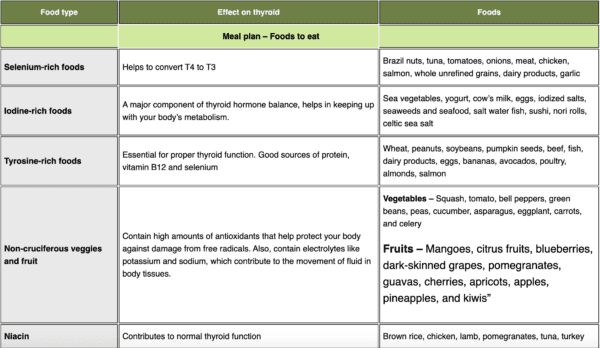
Iodine-rich foods for hypothyroidism
- Iodized salt
- Seaweeds and seafood
- Salt water fish
- Nori rolls
- Celtic sea salt
Selenium-rich foods for hypothyroidism
- Meat
- Chicken
- Salmon
- Tuna
- Whole unrefined grains
- Brazil nuts
- Dairy products
- Garlic
- Onions
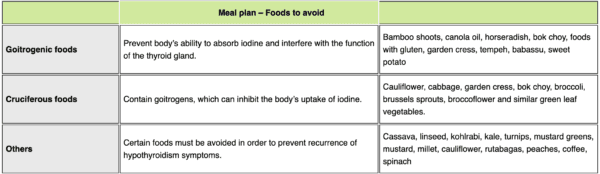
Foods to Avoid in a Hypothyroidism Diet
Many of the foods to avoid with hypothyroidism are common foods that should generally be avoided or limited as they do not contribute to good health. These items are:What Is Hypothyroidism (Underactive Thyroid)?
Hypothyroidism is a disruption in the normal processes carried out by the thyroid. Production of hormones reduces, which can lead to weight gain, constipation, changes in skin – becoming too dry – fatigue, and even depression.Hypothyroidism Symptoms
If you’ve already been diagnosed with hypothyroidism, then you are now aware of the best foods for your condition. If you have concerns about your thyroid, but haven’t gotten it checked out yet, this is a list of the symptoms you may be experiencing:- Thinning hair
- Depression
- Weight gain
- Constipation
- Dry skin
- Memory fog
- Weakness of muscles
- Elevated blood pressure
- Pain, stiffness, or swelling of joints
- Slowed heart rate
- Changes in menstrual cycle
- Elevated blood cholesterol
- Sensitivity to cold