



If you’re working from home all or part of the time, the chances are that your home working space is getting chillier as winter sets in. But with heating so expensive right now, having it on all day isn’t really an affordable option. So what can we do to stay warm?
In a cold room, the skin’s cold receptors are the first to be stimulated and cause the skin’s blood vessels to constrict, redirecting warm blood beneath the insulating fat layer we have just beneath the skin. Because hands and feet require blood flow to keep them warm and functional and have little fat coverage, they cool quickly. So, in a cold room, the first parts of us to feel the cold are the extremities: our fingers and toes.
The Solutions
Our first task is to keep our extremities warm by keeping blood flowing to them, and the best way of doing this is by maintaining (or raising) our core body temperature.There’s no need to heat a whole house or room. You’re much better off heating yourself up, and it starts with making sure you’re wearing appropriate clothing.
Clothes such as woollen jumpers and leggings trap millions of tiny pockets of air which provide insulation. Thermals are great, but multiple layers of ordinary clothing can work just as well. If sitting, a blanket or duvet over the legs and waist can help. Add a hot water bottle underneath, or use a wearable electric blanket if you want. Remember, heating the human not the house is much cheaper.
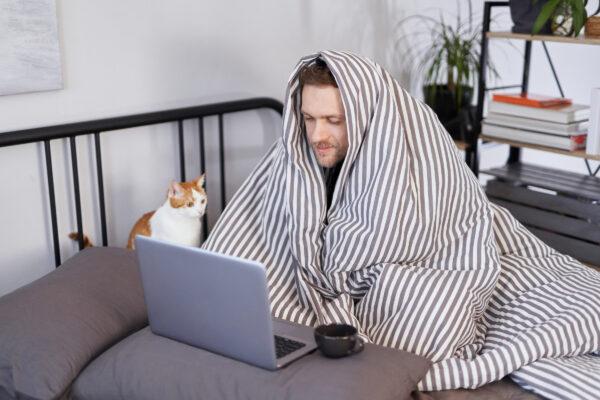
Because the temperature of the hands and feet dominates the overall perception of thermal discomfort, focusing on these areas is key. Think insulating socks, slippers and fingerless gloves. Placing your hands in your armpits when not typing can help, too. If you want to splash out, heated gloves and slippers could also be an option.
Other Tips
- Keeping hydrated is important for ensuring blood flow to the extremities. You don’t need to drink loads, but drink if you are feeling thirsty. Warm drinks are definitely comforting and make you feel “warmer” but don’t, in fact, affect your core temperature much, or for long.
- You need to eat enough calories to burn for heat generation. Most of us eat more than enough, though, and “extra” isn’t generally needed unless you are ill or malnourished for other reasons.
- Our cold receptors are very sensitive to changes in temperature, so draughts can make us feel disproportionately cold – and also waste energy and cost money. Use draught excluders at doors. Ensure that heat loss around and through windows is minimised. Make sure that the attic is well insulated. Also, as cold feet cause thermal discomfort, keeping them off the floor out of any draughts helps.
- Stress can also reduce blood flow to the skin, making you feel colder so try and avoid stress when working at home (if you can). Or kill two birds with one stone: if you feel yourself becoming stressed, step away from your desk and do a few minutes of exercise. You could even stick your hat, scarf and coat on and go for a brisk walk around the block, which should clear your head and warm you up.
- You can check the temperature of your fingers by touching your lips, if your fingers feel warm on your lips they are getting some blood flow, if they feel cold you need to do something to warm them up.
- If you are using your heating if possible heat the room you’ll be in rather than the whole house. Turning the thermostat down by just 1°C from 20 to 19°C can save you 10% a year in energy costs, and there are further savings to be made by reducing the temperature to the minimum recommended level of 18°C.
