This copy is for your personal, non-commercial use only. Distribution and use of this material are governed by our Subscriber Agreement and by copyright law. For non-personal use or to order multiple copies, please contact The Epoch Times Reprints.
At a news conference, Cameron said he was “not unsympathetic” to the cattle industry, but that he was concerned with the environmental impacts of animal agriculture and wanted to help reduce meat consumption and greenhouse gas emissions and improve health.
This is a critical time for our planet. What we eat and how we get our food will help shape its future.
Climate change, destructive weather, volatility in food production, and the rise of non-communicable diseases (diabetes and elevated blood pressure, for example) that have become the leading causes of premature death worldwide, demand that we think hard about what we eat and call for more sustainability in our global food systems.
Powered by Plants
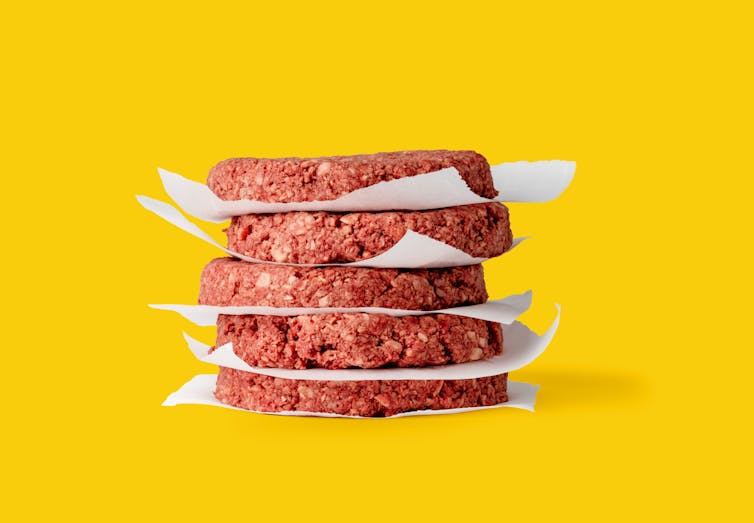
Last year set the stage for plant-based eating with the release of the Impossible Burger and other plant-based proteins that resemble beef. People can live well eating plant-based diets, and the appetite for them is growing.
The Impossible Burger is a plant-based burger made from wheat, coconut oil, potatoes and heme. Impossible Foods
A 2016 survey found that 17 percent of Americans adhere to a plant-based diet exclusively or predominantly, while another 60 percent are cutting back on meat-based products. Similar trends are taking hold in Europe and Asia.
A decrease in meat-eating could help governments save billions in health care costs. High levels of meat and saturated fat consumption are linked to a growing burden of chronic conditions, such as diabetes, cardiovascular diseases, and some cancers.
In Canada, a recent report found that provincial health-care spending could rise to 80 percent of budgets by 2030 if diets and lifestyles remained unchanged. In the United States, national health expenditures are expected to account for 20 percent of GDP by 2025. These escalating costs are mostly driven by an increase in the use of drugs, medical technology, and human resources to treat these diseases.
Planting Ahead
Global food systems are increasingly generating severe human, social, environmental, and economic costs. In an effort to boost efficiency, productivity, and profits, we have intensified and mechanized agricultural processes, including plant and animal breeding.
For example, it is grossly inefficient to grow grains and feed them to livestock. It would be 10 times more efficient if humans ate these grains and seeds instead.
Both the United Nations and the Food and Agriculture Organization have called for reforms in food and farming systems. The evidence gathered reveals the need for limits on chemical-intensive agriculture, intensive livestock production, and the mass production and mass marketing of ultra-processed foods. The evidence also points to the need for sustainability practices to drive needed improvements to global commodity supply chains.
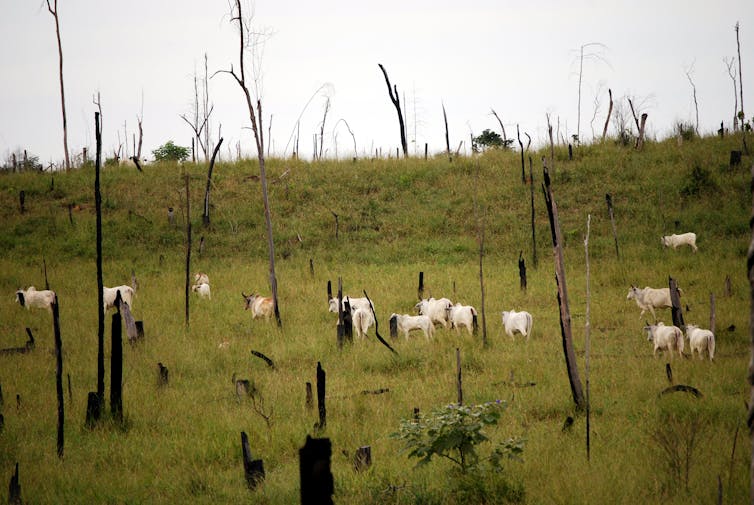
Cattle ranching is a leading cause of deforestation in Brazil. Shutterstock
In short, they are advocating for more sustainable diets across the planet. Sustainable diets seek to achieve positive outcomes for people, animals, and the planet by taking into account health, environment, and access to food in the diet, as well as lifestyle.
Independent research groups, such as IPES-Food, are also collaborating with citizens and social movements to shape policies and encourage the transition to more sustainable food systems.
In a recent report, IPES-Food and the Global Alliance for the Future of Food highlighted the many ways food is connected to our lives. They urge governments, industry and citizen-consumers to build more integrity into food systems by applying reliable approaches that are holistic, publicly supported and that replace poor outcomes with inspiring and sustainable results.
Succulent Opportunities
Innovation with greens and plant-based foods is already worth billions and is expected to keep growing. With plant-based businesses growing exponentially, traditional food companies are seizing opportunities to invest in plant-based brands.
Maple Leaf Foods, Canada’s largest meat distributor, extended its product line to include plant-based protein foods by acquiring Lightlife Foods and Field Roast, which offer grain-based “meat” and vegan cheese products. These are not lightweight businesses: Field Roast had approximately $38 million in sales in 2016.
Many more business opportunities await those with imagination. More succulent foods are anticipated in the market and some will include pea protein from the facility launched by James Cameron and team.
The future could mean cleaner air, water, and fortified soils, along with healthier and more equitable lifestyles—all powered by delicious plant foods.




 The future could mean cleaner air, water, and fortified soils, along with healthier and more equitable lifestyles—all powered by delicious plant foods.