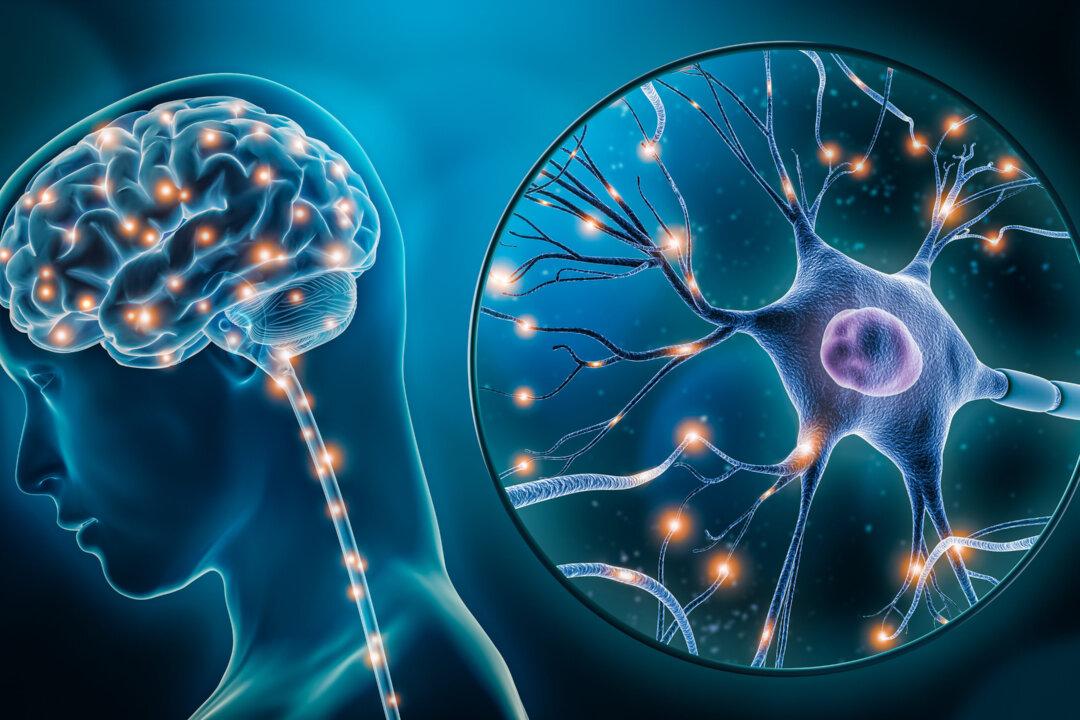
How we perceive the world, form memories, and experience satisfaction fundamentally define the way we live and who we are. Recent science and widespread firsthand accounts now show that hormonal contraception, including the birth control pill, profoundly affects these domains by altering the structure of the brain and our neurochemistry.
Hormonal contraception (HC) has long been regarded as a relatively safe and effective option for women seeking to prevent pregnancy since the 1960s. It has also been prescribed for a wide range of conditions ranging from acne to polycystic ovarian syndrome.
How the Pill and Other Hormonal Contraceptions Work
In a naturally cycling woman, the first two weeks of the ovarian cycle is called the follicular phase, which ends with a sharp increase in estrogen—which is not just one—but a group of sex hormones. Around day 14, the ovary releases an egg, known as ovulation.The next phase is known as the luteal phase and is marked by a rise in the hormone progesterone. When there is no fertilization, menstruation occurs and the two hormones return to baseline levels. The cycle begins again, typically lasting roughly 28 days in total.
Attraction, Perception, and Memory
Jasmyne Theodora, a content creator who focuses on traditional femininity, began using the Mirena IUD when she was 17. Now 23, she explained how she began using it because her cycle was irregular and her periods were difficult. Though an IUD is hormonal, it does not have a control week like the birth control pill, so she lost her period completely.But, as she began to learn how the cycle is a strong indicator of overall health, she questioned her decision to use HC and began her research.
“Instead of completely stopping my period, I wanted to get to the root cause of why it was so uncomfortable because it really should not be a horrible time for women,” Theodora told The Epoch Times.
Theodora shared her own change in partner preference.
“When I was on the [IUD], the men I dated were actually mostly shorter than me. They were very agreeable, very nice guys,” she said. “When I got off the [IUD], I was attracted to a completely different kind of man,” she said.
Before the IUD, she said she tended to be attracted to taller, more masculine men. After she stopped in 2021, she found herself returning to this preference in dating and marrying her husband.
Theodora also noticed that after she stopped HC, she felt more exuberant.
“I just felt I had a bit more of a verve for life. I didn’t realize that I felt kind of ‘blah’ until I got off of it … I just had a bit more enthusiasm for everything.”
From a chemical lens, this lack of cortisol response might be interpreted as lessened stress on a subject, which some may even consider a positive outcome, but that likely isn’t the case.
“... The pill-taking women’s pattern of HPA-axis function looks suspiciously similar to that of someone who has experienced chronic stress, suggesting that the pill might actually cause the HPA axis to go into overdrive, requiring it to take coordinated action to blunt itself.”
In considering four biomarkers of chronic stress exposure, researchers found that HC users displayed all four, including reduced volume of the hippocampus, a major part of the brain involved in memory and spatial navigation, as published in Nature’s Scientific Reports in 2017.They showed both groups either an emotionally arousing story or a more neutral story with similar content. Naturally cycling women showed greater recall of details, but not of the gist of the emotional story. HC-using women were inverted, showing great recall of the gist, but not the details.
A Tale of 2 Estrogens
Dr. Felice Gersh, an OB-GYN practicing integrative medicine based in California, described the synthetic hormones used in HCs as “endocrine disruptors,” whereas natural estrogen and progesterone are actually neuroprotective.“When you take birth control pill estrogen, that is really an endocrine disruptor,” she told The Epoch Times. “They’re chemicals. They’re never naturally found in a human body.”
Three main estrogens operate in the body: estrone, estradiol, and estriol. The most important and prevalent is estradiol. It is what HC mimics with the use of synthetic ethinyl estradiol.
In the brain, the hypothalamus—responsible for much of the body’s automatic functions—and the limbic system—involved in emotion, reproduction, and survival—are more populated with alpha estrogen receptors, which estrone binds to.
In the cerebral cortex—the outer part of the brain that contributes to cognition, memory, and consciousness—there are more beta estrogen receptors, which estriol binds to. The cortex is usually viewed as the newest part of the brain, involved in higher-order functioning.
Activation of one receptor type influences other receptors, Dr. Gersh said, i.e., increased alpha activity will reduce beta activity. But, natural estradiol can convert into either estrone or estriol, and it has a more balanced effect on all estrogen receptors.
However, she said, ethinyl estradiol, the estrogen used in HC, is heavily converted into estrone in the body. She speculates that this can produce an uptick in alpha activity, potentially depriving the cerebral cortex of beta receptor activation.
Toward New Ways to Manage Fertility
There is no doubt that hormonal contraception has produced a range of benefits for women since its widespread use. It can help women regulate hormonal issues in cases where other treatments fail. It can potentially reduce the risk of certain cancers. And, it affords women a greater degree of freedom over their fertility and reproduction.However, when it was initially formulated 70 years ago, we knew little about how hormones operate in the body, Dr. Gersh stressed.
“I’m not in favor of uncontrolled fertility, but we have to be honest about what we’re doing,” she said. “And, if we don’t acknowledge that this is happening, then we’ll never come up with better ways to control fertility.”
Theodora, a newly minted mother, acknowledged the benefits of HCs but also said if she knew then what she knows now, she would likely not have started using it.
“You are your hormones. Your hormones make up who you are to a very large extent,” she said. “When you take birth control, it affects your hormones … so significantly that it definitely can change who you are.”