The plane had not yet left the gate, but Dan’s heart was already pounding. His hands gripped the armrests as he stared out the window, watching baggage carts move across the tarmac. The space felt too small and enclosed, and every delay made the takeoff feel even scarier.
Dan had studied the statistics. He knew that commercial airlines have been becoming safer every year, yet he, like millions of people, still panicked at the mere thought of flying. Longtime airline captain Tom Bunn, author of “Soar: The Breakthrough Treatment for Fear of Flying,” has seen such disconnect throughout his career.
“A person can know the plane is safe and still feel terrified,” Bunn told The Epoch Times. “The problem is not logic. It is what the body has learned to fear.”
Why Fear of Flying Develops
Aviophobia doesn’t usually begin with a single bumpy flight. It often develops over time, influenced by the way the brain misreads certain feelings as something dangerous.Fear of flying is also not simply about altitude.
“Aviophobia, like all phobias, derives from a fear or fear response that arises in situations consisting of a lack of certainty or a lack of control,” Ohad Hershkovitz, a clinical psychologist, told The Epoch Times.


People can fear flying for countless reasons, Eric Goodman, a clinical psychologist and author of “The Mindful Freak-Out,” told The Epoch Times.
“For some, it’s about germs and contamination within the context of [obsessive-compulsive disorder],” he said. “Others may fear awkward small talk with the person sitting next to them.”
Some people may feel trapped and claustrophobic while in an airplane, he said.
The fear can develop at any stage of life. You may have easily flown without a care in the world when you were younger, but suddenly start worrying about turbulence when a close friend moves far away. Some people fear the unknown because they have never flown, while others experience unrelated life stressors that change how safe the world feels.
What Fear Does to Your Body
Once someone with flight anxiety steps onto a plane, their body can shift into full survival mode.“The real problem occurs when people interpret their anxiety as a threat in itself,” Goodman said. When this happens, the mind becomes overrun by fear.
“Now they’re not only anxious about the flight—they’re anxious about being anxious on the flight—which amplifies panic,” he said.
Shifting into survival mode turns off the rational part of the brain and activates physical symptoms of anxiety such as trembling, muscle tension, rapid heartbeat, and feeling trapped. The body wants to run, but it can’t, which makes the situation even worse.
At a biological level, this reaction begins in the amygdala—the area of the brain that detects danger—activating the sympathetic nervous system and releasing stress hormones such as adrenaline and cortisol. These hormones increase the heart and breath rates to deliver more oxygen, changes designed to protect the body even when no real threat is present.
Professional Treatments That Work
Several evidence-based therapies can help retrain your brain’s response to flying.Virtual Reality
Best for: Safe exposure practice, especially for people afraid to even step onto a plane.Virtual reality therapy allows you to simulate flying without leaving the ground. The therapy involves wearing a headset that generates the experience of being in an airplane cabin.
“[Virtual reality] lets you experience takeoff, turbulence, and landing in a controlled environment,” Goodman said.
The brain reacts to virtual reality as if it were actually on a plane, making the experience a powerful way to retrain how it responds to fear. Over time, people learn that they can handle the anxious reactions that once overwhelmed them, and many find that they can fly again.
Cognitive-Behavioral Therapy
Best for: Understanding and changing thought patterns that trigger panic.Cognitive-behavioral therapy (CBT) is a practical approach that helps you understand what your mind is doing when fear takes over. It teaches you how to catch anxious thoughts before they spiral out of control and gives you skills to calm your body when it starts to panic.
“CBT is an evidence-based psychotherapy that has proven very effective for phobias, including aviophobia,” Hershkovitz said.
Acceptance-Based Therapy
Best for: People who struggle with needing to control their anxiety or who find that fighting fear makes it worse.Some people find that the harder they try to get rid of fear, the stronger it is. Acceptance and commitment therapy is offered by trained therapists who guide people through practical exercises to help them face their fears rather than avoid them.
In acceptance and commitment therapy, a therapist encourages people to notice sensations and mental chatter with a gentle acceptance while staying focused on their end goal, whether that is visiting family across the country or going on a long-awaited vacation.
“[Acceptance and commitment therapy] teaches individuals to move toward what matters to them—such as being able to fly to attend a child’s college graduation—while developing a healthier, more adaptive relationship with the difficult emotions that arise,” Goodman said.
Eye Movement Desensitization and Reprocessing
Best for: Fears linked to past traumatic experiences or memories.Eye movement desensitization and reprocessing (EMDR) was first developed to help people recover from trauma such as post-traumatic stress disorder. Over time, researchers found that it also helps with specific fears, including fear of flying.
Hypnotherapy
Best for: Creating new automatic responses and reinforcing other therapeutic approaches.Hypnotherapy uses guided focus for relaxation. In the hypnotic state, the brain is less guarded and more able to learn new ways to respond to fear. For flyers, this can mean eliminating the negative thoughts that often trigger panic. Hypnosis helps create new associations so the body no longer reacts to flying with anxiety-producing thoughts, sweaty palms, or a racing heart.
5 Tips for Quick Anxiety Relief on Your Next Flight
Even with professional treatment, fear can come on suddenly during a flight. Having tools at the ready can give you a quick reset and help you to maintain composure. The following practices are simple, discreet, and supported by research. You might think of them as your in-flight emergency kit.1. Sensory Grounding
When anxiety spikes, the mind begins to focus on the worst-case scenario. Sensory grounding is widely used by clinicians to interrupt spiraling thoughts by shifting attention to immediate surroundings.On a plane, notice the texture on the back of the seat, the color of your seatmate’s sweater, or a child’s voice in the seat behind you. The key is to deliberately name these sensations in your mind, which helps you identify what you see, hear, or feel. Noticing surroundings pulls attention away from imagined danger and into the present moment.
2. Breathe Slowly
Not all breathing patterns soothe anxiety equally. Rapid, shallow breathing can reinforce panic, while slow, deliberate breathing helps guide the body in the opposite direction.3. Allow Sensations
Fear often intensifies not because of turbulence itself, but because of how the body reacts to it—such as with a racing heart, tight chest, or shaky hands. Fighting those sensations tends to make them stronger.- Name What You Feel: Instead of noting that “something is wrong,” be more specific, such as “my heart is pounding” or “my hands feel shaky.” Labeling your sensations reduces the brain’s alarm response.
- Allow Sensation for 10 to 20 Seconds: Tell yourself, “This is uncomfortable, not dangerous.” Let the feeling rise and fall on its own without trying to stop it.
- Drop Your Shoulders and Relax Your Jaw: Panic causes muscles to tighten. Softening the body signals to your nervous system that it is not in danger.
4. Tap
“Bilateral stimulation (used in EMDR) can be used discreetly during a flight with handheld buzzers, specialized audio with earbuds, or with tapping your shoulders while visualizing a safe, calm place,” Shida said.Tapping techniques could involve alternating taps from left to right at a steady pace while focusing on a neutral or calming image. Rhythmic back-and-forth stimulation gives the brain something to track, which can help interrupt the fear cycle and restore balance to the nervous system.
5. Hypnotherapy Anchors
Think of a hypnotherapy anchor as a personalized “calm button” you train in advance and then use when you need it most.Before your next flight, choose one small action you can do discreetly while in your airplane seat, such as gently pressing your thumb and finger together, silently saying a soothing word—such as “steady” or “safe”—or taking one slow breath in and a longer breath out. Practice pairing that action with calm moments before you fly.
Then, on the plane, use your chosen cue every time you feel a spike of anxiety and focus your attention on the feeling of your body easing, even for just a few seconds at a time.
A New Relationship With Flying
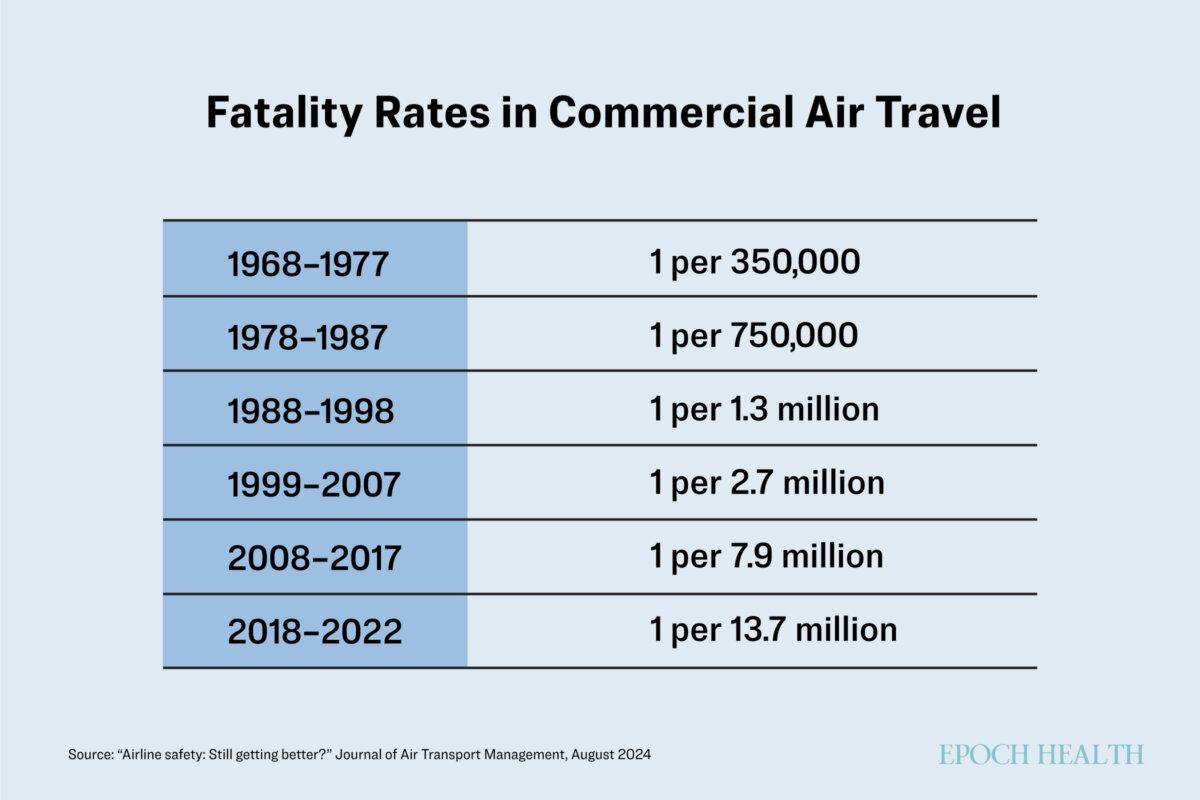
Statistics alone don’t cure fear, but the odds of dying in a plane crash are about one in 13 million, far lower than the odds of dying from many ordinary daily tasks. Traffic crashes account for nearly 40,000 deaths each year. Falls send more than 8.8 million Americans to emergency rooms, often from trips on stairs or slips in the shower. Chemical exposures from everyday household cleaners trigger more than 100,000 emergency room visits and there are more than 100,000 poisoning deaths annually.Commercial aviation has become extraordinarily safe, and it keeps improving.
Still, statistics rarely ease nervous flyers once the cabin door closes. That’s why the tools and therapies above focus not on convincing your rational brain, but on retraining your body’s automatic response.
Fear of flying is highly treatable. Every expert interviewed emphasized the same message: Your symptoms are real, but with the right tools, your brain and body can learn a new way to respond to them.