A Drug Marketed as a Natural Supplement Is Sending More People to Poison Control Centers

Researchers noted that the increase coincides with more people using kratom and the emergence of higher-potency products.
A Drug Marketed as a Natural Supplement Is Sending More People to Poison Control Centers
Iryna Imago/Shutterstock
|Updated:
0:00

It sits on the same shelf as energy drinks and beef jerky, marketed as a natural herbal supplement. But according to new federal data, kratom—widely available at gas stations and convenience stores across the country—is now sending more people to poison centers than ever before, with cases up more than 12-fold in a decade.

From just 258 calls in 2015, reports to U.S. poison centers reached a record high of 3,434 last year, according to a March analysis published in the Centers for Disease Control and Prevention’s Morbidity and Mortality Weekly Report.

Researchers of the study noted that the rise coincides with survey data showing more people are trying kratom, along with the emergence of high-potency products, including semisynthetic formulations containing concentrated 7-hydroxymitragynine (7-OH), a powerful opioid-like compound now sold in products such as extracts, gummies, and liquid shots.

The study also found that while most reports involved younger adults, the sharpest increase occurred among adults ages 40 to 59. By 2025, exposure report rates in this group had risen to nearly match those among adults ages 20 to 39.
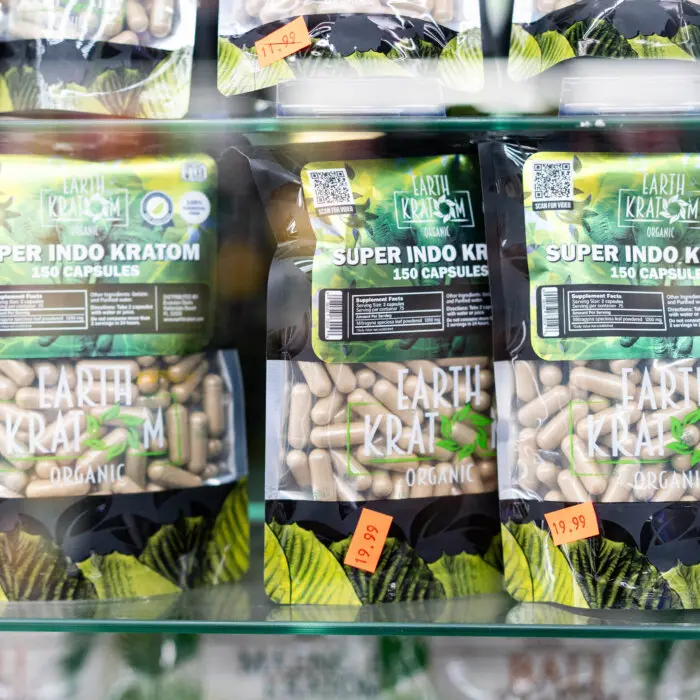
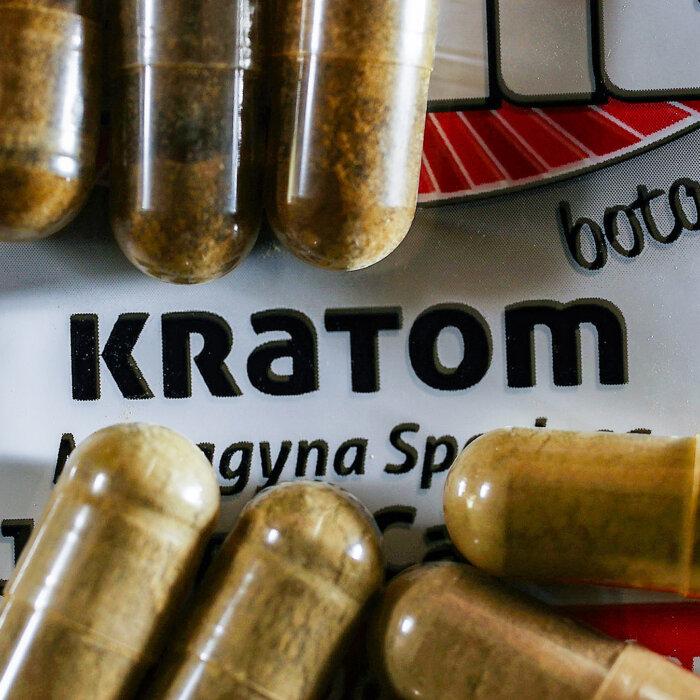
Because kratom is widely available without a prescription and often marketed as a natural remedy to manage chronic pain, anxiety, depression, or substance withdrawal—often as a form of self-medication—some people may view it as a more accessible or less risky option than prescription medications or illicit drugs.
“Just like with other substances, people use kratom to feel better or to feel good,” Dr. Eileen Barrett, a board-certified physician in internal and addiction medicine who previously wrote a commentary about the importance of physicians being knowledgeable about kratom, told The Epoch Times.

However, not everyone gets the exact result they are seeking.

From Ground Leaf to Potent Extracts

Kratom comes from the leaves of a tropical tree (Mitragyna speciosa) native to Southeast Asia.

The plant contains two main psychoactive compounds, primarily mitragynine and 7-OH, both of which act on opioid receptors in the brain.

At lower doses—typically around 1 to 5 grams of leaf material—kratom can produce stimulant-like effects such as increased energy and alertness. At higher doses, generally above 5 grams, it produces opioid-like effects including pain relief, relaxation, and euphoria. However, these ranges were developed based on traditional leaf products.

Today, many products are not simply ground leaves but concentrated extracts, isolated alkaloids, or chemically modified products designed to increase the amount of 7-OH. These products can be far more potent than traditional leaf preparations, meaning even a single extract shot or gummy may produce strong opioid-like effects.

“The 7-OH component is particularly dangerous because it binds to the opioid receptors many times more potent as morphine,” Barrett said. The U.S. Food and Drug Administration noted that 7-OH is 14 times as potent as morphine and 46-fold as potent as mitragynine. Users may experience morphine-like euphoria, but are also exposed to serious risks, including dependence, overdose, and even death. “I have seen patients who had to wake up in the middle of the night every 2 to 3 hours from withdrawal to take more.”

The risk is compounded by how kratom products are marketed and sold. “Unfortunately, people commonly believe kratom products are safe because they are perceived as natural—and they are also marketed that way,” Barrett said.

Many products marketed as natural are not simply ground leaves but more potent derivatives of kratom’s chemical compounds, Dr. Cooper Stone, a clinical assistant professor of psychiatry and behavioral science at the Perelman School of Medicine at the University of Pennsylvania, who was not part of the analysis, told The Epoch Times.

Some products have also been found to contain contaminants such as microbes and heavy metals, Barrett said. The FDA has also previously warned about Salmonella contamination linked to kratom products, and there have been reports of products adulterated with substances such as fentanyl.

“What was thought to be a well-meaning attempt at relief can quickly transform into a nightmare, whether it be accidental overdose or addiction,” Stone said.

Serious Cases

The findings suggest that the danger may not be with the kratom alone, but how it is often alongside other substances.

While most kratom-related poison center calls involved kratom alone, cases involving multiple substances were far more likely to result in hospitalization or death. The most common substances involved were alcohol, opioids, benzodiazepines, stimulants, and antidepressants.

Hospitalizations linked to multi-substance exposures rose sharply—by about 13-fold over the study period. Nearly eight in 10 deaths involved multiple substances; opioids were involved in about six in 10 fatalities, followed by benzodiazepines, stimulants, and alcohol.

At higher doses, kratom acts as a central nervous system depressant—similar to opioids, benzodiazepines, and alcohol. It also acts on opioid receptors. Therefore, experts say combining kratom with other substances can amplify their effects, slowing breathing, lowering blood pressure, and increasing sedation. Kratom may also interfere with liver enzymes that help break down drugs, potentially causing drug levels to rise and increasing overdose risk.
Previous research cited in the report found that about one-third of kratom users meet criteria for another substance use disorder, while roughly two-thirds report using kratom to manage depression or anxiety. Suspected suicide attempts were also more common in multi-substance cases.

Dr. Christopher Holstege, a medical toxicologist and medical director of the Blue Ridge Poison Center at the University of Virginia, who co-authored the report, told The Epoch Times that the finding raises concern. “We are seeing patients in our addiction clinics taking kratom, and people with addiction are at an increased risk of suicide.”

“When you’re desperate for relief, many people will try anything, particularly if it’s marketed to you in the right way and hyped up online,” Stone said. Many people already taking medications for anxiety, depression, or substance use disorders may turn to what they believe are benign natural remedies when they don’t experience enough relief, unaware of the interaction risks, he added.

Calls for Oversight

Kratom products are largely unregulated in the United States.

Manufacturers are not required to disclose exact formulations, leaving consumers with no reliable way to know a product’s potency, contents, ingredients, and potential drug interactions.

Part of the reason is that kratom occupies a gray area between herbal supplement and psychoactive drug.

Unlike prescription medications, dietary supplements do not require FDA approval before being sold. Federal efforts to classify kratom as a Schedule I controlled substance in 2016 faced strong backlash from advocacy groups and some researchers, who argued it may help some people manage pain or opioid withdrawal. Since then, debate has continued between those calling for stricter regulation because of rising reports of addiction, contamination, and overdose, and those pushing for regulated legal access rather than outright bans.
Regulation varies by state. Some states—including Alabama, Arkansas, Indiana, Rhode Island, Vermont, and Wisconsin—have banned kratom. Others allow it but have adopted measures such as age restrictions, labeling requirements, and limits on certain high-potency products through laws like the Kratom Consumer Protection Act.
Kratom is not the most common substance Cooper sees in his practice, but he has noticed rising use in recent years. Some families who have lost loved ones to kratom-related deaths have also begun raising awareness, sharing their stories through advocacy efforts and documentaries to warn others about the potential dangers.

For those already struggling with dependence, Barrett said, treatment is available. “I’ve seen how people with harrowing dependence get their lives back.”


Rachel Ann T. Melegrito
Author
Rachel Melegrito worked as an occupational therapist, specializing in neurological cases. Melegrito also taught university courses in basic sciences and professional occupational therapy. She earned a master's degree in childhood development and education in 2019. Since 2020, Melegrito has written extensively on health topics for various publications and brands.