Dr. Grace Lui Chung-yan, clinical associate professor (honorary) from the Department of Medicine and Therapeutics at CU Medicine, said, “Current clinical guidelines recommend that people living with HIV have regular cardiovascular risk screenings. Though there are various traditional risk prediction models, none has been developed for HIV-infected populations, so there is a need to look for the best model for them.”
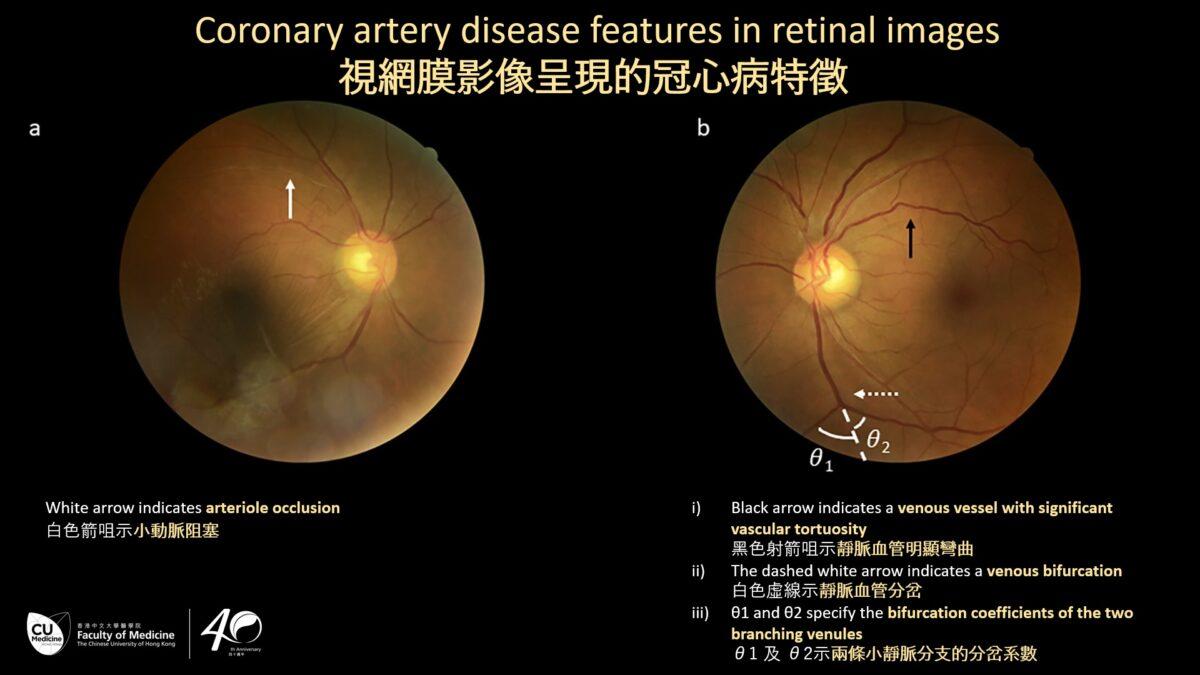
Professor Benny Zee Chung-ying, director of the Centre for Clinical Research and Biostatistics at The Jockey Club School of Public Health and Primary Care at CU Medicine, added, “Recent studies have shown retinal image characteristics are closely linked with multiple cardiovascular risk factors and major cardiovascular events. Features including arteriolar and venular calibre, curvature tortuosity and branching complexity have been shown to have associations with coronary artery disease.”
For this purpose, a research team at CU Medicine recently recruited 115 patients who were HIV-infected and had one or more risk factors for cardiovascular disease. The team analyzed the patients’ retinal features in combination with traditional cardiovascular risk factors. The results showed that out of the study population, 71 individuals (62 percent) had coronary atherosclerosis, and 23 individuals (20 percent) had obstructive coronary artery disease, which was detected through computerized tomography.
Researchers used instruments to capture retinal images of participants and utilized machine learning and deep learning to identify pertinent retinal features. The results showed this new risk prediction model was more than 90 percent sensitive and specific in assessing the risk of these two major coronary heart diseases in HIV-infected patients.