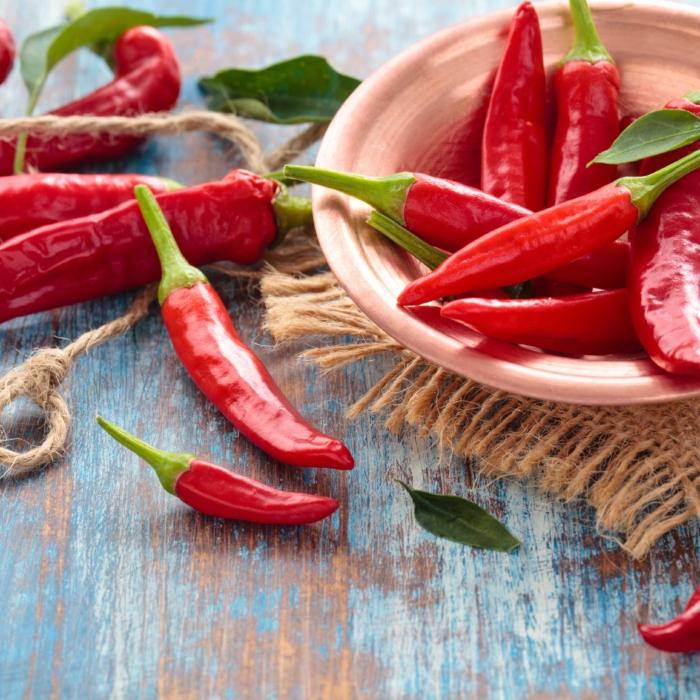
It’s hard to deny the popularity of the chile pepper (Capsicum annuum). This fiery fruit originated in Mexico thousands of years ago. Over the past few centuries, it’s become an indispensable ingredient in cuisines around the world.
Peppers do much more than spice up food. Research shows that chiles can relieve pain, reduce blood pressure, lower your risk of Type 2 diabetes, and may even help you lose weight.
“Compared with those who ate spicy foods less than once a week, those who consumed spicy foods 6 or 7 days a week showed a 14% relative risk reduction in total mortality,” the study authors wrote.
The all-mortality risk reduction was even stronger among spice-loving consumers who also didn’t drink alcohol.
The Health of Heat
It’s clear that chiles have a lot going for them, but it’s that spicy burn that makes people hungry for hot peppers.
However, such a craving seems counterintuitive. In the endless quest to find something to eat, we naturally seek pleasant tastes such as sweetness and saltiness. What would make us seek food that causes pain? Other mammals avoid hot peppers, and instinctively reject their spicy bite, so why have they become so popular with people?
To watch a hot pepper-eating contest is to witness the face of absolute agony. Yet, every few years, someone manages to produce an even spicier pepper specimen, tempting chile lovers with an even more agonizing experience.
Perhaps part of us knows that chile pain is beneficial. Capsaicin is the chemical that gives peppers their signature sting. It is also where researchers have found the bulk of chiles’ medicinal value.
Long before capsaicin was first isolated in 1816, doctors used chiles to treat a number of ailments, most commonly for pain. How can a food notorious for inflicting pain also be used to relieve it? According to the philosophy of homeopathic medicine, this is the principle of “like cures like.” It’s the idea that a substance known to cause a particular reaction in a healthy person can be used to treat those who suffer from similar symptoms.
The Reward Factor
The research also suggests the analgesic effect of capsaicin might be associated with increased activity of the cerebral opioid system—the same system stimulated with much harder drugs such as heroin and morphine.
The flavor of a particular chile pepper may have sweet or savory notes. However, we experience its heat through temperature receptors, not taste receptors. When you bite into a pepper, capsaicin molecules connect with temperature receptors on your tongue known as the heat-sensitive transient receptor potential vanilloid type-1 cation channel, or TRPV1 for short.
TRPV1 is tripped anytime your tongue touches a heat source. Take a sip of tea, for example, and the sensory input of TRPV1 lets you know if your beverage is ready to drink or still too hot to handle.
Hot but Not
Capsaicin also stimulates TRPV1, but it creates only an illusion of heat. Depending on the spice level of the pepper, that illusion can become extremely intense. You may even feel as if your entire intestinal tract is on fire.
TRPV1 is found throughout the body. Rub your eyes or elsewhere after handling chopped habaneros, and a burning sensation at that location is sure to flare up. The experience may be excruciating, but you’re not really on fire. Even for those who suffer through eating the hottest of peppers, the pain fades after a few minutes.
However, researchers have found that the burning illusion that peppers provide can actually stimulate the body to repair underlying features of other types of pain.
In a clinical trial published in 2023 in Pain, researchers studied people with nerve pain. With just a single application of a topical, high-concentration capsaicin treatment, they found “a significant reduction in pain intensity,” with more blood flow observed at the pain site.
“Half of the patients not only showed a functional recovery but also an improvement in vasodilatation, indicating regeneration of nerve fibers,” the study’s authors wrote. “The degree of vasodilatation significantly correlated with pain reduction.”
This study suggests that capsaicin can have a lasting pain-reductive effect, but keep in mind that not everyone will experience favorable effects.
Not for Everyone
The problem for some isn’t the capsaicin. Peppers are part of the Solanaceae family of plants, otherwise known as nightshades. Some other Solanaceae plants are tomatoes, eggplant, potatoes, goji berries, and ashwagandha. Nightshades contain a small amount of a chemical called solanine. The chemical is found in the highest concentration in poisonous nightshades, though most of us can eat nightshade vegetables with no ill effects. However, for people who are particularly sensitive to the chemical or who have a solanine allergy, nightshades have been known to cause inflammation and arthritis.
A Better Burning Metabolism
Even people without nightshade sensitivities may shy away from peppers because they simply can’t take the heat. In doing so, they’re missing out on a wealth of nutrients. Even the mild varieties are a rich source of minerals and vitamins and are particularly high in Vitamin C. Chiles also contain fiber, flavonoids, and other antioxidants. Plant sterols found in peppers may help lower cholesterol.
These spicy, nutritious plants come with another benefit. While most foods seem to cause us to pack on the pounds, chile peppers might help take them off.
How Does It Work?
Peppers aid weight management from a number of angles. One way is that peppers increase intestinal blood flow, thereby improving nutrient absorption while decreasing blood flow to fat tissue.
Part of these benefits come when capsaicin activates TRPV1, which increases our body’s intracellular calcium levels and triggers the sympathetic nervous system.
Another slimming feature of chiles is that they have been found to activate what is called brown fat. Compared with white fat, which simply hangs over your belt and builds up with excess calories, brown fat is more metabolically active, meaning you burn more calories even at rest.
Brown fat also breaks down blood sugar, and chiles have been shown to improve insulin control, suggesting that these spicy fruits may help with diabetes.
Of course, chiles are no replacement for exercise and a good diet, but they may certainly lend a helping hand—and you may not need much to make a difference. The positive effects on weight management with chile peppers in human studies were seen in a wide range of doses: from a single spicy meal to regularly eating chile peppers for up to 12 weeks.
Although chile peppers may not be a magic weight-loss pill, researchers have said there is still good evidence that it may play an important role in body weight regulation.
“Capsaicin seems to have a beneficial direct effect on gut microbiota, by promoting the growth of ‘anti-obesity’ bacteria and eliminating undesired pathogens,” researchers wrote in the 2022 review.