As the debate surrounding body composition measurements intensifies, health care professionals and researchers question the reliability of body mass index (BMI) as an indicator of health. While BMI has been widely used for more than a century, critics argue that it fails to consider variations in body composition, leading to potential misinterpretations.
BMI’s Biggest Shortcomings
The BMI assessment was initially developed to evaluate the health of large populations, offering a broad perspective on the overall fitness of society. In this context, the BMI assessment generally provides accurate results. However, when applied to individuals, as is now standard practice, it falls short of providing a comprehensive picture of a person’s health status.BMI is measured by dividing a person’s weight by the square of his or her height. The final number is categorized as underweight, normal, overweight, obese, or severely obese.
The conventional understanding defines the “normal” range as indicative of metabolic health, representing a balance between too skinny and too fat. While this reasoning seems logical, it overlooks significant differences in body composition.
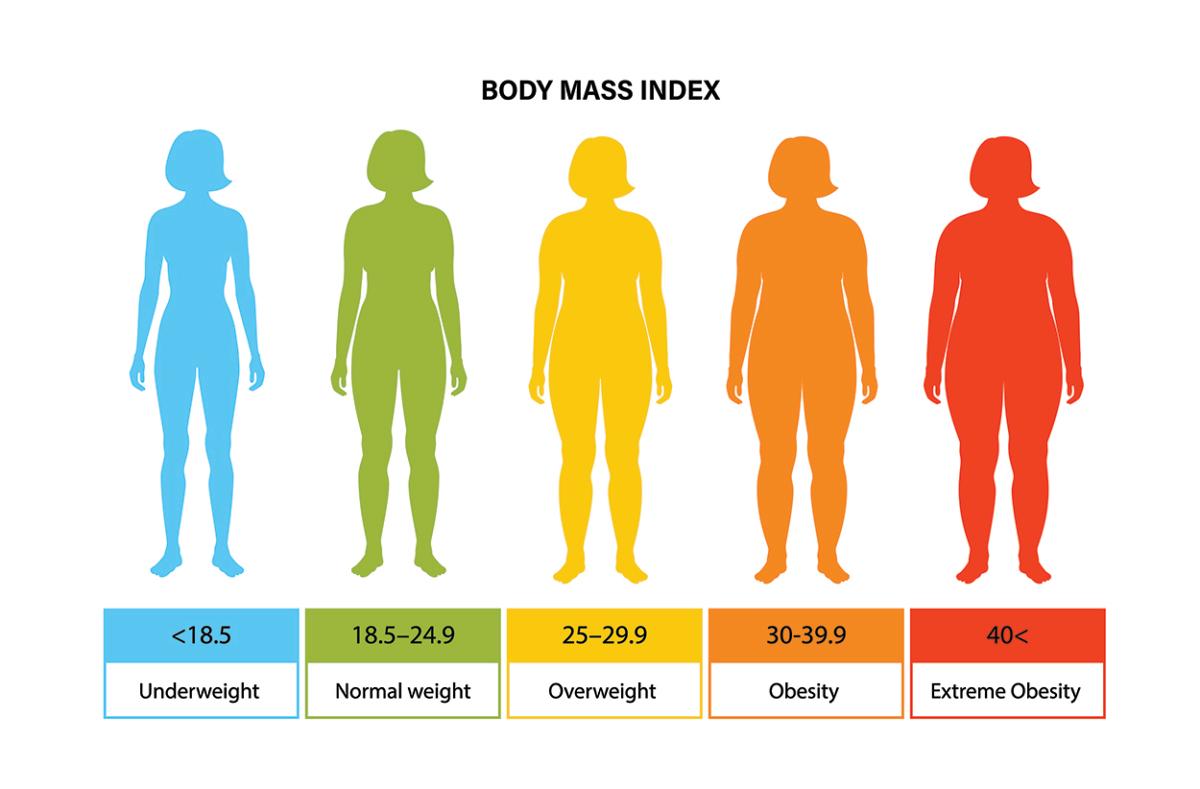
Because BMI is based solely on height and weight, it ignores muscle mass, bone density, overall body composition, and racial and sex differences.
“For example, a bodybuilder may have a very high BMI but be very lean because their muscle is increasing their weight, which increases their BMI,” said Chris Masterjohn, who has a doctorate in nutritional science. Therefore, BMI “is not a measurement of health at all—it is a measurement of your weight and height.”
“Individuals with higher BMIs can be healthy,” said Dr. Tracy Richmond, an assistant professor of pediatrics at Harvard Medical School with more than 10 years of experience conducting weight-related research.
She said using BMI alone to determine health risks can lead to overlooking individuals who may require further assessment, potentially misleading healthy individuals into believing they’re overweight and misinforming others who may face serious health challenges.
What Is a Better Way to Assess Fitness?
Margaret Ashwell, a British-based public health researcher and a consultant in nutrition science specializing in obesity and shape, said WHtR offers a valuable alternative to the BMI assessment in analyzing body composition and health. WHtR compares waist circumference to height; ideally, waist circumference is less than half of height.“WHtR is a better indicator of early health risk than BMI because it is a proxy for central adiposity,“ Ms. Ashwell told The Epoch Times. ”Fat stored in central depots is a risk factor for major metabolic diseases, such as Type 2 diabetes and heart disease.”
This simple method, according to Ms. Ashwell, accurately identifies the problem doctors should be looking for: the accumulation of fat. And given that increased exercise and muscle are associated with a smaller waist circumference, the WHtR assessment can distinguish between fat and muscle, unlike BMI.
The Best Ways to Measure Health
While the WHtR test may offer advantages over BMI, it alone doesn’t entirely assess an individual’s health; it can’t, for instance, reveal elevated inflammation or a nutrient deficiency.Therefore, Mr. Masterjohn suggested additional evaluations such as body fat analysis, fasting glucose measurement, lipid profile testing, inflammation markers such as C-reactive protein, and a complete metabolic panel, blood count, and urinalysis to obtain a comprehensive understanding of one’s health.
He also recommended a functional movement screen by a physical therapist or personal trainer to preserve optimal body functionality with age.