This copy is for your personal, non-commercial use only. Distribution and use of this material are governed by our Subscriber Agreement and by copyright law. For non-personal use or to order multiple copies, please contact The Epoch Times Reprints.
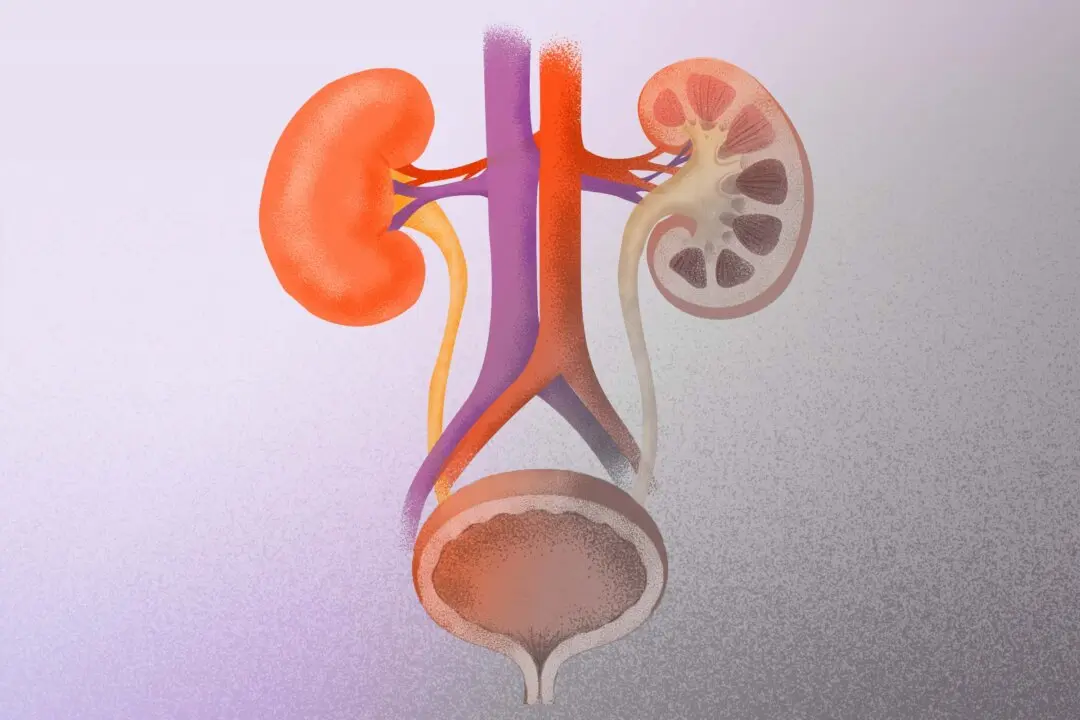
The kidneys are important detoxification organs of the human body. Their main function is to filter waste in the blood while retaining useful substances for reabsorption and future use. Proper nutrition is key to caring for these essential organs. What are the signs that our kidneys may not be functioning well?
Powerful and Hard Working–Kidneys Filter 200 Liters of Water a Day
The kidneys are high-performance organs. Blood pumped from the heart passes through millions of tiny “blood filter” renal tubules and glomeruli in the kidneys to be filtered of wastes. Throughout a 24-hour cycle, the kidneys filter a total of 200 liters (nearly 53 gallons) of water.
Kidneys filter various metabolic wastes and harmful substances, including urea, uric acid, creatinine acid, excess minerals, food additives, water-soluble pesticides, drugs, alcohol, chemical toxins, and heavy metals.
Three Stages of Chronic Kidney Disease
Kidney disease lasting more than three months is called chronic kidney disease (CKD), which can be divided into three types according to the degree of severity.
Mild: Symptoms are proteinuria (elevated protein in the urine), hematuria (blood in the urine), foamy urine, and dark urine.
Moderate and severe: Symptoms are lower extremity edema (swelling), elevated blood pressure, and anemia (low red blood cell count).
End stage: At this stage of CKD, when the renal function drops below 15 percent of normal, the patient experiences extreme fatigue and requires dialysis (a manual process of kidney function).
There are no obvious symptoms in the early stages of kidney disease. If you are young but have high blood pressure, inexplicable anemia, lower extremity edema, and fatigue, it may signal early renal failure.
Foamy, Yellow Urine Does Not Necessarily Mean Kidney Disease
Occasional foam in urine may be normal. If there is a lot of foam every time you urinate and it does not disappear after 30 seconds, it could be an indication of proteinuria. This is the time to contact your doctor.
Light or bright yellow-colored urine may be caused by taking B vitamins or an indication of dehydration. If the urine is dark yellowish towards brown it is wise to consider whether there are blood cells in the urine—a condition called hematuria that can indicate early stages of kidney disease. This would be a good time to check with your doctor or health care provider.
8 Factors That May Impair Kidney Function
1. Diabetes
Diabetes can cause damage to small blood vessels, which can degrade the filtering function of glomeruli and lead to kidney failure. According to the Centers for Disease Control and Prevention, 37.3 million Americans are living with diabetes.
2. Hypertension
High blood pressure causes damage to elastic fibers in blood vessel walls. Conversely, kidney disease will also promote the secretion of some hormones that raise blood pressure, forming a vicious cycle.
3. Other kidney problems
Chronic nephritis, kidney stones, and polycystic kidney disease may impair proper kidney function.
4. Gout
If the uric acid level is high, crystallization in the joints will cause arthritis, and crystallization in the kidneys will cause kidney damage.
5. Medications
Many medications require kidney detoxification, and excess medications may damage the kidneys—particularly anti-inflammatory and anti-infective medication.
6. Excessive dietary phosphate
Excessive phosphorus, generally from the consumption of processed foods, will disrupt the body’s regulation of phosphate, calcium, and vitamin D, causing mineral disorders and vascular calcification.
High phosphorus, also called hyperphosphatemia, can be a sign of kidney damage in many cases. The normal range for phosphorus levels in the blood is typically between 2.5 and 4.5 mg/dL for individuals with healthy kidneys. If phosphorus levels in the blood are consistently higher than this range, it may indicate an underlying medical condition or kidney dysfunction.
7. Heavy metals
Chromium, mercury, and lead are heavy metals harmful to the kidneys. Smokers should pay special attention, as cigarettes contain heavy metals such as chromium and lead, and nicotine can also constrict blood vessels and cause blood pressure to rise. The risk of CKD in smokers and heavy alcohol drinkers is five times greater than that of the general population.
8. Products that contain melamine
Melamine, found in cooking utensils and a variety of plastic and paper products, is toxic to the kidneys. It cannot be metabolized when it enters the human body and can damage the renal tubules, causing kidney stones and kidney failure. It is best to avoid using products that contain melamine.
Nutrients, Foods, and the Importance of Water for Kidney Care
Antioxidant and anti-inflammatory nutrients such as vitamin C, vitamin E, quercetin, anthocyanin, curcumin, catechin, and zinc can help maintain kidney health. They can reduce the damage of reactive oxygen species in the body to the cells, reduce the damage to glomeruli and renal tubules, and reduce uric acid levels.
A study found that participants in the highest tertile of proanthocyanidin (polyphenols, naturally occurring compounds found in fruits and vegetables) intake had a 9 percent lower concentration of cystatin C (P<0.001) compared to those with low consumption. Cystatin C is a protein that is produced by the cells in the body. Healthy kidneys keep the level of cystatin C in the blood within a normal range. When the level of cystatin C in the blood is elevated, it may indicate that the kidneys are not functioning properly.
Moreover, individuals with high proanthocyanidin intake were found to be at a 50 percent lower risk of moderate chronic kidney insufficiency and a 65 percent lower risk of experiencing a 5-year renal disease event (P<0.05) than those with low intake, indicating that increased consumption of proanthocyanidins was associated with better renal function and substantially reduced renal associated events
Sufficient daily water intake is vital to the detoxification of the kidneys and the prevention of kidney stones. You should boil your water to make it safe to drink. Boiling is the surest method to kill disease-causing germs, including viruses, bacteria, and parasites. Seven or eight cups a day is deemed sufficient and can be increased appropriately during summer.
A balanced diet including vegetables, fruits, grains, beans, and a moderate amount of eggs, fish, and meat can also help remove toxins from the body.
High-quality protein such as fish, eggs, and poultry is recommended for those with kidney damage. A plant-protein-based diet takes greater care as foods such as nuts, often eaten in greater abundance in vegetarian and vegan diets, can increase the burden on kidneys.
For those with poor kidney function, zinc may be of benefit. In a peer-review research article published in 2021 among patients with chronic kidney disease, it was found that those who consumed less zinc were more likely to develop end-stage renal disease than those who consumed more zinc. Zinc is an antioxidant and anti-inflammatory agent that regulates enzymatic activity and protects the kidneys from damage caused by metals such as lead, copper, and mercury. Moderate consumption of oysters, meat, fish, and eggs are good sources of dietary zinc.
Jingduan Yang
M.D.
Dr. Jingduan Yang is a board-certified psychiatrist and fifth-generation classical Chinese medicine physician whose work bridges Western psychiatry, functional medicine, and ancient healing traditions. He is the creator of the ACES Model of Health and Medicine—a four-dimensional framework spanning anatomy, chemistry, energy, and spirit—and the author of “Facing East” and “Clinical Acupuncture and Ancient Chinese Medicine.” As a principal founder of the Northern School of Medicine and Health Sciences, he advances whole-person care grounded in science, ethics, and humanity.