Standing in the meat aisle at Costco the other day, I found myself doing the math that so many of us do at the grocery store. Ground beef: $5.99 a pound for conventionally grown, $6.24 for grass-fed. Not a huge gap. Then the chicken breast: $2.99 a pound for conventional, $5.18 for organic.
I just stood there for a moment, holding a package in each hand like I was on a low-stakes game show, weighing the immediate hit to my wallet against the abstract promise of quality.
With food prices squeezing American households, choosing the more expensive label can feel like an indulgence. However, as a physician working with patients struggling with chronic depression, autoimmune disorders, and metabolic disease, I’ve stopped looking at the price per pound in isolation. In my practice, what people eat is not background noise—it is often the intervention that their health depends on.
The question should not be whether organic or grass-fed meat is worth the premium. The question really should be: “Worth it compared with what?” Compared with the ongoing cost of managing chronic inflammation? Compared with years of symptoms that never quite resolve?
What Does ‘Organic’ Mean on a Meat Label?
Most consumers’ first instinct around labels is skepticism. Is the organic label just fancy wording to justify a higher price? It’s a fair question—and one I often hear in my clinic.However, looking closely at what the certification actually requires changes the picture.
The Department of Agriculture label represents a specific, legally regulated set of standards enforced by the National Organic Program.
Every bite of food the animal eats must be 100 percent organic—no genetically modified organisms, no synthetic chemicals, no antibiotics, and no growth hormones. Ever. The animals must have year-round access to the outdoors, and cattle, sheep, and goats must have at least 120 days of access to organic pasture, from which at least 30 percent of their feed must come.
Organic Versus Grass-Fed
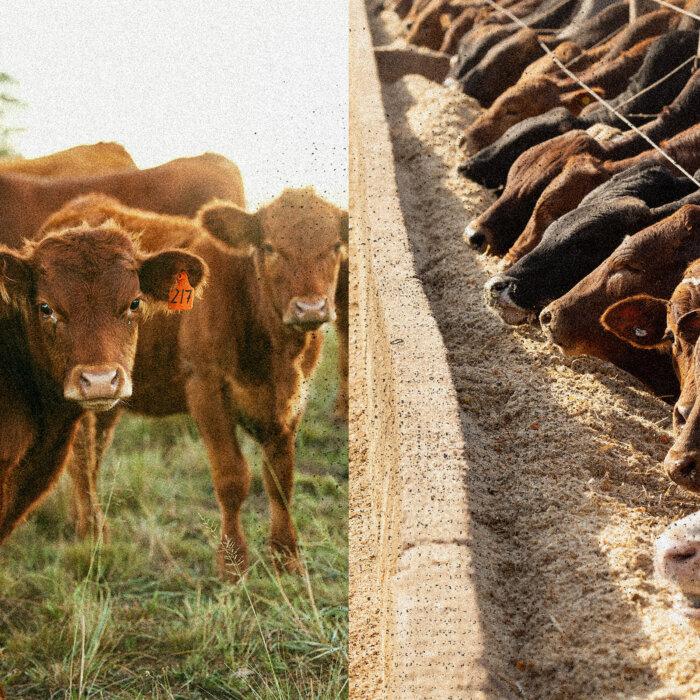
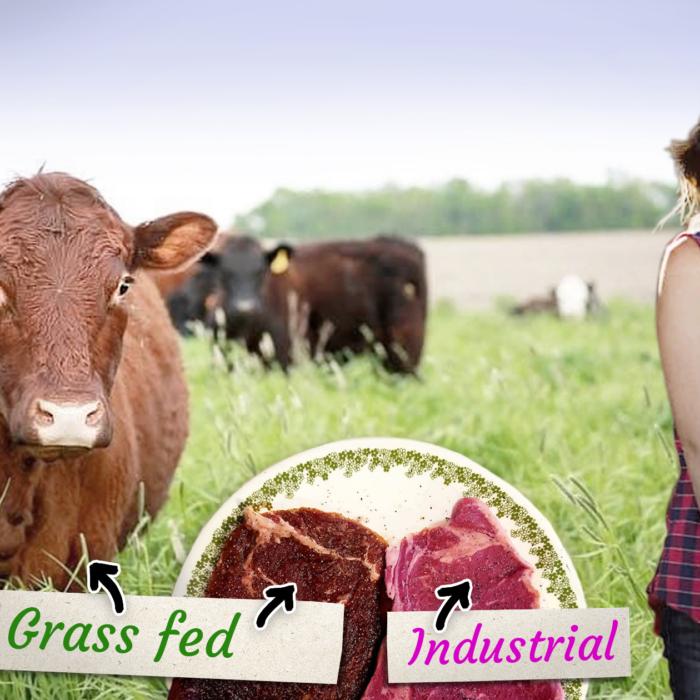
People often think of “organic” and “grass-fed” interchangeably. However, they’re not the same, and the distinction matters clinically.Grass-fed certification, typically granted by the American Grassfed Association, has its own distinct standards. Animals eat only grass and forage from weaning until harvest—no grain ever. They’re raised on open pasture, not feedlots, with no antibiotics or added growth hormones. If an animal gets sick and requires treatment, it’s removed from certification. All animals must be born and raised on American family farms.
The Clinical Case for Choosing What’s in Your Meat
The science around meat and our health is more compelling than most people—including many physicians—realize.Omega-3 Fatty Acids and the Brain
Grass-fed beef contains two to five times more omega-3 fatty acids than grain-fed beef. In my psychiatric practice, those numbers are not a minor nutritional footnote. Omega-3 deficiency is one of the most consistently documented biological features in patients with depression, bipolar disorder, and anxiety.CLA and Metabolic Health
Grass-fed beef contains two to four times more conjugated linoleic acid (CLA) than grain-fed beef. CLA has been associated with anti-cancer properties, reduced body fat, improved insulin sensitivity, and better body composition.Fat-Soluble Vitamins and Antioxidants
One well-designed study published in 2025 in npj Science of Food found that grass-fed beef contained nearly three times more vitamin A, more than four times more vitamin E, and three times more phytochemical antioxidants than grain-fed beef from the same region. Vitamin E is a critical neuroprotective antioxidant. Vitamin A precursors matter for immune regulation and epithelial integrity, which becomes relevant in relation to leaky gut and systemic inflammatory load.Antibiotic Resistance Is Also a Mental Health Issue
The connection between antibiotic resistance and mental health is rarely made, but it is a factor.The microbiome plays a significant role in mental health. It influences the metabolism of tryptophan—an essential amino acid found in high-protein foods—which serves as the precursor to both serotonin and melatonin, the hormones responsible for regulating mood and sleep-wake cycles.
Notably, approximately 90 percent of the body’s serotonin is produced in the gut, underscoring the microbiome’s outsized role in emotional and psychological regulation. The microbiome also affects vagal nerve signaling, the bidirectional communication pathway between the brain and internal organs. Stronger vagal signaling is associated with better stress regulation.
Patients who have been on repeated courses of antibiotics—or who have spent years eating large quantities of meat containing antibiotic residues—often present with gut dysfunction that tracks closely with their psychiatric symptoms.
The Hormone Question
Synthetic growth hormones are prohibited in both organic and grass-fed certified meat. In conventional production, they’re routine.For my patients managing hormone-sensitive conditions—polycystic ovary syndrome, endometriosis (a chronic, often painful, disease causing tissue similar to the lining of the uterus to grow outside of the uterus), estrogen-dominant presentations, thyroid dysfunction, mood disorders with a clear hormonal component—the addition of hormones to meat is significant.
Why Does Organic or Grass Fed Cost So Much More?
Ask any independent grass-fed cattle farmer about high prices, and you will hear a version of one answer: “People see the price tag and think I’m gouging them. But I’m not getting rich.”It’s true—and the reasons are structural.
Grass-fed cattle take significantly longer to reach slaughter weight. Conventional grain-finished cattle are typically slaughtered between 14 and 18 months, while grass-fed cattle are slaughtered between 20 and 26 months, sometimes later. That’s additional months of land, feed, water, labor, and care.
Grass-fed systems require two to three times more land than conventional feedlot operations. The animal is also smaller at harvest—a grass-fed steer yields roughly 1,200 pounds, compared with 1,350 pounds for a grain-finished animal—producing less sellable meat from a longer, more expensive process.
What Can Be Done About the Price?
When patients tell me they cannot afford the upgrade, I always give them the same advice:- Eat Less and Better Meat: Rather than treating animal protein as the centerpiece of every meal, treat it as a supporting player. A smaller portion of grass-fed beef, served with vegetables, legumes, and whole grains, often costs the same per meal as a larger portion of conventional meat, and it does more biological work. For patients taking omega-3 supplements, magnesium, vitamin D, and a probiotic, regular high-quality animal protein often allows us to simplify their supplement stacks. Real food tends to work better than isolated nutrients, precisely because it delivers them in the complex, synergistic form the body recognizes.
- Buy Smarter: Purchasing a quarter or half cow directly from a local farmer typically runs $5 to $7 per pound across all cuts combined—often comparable to what you would pay for just ground beef at a grocery store. Community-supported agriculture subscriptions, farmers markets, and direct farm purchases cut out multiple markup layers. Learning to embrace less popular cuts—such as chuck roast, short ribs, skirt steak, and organ meats—also dramatically reduces costs, and these cuts often have higher nutrient density.
- Push for Policy Change: U.S. farm subsidies have historically underwritten large-scale conventional agriculture, making industrial meat artificially inexpensive while externalizing the true costs—antibiotic resistance, chronic disease burden, environmental degradation—onto public health budgets. Redirecting even a fraction of those subsidies toward regenerative and organic producers could meaningfully shift the economics.
Eat Real Food
The 2025–2030 Dietary Guidelines for Americans, released in January 2026, carry a tagline that would have seemed radical in previous iterations: “Eat real food.” The guidelines call for prioritizing high-quality protein at every meal and explicitly name ultra-processed foods as something to avoid.For those of us in integrative medicine who have been saying this for years, the new guidelines feel like a turning point or at least an official acknowledgment of what the evidence has been suggesting for decades.
The premium for organic and grass-fed is real, and it’s not accessible to everyone for now. However, for patients who can make even partial shifts—a few meals a week, a farmers market habit, a direct farm relationship—the return on investment, measured in inflammatory burden, microbiome health, omega-3 status, and hormonal clarity, can be genuinely significant.
I chose to buy the $5.18 chicken at Costco. Not because I think a single purchase changes everything, but because, as a physician, I have watched patients spend years and thousands of dollars on interventions that might have been less necessary had the foundations of their diets been different. In the end, it’s not the price per pound but the price of our health over time that we are paying for.