Astute readers will note that I usually provide exercise regimens that only require a few tools to perform. I do this because I love providing exercises that don’t require a lot of equipment or spendy items, and also don’t require special spaces or gym memberships.
It’s surprising how effective bodyweight exercises can be, especially when performed in sets of multiple exercises. In this article, however, I want to give some special love to weighted exercises that actually do use weights—even if only one.
5 Fantastic Exercises Requiring Only 1 Weight
The following exercises require only one weight, but as a whole, they can be quite challenging, and I think you’ll like them. The best part? You can participate in these exercises whether you are new to exercise or more seasoned. Perform them long enough, and you will grow strong and capable.My patients tolerate these exercises well, but I recommend that you consult with your medical provider to ensure that they are right for you.
Practice Tip: Avoid the temptation to speed up the movement as you move through the repetitions of the following exercises. Moving too fast will diminish the effectiveness of the exercises, break up their movement consistency, and even potentially lead to injury. Control the exercises carefully, and don’t let them get ahead of you.
1. Goblet Squat
The goblet squat is a frequent “go-to” exercise in the clinic because of its laser-sharp focus on your gluteal and quadriceps muscles, and because it sharpens your balance. It also adds an upper-body component.Step 1: Stand with your feet approximately hip-width apart and cradle a weight in your hands just under your chin—palms facing each other.
Step 2: Carefully lower into a squat until your hips and knees reach 90 degrees of flexion. Sit back into the movement to avoid having your knees move out in front of your toes. Resist the temptation to hold your breath.
Step 3: Lowering down and then standing up counts as one repetition. Try to perform three sets of 12 repetitions, adjusting sets and repetitions to suit your needs.
Modifications: If you can’t squat far, squat as far as you can and then come back up. Trust me, if you’re careful to move slowly, this exercise will still be of great benefit.
Why I Like It: The goblet squat naturally enforces good posture during task performance and is a great exercise for learning body awareness.
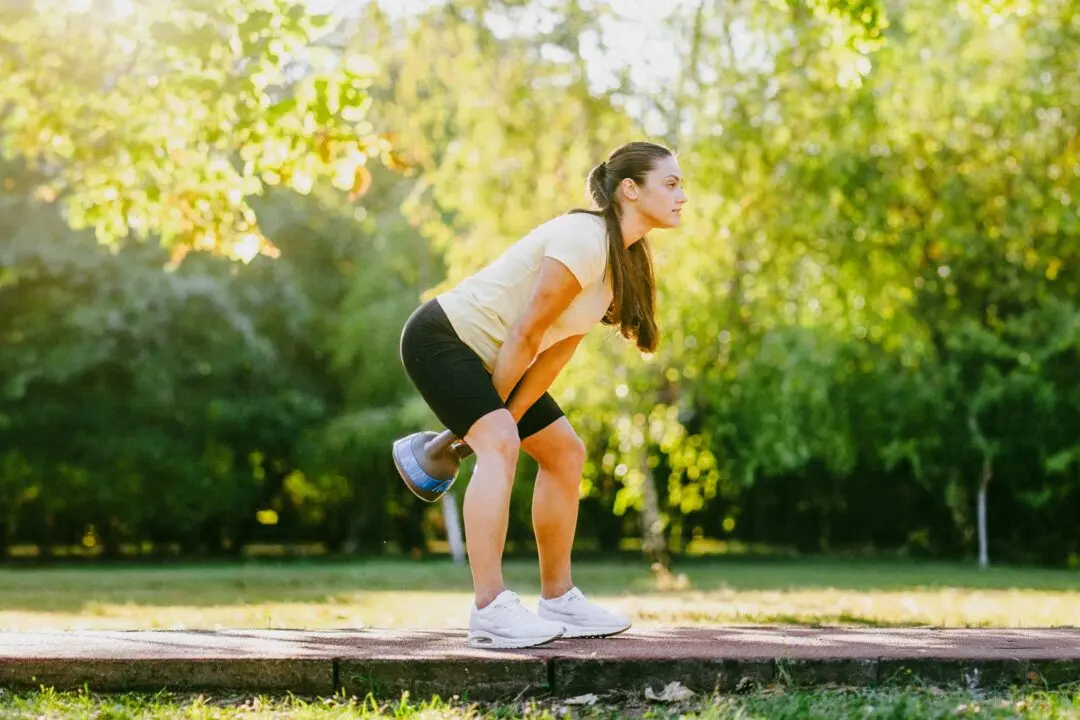
2. Kettlebell Swing
I have recently fallen back in love with the kettlebell swing. It’s one of those types of exercise movements that make sense to your body, and as a consequence, I find that most people fall naturally into the movement.Step 1: Stand with your trunk upright and your feet hip-width apart. Hold a kettlebell with both hands.
Step 2: Quickly lift the kettlebell straight out in front of you with your elbows straight.
Step 3: Let the kettlebell swing down between your legs while keeping your arms and back straight and slightly bending your knees. Continuing in a fluid movement, swing it straight out in front of you again.
Step 4: Swinging the weight up and then back down counts as one repetition. Try to complete three sets of 15 repetitions.
Modifications: If you can’t swing the weight straight out—I promise you’re not alone—just swing it up as far as you can. Also, be sure to use a weight that you can effectively manage.
Why I Like It: The kettlebell swing is a great, natural exercise that’s simple to perform and extremely effective.
3. Single-Arm Dumbbell Snatch
From the floor to the ceiling, this exercise is full of goodness. It’s a single-sided compound movement and gets your body moving a weight just about as far as you can without taking a step.Practice Tip: This is a vigorous exercise, so don’t be surprised if you get short of breath. Just rest until you catch your breath before continuing.
Step 1: Stand with your feet approximately hip-width apart, with a weight placed by your right foot.
Step 2: Squat down and pick the weight up with your right hand before rising fully back up and pushing it straight overhead. Hold for one second before lowering it back down toward the floor.
Step 3: Raising the weight up and then lowering it back down counts as one repetition. Try to perform three sets of 12 repetitions per side, feeling free to modify the sets and repetitions as you see fit.
Modifications: If you can’t reach all the way to the floor, place the weight on a stool or pillow to decrease the distance you need to reach.
Why I Like It: The single-arm dumbbell snatch works many muscles and provides a great cardiovascular component at the same time. It’s an effective go-to exercise if you only have time for one.
4. Single-Arm Dumbbell Row
All of the resisted rowing exercises are excellent, in my opinion. The ones that use both arms are effective in and of themselves, but I very much like single-arm rows for their increased emphasis on using your trunk muscles to stabilize against the resulting asymmetrical torque. Performing the exercises in a bent-over position allows us to use a simple weight.Step 1: Hold a weight in your right hand and bend forward to approximately 45 to 90 degrees of hip flexion—depending on your comfort level—and let your arm hang straight down. Be sure your shoulders are horizontal to the floor.
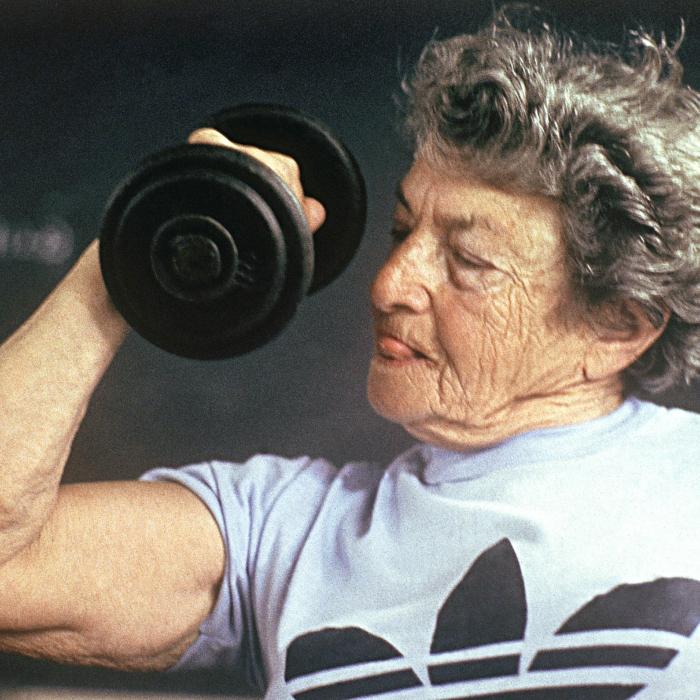
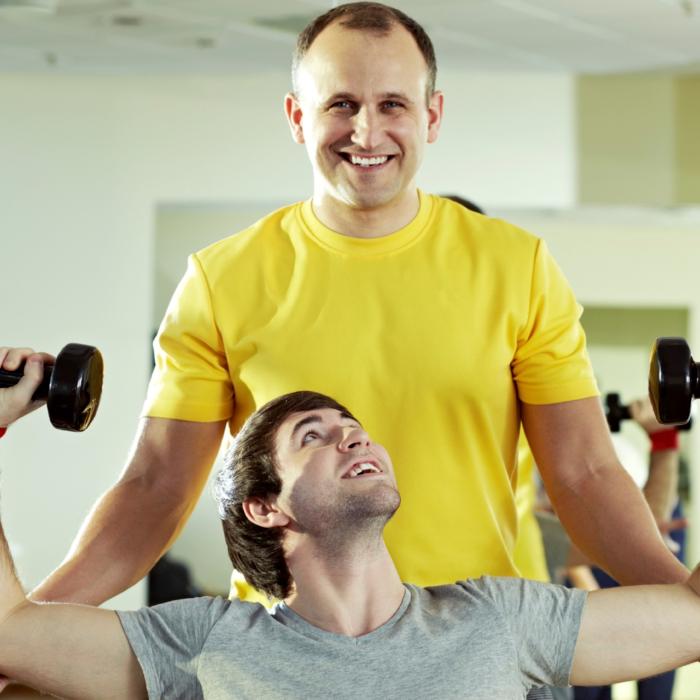
Step 2: Carefully pull the weight straight up without rotating your shoulders, as if you were trying to saw a large log.
Step 3: As soon as you lift the weight all the way up, slowly lower it back down into the starting position. Raising the weight all the way up and then lowering it back down counts as one repetition. Try to complete three sets of 12 repetitions per arm, feeling free to complete all exercises first on one side and then the other, or alternating sides as you move through your sets.
Modifications: If you struggle to maintain your balance during this exercise, spread your feet wider.
Why I Like It: The single-arm dumbbell row is an everyday power movement. Strengthening yourself in the single-arm row translates well into daily functional tasks.
5. Russian Twist
You’ve worked hard thus far, so take a seat—and continue working. The Russian twist is just the exercise we need right now, and I think you’ll like it.Practice Tips: If you feel a little dizzy while performing this exercise, slowing down can often help. Keep your low back strong and straight for this exercise; if it rounds when you lean back, don’t lean back quite as far.
Step 1: Sit on the floor, with your trunk upright, knees bent, and feet flat on the floor while holding a weight in both hands.
Step 2: Lean back as far as possible while still being able to keep your feet on the floor—if you go too far, they will rise. Rotate to the right and touch the weight to the floor. Next, rotate left and touch the weight on the left side. Touching both sides counts as one repetition. Try to perform three sets of 12 repetitions, or 24 repetitions if you want to count a repetition each time you touch the floor.
Modifications: If you can’t manage much weight, you can simply clasp your hands together instead. If you can’t rotate very far to either side—many of us have side-to-side movement discrepancies—or both sides, just rotate as far as you can.
Why I Like It: Don’t be fooled—the Russian twist provides excellent mobility training for your spine while also offering highly effective resistance training for your arms and shoulders.
These one-weight wonders combine to help you regain and maintain better health. I recommend that you perform them at least three times per week. I hope you find them helpful.
About the fitness model: Aerowenn Hunter is a health editor and fitness model for The Epoch Times. Vibrant in her 60s, she’s an accredited yoga therapist who has dedicated three decades to teaching yoga.
Views expressed in this article are the opinions of the author and do not necessarily reflect the views of The Epoch Times. Epoch Health welcomes professional discussion and friendly debate. To submit an opinion piece, please follow these guidelines and submit through our form here.