Often, when the going gets tough, we stress. It’s natural and essential for survival, but not all stress is good. Finding the balance between harmful and beneficial stress is essential for our long-term well-being. So how can we modulate our stress response so it works for us?
The good news is that the body is designed to cope with stress, which is commonly defined as the body’s reaction to a perceived internal or external threat or pressure.
Often coupled with stress is the feeling of anxiety, a feeling of uneasiness or fear about something in the future. Although stress and anxiety are natural responses, they can become overwhelming, negatively affecting physical and mental health.
Managing stress and anxiety is essential for maintaining overall health and longevity, especially in our fast-paced world, where productivity and industry are prioritized. Although many people have heard of ways to naturally manage stress and anxiety, such as lifestyle changes and mind-body techniques, there is a stress antidote many don’t know about: adaptogens.
Adaptogens constitute anything that helps buffer or remove stress, hence the name: “adapt” being the ability to adjust to new conditions and “gen” meaning “that which produces.” Exercise, meditation, and sleep are adaptogens, as is anything else that can reduce stress and improve mood.
How Do Our Bodies React to Stress?
When we encounter a perceived threat or challenge, our bodies respond with a stress response, a complex set of physiological and psychological changes that help us cope with the situation. In short, this set of changes is designed to prepare the body for action. The stress response is modulated by two central systems in the body: the hypothalamic-pituitary-adrenal (HPA) axis and the sympathetic nervous system.

When faced with a threat, the hypothalamus in the brain releases a corticotropin-releasing hormone, which later stimulates the pituitary gland to release an adrenocorticotropic hormone. This action stimulates the adrenal glands, which release cortisol and other stress hormones into the bloodstream. This interplay between the different glands is what constitutes the HPA axis.

Amid this chain reaction and interaction of glands and hormones, one hormone steals much of the spotlight: cortisol, also known as the stress hormone.
Cortisol increases glucose availability in the bloodstream, providing energy for the body to respond to a perceived threat. It also suppresses nonessential bodily functions, such as digestion and reproduction, to conserve energy for dealing with a perceived threat.
While cortisol is released, the sympathetic nervous system is activated. The sympathetic nervous system is responsible for the “fight or flight” response. The activation of the sympathetic nervous system leads to a release of adrenaline and noradrenaline. These hormones increase the heart rate and blood pressure, dilate the airways to improve oxygen uptake, and stimulate the release of glucose from the liver. All of this is for one purpose: to increase alertness and prepare the body for action.
The interaction between the HPA axis and the sympathetic nervous system is part of the stress response, which we can observe objectively and is what scientists use to measure stress in the lab.
Chronic Stress Harms the Body
In a meta-analysis published in Psychosomatic Medicine, researchers conducted a comprehensive review of the relationship between stress and immunity in humans. The analysis included more than 293 studies examining the effects of acute and chronic stress on immune responses, including natural killer cell activity, lymphocyte proliferation, and antibody responses.The authors found that acute stressors, such as public speaking or exams, were associated with a temporary enhancement of immune function, including increased natural killer cell activity and lymphocyte proliferation. In contrast, chronic stressors, such as caring for a spouse with dementia or job strain, were associated with more prolonged suppression of immune function.
Apart from suppressing the immune system, chronic stress naturally has serious implications regarding mental health and cardiovascular disease.
Adaptogens have been shown to affect stress hormones such as cortisol, adrenaline, and noradrenaline, which supports a healthy stress response.
Common Adaptogens and Their Effectiveness

Ashwagandha, also known as Indian ginseng, is a popular adaptogenic herb used traditionally in Ayurvedic medicine.
The researchers sought to measure the effect of ashwagandha across numerous metrics. The study assessed levels of perceived stress, depression, anxiety, and general well-being by using stress scales and biochemical markers such as serum cortisol levels.
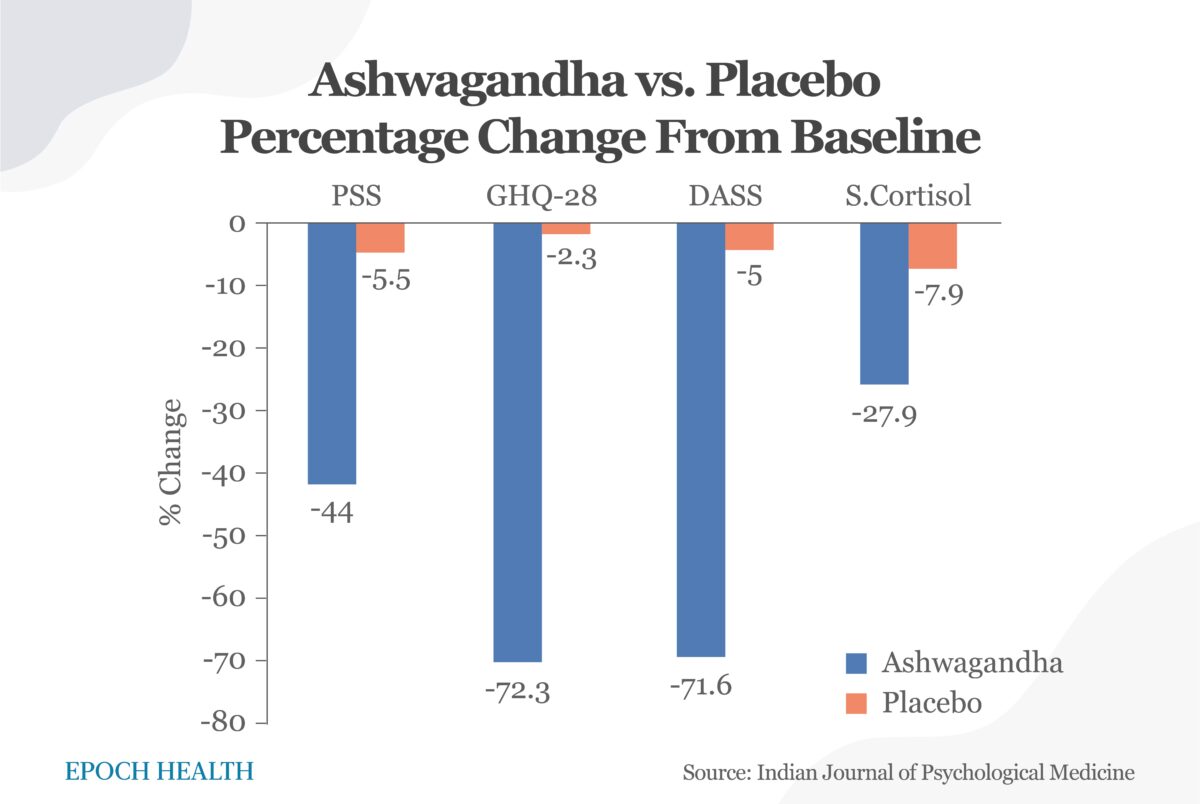
The findings demonstrated the power of ashwagandha: Taking 300 milligrams (.01 ounces) of ashwagandha root extract twice daily for 60 days significantly reduced perceived stress, serum cortisol levels, and anxiety levels in adults relative to placebo.
The results are expressed as p-values, which indicate the probability of the observed differences being due to chance. A p-value of less than 0.05 is generally considered statistically significant, meaning the results are unlikely to have occurred by chance alone. In this case, the values for perceived stress and anxiety levels were both less than 0.0001, while the value for serum cortisol was 0.0006.
The group that took ashwagandha experienced significant reductions across four measures: perceived stress (-44 percent) general well-being (-72.3 percent), depression anxiety (-71.6 percent), and serum cortisol levels (-27.9 percent). The placebo group saw reductions of only 5.5 percent, 2.3 percent, 5 percent, and 7.9 percent, respectively. The differences are statistically significant, indicating that ashwagandha considerably improves these aspects of stress.

Rhodiola Rosea
Rhodiola rosea helps people cope with stress and has been shown to improve cognitive function and physical performance.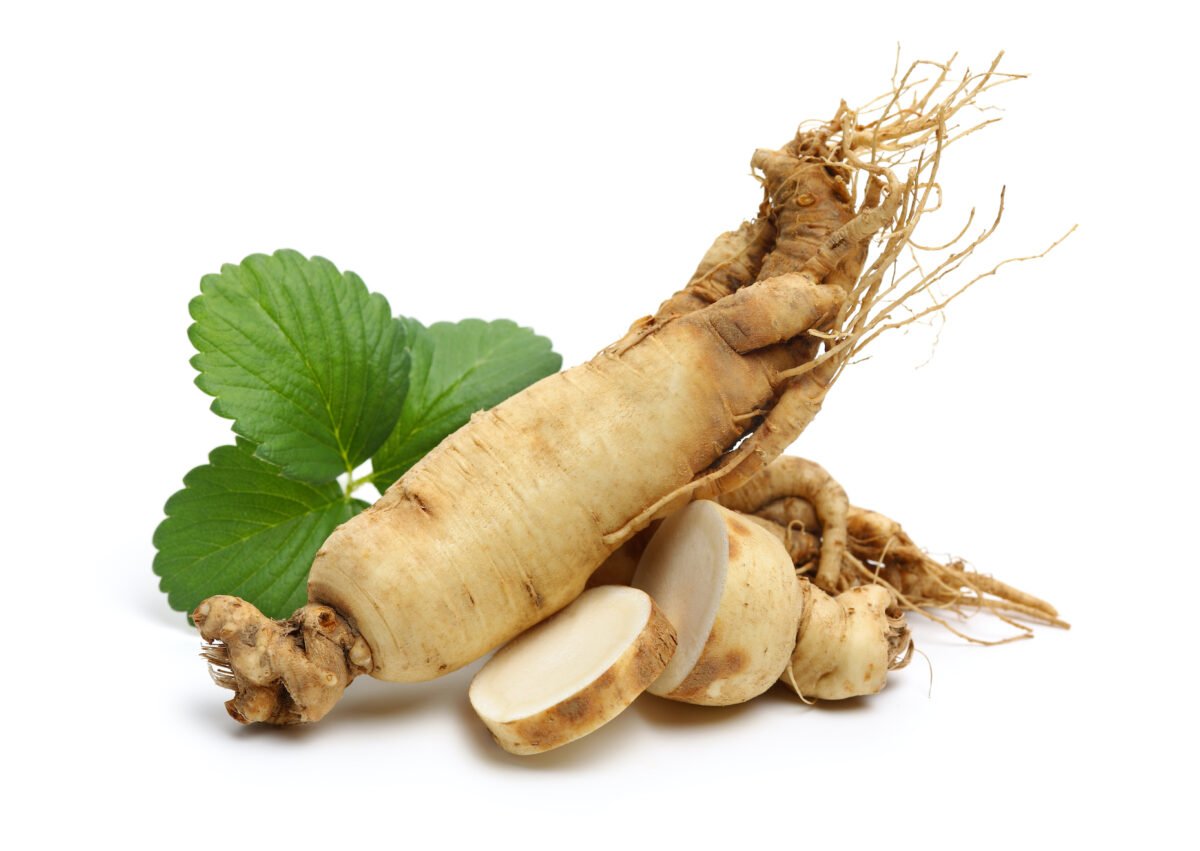
Ginseng
Ginseng is a well-known adaptogenic herb used traditionally in Chinese medicine to promote overall health and vitality.Holy Basil and Licorice Root
Holy basil and licorice root have a range of beneficial effects on the body, including reducing stress and anxiety, improving cognitive function, and enhancing the immune system.Although more research is needed, existing studies show that adaptogens positively affect the nervous system and cortisol levels, thus helping with stress and anxiety.
Stress Is a Mind-Body Reaction
Even though stress is a psychological term often defined by the type of strain we experience, stress is actually a mind-body condition.How to Use Adaptogens
Adaptogens come in various forms, such as capsules, powders, teas, and tinctures. Each form has its benefits and drawbacks. Capsules and powders provide a concentrated form of adaptogens. Teas and tinctures may offer a gentler and more soothing effect.Ashwagandha
The recommended dosages of ashwagandha root extract based on studies range from 250 to 600 milligrams per day. The standard dosing protocol involves taking 600 milligrams per day divided into two dosages; one taken with breakfast in the morning and the other with dinner in the evening.Research indicates that 600 milligrams per day is more effective than lower dosages in improving sleep, and dosages ranging from 600 to 1,000 milligrams per day may be more beneficial for athletes undergoing intense exercise. However, further studies are needed to verify whether dosages exceeding 600 milligrams per day result in greater benefits.
Rhodiola Rosea
Daily consumption of Rhodiola rosea as a preventive measure against fatigue has proven effective at low dosages of 50 milligrams.For immediate relief from fatigue and stress, Rhodiola rosea is commonly taken in dosages ranging from 288 to 680 milligrams.
Holy Basil
The recommended dose of holy basil for neurological and adaptogenic effects is 500 milligrams of leaf extract, taken twice daily.Studies show that doses of 100 to 200 milligrams per kilogram of body mass and 500 milligrams per kilogram of body mass may provide health benefits and boost testosterone, respectively.
Other Adaptogens
Anything that makes the body’s natural healing process stronger could, in theory, help us release stress.- Getting regular exercise
- Sleeping well
- Eating a healthy diet
- Gardening
- Practicing meditation
- Being mindful
- Keeping your space tidy and clean
- Helping others
- Being optimistic and thinking positively