This copy is for your personal, non-commercial use only. Distribution and use of this material are governed by our Subscriber Agreement and by copyright law. For non-personal use or to order multiple copies, please contact The Epoch Times Reprints.
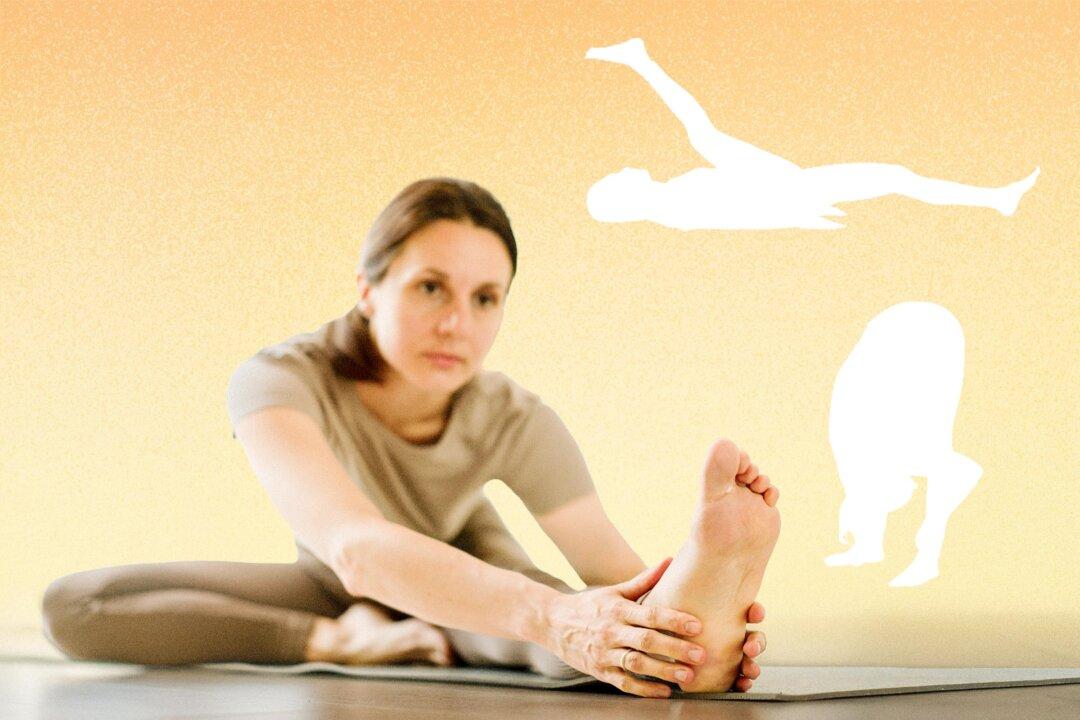
Most people think stretching simply loosens tight muscles after a workout. But emerging research suggests the right kind of stretching may do much more. By actively engaging muscles as they lengthen, strength-based stretching can improve mobility while helping build muscle, enhance balance, and reduce the risk of injury—all without picking up a weight.
Resistance training has long been considered the gold standard for building muscle and strength. Yet many people overlook flexibility, despite its essential role in healthy movement. Tight muscles can restrict a joint’s range of motion, reduce exercise efficiency, and make everyday activities—from climbing stairs to bending down—more difficult.
Strength-based stretching bridges the gap between strength and mobility training. Instead of relaxing into a stretch, you actively contract your muscles to control the movement as they lengthen. This approach not only improves flexibility but also challenges the muscles, helping develop strength, stability, and coordination through a full range of motion.
Growing evidence suggests these benefits extend beyond movement quality.
A 2024 study compared static stretching with traditional resistance training in 81 physically active adults over eight weeks. Participants were randomly assigned to either a stretching group or a resistance-training group. The stretching group performed 15 minutes of chest stretching four days a week, while the resistance-training group completed five sets of 12 repetitions three times a week.
By the end of the study, both groups had gained similar improvements in maximal muscle strength and muscle thickness. As expected, flexibility improved significantly more in the stretching group. Although the researchers examined only the chest muscles, the findings suggest that stretching performed with sufficient intensity may stimulate muscle adaptations in addition to increasing flexibility.
11 Glute-Leg Stretches With Built-in Strength Training
The following 11 exercises, adapted from Chinese classical dance training, put this principle into practice. Rather than relying on passive holds, they use body weight and controlled movement to strengthen the glutes and legs while improving hip, knee, and ankle mobility. The result is a lower-body workout that develops strength and flexibility at the same time.
This move strengthens the calves while improving ankle mobility and balance from a deep squat position.
Step 1: Begin in a deep squat with both feet flat on the floor. Place your hands on the ground in front of you for support.
Step 2: Maintaining the squat position, lift your heels to rise onto the balls of your feet, then slowly lower your heels back to the floor. Repeat with controlled movements.
2. Squat-to-Stand
This exercise builds glute and leg strength while training control through a full range of motion.
Step 1: Squat on the floor with your feet flat, bringing your thighs close to your abdomen into a deep squat.
Step 2: Stand up by driving through your glutes and extending your hips and knees until your legs are fully straight.
Step 3: Squat back down by sitting your hips downward and bending your knees into a deep squat. Let your arms swing naturally with the movement. Repeat the rise-and-squat sequence several times.
3. Standing Forward Fold
This stretch targets the hamstrings, hips, and lower back while encouraging better mobility.
Step 1: Stand with your feet slightly wider than shoulder-width apart.
Step 2: Keep your back straight and hinge forward from the hips, reaching your hands toward the floor as far as possible.
4. Windmill
This movement adds rotation to a forward fold, stretching the legs, back, and shoulders.
Step 1: Stand with your feet wider than shoulder-width apart. Hinge forward about 90 degrees from the hips, place your hands on the floor for support, and keep your back straight.
Step 2: Rotate your upper body to the right, keeping your left hand on the floor while your right hand reaches upward. Return to the starting position, bringing your right hand back to the floor.
Step 3: Rotate your upper body to the left, keeping your right hand on the floor while your left hand reaches upward. Return to the starting position, bringing your left hand back to the floor. Alternate sides.
5. Second Position Plié
This dance-inspired move strengthens the glutes and thighs while opening the hips.
Step 1: Stand with your feet about twice your shoulder width apart, with your toes and knees naturally turned out, keeping your back straight.
Step 2: Lower into a squat, allowing your knees to open outward in the same direction as your toes, and descend vertically until your thighs are parallel to the floor. Hold for a few seconds.
Step 3: Without moving your hips or knees, rise onto your toes, then lower your heels back down. Repeat the movement, keeping your torso upright.
6. Second Position Plié With Heel Raise
Adding a heel raise challenges the calves, ankles, and balance while strengthening the legs.
Step 1: Stand with your feet about twice your shoulder width apart, toes and knees naturally turned outward, and keep your back straight.
Step 2: Lower into a squat, letting your knees open outward toward your toes, and descend vertically until your thighs are parallel to the floor. Hold for a few seconds.
Step 3: Without moving your hips or knees, rise onto your toes, then lower your heels back down. Repeat the movement, keeping your torso upright.
7. Second Position Side Shift
This side-to-side movement deepens the inner thigh stretch while strengthening the hips and legs.
Step 1: Stand with your feet slightly wider than shoulder-width apart, turned out in a natural V-shape, keeping your back straight.
Step 2: Lower into a squat, allowing your knees to open outward in the same direction as your toes, and descend vertically until your thighs are parallel to the floor. Hold for a few seconds.
Step 3: While maintaining the squat position, shift your pelvis left and right as far as your flexibility allows, feeling the stretch along the inner thighs. Keep your back straight throughout.
8. Low Lunge Twist Right
This lunge variation stretches the hips while opening the chest and middle spine.
Step 1: Stand upright.
Step 2: Step your right foot forward into a deep lunge. Lower your body until both forearms rest on the floor inside your right foot, forming a low lunge.
Step 3: Rotate your body to the right while reaching your right hand upward, feeling a stretch through the hips and middle spine.
Step 4: Return your body to center, then press through your hands to stand back up and return to the starting position. Repeat Steps 2 through 4 several times.
9. Low Lunge Twist Left
This mirrors the right-side twist, helping improve balance, hip mobility, and spinal rotation.
Step 1: Stand upright.
Step 2: Step your left foot forward into a large lunge, place both forearms on the floor, and form a low lunge on the left side.
Step 3: Rotate your body to the left while reaching your left hand upward, feeling a stretch through the hips and middle spine.
Step 4: Return your body to center, then press through your hands to stand back up and return to the starting position. Repeat Steps 2 through 4 several times.
10. Butterfly Stretch
This seated stretch opens the hips and inner thighs while encouraging a tall spine.
Step 1: Sit on the floor with your knees bent and the soles of your feet together. Let your knees fall outward while keeping your back straight.
Step 2: Draw your feet closer to your body and gently press your knees toward the floor.
Step 3: Hinge forward from the hips and slowly lower your upper body toward the floor. Hold for a few seconds. Repeat Steps 2 and 3 several times.
11. Middle Split Forward Fold
This stretch targets the inner thighs, hamstrings, and hips in a wide-leg position.
Step 1: Sit with your legs open to the sides, keeping your back straight and your knees facing upward.
Step 2: Hinge forward from the hips and reach your hands forward, holding the position for a few seconds. Repeat the movement.
Train Mobility and Strength Together
Stretching doesn’t have to be separate from strength training. When muscles actively work while they’re being lengthened, they become stronger throughout their full range of motion—a quality that’s essential for athletic performance, injury prevention, and healthy aging.
Whether you’re looking to improve your workouts, move more comfortably, or stay active as you age, incorporating these exercises into your routine two or three times a week can help you build a body that’s not only stronger, but also more mobile and resilient.
Views expressed in this article are the opinions of the author and do not necessarily reflect the views of The Epoch Times. Epoch Health welcomes professional discussion and friendly debate. To submit an opinion piece, please follow these guidelines and submit through our form here.
Amber Yang
Amber Yang is a certified personal trainer. She met all the requirements of the American Council on Exercise to develop and implement personalized exercise programs. She worked as a marketing manager for natural skin care products for years and as a health and beauty reporter and editor for ten years. She is also the host and producer of the YouTube programs "Amber Running Green" and "Amber Health Interview."