You might not think of your inner elbow as the key to better sleep, a healthier heart, and relief from arm pain—but traditional Chinese medicine (TCM) certainly does. Lesser Sea (Shao Hai, HT3) is an important acupoint on the Heart meridian widely used in clinical practice.
A Useful He-Sea Point
Shao Hai is a unique acupoint classified as a He-Sea point. He-Sea points are where qi (vital energy) enters the body’s interior, influencing the associated organ—in this case, the heart. According to the foundational acupuncture text, “Zhen Jiu Jia Yi Jing (The A-B Classic of Acupuncture and Moxibustion),” written almost 2,000 years ago, Shao Hai has long been recognized for regulating heart function.When the flow of qi along the Heart meridian is disrupted, whether due to an unhealthy lifestyle or strong negative emotions, it can lead to symptoms such as irregular heartbeat, high or low blood pressure, chest tightness, and even insomnia or disturbing dreams, this is where Shao Hai is particularly effective—it is specifically utilized to normalize the strength and rhythm of the heartbeat, harmonize emotional imbalances, and promote restful sleep. It also connects the heart and kidney systems, which TCM considers essential for maintaining physical and emotional stability.
What Modern Science Says About Shao Hai
Although conventional medicine does not acknowledge the existence of meridians, emerging research provides evidence that these energetic pathways may have unique properties. A fascinating thermal imaging study showed the effects of moxibustion, a heat-based therapy following specific meridian lines.In this study, heat applied to acupoints, including Shao Hai on the heart or lung meridians, traveled more effectively along their designated pathways than to nearby, unrelated points. This suggests that meridians are not arbitrary and may correspond to physiological lines of communication that the body utilizes.
How to Locate and Stimulate Shao Hai
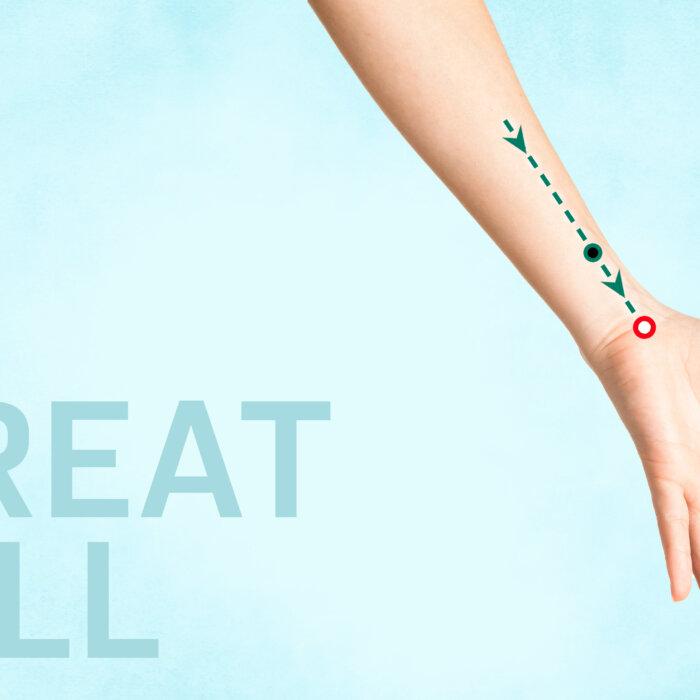
To find Shao Hai, bend your elbow to a 90-degree angle. Locate the inner side of the elbow crease and feel for the bony bump of the inner elbow (the medial epicondyle of the humerus). Shao Hai is situated directly in the middle of the line connecting the two landmarks. When you find a tender spot in that region, you’ve likely hit the mark.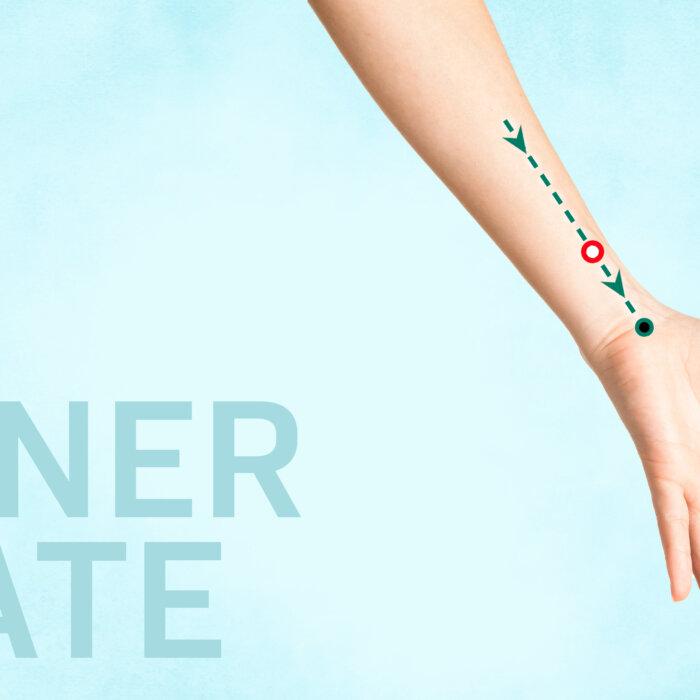
How to Stimulate Shao Hai at Home
- Press: Firmly press the point for three to five seconds, pause for three seconds, and repeat for one to three minutes per side.
- Massage: Use circular pressure with your thumb or index finger for the same duration.
- Tapping: Try rhythmic tapping with a loose fist while breathing in for three counts and out for four to six. Some traditionalists recommend 108 taps per arm for a deeper effect.
- Herbal Patch: Apply an herbal patch overnight for consistent stimulation while you sleep.