The oils aisle at the grocery store can be a bit overwhelming. With smoke points, refined, and unrefined, it can be hard to decide between olive, avocado, and coconut—just to name a few.
Each oil has unique health benefits, flavors, and uses. Understanding these will help you decide which oil works best for your diet and purposes.
What Is the Smoke Point?
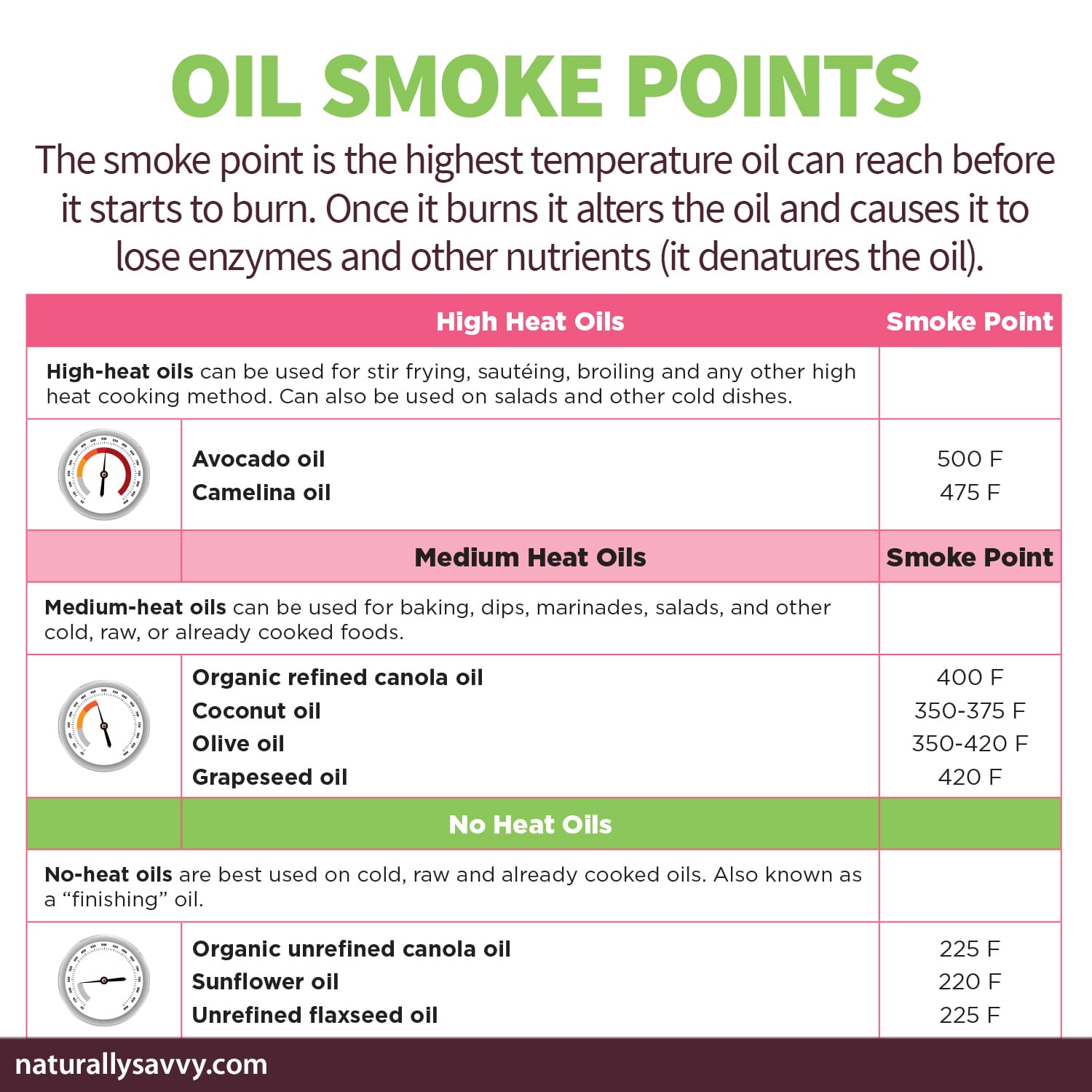
The smoke point is the highest temperature oil can reach before it starts to burn. Once it burns, it denatures the oil and causes it to lose enzymes and other nutrients. Ingesting burnt oil creates free radicals in our body which can result in inflammation and signs of aging. It’s important to select the right oil for the job, based on its smoke point and how you want to use it.
Refined Versus Unrefined Oils
The refining process can drastically change the oil. Canola oil, for example, comes refined and unrefined. Refined canola oil has a smoke point of 400 F, but chemicals such as bleach or hexane are used to extract the oil. Most canola grown in North America is genetically modified. Organic, unrefined canola oil has a smoke point of 200 F, and steam is used to extract the oil. It’s also free of GMOs.
Types of Oils and How to Use Them
Avocado Oil
Avocado oil is made from the fleshy part of avocados and is now being used in products from mayonnaise to potato chips. It’s one of the few oils we can eat that doesn’t come from a seed.
Lisa Roth Collins
Author
Lisa Roth Collins is a registered holistic nutritionist and also the marketing manager at NaturallySavvy.com, which first published this article.