This copy is for your personal, non-commercial use only. Distribution and use of this material are governed by our Subscriber Agreement and by copyright law. For non-personal use or to order multiple copies, please contact The Epoch Times Reprints.
Winter has long captivated artists as both subject and symbol. Across five centuries, painters have captured snow and cold through meticulous realism, allegorical symbolism, and scenes of everyday life. Medieval monks illuminated frozen landscapes in devotional manuscripts. Dutch masters observed city gates softened by fresh snow. American painters filled urban ice rinks with movement and color.
From solitary deer in silent forests to crowds of skaters gliding across frozen ponds, these nine paintings reveal how artists have seen winter: as hardship and celebration, stillness and energy, isolation and communion.
‘Snow-Covered Forest Road in Sunlight’
"Snow-Covered Forest Road in Sunlight," 1908, by Peder Mork Monsted. Oil on canvas; 47 1/5 inches by 78 3/4 inches. Private collection. Public Domain
Although the scene in “Sneklaedte skovvej i sollys” (“Snow-Covered Forest Road in Sunlight”) depicts a cold winter’s day, Danish painter Peder Monsted’s approach creates a warm and inviting atmosphere through sparkling sunlight and the presence of happy children at play.
Monsted devoted his career to the close observation of nature, a commitment shaped by academic training in Copenhagen and years of travel throughout Europe, Africa, and the Middle East. He is best known for his meticulously detailed realist landscapes, which achieve an almost optical precision in their rendering of light and texture.
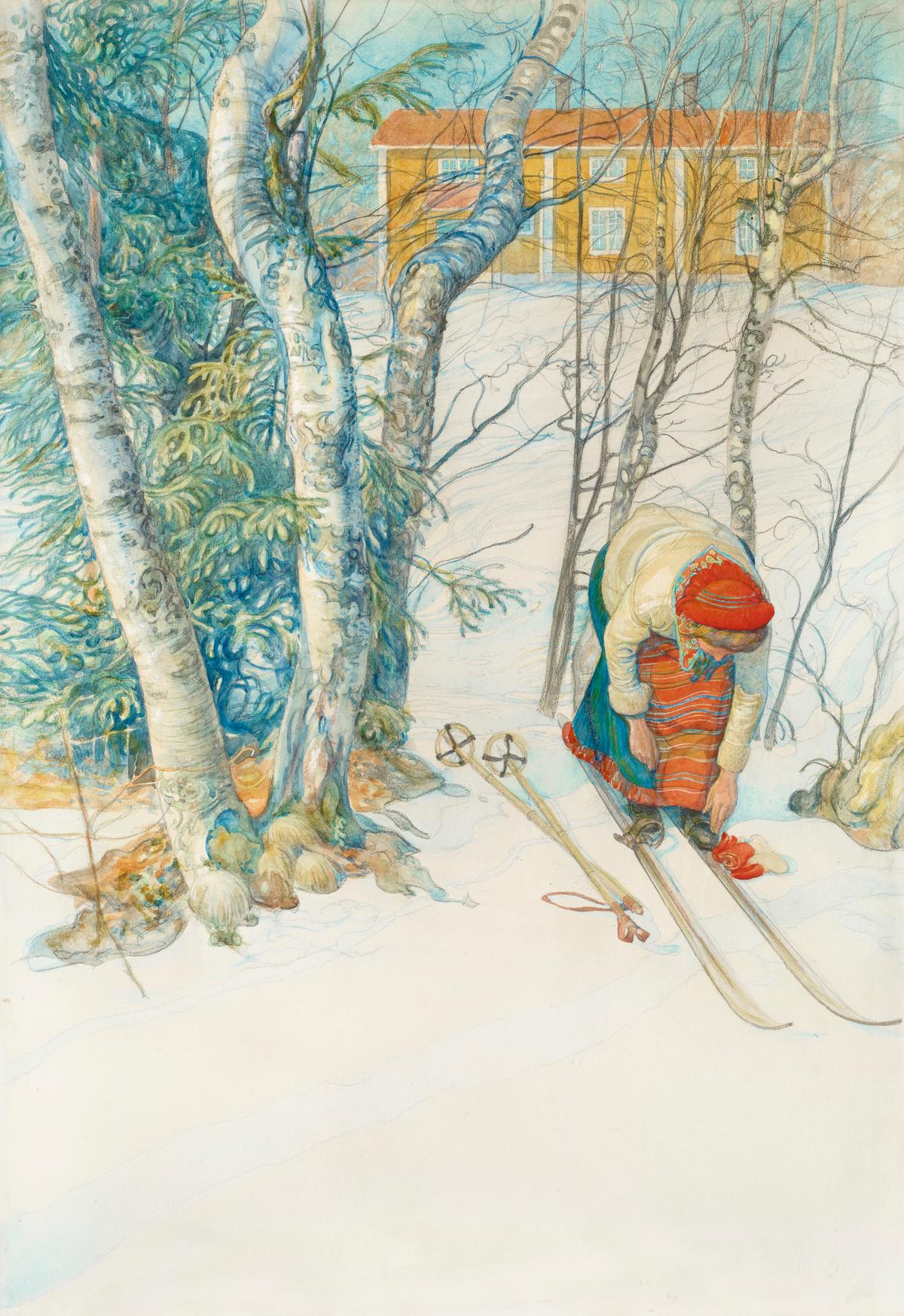
‘The Female Skier’
"Skidloperska/Flicka Spanner Pa Sig Skidorna" ("Skier/Girl Putting on Her Skis"), 1911, by Carl Larsson. Watercolor; 29 1/10 inches by 20 3/5 inches. Private collection. Public Domain
Swedish artist Carl Larsson is best known for celebrating everyday life with warmth and clarity. Deeply influenced by his family life and national identity, Larsson helped define a modern vision of Scandinavian culture that embraced both domesticity and the natural world. In “Skidloperskan,” winter becomes not a hardship but a space for health and vitality, rendered in the bright, colorful palette that became a hallmark of his optimistic view of modern life.
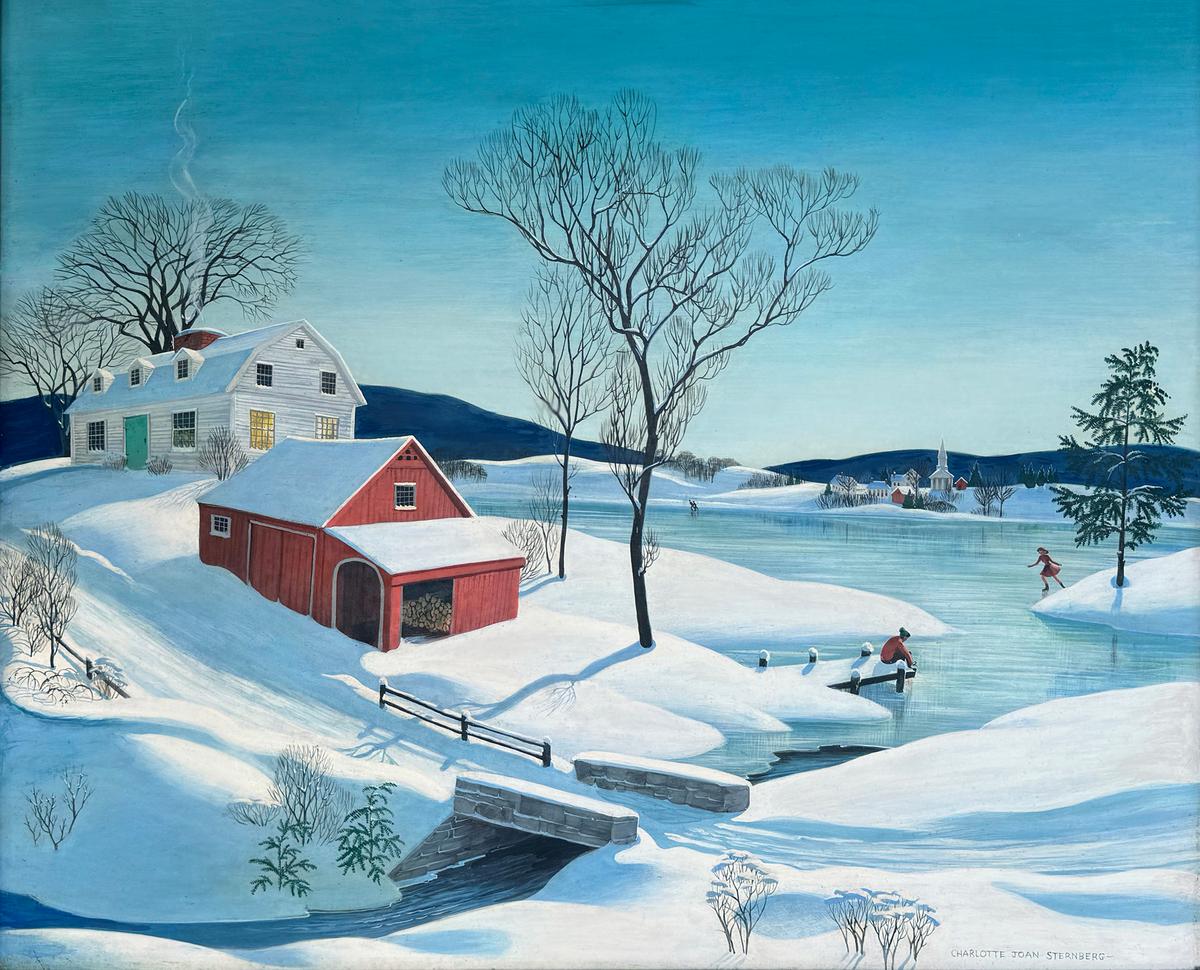
‘Americana Winter Scene’
"Americana Winter Scene (Ice Skaters)," 1950, by Charlotte Sternberg. Egg tempera; 15 3/4 inches by 19 1/2 inches. Courtesy of Robert Funk Fine Art, Miami
American painter Charlotte Sternberg trained at Yale in egg tempera, the medium she used throughout her career in commercial illustration. She became best known for Americana themes, particularly snow scenes of historic New England that were often published as Christmas cards.
In “Americana Winter Scene (Ice Skaters),” Sternberg presents winter as a shared community experience, with figures gliding cheerfully across the ice in a carefully balanced composition. Her polished illustrative approach transforms this seasonal pastime into an emblem of collective joy and social connection.
‘The Very Rich Hours of the Duke of Berry’
"Très Riches Heures du Duc de Berry" Folio 2, verso: February, circa 1412–1416, by Paul Limbourg. Illumination on vellum; 8 4/5 inches by 5 3/10 inches. Condé Museum, Chantilly, France. Public Domain
Created in the early 15th century, the “Très Riches Heures du duc de Berry” stands as one of the greatest achievements of medieval manuscript illumination. Paul Limbourg and his brothers Herman and Jean originally created this book of hours, a Christian devotional collection of prayers, for the Duc de Berry.
A premier example of International Gothic manuscript painting, the work features exquisitely detailed figural work and vividly colored seasonal landscapes within illuminated calendar pages. Characteristic of medieval art, the composition places figures and landscape elements on a generally flattened picture plane, yet achieves remarkable depth through meticulous detail and atmospheric effects.
This winter scene depicts a leaden sky over a frozen landscape where a shepherd tends his flock, a figure carries wood and others walk toward a distant village, with evocative details like frosty breath and smoking chimneys.
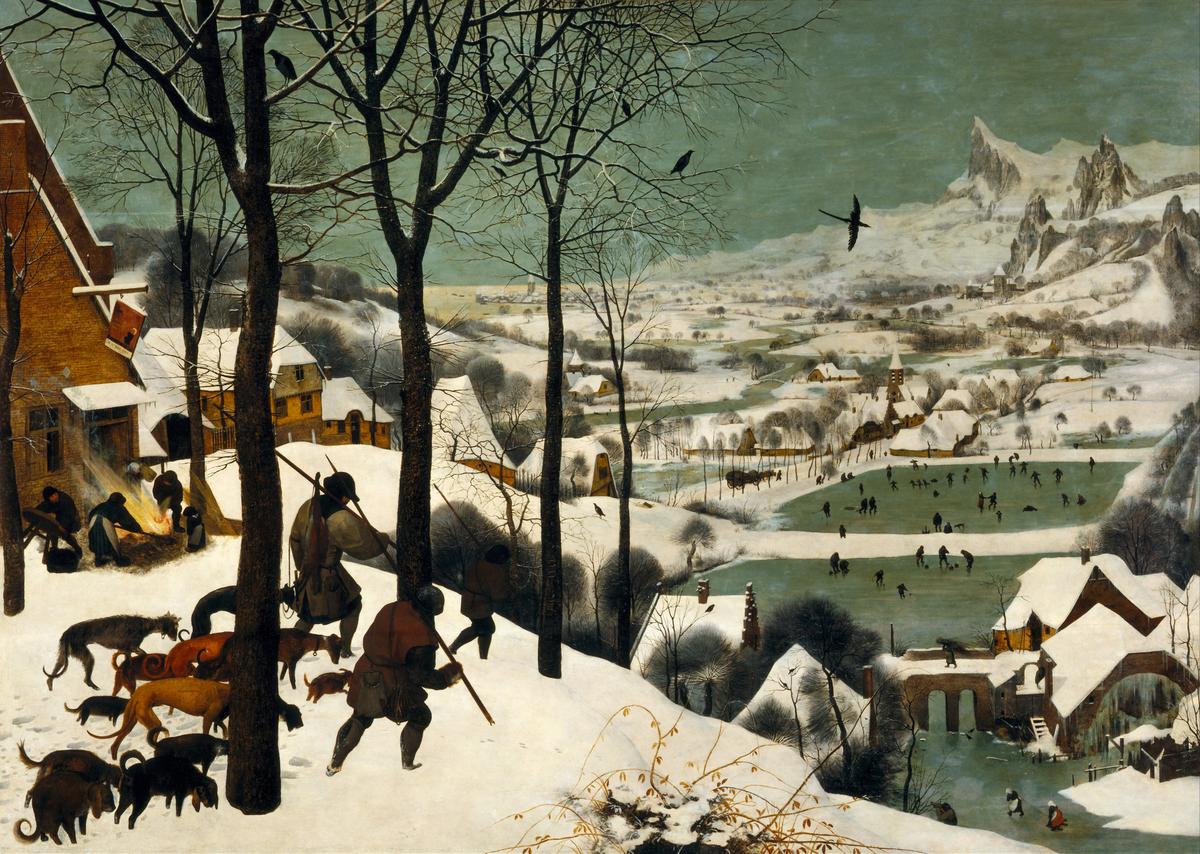
‘Hunters in the Snow’
"Hunters in the Snow," 1565, by Pieter Bruegel the Elder. Oil on oak wood; 46 inches by 63 3/4 inches. Vienna Museum of Art History. Public Domain
Few images define winter in Western art as powerfully as Pieter Bruegel the Elder’s “Hunters in the Snow.” This 16th-century masterpiece captures the season’s demands through both panoramic landscape and intimate human detail. The composition draws the viewer’s eye from weary hunters descending a snow-covered hill toward home, down to a vast frozen valley beneath them, its surface animated by distant figures skating and working. Bruegel’s genius lies in merging sweeping scale with human narrative, creating a scene that is at once monumental and deeply personal.
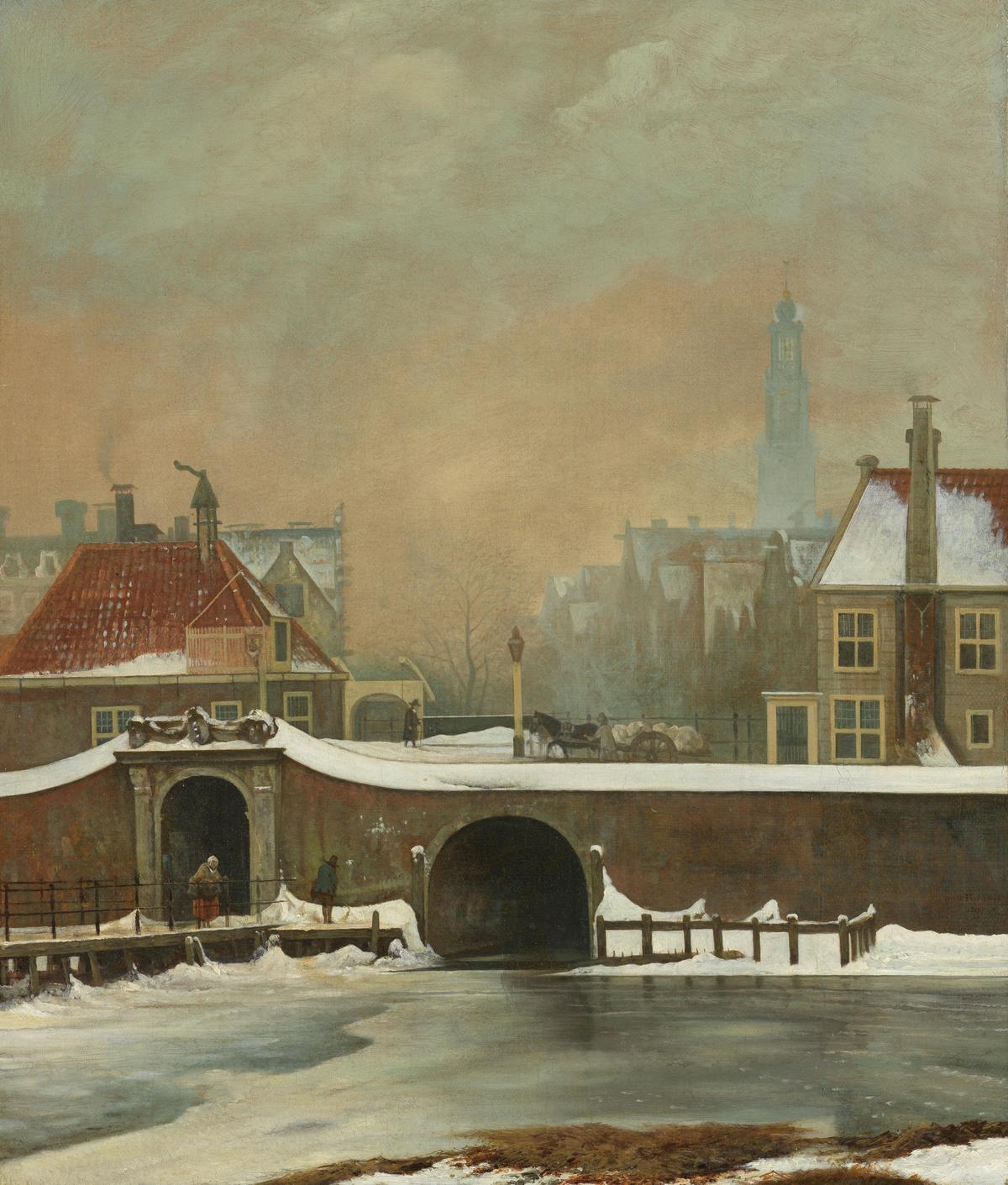
‘The Window Gate in Amsterdam’
"The Window Gate in Amsterdam," 1809, by Wouter Johannes van Troostwijk. Oil on canvas; 22 7/16 inches by 18 7/8 inches. Rijksmuseum, Amsterdam. Public Domain
Dutch painter Wouter Johannes van Troostwijk was an early plein-air artist who painted outdoors, a practice that would tragically lead to his death at age 28. In the intimate urban scene “Het Raampoortje te Amsterdam” (“The Window Gate in Amsterdam”), winter snow softens the city gate and buildings while chimney smoke drifts upward and delicate light plays across shadow. Van Troostwijk’s restrained palette and careful observation reflect a Dutch realist tradition focused on mood and atmosphere.
‘Deer and Doe in a Snowy Landscape’
"Deer and Doe in a Snowy Landscape," 1883, by Rosa Bonheur. Oil on canvas; 17 15/16 inches by 26 1/2 inches. Private collection. Public Domain
Rosa Bonheur is known for her uncompromising realism and deep respect for animal life. Throughout her career, she combined careful anatomical study with vigorous composition to create powerful yet naturalistic scenes.
In “Deer and Doe in a Snowy Landscape,” she observes winter through the calm presence of wildlife. The animals are rendered in meticulous detail, from their sinewy muscles and rich brown fur to their alert, watchful eyes, all set against the stark simplicity of the snow-covered ground. The deer stand quietly in the winter landscape, their stillness suggesting an unforced coexistence with their harsh environment.
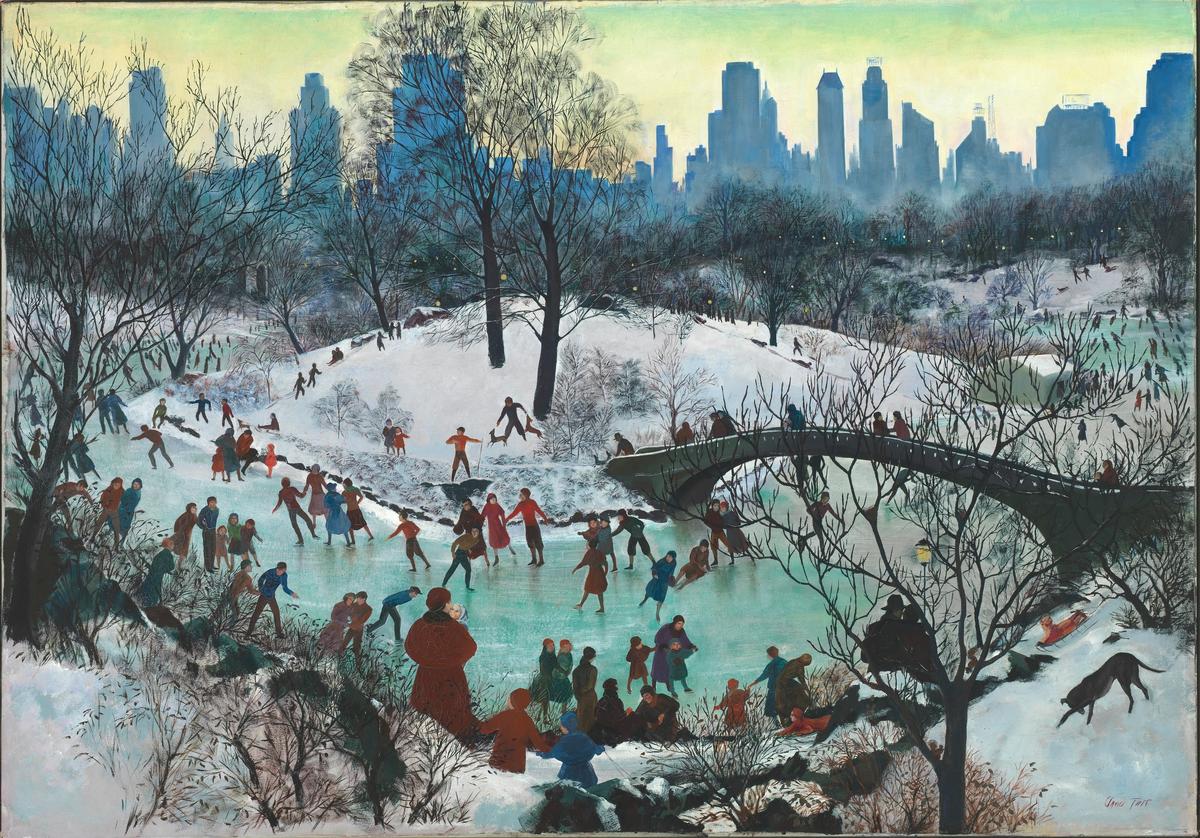
‘Skating in Central Park’
"Skating in Central Park," 1934, by Agnes Tait. Oil on canvas; 33 3/4 inches by 48 inches. Smithsonian American Art Museum, Washington. Public Domain
Agnes Tait’s work reflects early 20th-century Americana, blending realism with an emphasis on rhythm and movement. Drawing from both American Romantic traditions and European masters, she created expansive landscapes and energetic scenes of figures in motion. During the Depression, her work for federal art programs ranged from large-scale murals to prints, interspersed with pieces inspired by her travels.
“Skating in Central Park” emerged from this period as part of the New Deal’s Public Works of Art Project. The painting presents a festive, social scene where skaters glide across the ice in flowing patterns while the city recedes into a muted backdrop. Tait captures urban leisure and the joyful communal spirit of winter.
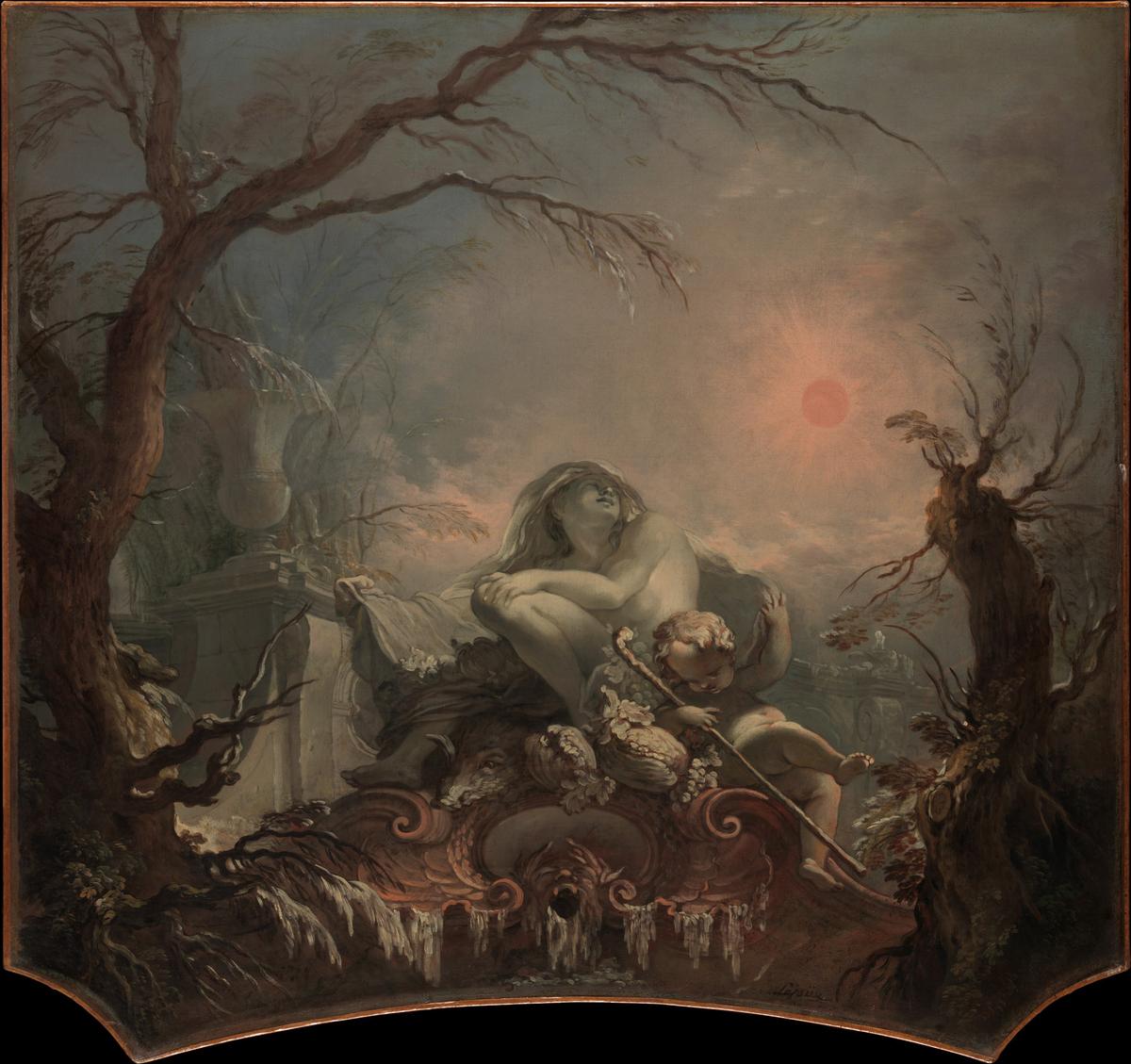
‘Allegory of Winter’
"Allegory of Winter," 18th century, by Jacques de La Joue the Younger. Oil on canvas; 39 1/4 inches by 41 5/8 inches. Metropolitan Museum of Art, New York City. Public Domain
French painter Jacques de La Joue (1686–1761) worked in the rococo style, a movement characterized by light, elegant, and highly decorative aesthetics. Emerging in Paris as a reaction against the strict formality of baroque art, rococo featured pastel colors, asymmetrical curves and themes of leisure, romance and mythology.
In “Allegory of Winter,” La Joue approaches the season through symbolism rather than observation. Draped figures and soft tones suggest rest and introspection, while ornamental elements like flowing curves and delicate scrollwork frame the composition with refinement and grace.
What arts and culture topics would you like us to cover? Please email ideas or feedback to [email protected]
Sarah Isak-Goode is a writer and art historian rooted in the Pacific Northwest. Her name—pronounced EYE-zik-good and meaning "good laugh"—hints at the warmth she brings to everything she does. Equal parts scholar and storyteller, Sarah brings the past to life through a distinctly human lens, exploring what connects us across the centuries. Away from her desk, she feeds her curiosity through traveling, painting, reading, and hiking with her dog, Thor.