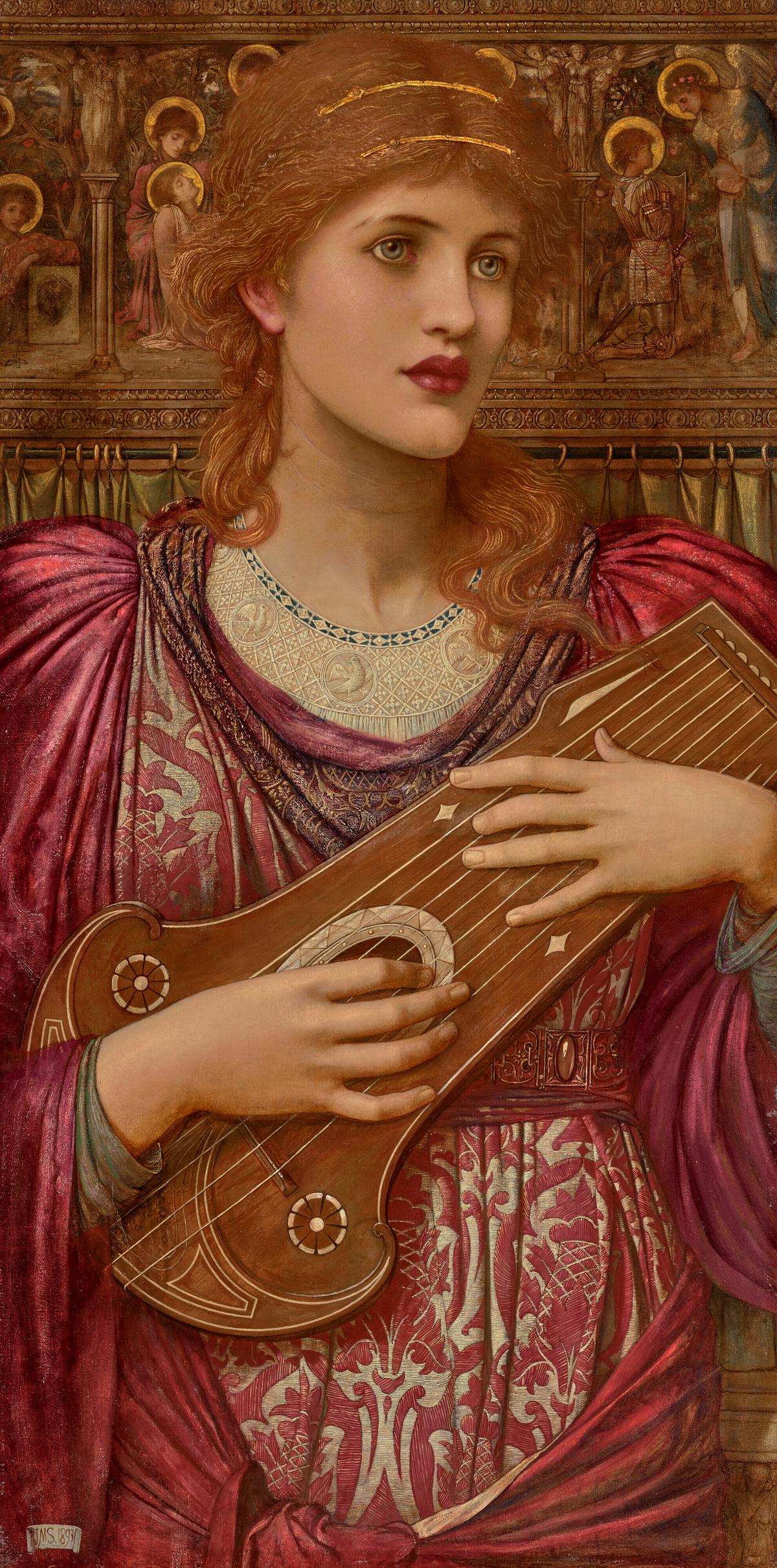
On June 30, Christie’s will present John Melhuish Strudwick’s “Thy Music, faintly falling, dies away, Thy dear eyes dream that Love will live for aye.” The jewel-like Pre-Raphaelite work intertwines music, poetry, and medieval fantasy.
Beauty, Symbolism, and the Language of Music
Rich in decorative detail and poetic symbolism, “Thy Music, faintly falling, dies away, Thy dear eyes dream that Love will live for aye” (sometimes referred to as “Golden Strings”) exemplifies the qualities that have made Strudwick one of the most sought-after figures of the late Pre-Raphaelite movement. Its idealized figures, sumptuous textiles, and medieval-inspired setting reflect an artistic vision devoted to beauty, craftsmanship, and emotional resonance.The painting depicts a slender young woman with porcelain skin and copper hair, a frieze extending across the composition above her, echoing the work’s color palette. She wears a gown of red and silver silk brocade whose balanced, plant-inspired pattern is characteristic of Italian Renaissance textile design. On such brocades, these motifs carried layered meaning: The artichoke might symbolize luxury or hope, and the pomegranate often represented fertility and eternal life.
A Painting With an Extraordinary Provenance
The painting’s history is nearly as compelling as the work itself. It was originally purchased directly from Strudwick by William Imrie, a shipowner and cofounder of the White Star Line, a major British shipping company now best known as the owner of the RMS Titanic. Its tragic sinking became one of the defining maritime disasters of the modern era. Imrie was arguably Strudwick’s most significant patron. Following Imrie’s death in 1906, several Strudwick paintings from his collection were offered at Christie’s in 1907.In the 1970s, the painting entered the collection of Sir Tim Rice, the lyricist best known for his celebrated collaborations with Andrew Lloyd Webber, together responsible for such landmark works as “Joseph and the Amazing Technicolor Dreamcoat,” “Evita,” and “Jesus Christ Superstar.”
In 1987, the painting was acquired by P.C. Withers, an English scholar and art collector. Withers was one of the foremost authorities on Strudwick’s life and work, and his research played a significant role in reviving interest in the artist during the late 20th century. After Withers, the painting passed into the hands of Albert Zuckerman, the legendary literary agent whose remarkable roster of clients included Ken Follett and Stephen Hawking.
A World Shaped by Medieval Imagination
Christie’s has long been the most authoritative marketplace for Pre-Raphaelite art, a field that has never lost its hold on collectors and the auction house boasts a strong record of landmark sales. Among the movement’s finest later artists is Strudwick, who was born in London in 1849 and developed his style after working as an assistant to John Roddam Spencer Stanhope and Edward Burne-Jones, from whom he inherited a love of medieval subjects and highly decorative compositions.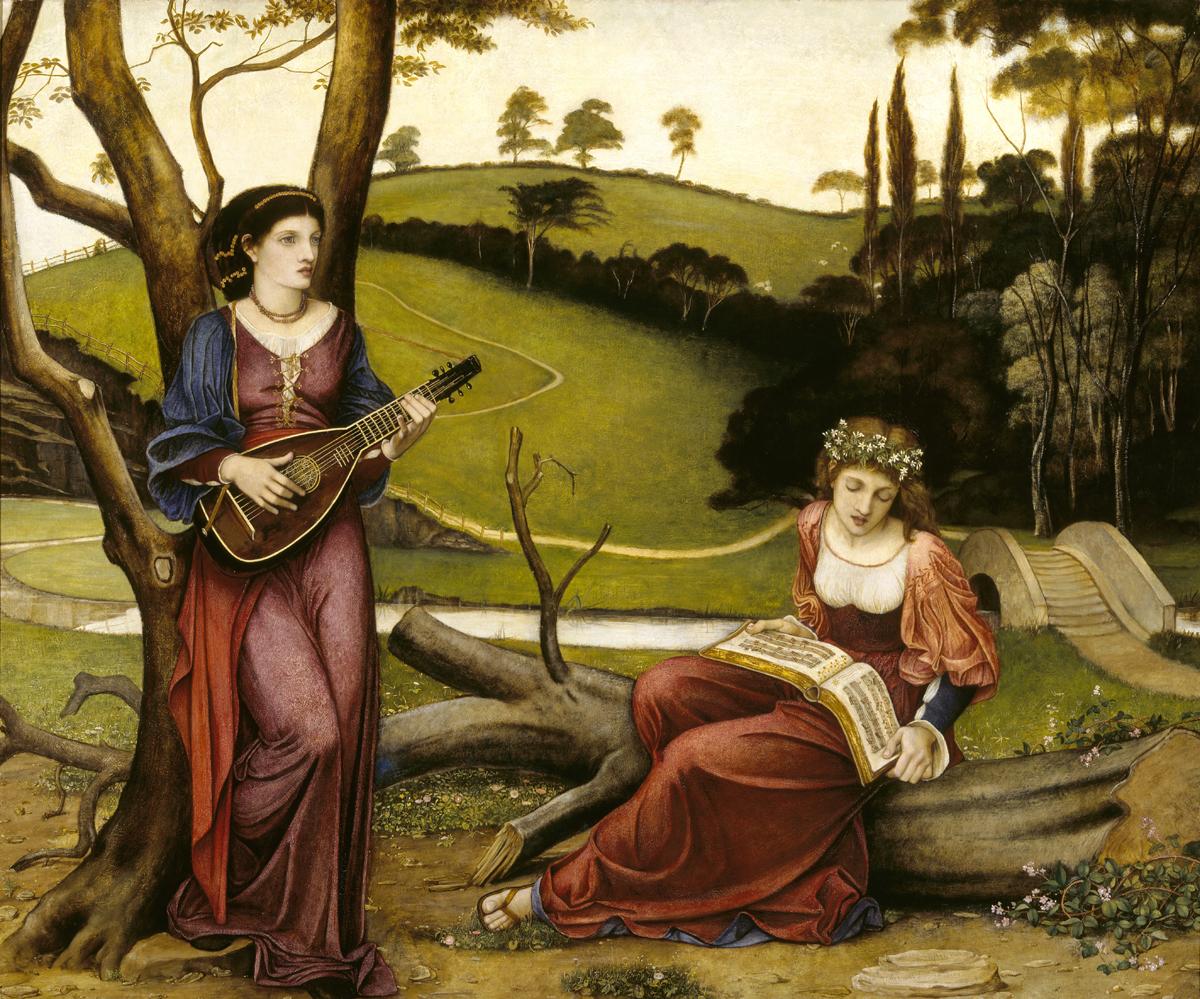
That inheritance was deeply rooted in the ideals of the Pre-Raphaelite Brotherhood. The Pre-Raphaelites looked to the Middle Ages for artistic authenticity and spiritual meaning. They rejected academic convention and embraced vivid color, intricate detail, and literary subject matter. Strudwick absorbed all of this and, in time, made it entirely his own as a second-generation Pre-Raphaelite artist.
The title, “Thy Music, faintly falling, dies away, Thy dear eyes dream that Love will live for aye,” comes from a poem by George Frederick Bodley. As an architect, designer, and poet, Bodley was drawn into Strudwick’s world through shared connections, and the two forged a friendship that found natural expression in their work. Strudwick took Bodley’s poetry as direct inspiration for his paintings, borrowing lines as titles, and sometimes had them inscribed on the frames themselves. Bodley gathered these and other verses in a collection of sonnets and poetic reflections published in 1899.
From Gentle Music to Golden Days
Several of Strudwick’s best paintings return to these same themes, and following them helps reveal what makes Christie’s work stand out within his relatively small body of output. Moving from “Oh, Swallow, Swallow” to “In the Golden Days” shows how these ideas were developed and refined across his career.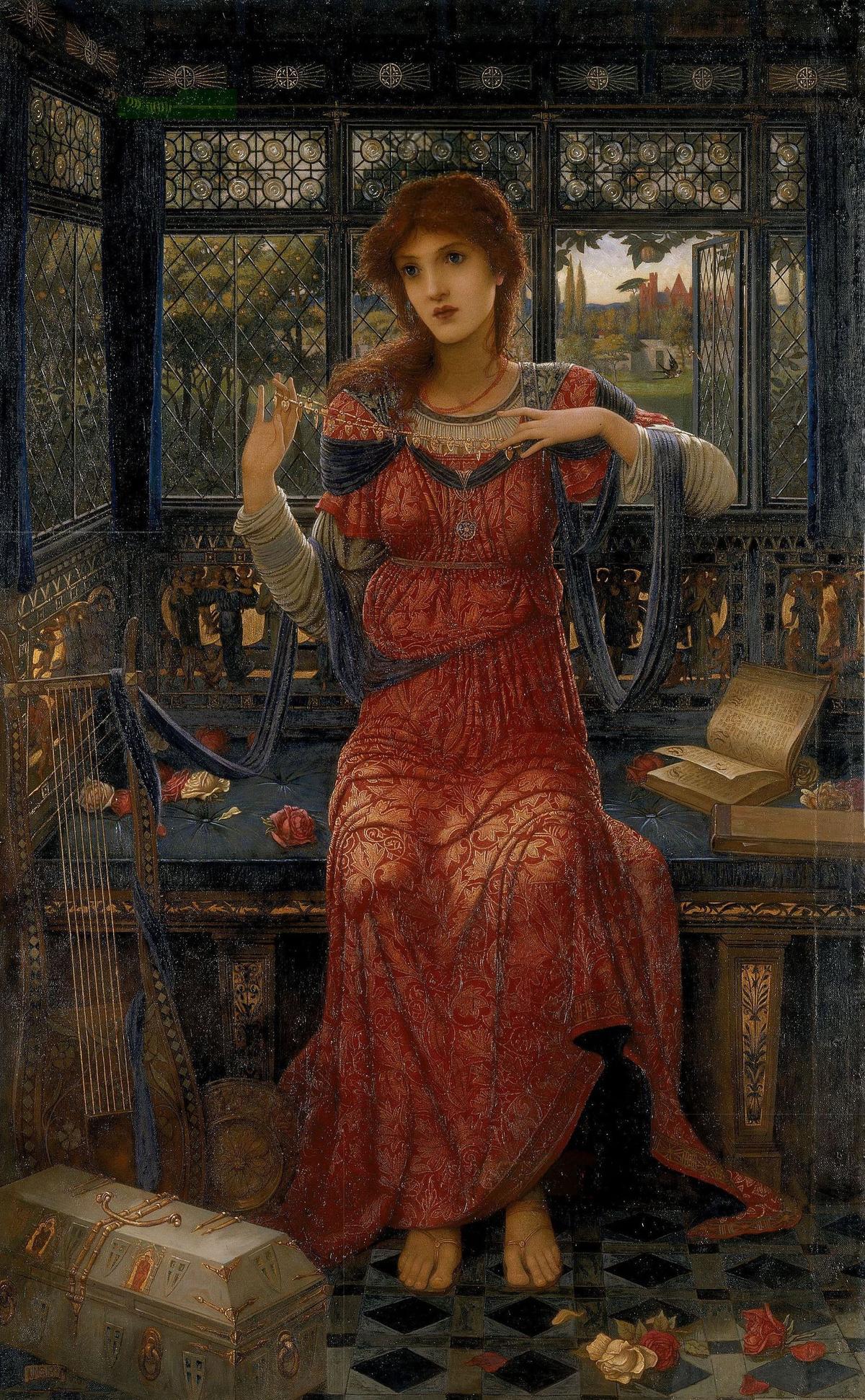
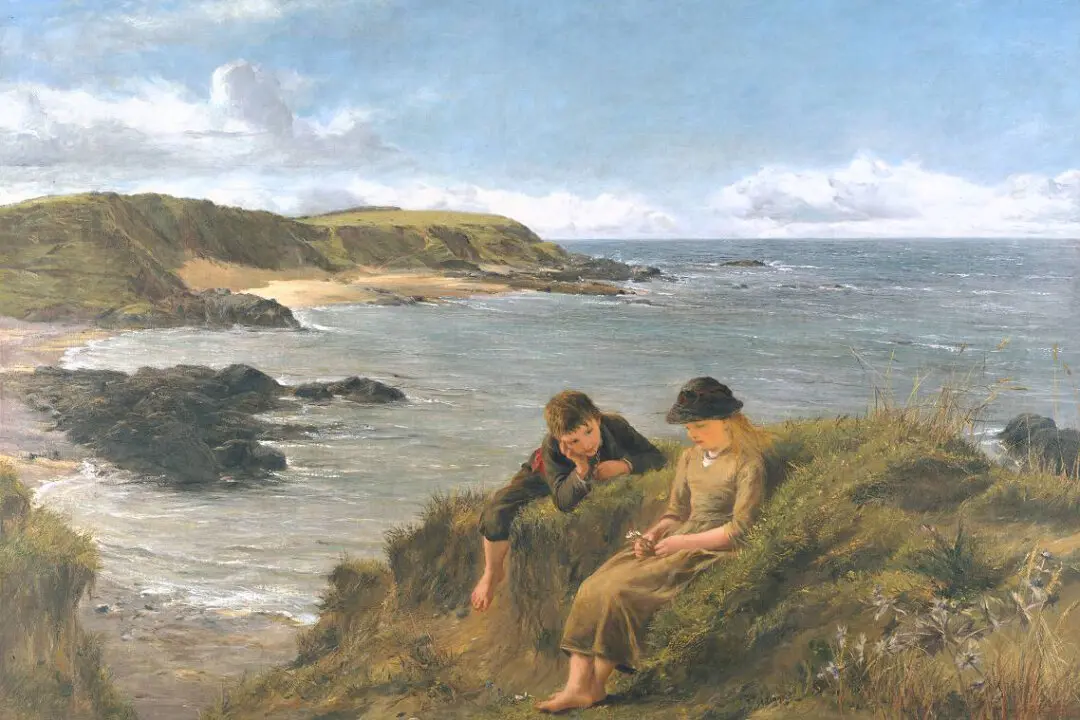
“Oh, Swallow, Swallow” was inspired by Alfred Lord Tennyson’s “The Princess.” Rather than illustrating the poem literally, Strudwick presents a carefully composed scene centered on a young woman, reminiscent of the figure in “Thy Music, faintly falling, dies away, Thy dear eyes dream that Love will live for aye.” She is seated before a window, awaiting a message carried by a swallow, while loosely holding a golden chain in her hand. Red roses are scattered at her feet. The painting now hangs at Sudley House in Liverpool, home to a notable collection of Victorian art.
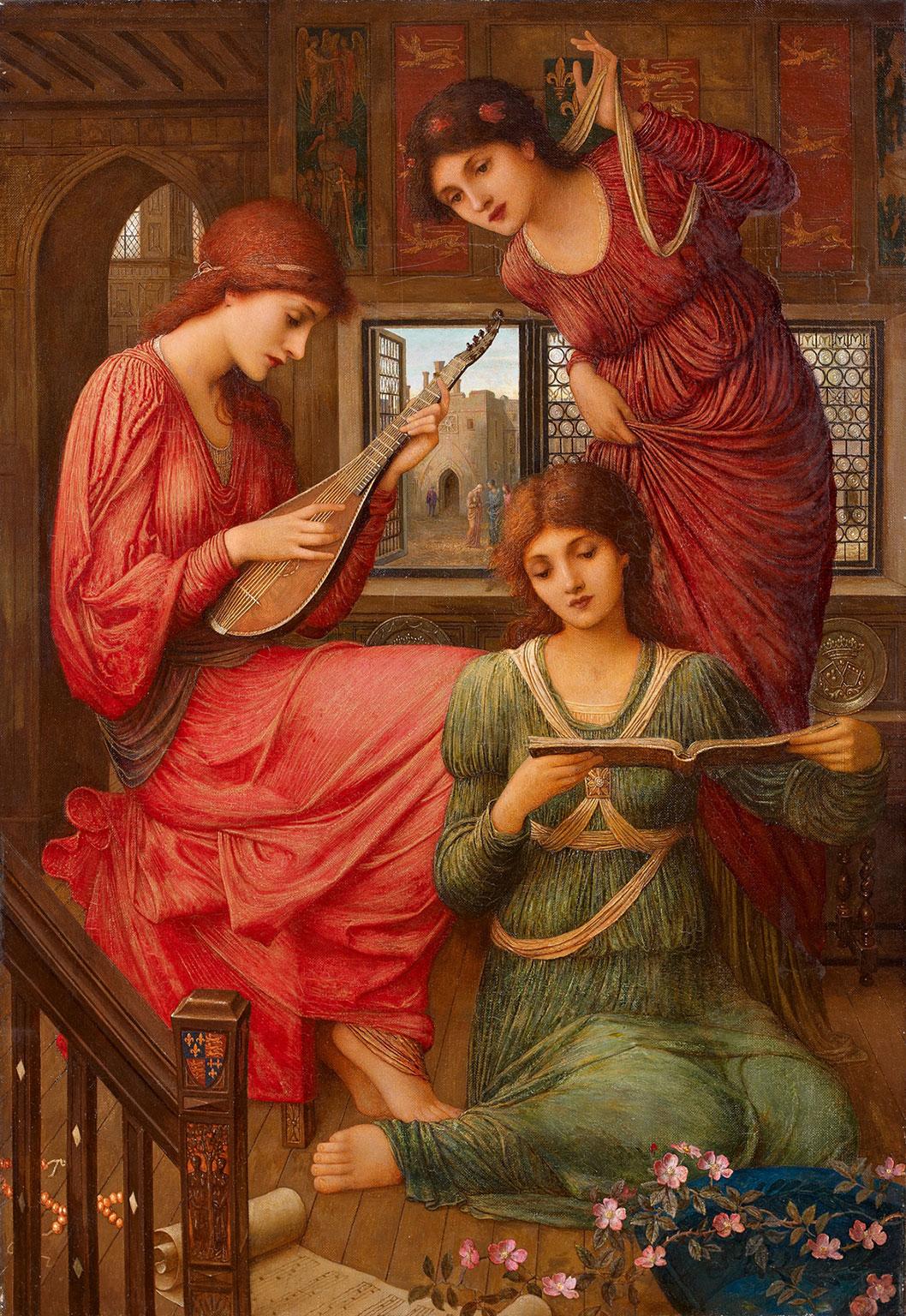
Strudwick’s 1907 work, “In the Golden Days,” is a late-career composition that brings together many of his recurring themes in a single, unified scene. Three young women are arranged within a richly furnished interior, their quiet domestic setting framed by subtle indications of change and the passage of time. Each figure is rendered with the Pre-Raphaelite hallmarks of delicate, idealized features, pale complexions, and softly waved hair, and each holds an object associated with art, music, or poetry. The painting represents one of the final expressions of Strudwick’s artistic vision before he stopped painting in 1909.
Rarity and the Return to Prominence
Although admired by a loyal circle of patrons during his lifetime, Strudwick’s reputation declined sharply in the early 20th century. As artistic tastes shifted toward modernism, his highly refined medievalism came to be regarded as old-fashioned.The qualities that once seemed out of step with modern taste have since formed the basis of his renewed reputation. Collectors and scholars now value Strudwick’s paintings for their exceptional craftsmanship, poetic atmosphere, and rarity. With fewer than 40 known works, each surviving painting offers a glimpse into an artistic world shaped by beauty, music, and literature.
Christie’s offering of “Thy Music, faintly falling, dies away, Thy dear eyes dream that Love will live for aye” stands out as a leading example of this legacy and an opportunity for collectors to acquire a work by one of the Pre-Raphaelite movement’s most elusive figures.