Research has clearly established the importance of fathers who are present and involved in the lives of their children. Children whose fathers are actively involved in their lives are twice as likely to go to college, 80 percent less likely to go to jail, and 75 percent less likely to experience teen pregnancy.
But it runs even deeper than that. A study conducted at the Inner Mongolia University of Technology found that “the more time parents spent with children, the higher their children’s well-being will be.” This indicates that the more hands-on dads (and moms) can be, the better. Children’s wellbeing rises with the number of hours spent with one or both parents.
These considerations make a strong case for fathers to work from home to the degree they’re able, even if they are the primary breadwinner. In fact, the benefits of fathers remaining physically present in the home might be weighty enough that men should prioritize the type of careers where this is possible.
The fact that this proposal—that men should prioritize working from home whenever and however possible—is unconventional today reveals just how far we’ve drifted from traditional understandings of the household and the role of the household in economic and social life.
The Traditional Model
Pre-industrial societies often viewed the home as the center of life. It was not just a place to crash after a day at the office and long commute through dizzying streams of traffic. It lay at the heart of leisure time, family bonding, and even economic production. When the economy operated on an array of small, often family-owned businesses, shops, and farms, home was much more than a place to watch TV and sleep—it was where both lives and livelihoods played out.For the baker living above his shop or the farmer on his plot of land, home meant everything: the family’s place of sustenance and the place where the family enjoyed the fruits of that labor. Scenes of playing with the children under the apple trees blended seamlessly into picking vegetables from the garden, which in turn morphed into the family gathered around the dinner table and the hearth to enjoy food, fellowship, and music.
The model also blurred the lines between “homemaking” and “career” (and so, maybe, helped minimize the tension between the sexes that can result from the dichotomy). In the home-centered system, homemaking, child-rearing, and career were more thoroughly integrated, and all three depended on the efforts of both husband and wife.



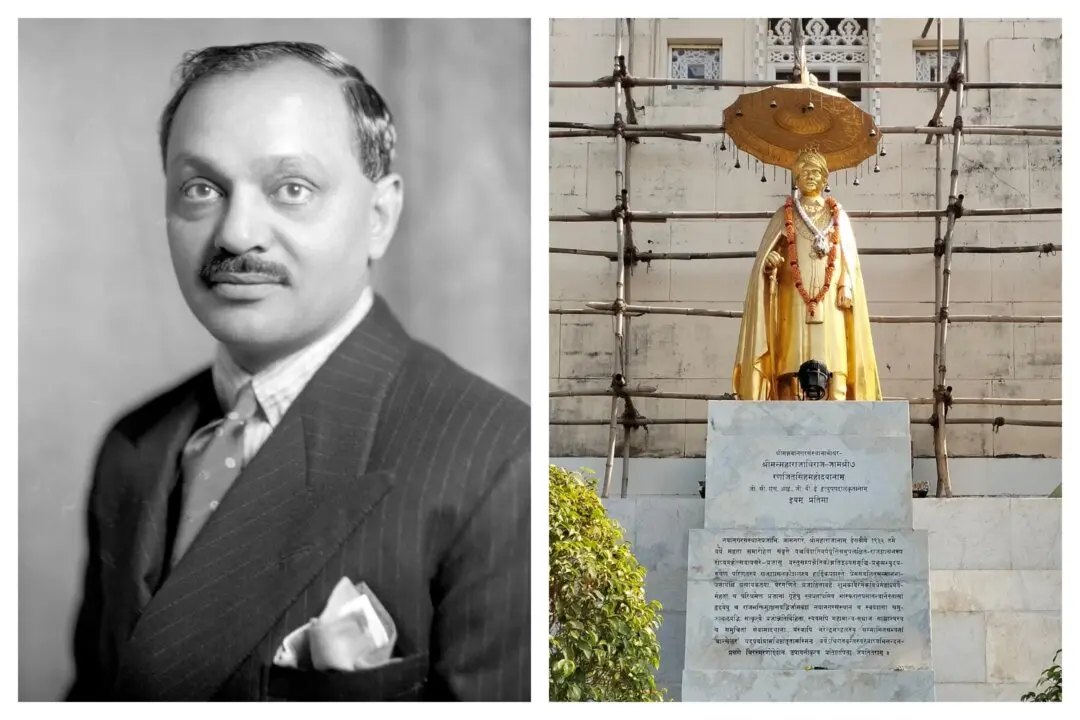
A man takes in the view of the Blue Ridge Parkway in Doughton Park, North Carolina, circa 1930. FPG/Hulton Archive/Getty Images
In the words of philosopher John Cuddeback,
“This other, and arguably older, traditional view is tied to a robust notion of the household community. Here, human flourishing, understood primarily in terms of depth of character and relationships, calls for a community of daily life marked by significant work and leisure activities. The right order and well-functioning of such a community demand the significant investment of both husband and wife, father and mother.”
Similarly, Dale Ahlquist, commenting on the economic and social ideas of G.K. Chesterton, articulated the home-centric economic and social model that Chesterton was attempting to preserve post-industrial revolution. “Chesterton’s ... ideal not only called for mothers to stay at home, it called for fathers to stay at home as well. The home-based business, the idea of self-sufficiency would not only make for stronger, healthier families, but a stronger, healthier society.”
Modern social and economic systems, by contract, have shifted the center of gravity from the home to the workplace or the school. Industrialization and corporatization drew men and women from farms or family businesses into factories and, later, office buildings, while children—who were no longer an economic asset able to assist in the family business—were dispersed to schools and daycares.
Despite its undeniable benefits, this new economic model has had potentially damaging effects by disrupting the family connectedness and rootedness that arises from a home-based economy.
Modern Workarounds
Of course, we’re not going to return to a pre-industrial economy. But that doesn’t mean that none of its positive elements can be incorporated into the contemporary system. In fact, our industrial and technological achievements may have opened a way to recover some of these benefits. The internet has unlocked a whole new host of work opportunities that can be accomplished from home.Here’s where the suggestion that fathers (and mothers) pursue work-from-home opportunities becomes more feasible. If a man is unable to run a farm or operate a store on the same premises as his bedroom, that no longer needs to stop him from making his home his place of work, allowing him to be more present with his family. Many corporate jobs can now be done remotely, as can countless freelance or self-employed roles.
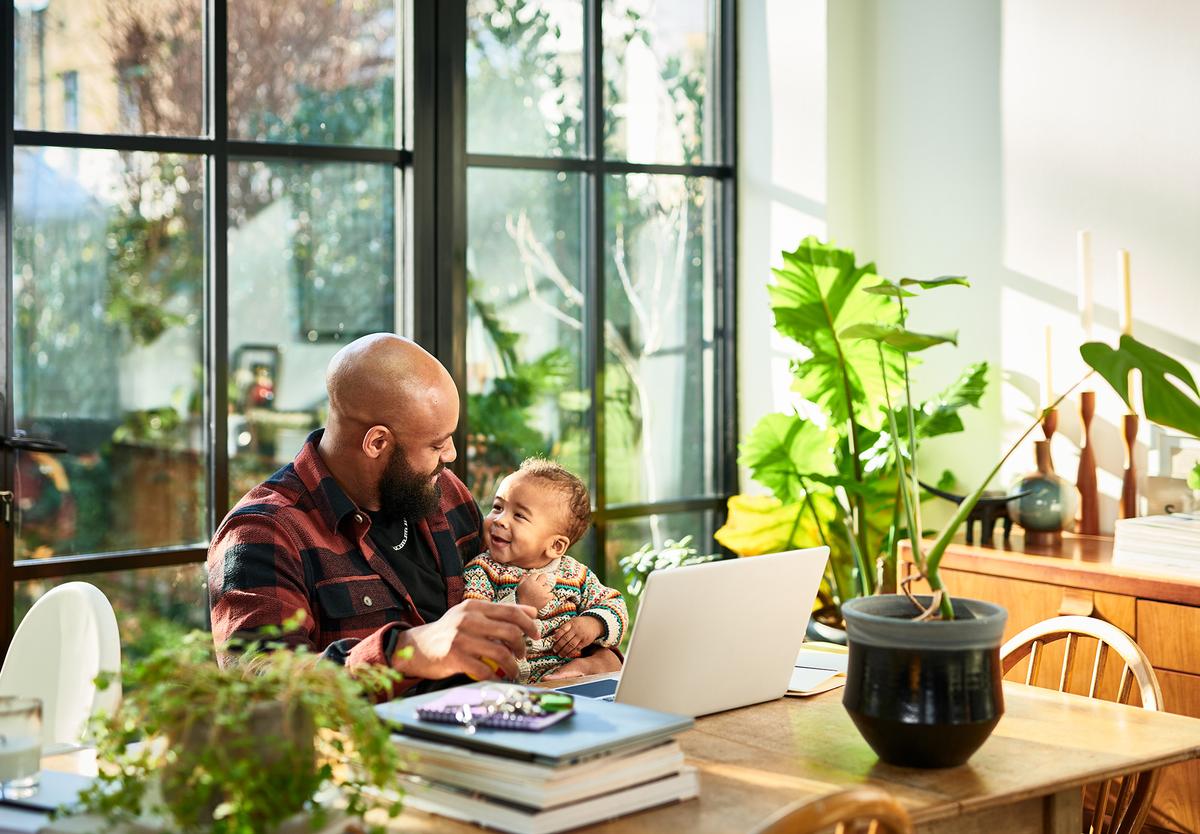
Even brief interactions throughout the day can strengthen parent-child bonds when caregivers are physically present and emotionally engaged. Westend61/Getty Images
Speaking from experience, the transition from an out-of-home job to a work-from-home one has been a great blessing for me and my family. To list just a few of the benefits: I get to see more of my wife and daughters throughout the day; my wife, who does not work outside the home, is less lonely; the family shares more meals together; I’m able to assist my wife with childcare or other needs throughout the day; I have greater flexibility in my schedule; I save money, time, and stress by cutting out the commute; the beautiful reality of home has taken on a deeper meaning; and we have put down stronger roots.
Of course, this won’t be possible for everyone. But it’s not a bad ideal to aim for.
If we wish to build a society that prizes and protects domestic life, we might begin by spending more of our time at home in a domestic atmosphere. We might begin by prioritizing home and recognize that home can only be “where the heart is” if we give it the attention it deserves. Cuddeback insists, “I suggest that the real good of people—youth, adult men and women, and the elderly—calls for a radical shift today in our understanding and practice of homelife, and for a richer kind of paternal involvement.”
Rather than seeing home and career as in strong competition, fathers can recontextualize the issue by integrating career, home maintenance, food production, housework, childcare, family time, and leisure time together under the heading “the art of the household.” Working from home can be a significant step in that direction.
When a man marries a woman, he tells her, in essence, that he wants to spend the rest of his life with her. When both spouses stay home together, it gives a beautiful and direct expression to that longing of the heart.