“Do not consider yourselves orphans. You are now Nawanagaris, and I am Bapu, the father of all the people of Nawanagar, so also yours.”
These must have been strange words for the children to hear after being cast off by all the nations of the earth, after sojourning through harsh, barren landscapes as orphans and castaways, after suffering hunger, hardship, heartache—day upon weary day, as far back as they could remember. Was it possible that some hospitable corner of the world still existed? Was it possible that this man actually wanted them?
‘You Are Not Orphans’
Strange, too, to these fair-skinned, fair-haired Polish children must have been the dark face, soft dark eyes, and broad shoulders of the man who was now calling himself their father: Maharaja Digvijaysinhji Ranjitsinhji Jadeja, ruler of the princely state of Nawanagar in India.“Do not consider yourselves orphans.”
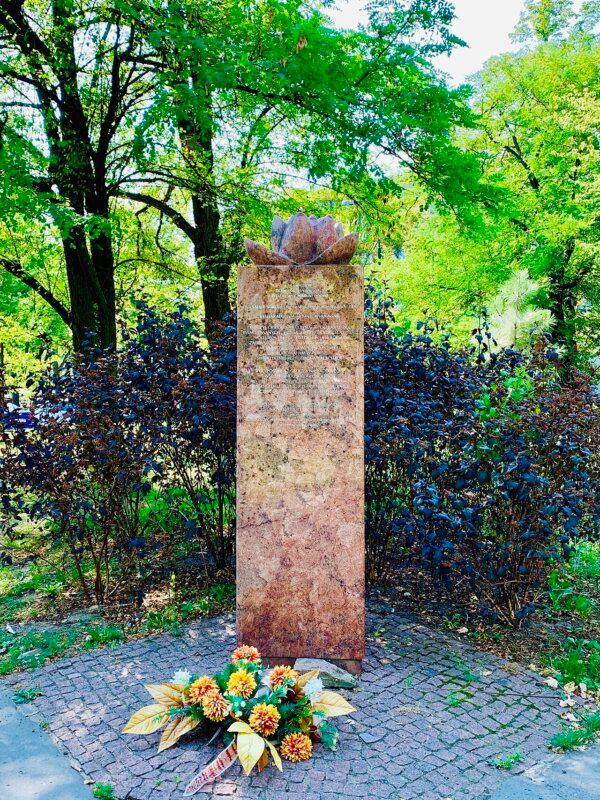
The "Good Maharaja" monument in Warsaw's Ochota district, erected to honor the Indian ruler who saved Polish orphans and ensured their heritage was preserved. Chris Olszewski/CC BY-SA 4.0
The sentence must have sounded absurd. But, as the children would learn, these were not empty words. The Maharaja of Nawanagar—“The Good Maharaja” as he would come to be known among the Polish—meant these words with all his heart.
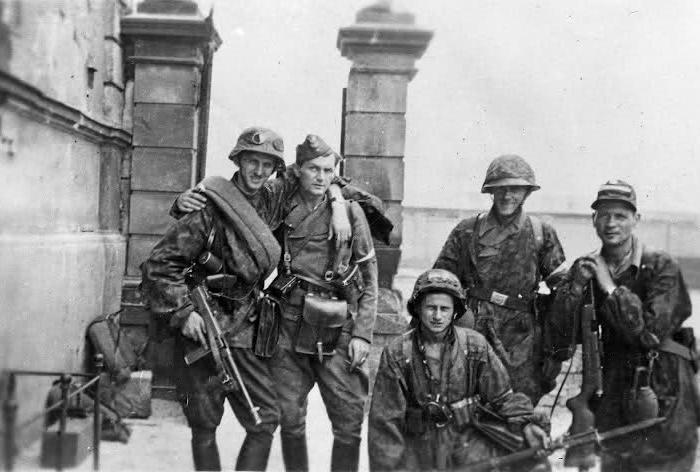
What strange alignment of the stars had led these thousand or so Polish children, aged 2 to 15, to the doorstep of an Indian prince? In 1939, Poland had been swallowed up by two gaping and devouring mouths: the Nazis and the Soviets. These two forces had signed a non-aggression pact and agreed to divide Poland between them, leading to the deaths or deportations of hundreds of thousands of Poles.
After sweeping into Polish territory, the Soviets began killing or rounding up the Polish intelligentsia and their families—military officers, civil servants, teachers, anyone who might be “socially dangerous”—and sending them to labor camps in Siberia. Many of these unfortunates perished on the journey, exposed, as they were, to harsh winter elements in unheated cattle cars. Others died in the terrible conditions of the camps.
However, only two years later, in 1941, Hitler broke the non-aggression treaty with the Russians and invaded the Soviet Union. Suddenly, the Germans were a much bigger concern for the Soviet Union than the Poles were, and they ordered the freeing of Polish prisoners and the formation of a Polish army to oppose the Nazi juggernaut. Tens of thousands of Polish refugees were thus evacuated to Iran—at which point no one was quite sure what to do with them.
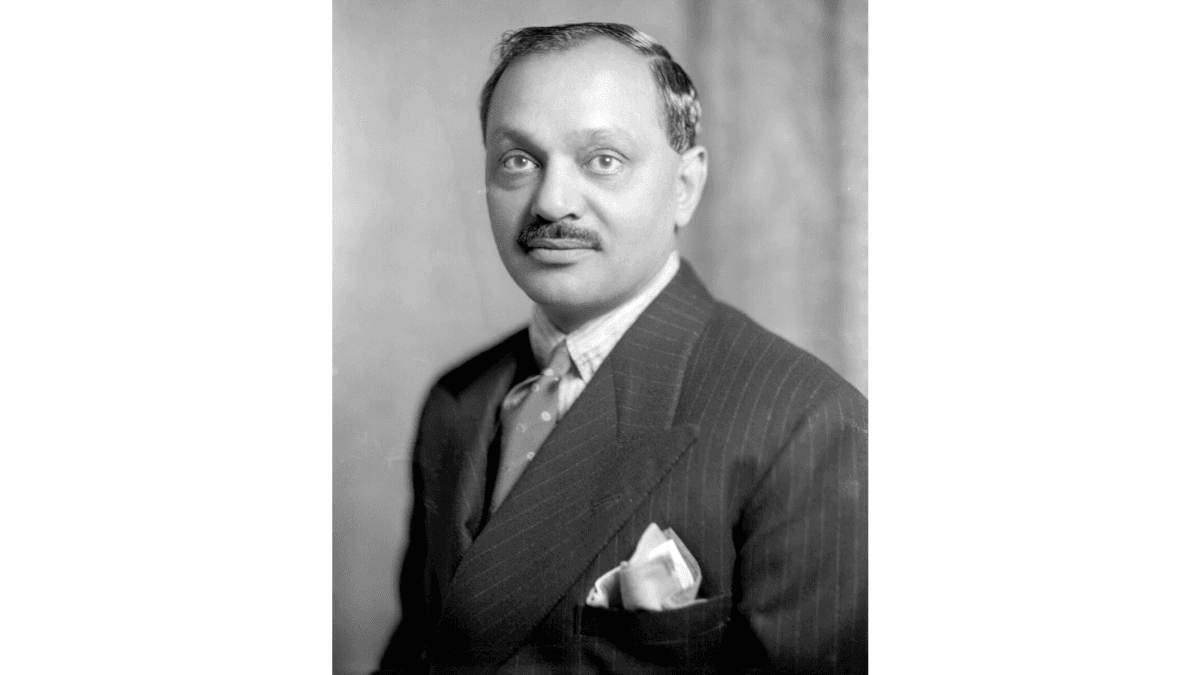
Maharaja Digvijaysinhji became known in Poland as "the Good Maharaja." Public Domain
The Polish refugees—especially the children, many of whom were malnourished and disease-ridden as a result of their internment in Soviet camps—would be a significant financial and humanitarian burden to any country or group that took them in. So, at first their fate was uncertain.
Sanctuary in Nawanagar
But while governments, bureaucrats, and agencies debated, disputed, and dragged their feet, one man had pity and took action. The Maharaja of Nawanagar, Digvijaysinhji, took matters into his own hands and, without waiting for British or Indian governmental approval, decided to welcome the Polish children. He invited them to the nominally sovereign Indian princely state he ruled, called Nawanagar. The Maharaja was born in 1895 into a premier Indian family and spent his formative early years in England. He was educated at Rajkumar College, Malvern College, and University College London before assuming his duties as Maharaja after the death of his uncle, the previous ruler of Nawanagar, in 1933.Digvijaysinhji was a rather short, broad military man, who had served admirably in WWI and been promoted to the rank of captain in the British Indian Army. Later, he received an honorary promotion in the Indian Army to the rank of lieutenant-general. Yet despite his military bearing, he had gentle, thoughtful eyes, a compassionate heart, and an avuncular disposition.
His kind and courageous spirit was evident in his decision to take in the Polish refugee children. As Peter Zablocki wrote for Smithsonian Magazine,
“The maharaja’s decision to proceed independently, before Britain and India had officially committed to helping the Polish refugees, was an extraordinary one. He had no historical connection to Poland, no strategic reason to act, nor external pressure to respond. He was driven only by what Leo Amery, then-secretary of state for India, called ‘practical common sense.’ As Digvijaysinhji reportedly said, ‘If God has sent me these children, it is my duty to care for them.’”
Building a Home Away From Home
And care for them he did—in style. He provided not only food and shelter but also community, religion, education, games, a beach for swimming, and all the other fitting accouterments of childhood. Despite the sputtering protests of British officials, the maharaja built an extensive camp for the children in the village of Balachadi, near his palace on the Kathiawar Peninsula, telling the British, “It’s my money. Where I spend it is my affair.” The camp contained a few dozen barracks for the children’s living quarters, a school, a library, kitchens, and a Catholic Church.Digvijaysinhji referred to the refugees as “my children,” and he took their upbringing very seriously. He insisted that their Polish identity be honored, directing that the Polish flag be hoisted in camp every day and the Polish national anthem be sung. He arranged for special cooks to tame down the spicy Indian food to suit the less exotic palate of Polish children. Teachers who had been evacuated along with the children continued to teach them in the camp school, while Fr. Franciszek Pluta ministered to their spiritual needs.
Still, this was not enough to satisfy the maharaja. He also facilitated cultural and sporting events for the children. A former pro soccer player led athletic classes, and soon the camp boasted a team capable of competing with local Indian and British military teams.
The maharaja attended the children’s plays, activities, Easter services, and sporting events. To top it all off, he even arrived on Christmas dressed as Santa Claus to distribute presents to the children.
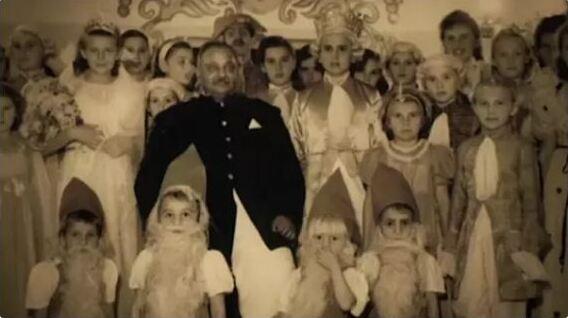
The Maharaja with the Polish children on Christmas Eve, in 1943. Alewis2388/CC BY-SA 4.0
The son of one of the Polish refugee children recalled that “All [Mother] remembered [of that time in India] was happiness and peace, and said she owed the Maharaja her life.”
Other survivors are on record as having made similar statements. Karolina Rybka also lived at the Indian camp, and in a 2019 interview with CBS News, she said, “He saved our lives.”
She recollected attending school until noon, then going to the ocean to swim with the other children. “Big waves. We were just jumping. We were so happy.”
“I have no idea what would have happened to us, a thousand kids,” she reflected. “The war was everywhere. ... Nobody wanted us."
For this band of children, at least, history had been rewritten, and hell transformed into heaven. A world that had condemned them to starvation and death suddenly opened up again and welcomed them in the smiling eyes of an Indian prince.
Protecting His ‘Children’ to the End
The idyllic existence of the children was threatened, however, when the Soviet-backed Polish Lublin government showed up and told the maharaja and the children that, under international law, the orphans needed to return to their country of birth. Maharaja and his team suspected that this was an attempt by the Soviets to gain control of the children. That was quickly stopped. To prevent the Communists from getting their hands on the children, the maharaja, camp commander Fr. Franciszek Pluta, and British liaison Lt. Col. Geoffrey Clarke collectively adopted the children in a single legal proceeding. Meanwhile, the Red Cross worked to identify surviving family members so that the children could be safely sent home.Bit by bit, the children were resettled in the United States, Australia, Canada, and the UK. Only those who wished to go were sent back to Poland. The last convoy of children departed from the camp in 1946.
Digvijaysinhji never asked for any payment for his incredible act of generosity. In his mind, he had simply done the right thing. He was rewarded posthumously, however. He received the Commander’s Cross of the Order of Merit of the Republic of Poland, and a square in Warsaw—“The Good Maharaja Square”—was named after him.
We can best glimpse the noble heart of this man by attending to his own words. This is what he said in a 1942 interview in the “Poland” bi-weekly publication about his decision to welcome the children. It is worth quoting at length:
“Deeply moved and distressed by the suffering of the Polish nation, and especially of those who are spending their childhood and youth in the tragic circumstances of this most terrible of wars, I want to contribute and, in some way, improve their lot by offering them refuge in a country that is far away from the ravages of war. I am extremely pleased that I have the opportunity to alleviate the sufferings of these children as I sympathize with the Polish nation and its relentless struggle against oppression, a nation which has produced such magnificent sons. ... I am trying to do whatever I can to save the children as they must regain their health and strength after these dreadful trials so that in the future they will be able to cope with the tasks that await them in a liberated Poland.”
These are the words of a certain type of man who arises in history from time to time, a man with clear moral vision and the courage and initiative to simply act upon it without further ado.
Hundreds of Polish children—and, by extension, their children and grandchildren—owe their lives and happiness to the maharaja’s strength of character and his ability to act simply and forcefully for good.
What arts and culture topics would you like us to cover? Please email ideas or feedback to [email protected].