NEW YORK CITY—What do a 150-million-year-old Stegosaurus fossil, a 1787 “Official Edition” of the U.S. Constitution, and a Leonardo da Vinci painting have in common? All of these treasures are currently on view in New York City museums, generously lent by their owner, the hedge fund billionaire and philanthropist Kenneth C. Griffin.
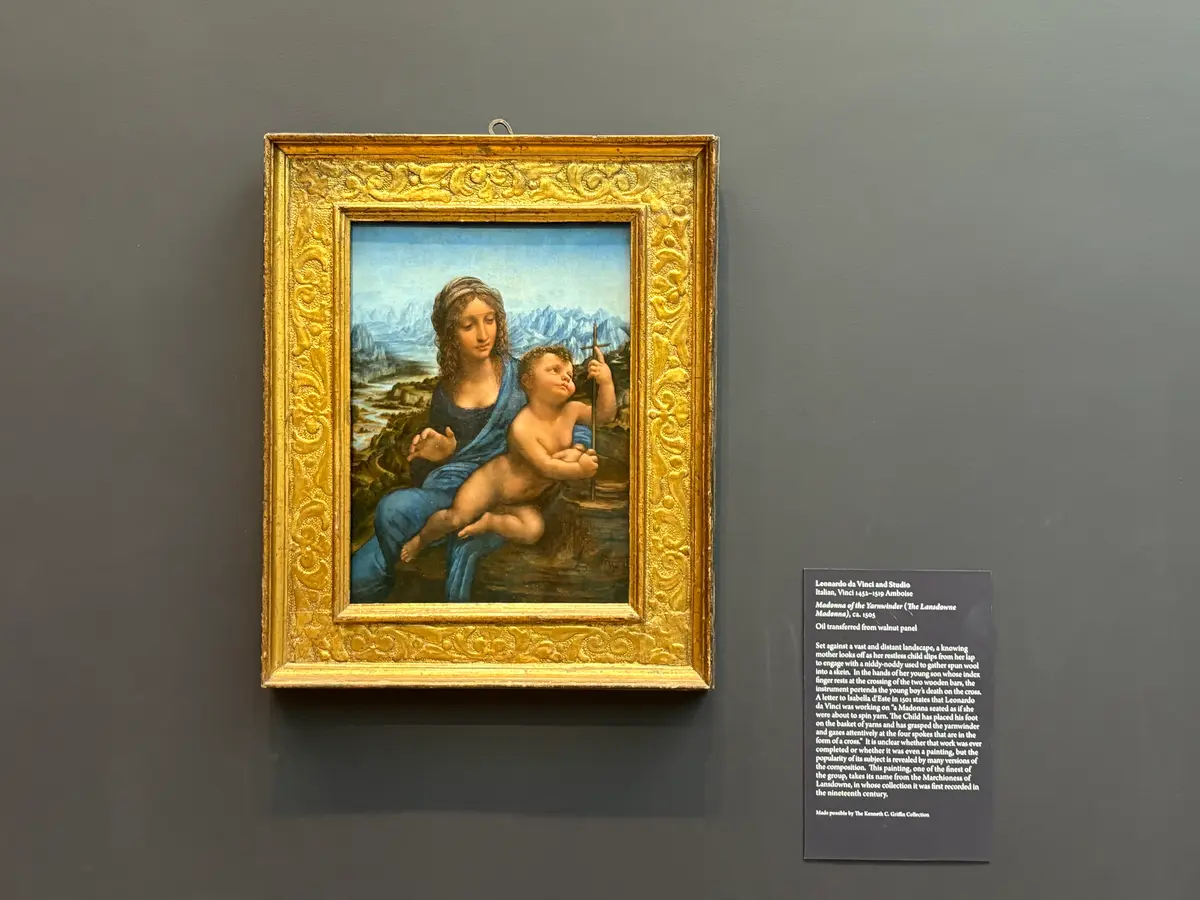
Press releases have heralded the dinosaur “Apex” on view at the American Museum of Natural History and the historic founding document displayed in a South Street Seaport Museum exhibition. However, the Leonardo oil “Madonna of the Yarnwinder (The Lansdowne Madonna)” went on long-term loan at the Metropolitan Museum of Art sometime this spring without much fanfare. This is just the latest enigmatic entry in the painting’s complicated history.
‘Landsdowne Madonna’ Owners
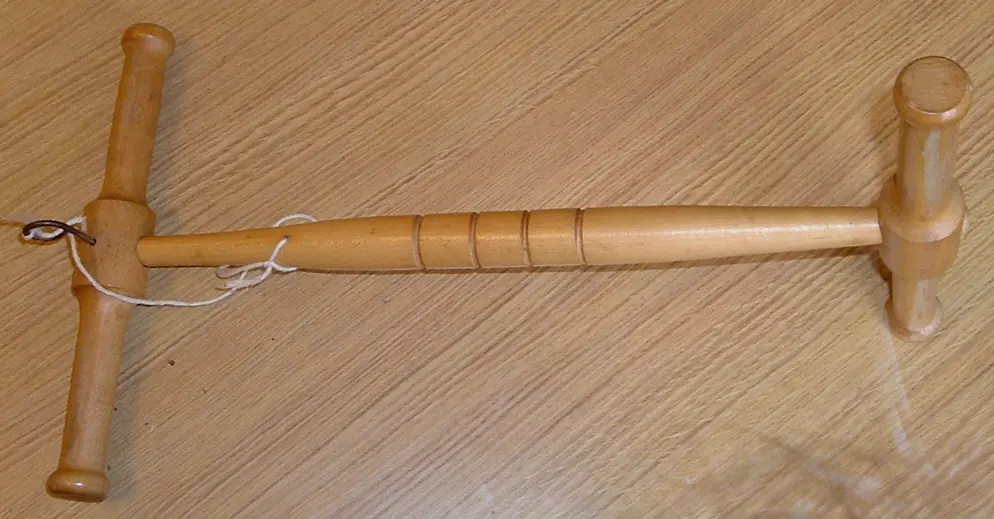
One of the Renaissance’s most intriguing art history mysteries is the Madonna of the Yarnwinder composition, and how it was envisioned and rendered by Leonardo (1452–1519). The first record of such an artwork comes from a 1501 letter sent to the influential patroness Isabella d’Este, Marchioness of Mantua, by her agent in Florence.In it, the artist is described as working on “a Madonna seated as if she were about to spin yarn. The Child has placed his foot on the basket of yarns and has grasped the yarnwinder and gazes attentively at the four spokes that are in the form of a cross.” However, The Met’s gallery label explains that whether the work referenced was ever finished or was even a painting is unclear.
Some scholars believe that the “Landsdowne Madonna” was commissioned by Florimond Robertet, secretary to French King Louis XII. Given the many twists and turns of the painting’s location and attribution, “probably” and “possibly” are found throughout the provenance. Indeed, The Met lists Robertet as “probably” the first owner.
In 1499, Louis’s forces invaded Milan, during which time Robertet may have met Leonardo, who was living there. The following year, the artist returned to Florence, the city of his artistic training. “The Lansdowne Madonna” is dated to circa 1501.
Nearly 40 copies of the Madonna of the Yarnwinder theme by Leonardo’s followers have been identified. The finest versions of this composition that are generally attributed to Leonardo and his studio are “The Lansdowne Madonna” and another version called “The Buccleuch Madonna.” The latter is owned by the Duke of Buccleuch, one of the wealthiest men in Scotland with a renowned inherited art collection; it has been in his family for more than 250 years.
In 2003, “The Buccleuch” made headlines for all the wrong reasons—it was stolen from Drumlanrig Castle, the duke’s Dumfriesshire residence. Four years later, it was recovered. Currently, it is on loan to the National Galleries of Scotland, now called the National.
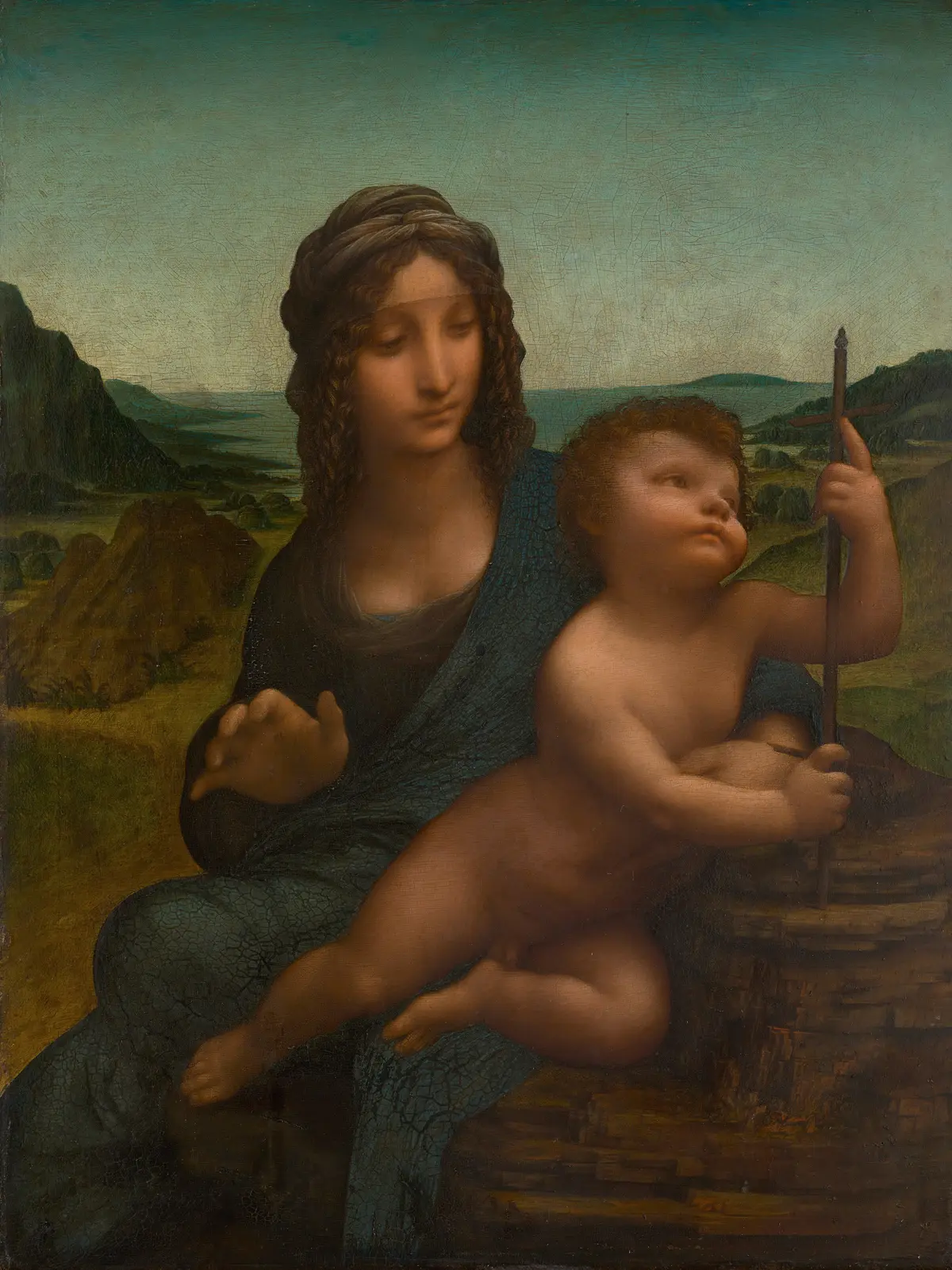
Madonna of the Yarnwinder Composition
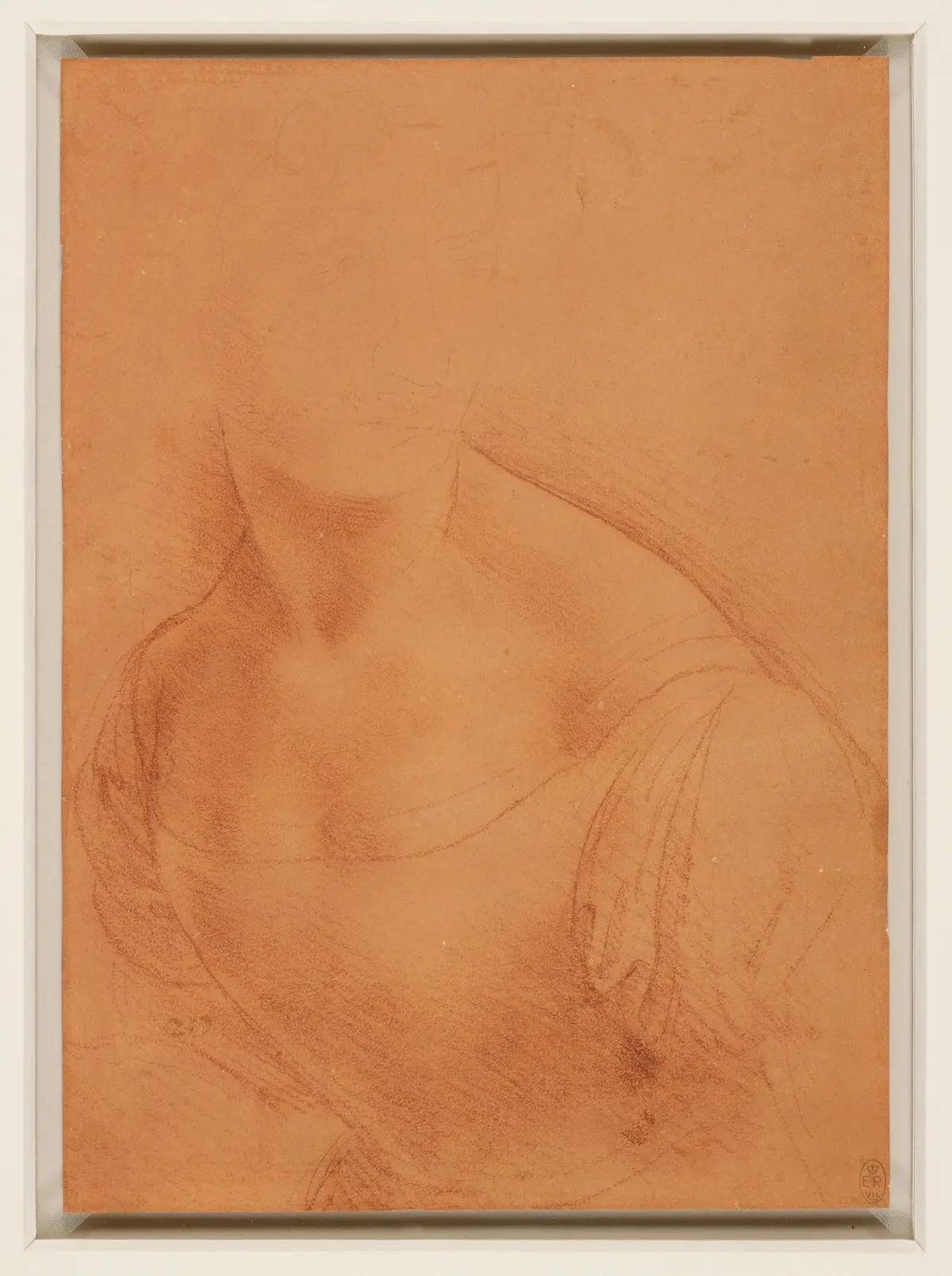
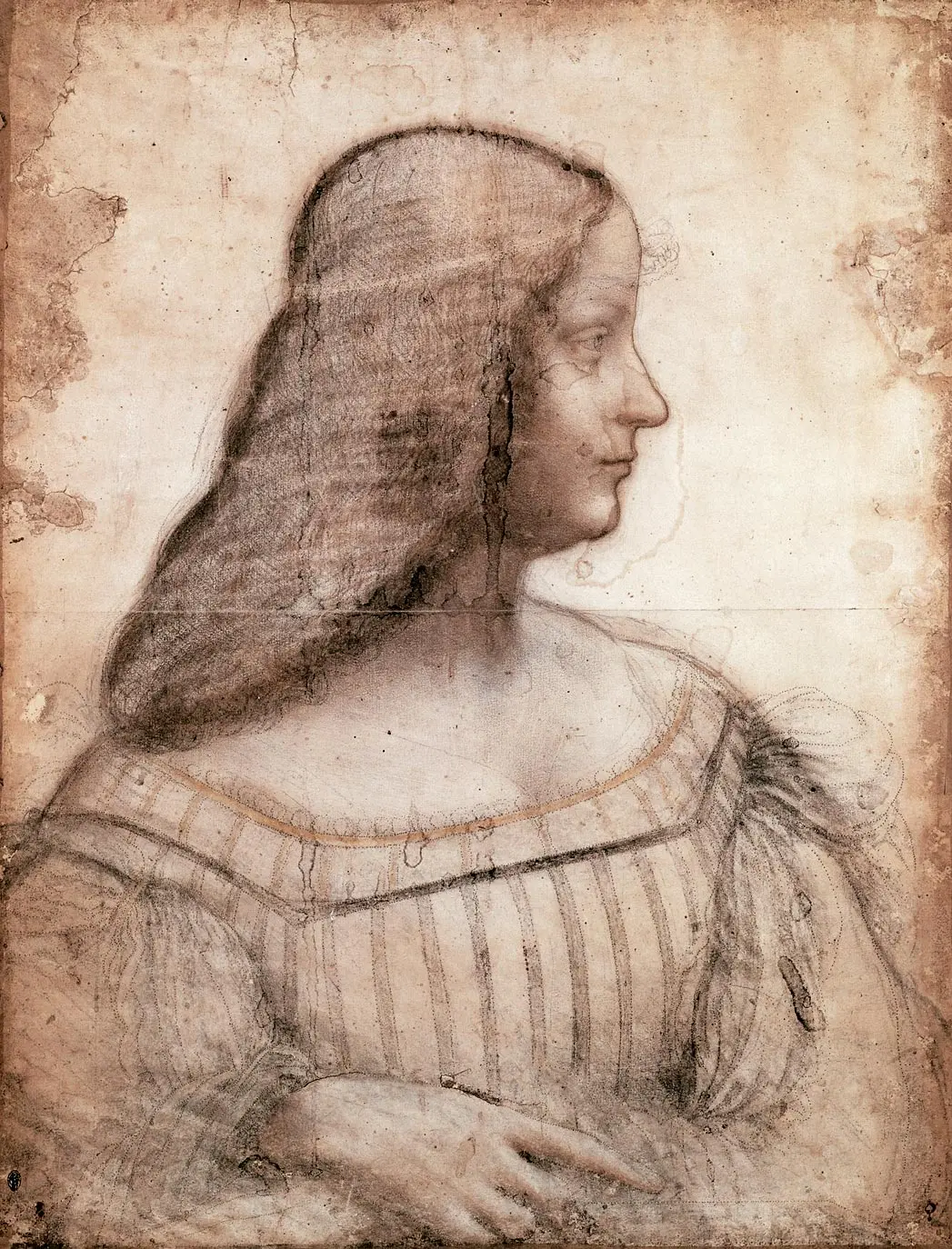
Leonardo’s painting practice began with first working on a composition via drawing. The Royal Collection Trust’s circa 1500 metalpoint and red chalk “The bust of the Madonna” is a study for the bust of the Virgin in the Madonna of the Yarnwinder composition. When working in oil, changes were made in both the figure’s pose and drapery.
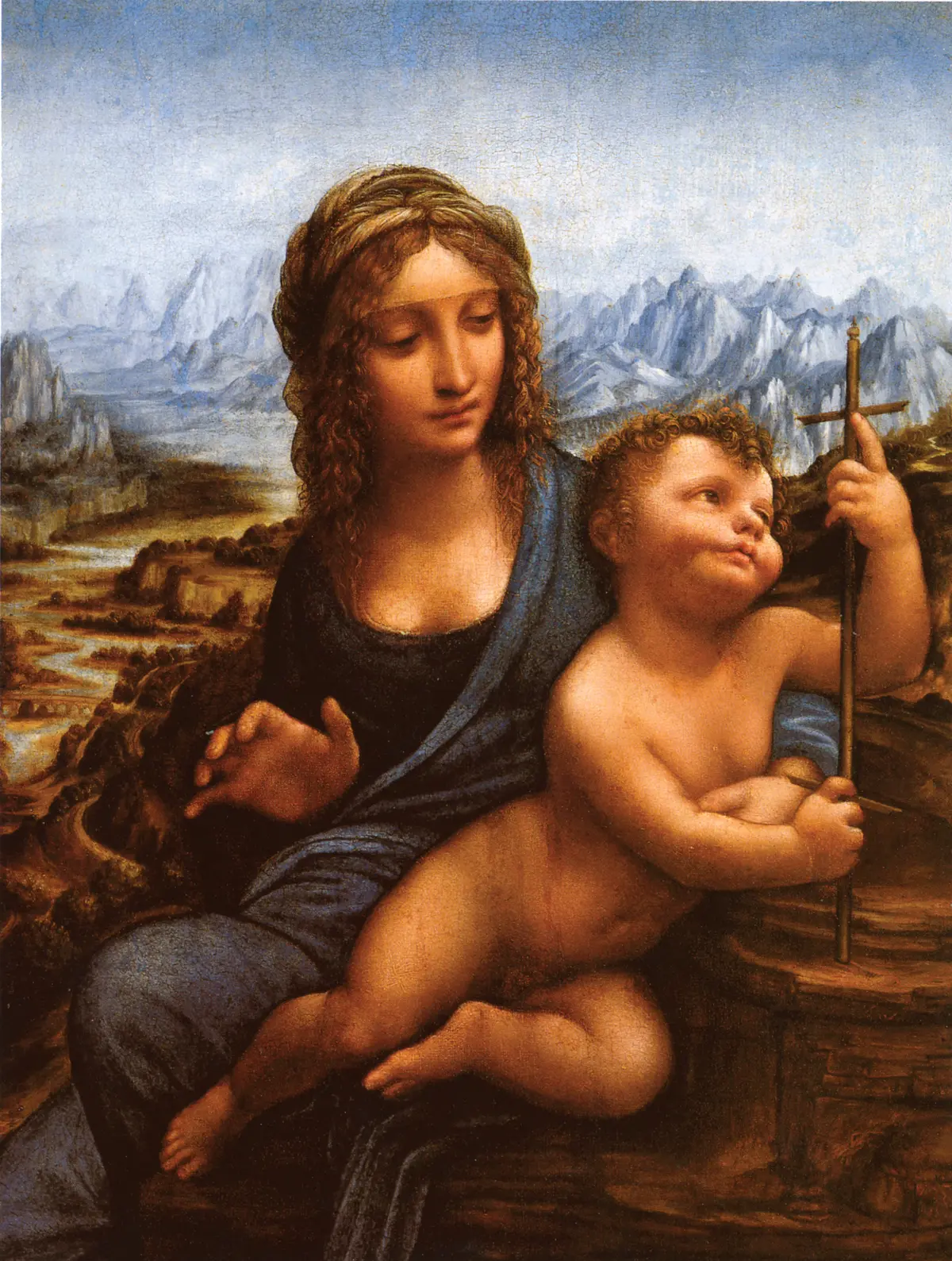
Christ gazes at his index finger, which is positioned at the crossing of the instrument’s two wooden bars. The cross-shaped yarnwinder portends the crucifixion. An additional reference may be to the Fates, who are portrayed in classical mythology as spinners.
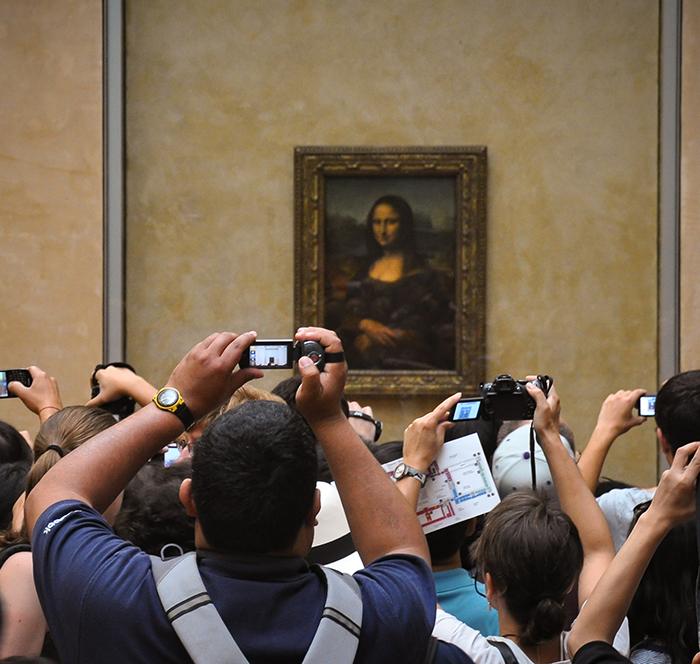
The background of the painting depicts a vast, faraway landscape in a style found in other Leonardo canvases. Distinguished Leonardo scholar Martin Kemp, Professor Emeritus of the History of Art at Oxford University, cites a bridge in the middle ground as practically a twin to one in the “Mona Lisa.” “The Lansdowne” has carried different attributions throughout its history, from being cited as a studio work to that of a Leonardo follower. When it was last auctioned publicly in 1972, it was sold as a work by a lesser-valued Italian Renaissance painter, Giovanni Antoni Bazzi, known as Il Sodoma.
“The Lansdowne” and “The Buccleuch” appear similar at first glance, but they are not identical. Each one has different areas of artistic strength, reflecting perhaps the level of Leonardo’s participation. For a period of time, Kemp deemed that “The Lansdowne” was completed in the studio later than “The Buccleuch” and had more limited brushwork by Leonardo himself. Further technical examination has convinced him that Leonardo worked actively on the two paintings simultaneously. Both would then be genuine originals.
Leonardo is one of the world’s most famous artist, yet only one of his paintings is part of a museum’s permanent collection in the Americas. That work, the portrait “Ginevra de’ Benci,” is at the National Gallery of Art in Washington. Griffin’s current loan of “Madonna of the Yarnwinder (The Lansdowne Madonna)” to The Met gives the public another prime opportunity to see a poetic and poignant Leonardo in the flesh.
!["Ginevra de' Benci [obverse]," circa 1474–1478, by Leonardo da Vinci. Oil on panel; 15 inches by 14 9/16 inches. National Gallery of Art, Washington. (Public Domain)](/_next/image?url=https%3A%2F%2Fimg.theepochtimes.com%2Fassets%2Fuploads%2F2025%2F03%2F04%2Fid5819936-Ginevra.jpg&w=1200&q=75)