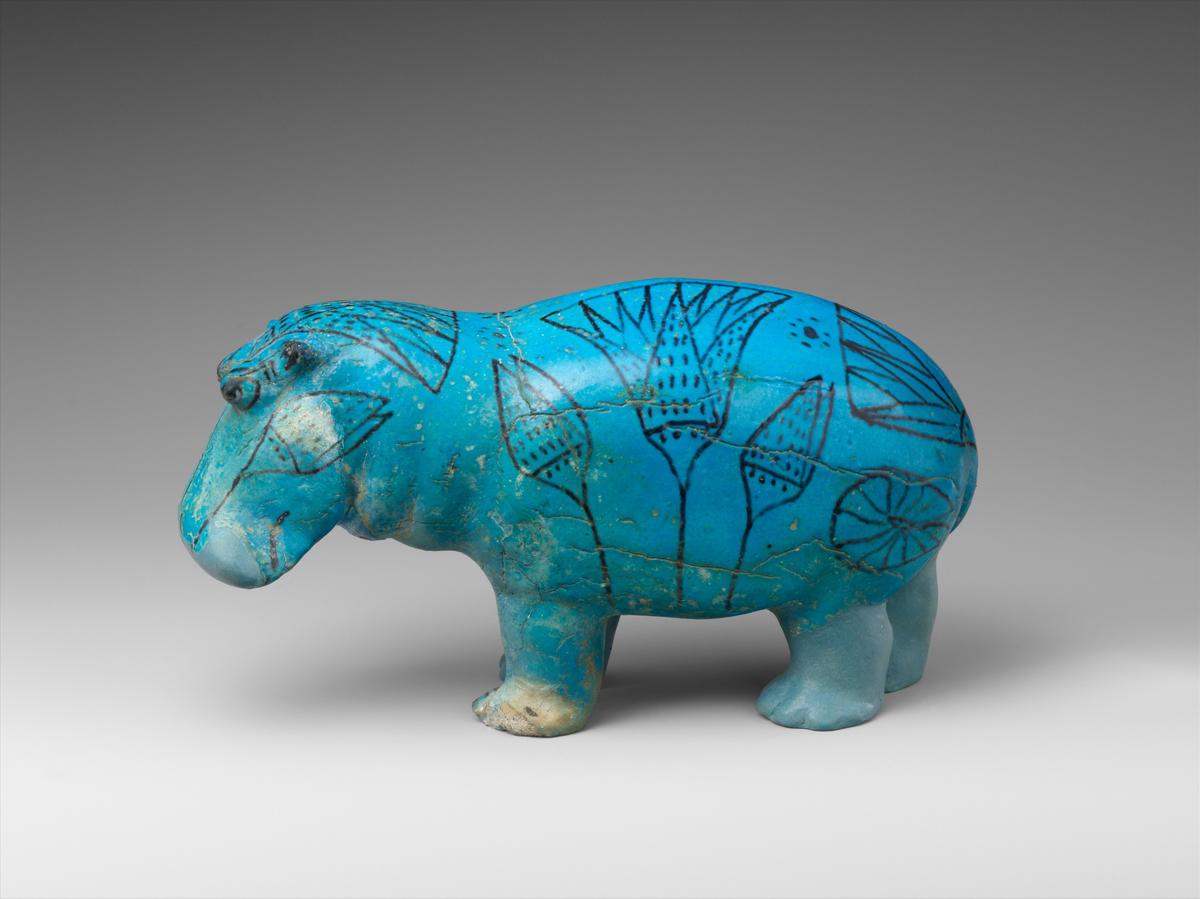
Each year visitors to the Metropolitan Museum of Art make a point to stop and say hello to William, the museum’s unofficial mascot. William is a hippopotamus statuette made almost 4,000 years ago, circa 1961 B.C to 1878 B.C., in ancient Egypt during the Middle Kingdom’s Dynasty 12. It was discovered during the 1910 excavation of an Upper Egyptian site about 30 miles south of the modern-day city Asyut and acquired by The Met seven years later.
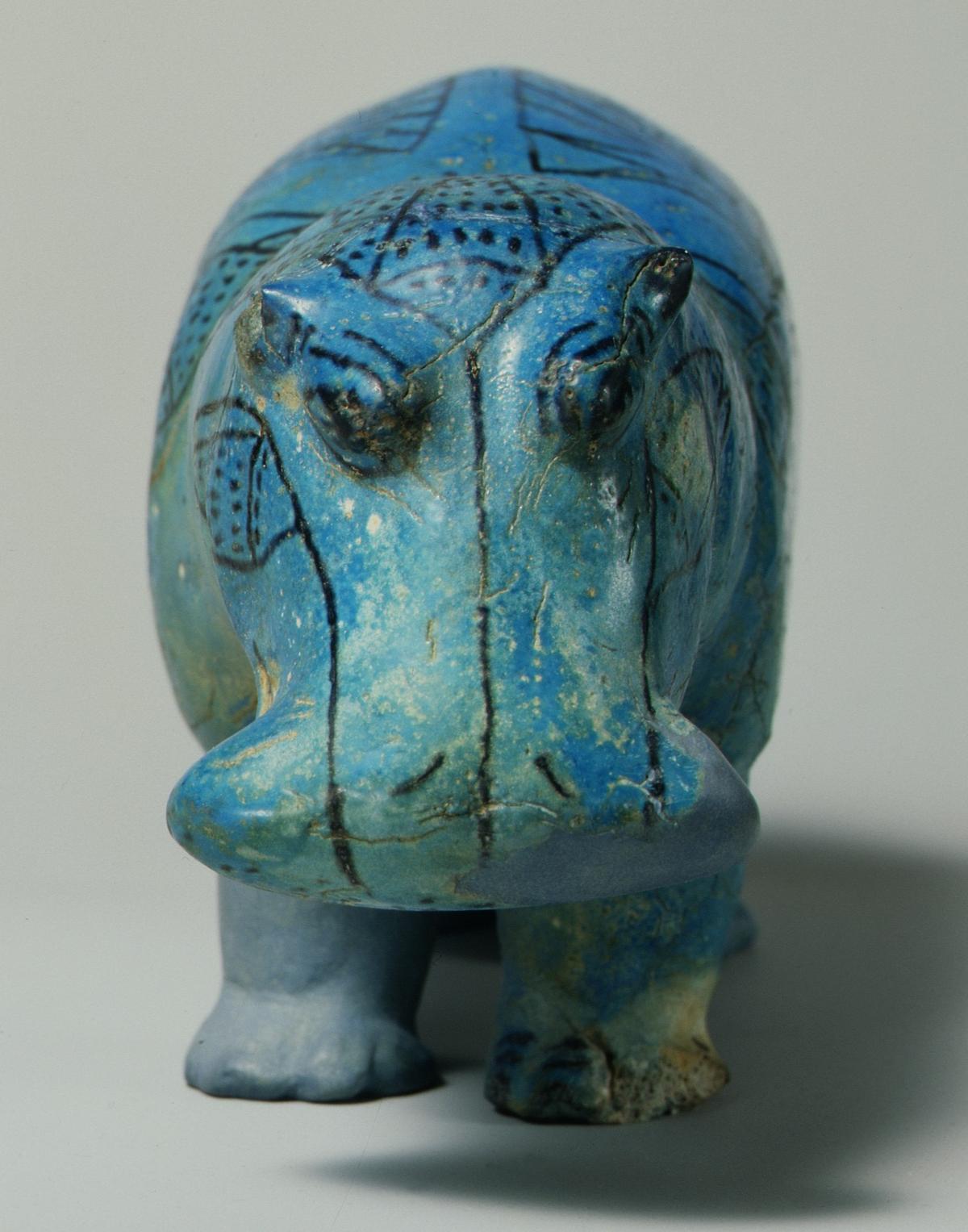
While William appears adorable to contemporary viewers, hippopotamuses were actually among ancient Egypt’s most dangerous animals. When in water, they threatened boats; when on land, these enormous creatures’ huge appetites wreaked havoc on farmers’ fields.
Extremely aggressive when it’s vulnerable, hippos can attack humans and even outrun them over a short distance. Indeed, when looking at William’s face, one can see that his eyes are menacing. Today, this species kills more people in Africa than any other large animal. In Egypt, however, hippos are now extinct in part due to ancient hunting and human encroachment on their habitat.
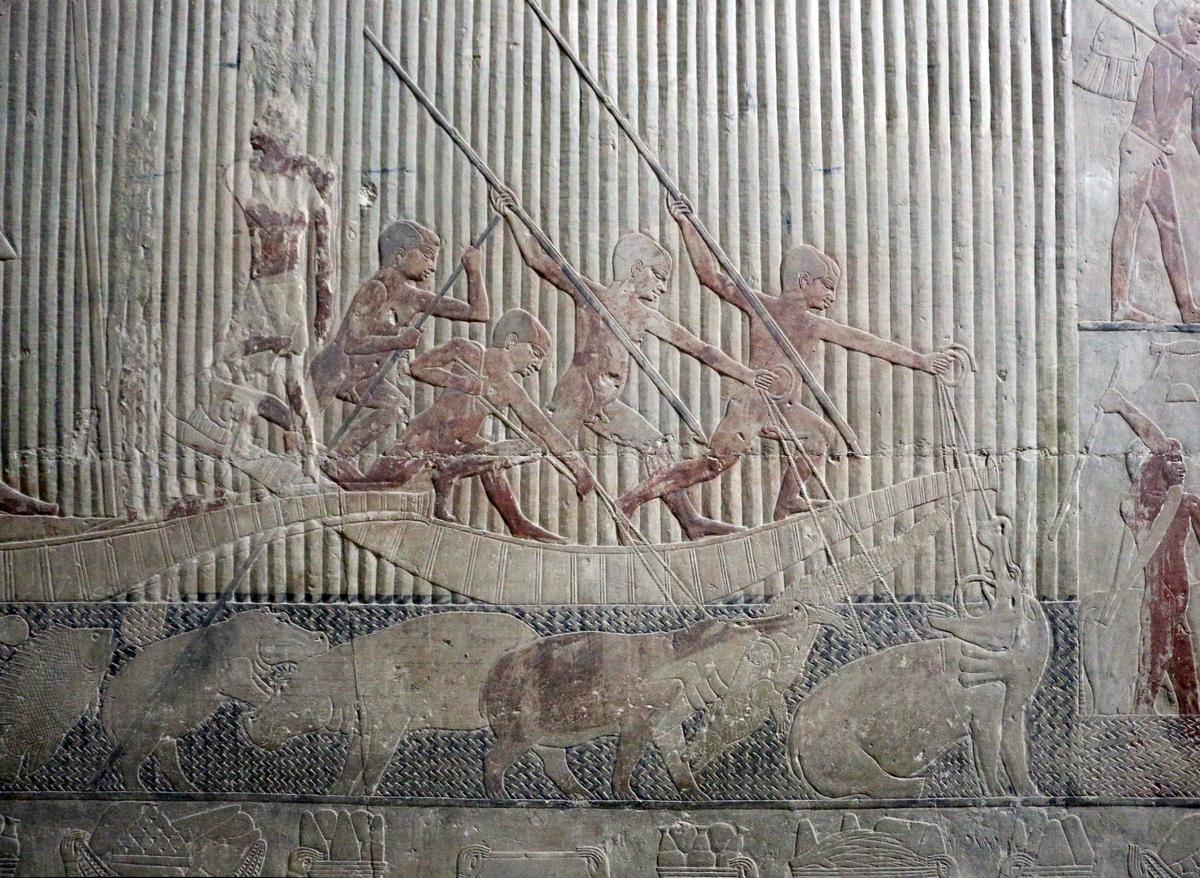
Hippopotamus hunts in Egypt, which are depicted in art, began in the Predynastic Period and lasted for over 3,000 years. The most famous artistic portrayals of the animal in ancient Egypt are similar to William—small faience statues (sintered-quartz ceramic) dating to the Middle Kingdom or subsequent Second Intermediate Period. Primarily made as grave goods, nearly 100 examples are in international collections today.
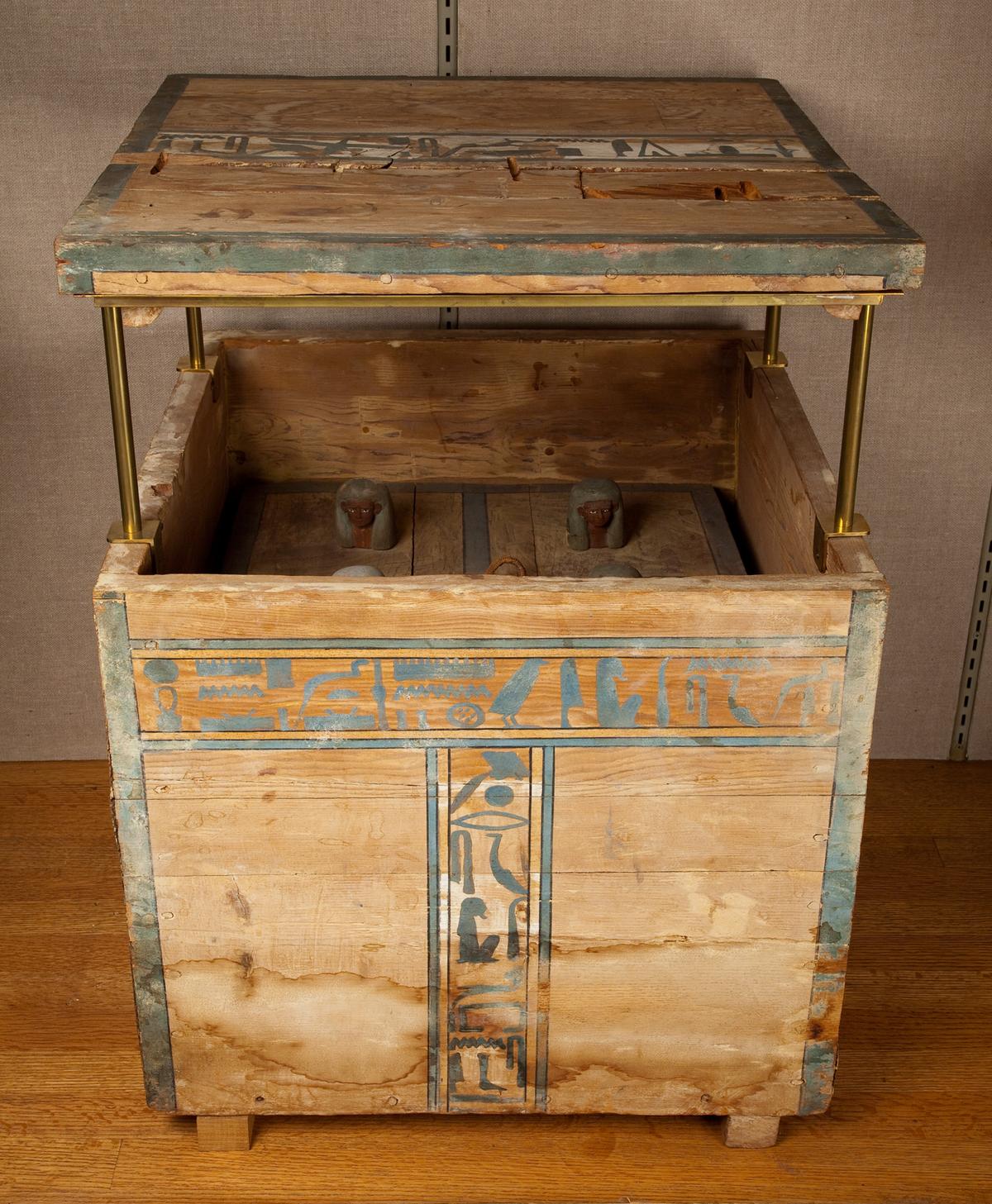
William, at 7 7/8 inches by 2 15/16 inches by 4 7/16 inches, was found in a shaft associated with the tomb chapel of the steward Senbi II. Other items excavated include Senbi’s canopic chest, which is also in The Met’s collection.
William’s striding front left leg is original, but its other three legs were seemingly broken intentionally before being buried so that it would not be able to harm the deceased. Broken legs are common among hippo faience statues. William’s legs have since been restored.
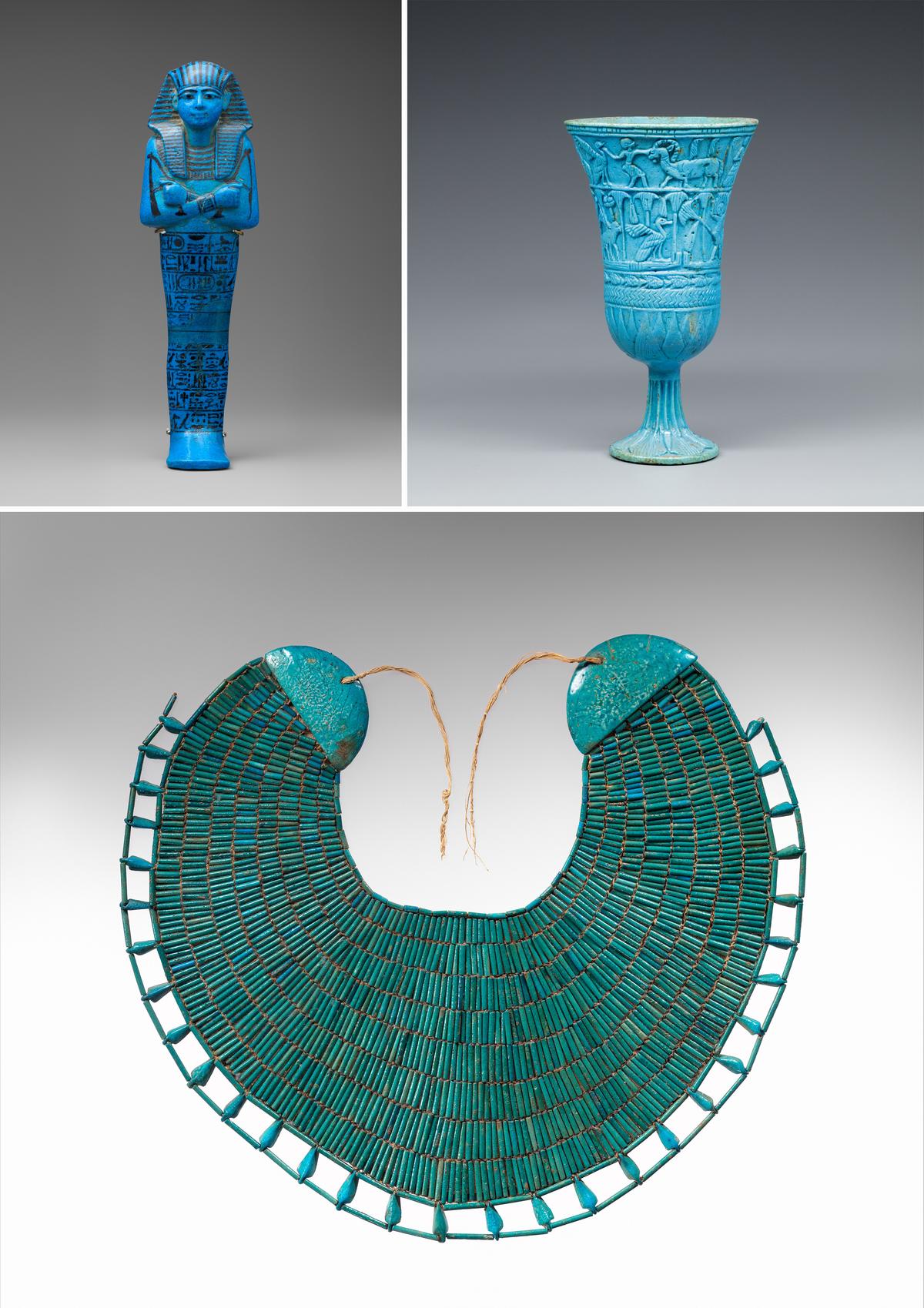
Egyptian faience is a man-made ceramic material composed of common materials: ground quartz, alkaline salts, lime, and mineral-based colorants. Different colored glazes were used, but the most famous is a shiny, bright blue glaze. This color, made from the inclusion of copper, may have developed in order to suggest natural stones such as turquoise, and its gleam evoked the sun’s shimmer.
Faience was used to make ritual objects for tombs and temples, jewelry, vessels, and sculptures. The Egyptians believed they were imbued with magical powers of eternity and rebirth due to their medium.
Ancient Egyptians buried their dead with representations of the fearsome hippo because the animal also had positive connotations. The purpose of their inclusion in tombs was to guarantee the deceased’s rebirth; hippos were considered to have regenerative power due to their behavior and habitat.
Another creation myth centers around a lotus flower arising from primeval water. The majority of faience hippos are adorned with painted images of aquatic plants like lotuses beneath the blue glaze. William is decorated with black lotus flowers. In ancient Egypt, lotuses grew along the Nile, sharing a habitat with hippos. Their flowers close at night and open with the morning sun, which was interpreted as symbolic of regeneration and rebirth.
William received its name from a 1931 story published in the British humor magazine “Punch.” As The Met explains, the written piece was “about a family that consults a color print of the Met’s hippo—which it calls “William”—as an oracle. The Met republished the story the same year in the Museum’s Bulletin, and the name William caught on!” In 2017, The Met’s famous hippo merited a special display to commemorate the 100th anniversary of its acquisition. It has had both a figurative and literal rebirth since it emerged from the tomb.