Who would have thought that Alexander Graham Bell, the inventor of the telephone, considered his newly created invention a distraction? He did.
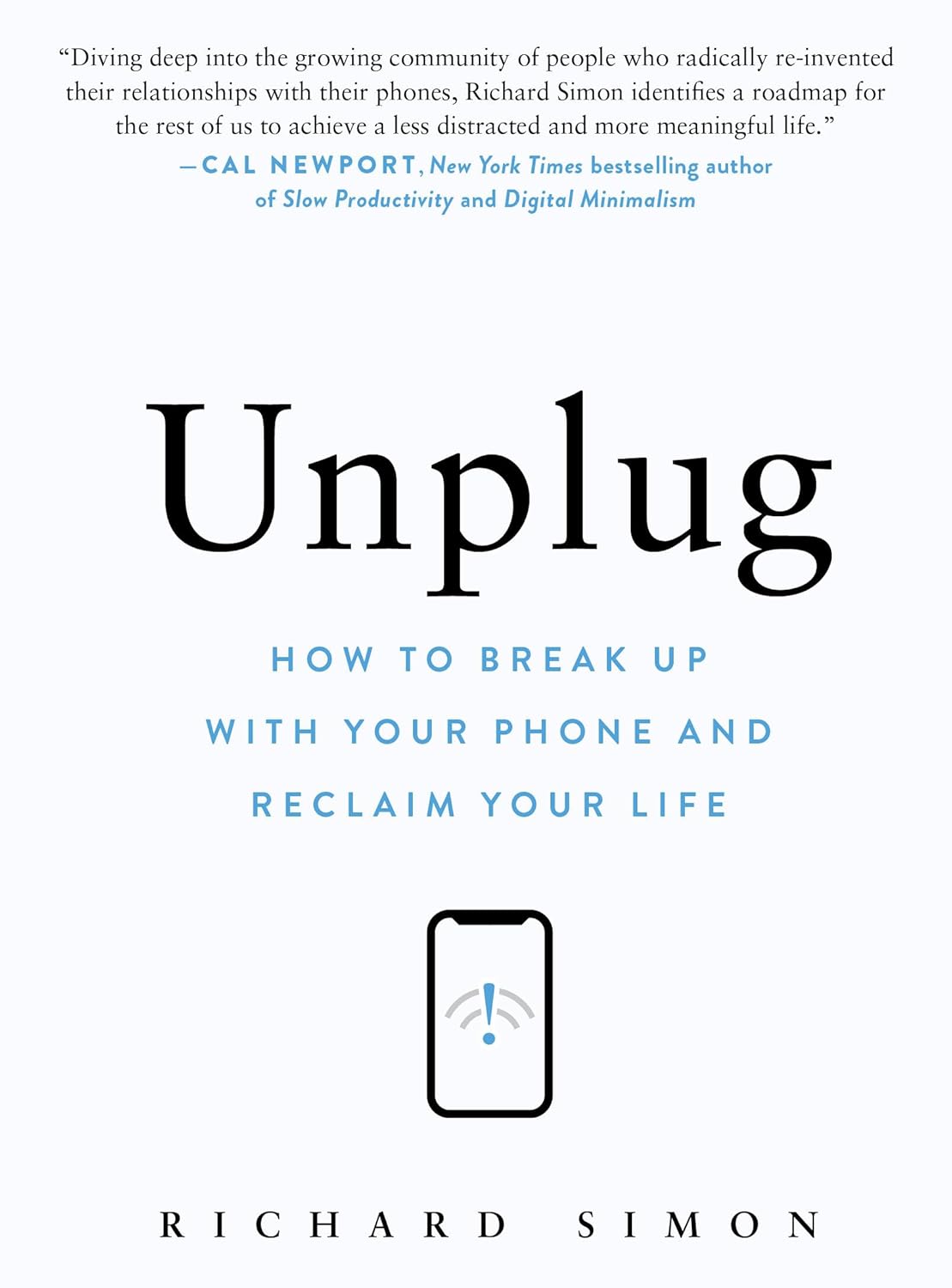
Bell refused to have one in his private study because he needed to remain focused on his work. This is one in a long line of telephone and cellphone users we read about who’ve distanced themselves from their phone to get back quality time with their family and friends. While doing this, they gain a renewed appreciation of deeper relationships and success.“Unplugged” by Richard Simon is a small book with a big idea. Its subtitle says it all: “How to break up with your phone and reclaim your life.” Simon provides examples of people around the world who have turned off their smartphone, eliminated it entirely from their lives, or downsized to a simpler version.

Designed to Be Addictive
From students who aren’t getting their schoolwork accomplished, to families not spending enough time together, Simon’s stories give readers ample fuel to consider whether this radical notion of “unplugging” is for them.There are also bits of cellphone history. The author shows how the smartphone developed over time—how it was purposely designed to keep users engaged, playing games, surfing the internet, taking pictures, and checking for incoming texts—all for that next dopamine hit.
In the early chapters, Simon shares about his own dopamine addiction and his desire to remove the phone from being a constant in his life. He writes about spending hours on it, using up time he’d never get back.
Losing ‘Deep Work Concentration’
Besides the phone’s addictive quality and what it robs us of, Simon points out we’re also losing the ability for deep work concentration. It’s defined as the kind of work that pushes our cognitive capabilities to the limit; this ability to go deeper in our work adds value to it and improves our skills. The incessant interruption of the cellphone breaks our focus and can prevent workers from taking their careers to the next level.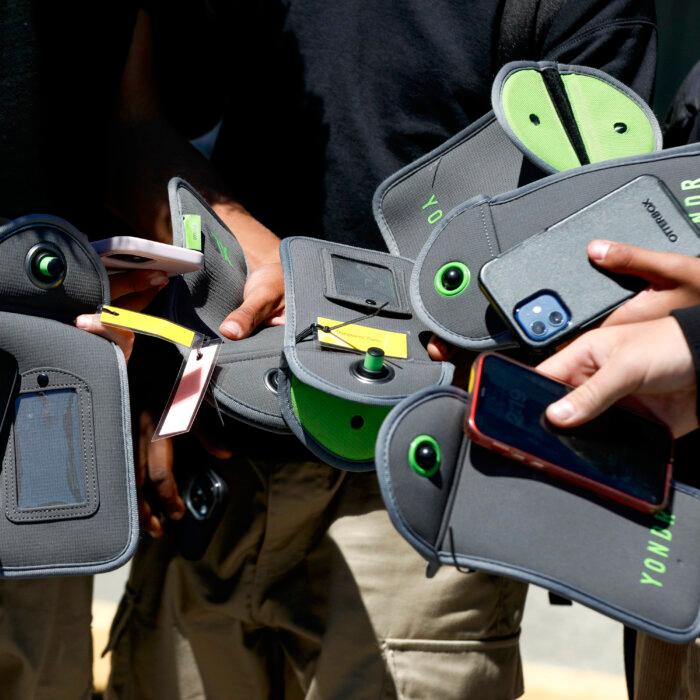

Also peppered throughout the book are statistics confirming the cellphone’s alarming reach and power. A 2022 survey found there were 8.6 billion mobile phone subscriptions in the world; the average number of times an American unlocks their phone is 150 times a day.
That adds up to a lot of dopamine hits going around. The phone offers the feeling of power and control. It’s a pleasurable and desirable activity, he says. “It’s an itch that needs to be scratched.”
There are anecdotes from those who’ve ditched the phone successfully. They’ve added new hobbies into their lives such as picking up an instrument, writing, or doing more of the things they love.
Simon offers the various stages of limiting cellphone usage. A “digital hack” is a technique to reduce cellphone use; “digital detox” is to disconnect completely.
Try-It-Yourself Guidelines
For readers interested in trying their own detox, Chapter 2 provides five practical steps in unplugging: preparation, evaluation, duration, withdrawal, and reintegration.Of them all, the preparation may be the most important because of all the cellphone tools users have come to rely on, such as getting instant directions or making emergency calls.
Simon says to create alternative plans. He suggests to get acquainted with the route, allow time to stop and ask directions, and downgrade to a flip phone for emergency calls. If readers think that ditching their phone isn’t possible, Simon has thoroughly considered every possible excuse and offers doable solutions.
His intent, after all, is to create a guide, if not to end the user’s relationship with his or her phone. Simon suggests to reset “your relationship with your phone to get back something finite: time.”
Boredom, a Good Thing
While work success and renewed family relationships can be positive outcomes of a cellphone unplug, users can also learn to befriend “boredom.” In fact, Simon suggests we should relish it. “Many of us think boredom is a bad thing, and when we sense it coming, we quickly grab our smartphone to fill the void.”We shouldn’t. It’s in boredom that creativity and imagination happen, says one of the experts Simon cites. That exact quality was discovered by those whose stories fill the pages. The author suggests that when the user is bored, he or she should “stop, breathe, and embrace the moment.”
What happens with all that displaced dopamine? Since the author spent a year in the unplugged world, he experienced most, if not all, of what his readers will. His addiction was no different than any other busy executive, spouse, and parent.
He needed to find other ways to overcome his brain’s need for high-dopamine experiences. Rather than mindlessly watching YouTube videos, for example, he now only does so while working out on exercise machines.
It’s in these passages where readers will see if there’s a will, there’s a way. Prepare to be given plenty of encouragement via the author, the research cited, and the end results of those who tried it and succeeded.
Consider this a “roadmap” to a better life, with directions that no GPS can provide.