No, the latter isn’t a simple translation of the former. It’s a gargantuan symphonic tribute to Shakespeare by France’s greatest Romantic-era composer.
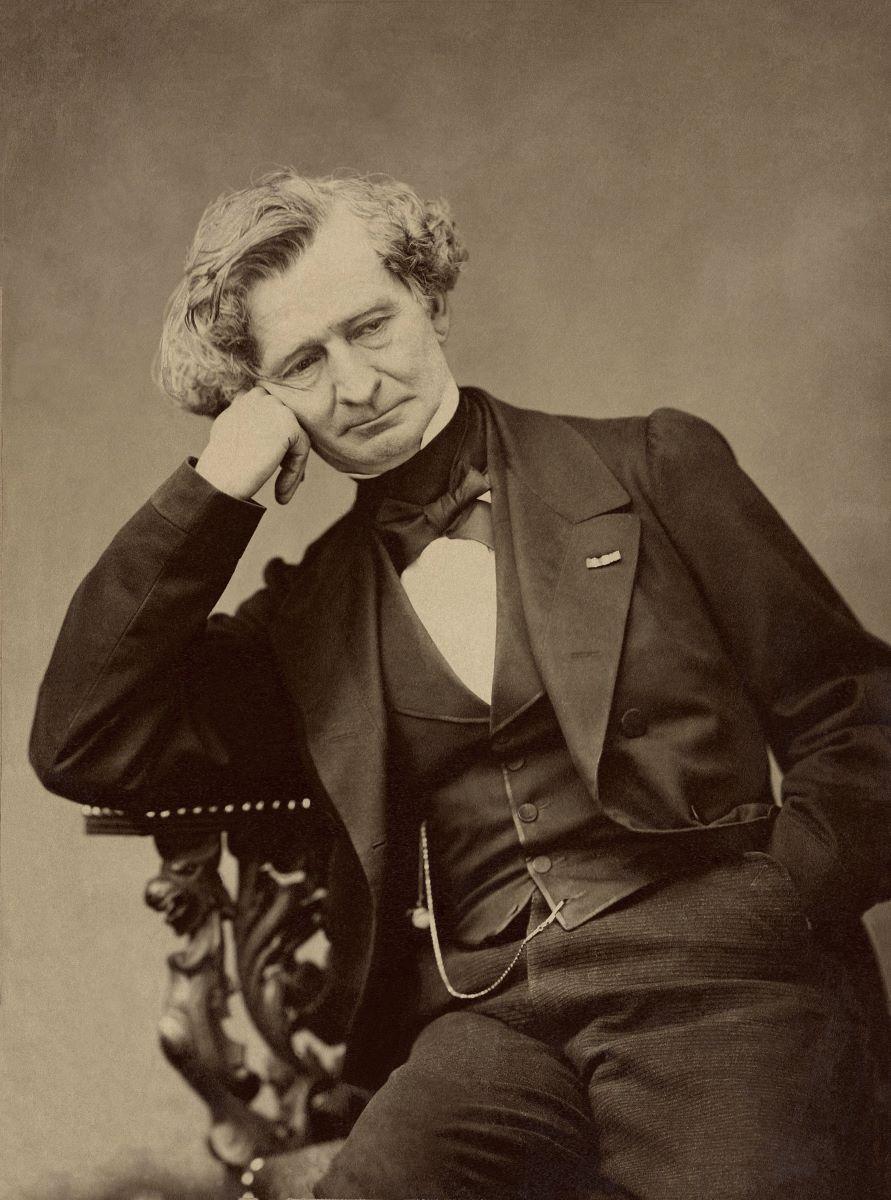
Hector Berlioz (1803–1869) was the son of a French provincial doctor who insisted his son follow him into the medical profession. Against young Hector’s wishes, Berlioz pere forced his son into the country’s most prestigious school of medicine. Unfortunately for his father, it was located in culture-drenched Paris.
We imagine Hector wandering Paris starry-eyed, fresh from his little village in southeastern France. He attended the Opéra national de Paris and the Opéra Comique. He perused the library of scores at the Paris Conservatoire. And while he dutifully completed his medical courses, he announced upon graduation that music, not medicine, would be his life’s calling.
It was quite an announcement coming from someone whose early training in music included a little flute and some guitar, but not the piano, which he played haltingly throughout his life. In this, he anticipated the other great non-pianist composer of the century, Richard Wagner.
A Muse Fueled Composition
Her name was Harriet Smithson, an English actress who played Ophelia and Juliet in the productions Berlioz attended. He must have noticed her Ophelia, but it was her Juliet that pierced his heart. He began writing passionate love letters to the actress and even took an apartment across from the theater where she performed, to watch her come and go. Today, this might be called stalking. Then, it was apparently par for the romantic course.

She rebuffed him. In return, Berlioz composed a massive orchestral work with a specific program, that is, a story. It concerned a young lovesick artist, who was drug-addicted and suicidal.
“Symphonie fantastique” (1830) put Berlioz on the map and eventually won him the hand of Harriet Smithson. She deigned to see him in 1832 and married him in 1833. The relationship went south quickly; the couple separated in 1843 and lived apart until her death in 1854.
Old hate asleep Arose like hell; Capulets, Montagues, two enemy houses, In Verona have crossed the iron. Yet these bloody disorders The Prince repressed the course, By threatening to death those who despite his orders To the justices of the sword would still resort. In these moments of calm a party is given By the old Capulets chief.
Much of the score is orchestra-only, exhibiting Berlioz’s extraordinary skills of orchestration. His book on the subject was considered the best for more than a century.‘Roméo et Juliette’
Listen to this magnificent performance by the National Orchestra and France, conducted by Daniele Gatto, with soloists and choir, through good speakers. Don’t attempt to grasp the text or even follow the story. Simply allow Berlioz’s emotionally charged music to wash over you.Berlioz’s “Roméo et Juliette” is one of four works in the mainstream repertoire based on Shakespeare’s tragedy. The others are Tchaikovsky’s tone poem, Gounod’s opera, and Prokofiev’s ballet score.