If it were possible to listen to the following piece without knowing its nickname, labeling it simply “Symphony in E minor,” would we recognize it as distinctly American in its materials and their treatment?
(That’s just the first movement. Videos of the other movements follow immediately after.)
Here is a symphony in the traditional four movements common since Haydn—Allegro, slow movement, scherzo, closing Allegro. Its first movement is in perfect sonata-allegro form comprising three subjects, their development, and their reappearance with the usual key changes.
Given this and the standard forms of the remaining movements, I think the honest answer to our opening question would have to be, “No. Quite obviously not.”
And yet this is the “New World Symphony” by Czech composer Antonin Dvorak (1841–1904), a work often regarded as a cornerstone of American musical language, though it was written by a visitor to America, not by an American. It is so regarded because Dvorak said that his score was influenced by “Negro and Indian” musical sources. However, aside from the theme of the symphony’s second movement, which resembles an African-American spiritual in its melodic shape, that claim is hard to justify.
A European in America
Dvorak left Prague for New York City in 1892 to take on the position of director for the now-defunct National Conservatory of Music. Homesick, he would return to Prague three years later.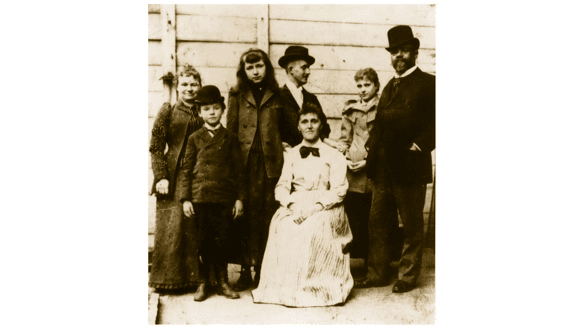
Dvorak’s conservatory students included one Harry Burleigh, an African-American singer who shared many spirituals and other African-influenced songs with his teacher. Dvorak became convinced that these songs were the source material American composers needed to create a truly American classical music. He famously stated:
“I am convinced that the future music of this country must be founded on what are called Negro melodies. These can be the foundation of a serious and original school of composition, to be developed in the United States. These beautiful and varied themes are the product of the soil. They are the folk songs of America and your composers must turn to them.”
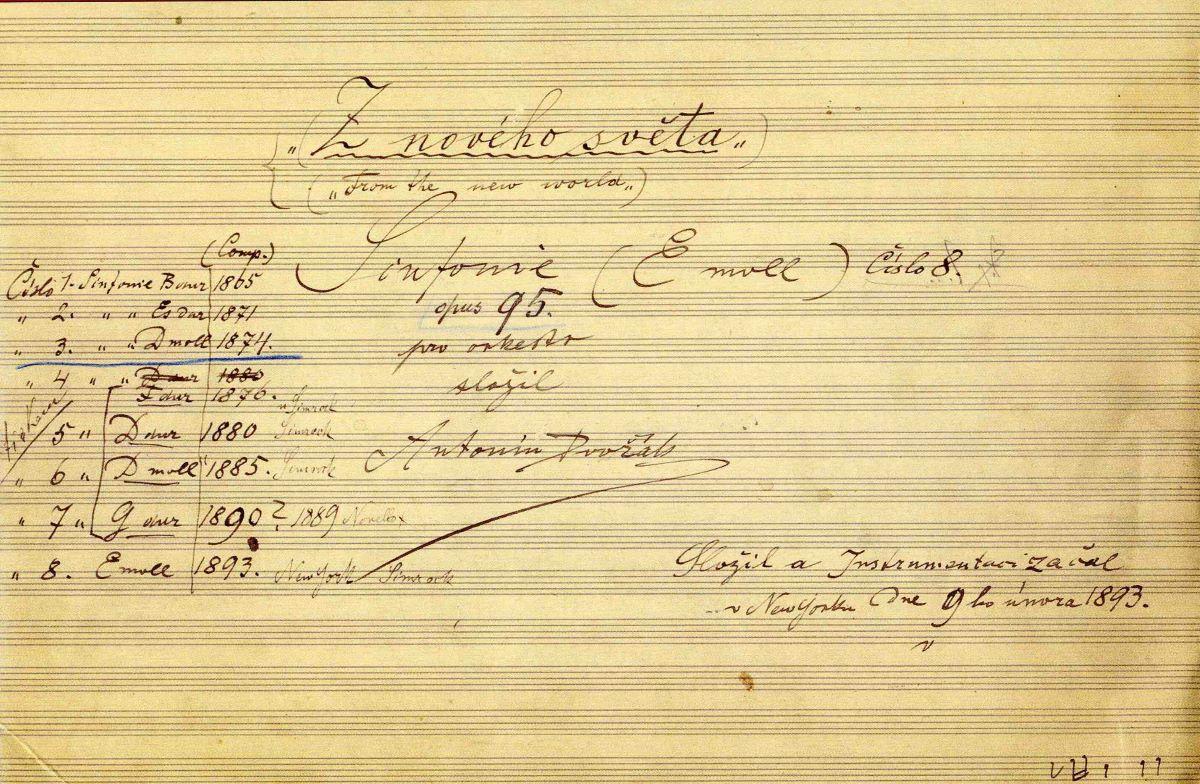
The composer made claims of “Negro and Indian” influences throughout the score. He said he intended the scherzo to conjure the image of “Indians dancing.” I dare the listener to imagine Indians dancing to this very European scherzo.
The truth is that, after Dvorak, real American music started up. It was nascent in the quick-step marches of John Philip Sousa and the faux-folk songs of Stephen Foster, and it would soon blossom into ragtime, jazz, the blues, and—in classical music—orchestral takes on jazz (George Gershwin) and various strains of European folk song.
The variations movement of Aaron Copland’s “Appalachian Spring” (1944), possibly the most American orchestral music ever written, is based on a Shaker hymn. We hear the so-called “New World Symphony” through the lens of these more authentically American works, and, consequently, it seems less from the New World than from the Old.
Symphony in E Minor, No. 2, Largo
After a solemn introduction, the English horn enters with the tune at 0:49. It’s simple and plaintive, with a middle section shadowed by the clarinet in its deep chalumeau register. An orchestral interlude ensues, and the tune returns, unchanged. At 5:35, the mood alters with a more agitated second theme. The orchestra takes this in a quiet direction, however, and at 8:11 we have a placid third theme that takes us eventually to yet a fourth theme, this one a sprightly dance.At 10:26, we’re back to the English horn and the first theme, unchanged and undeveloped. This underscores Bernstein’s belief about the symphony as a whole: That its appeal relies more on its tunes than on its structural integrity. Development—motific manipulation and transformation—was not Dvorak’s strength.
Is the “New World Symphony” American? It was to its composer. From our vantage, 133 years later, it’s more like a richly imagined piece of late Romantic symphonic repertoire with a tinge of Americanism. We’ll take that, thank you.