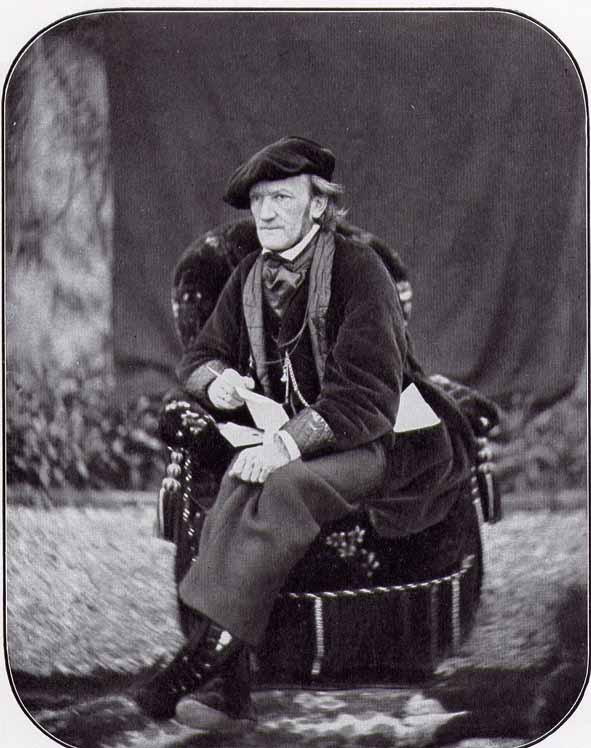
On Christmas morning, Dec. 25, 1870, Cosima Wagner woke to the sounds of a small orchestra serenading her from the staircase outside her bedroom. She apparently had no hint of what was going on, though she soon found out: The music was a birthday present from her composer-husband Richard Wagner. (Cosima’s actual birthday was Dec. 24, but she celebrated on Dec. 25.) She later noted in her diary:
“When I woke up, I heard a sound; it grew even louder. ... Music was sounding, and what music! After it had died away, R[ichard] came in ... with the five children and put into my hands the score of his ‘Symphonic Birthday Greeting.’ I was in tears, but so, too, was the whole household.”
The title given by the composer of this matchless birthday gift was a mouthful: “Tribschen Idyll With Fidi’s Birdsong and the Orange Sunrise, as Symphonic Birthday Greeting.” “Fidi” was a nickname for the couple’s son, Siegfried, “Tribschen” was the name of the Wagner family villa on Switzerland’s Lake Lucerne from 1866 to 1872, and “orange sunrise” apparently had to do with the way the light played on the wallpaper on Siegfried’s day of birth. The 19-minute score, repeated twice that day at Tribschen, remained a private composition for years afterward, without public performances.
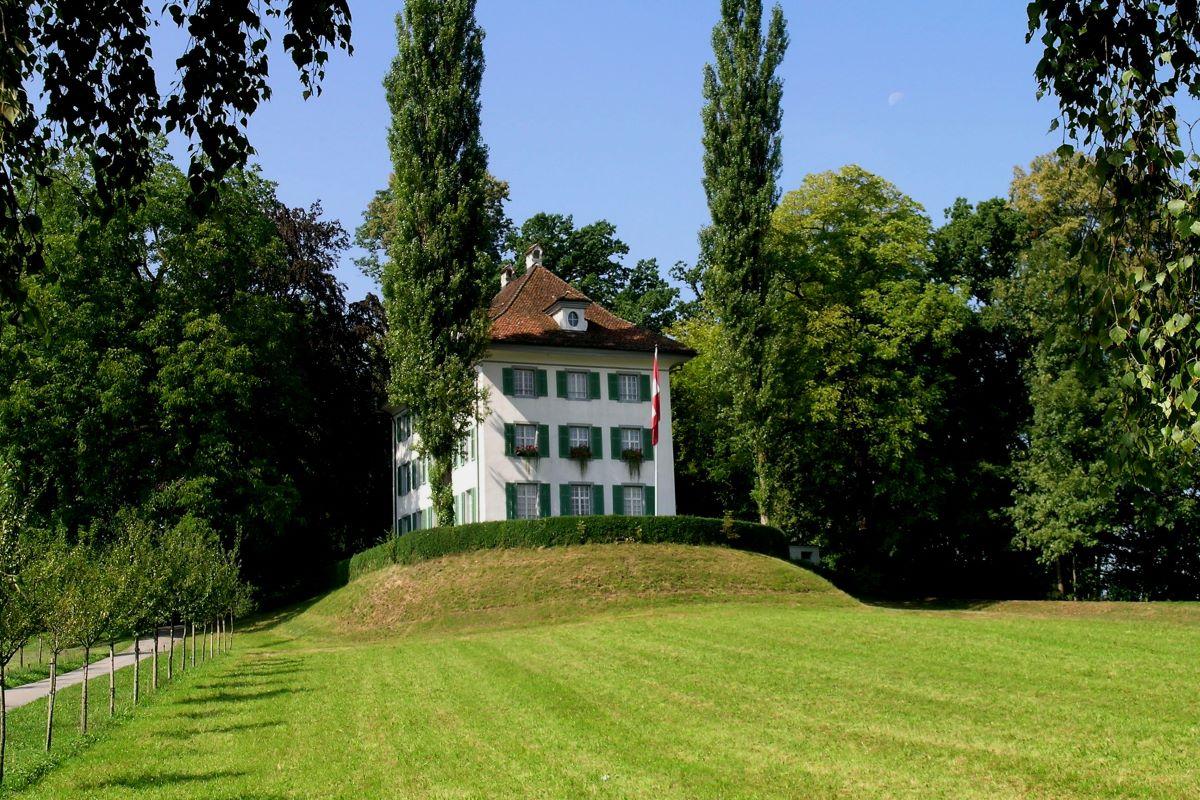
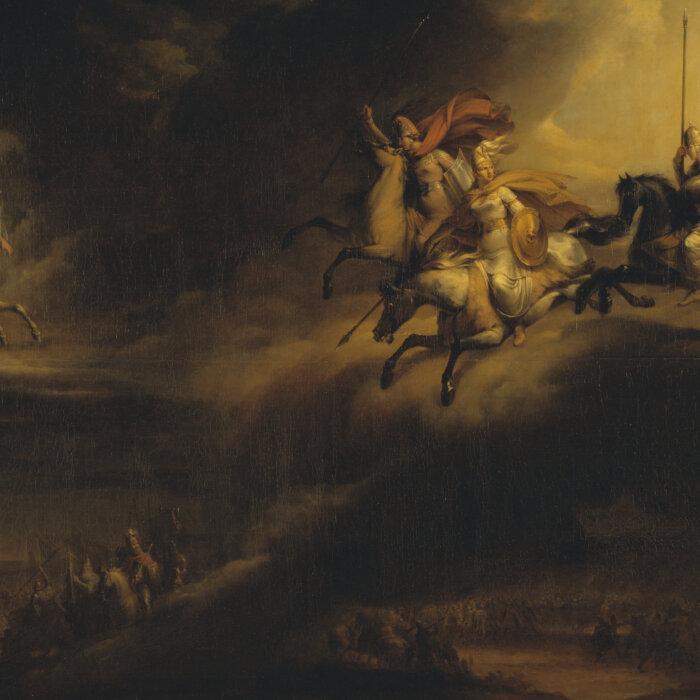
In 1877, strapped for cash, Wagner agreed to publish the work as the “Siegfried Idyll.” It was given its first public performance that same year and is today Wagner’s only score in the chamber orchestra repertoire. He had already used the piece’s main theme in “Siegfried” (1876), the third music drama of his tetralogy, “The Ring of the Nibelung,” so the new name referred both to it and to his son.
The most remarkable characteristic of “Siegfried Idyll” is its tender intimacy. Most of Wagner’s career was given to making ever bigger, more epic pieces, from the early operas “Rienzi” and “The Flying Dutchman” to the sprawling tonal mythologies of “Tristan and Isolde” and “Parsifal.” Here, by contrast, is a 19-minute paean to his wife. There are still spots where the musical ideas gather into small climaxes, but they are like the surf, cresting on the shoreline at ebb tide. Serenity is the general condition here.
Strings announce the expansive main theme at the start. It will grow and be foreshortened and otherwise vary throughout the 19 minutes of the piece. Winds slowly join in. Starting around 2:27, the winds begin to enter. At 4:00, things are placid, but they immediately begin to swell, especially when the horns leap up at 4:09. (The strings in this performance are particularly voluptuous; one wonders if the effect was anywhere near the same with one instrument to a part.)
At 5:07, the oboe introduces a new theme. This one is a quote from the German lullaby, “Schlaf, Kindlein, schlaf” (“Sleep, child, sleep”). At 6:26, we hear the lullaby and the main theme in counterpoint. At 6:49, we reach another quiet moment (the lullaby having taken effect, perhaps) with single notes from the horns and simple responses from the strings. A bit of playfulness ensues, culminating in trills, first from the strings, and then from the flute. Could this be “Fidi’s Birdsong” from the original title?
A clarinet duet arrives at 8:03, joined in order by bassoon, oboe, flute, and the two horns. At 9:35, the oboe trades in the lullaby for a crack at the main theme, while the strings cradle him in triplet-rhythm harmonies. Solo clarinet and solo horn pick up the tune until at last (10:46) the strings reclaim it in truncated form.
At 11:11, the first horn has a new melody that is almost certainly the “orange sunrise” of the original title. Birdsong accompanies this in the guise of clarinet and flute. At 12:21, the sunrise is so bright that the trumpet must finally make its brief but colorful entrance. At 17:11 we reach another trough of calmness, and from there until the end is denouement.
Wagner’s “Siegfried Idyll” demonstrates that to every great composer belongs no single quality, but multiple possibilities. Wagner the Epic is, here, Richard the Domestic.