This copy is for your personal, non-commercial use only. Distribution and use of this material are governed by our Subscriber Agreement and by copyright law. For non-personal use or to order multiple copies, please contact The Epoch Times Reprints.
Go to 13:00 on the following YouTube video and tell yourself what it is you are hearing. I’ll wait: (Listen)
If you said, “That was one wild symphonic samba!” you’d be right. In 2/4 with an accent that sharply emphasizes “and-two-and,” the samba is a Brazilian dance-music form that came into prominence in the mid 19th century, exactly when this piece was composed, 1858.
But if you said, “Ah! The first American symphony!” you’d also be spot on. This is the second movement of the Symphony No. 1 by Louis Moreau Gottschalk (1829–1869). Approximately 35 years before Dvorak made his big splash with the symphony he called “From the New World,” a New Orleans-born composer, not yet 30, composed his Symphony No. 1, linked above in a recording by the Utah Symphony Orchestra. And my, is it more American than Dvorak!
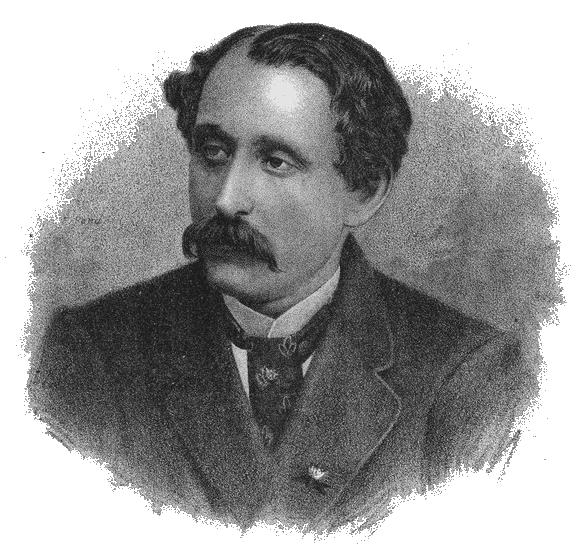
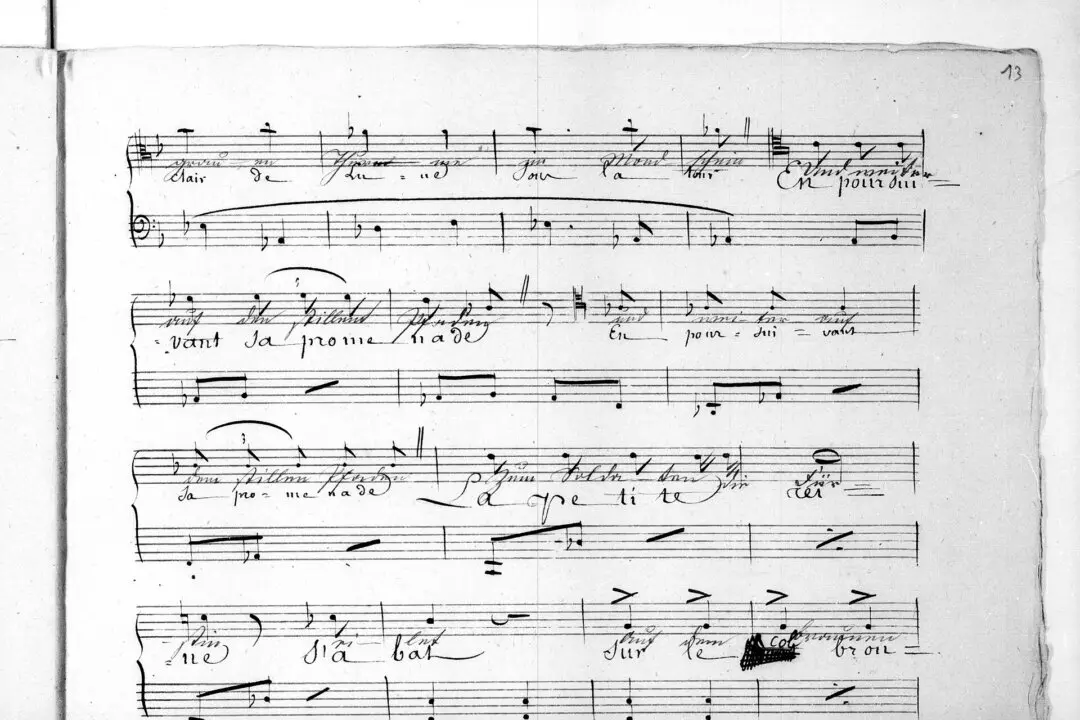
Louis Moreau Gottschalk illustrated in an 1864 Publication of The Dying Poet for piano. Public Domain
Who was Gottschalk? Half Creole and half Jewish, he was America’s first piano virtuoso whose education took him to Paris and whose career took him largely outside the country, especially South America. The vibrant folk music of both North and South America attracted him. He wrote mostly solo piano music, such as “The Banjo,” linked below, which imitates the banjo picking of American frontier folk musicians and briefly references Stephen Foster’s “Camptown Races” (at 3:19): (Listen)
Now, return to the first link and listen to the entirety of Gottschalk’s Symphony No. 1. It’s in only two movements, so the first movement goes from the start until 13:00.
This is the Paris-educated Gottschalk, soberly aware that he is composing a symphony. The first, rather majestic-sounding movement is called “La nuit des tropiques,” or “Night in the Tropics.” The samba movement is called, aptly enough, “Une Fête sous les tropiques” (“A Party in the Tropics”). It’s not that Gottschalk’s classical training is abandoned in the second, but that it’s placed in the service of a lively and joyful dance. At 17:17, it turns briefly into a fugue!
A Truly American Work
If we take Gottschalk’s designation of “symphony” seriously, this is the first example of a symphony composed by an American. It premiered in Brazil and then the score was lost until rediscovered and given its American premiere in 1955—approximately 97 years after Gottschalk wrote it. The forces he scored it for were so mammoth that current versions, such as the one here, are actually reductions of the composer’s original.
But not everyone considers the label “symphony” as appropriate. Critic Joseph Horowitz wrote in his review of the recording linked above that “this wonderful work does not really belong in our survey of ‘American symphonies’—Gottschalk eschews any semblance of the Germanic template.”
Horowitz continued: “The American symphony more truly begins with the Symphony No. 1 (1875) of John Knowles Paine (1839-1906),” which apparently fits the German template. Here it is: (Listen)
Paine was adept at shaping symphonic structure along the lines of Beethoven. The opening movement of this work even borrows the famous rhythmic motif from Beethoven’s Fifth Symphony. This is a skillfully orchestrated work filled with lovely melodies and sharply etched rhythms.
I hope the Paine symphony gets more attention than usual in the wake of the nation’s 250th anniversary. As for Gottschalk, it’shigh time for a revival of this man’s incredibly compelling, profoundly American music.
What arts and culture topics would you like us to cover? Please email ideas or feedback to [email protected].