It is somewhat ironic that three of the most popular works by Bohemian composer Antonin Leopold Dvorak (1841–1904) were written in the United States during a three-year stay in New York City and Spillville, Iowa. But only somewhat. The 19th century was the era of nationalism, and what better place for a composer to be than in the ferment of a brand-new nation?
Before Dvorak’s U.S. sojourn of 1892–1895, which birthed the U.S.-inspired scores of the “New World Symphony,” the “American” String Quartet, and his Cello Concerto, the composer’s nationalism focused on the culture of his birth, the Bohemian and Moravian folk dances belonging to the land we now call the Czech Republic. His most accessible and enduring tribute to this tradition is a two-volume set of “Slavonic Dances” (1878 and 1886).
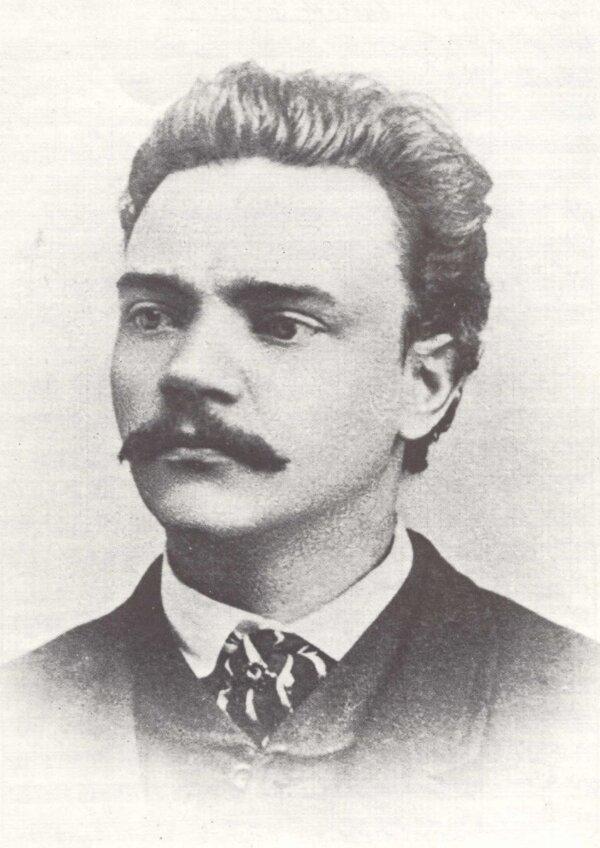
The popularity of the “Slavonic Dances,” Op. 46, was such that the publisher requested an arrangement for orchestra; the composer dutifully delivered his Op. 46 arranged in the brilliant symphonic garb we recognize today. A few years later, Dvorak responded to the persistent popularity of Op. 46 with a second set of eight folk-music-inspired pieces, the Slavonic Dances, Op. 72. We say “folk-music inspired” because while Dvorak used musical forms indigenous to his homeland, the tunes themselves were his own.
Like its predecessor, Op. 46, Op. 72 was originally written for piano, four hands, and later orchestrated. The time has long since passed, alas, when families kept pianos in the parlor and sat down, two at a time, to play four-hands music. We know Dvorak’s “Slavonic Dances,” when we know them at all, in their orchestrated form.
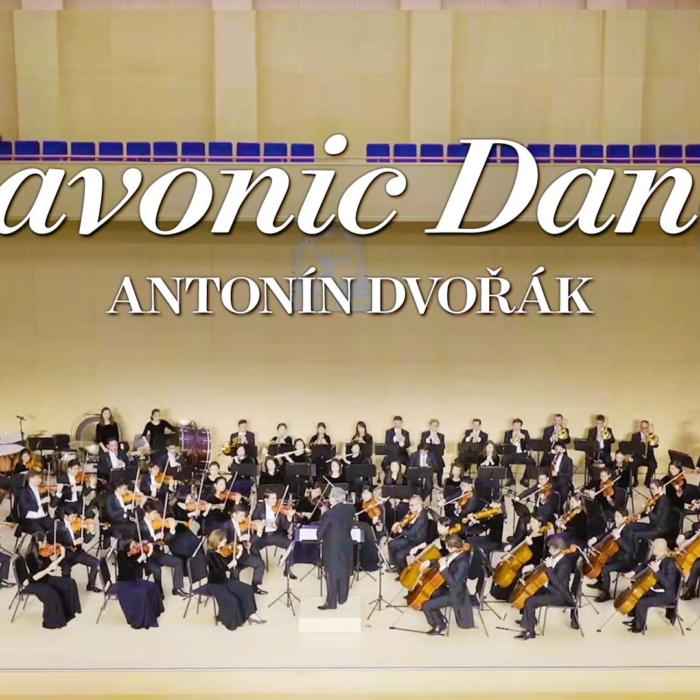
A Guide to the 16 Slavonic Dances
Op. 46, No. 1: Furiant, Presto. Off to a fiery start with a piece in the shape of a dance, “Furiant” is ferociously fast, in three beats that throws accents in unexpected places to produce the illusion of being in two. The name derives from a word meaning “swaggering.”No. 2: Dumka, Allegretto Scherzando. An Eastern European form that alternates dramatically between moody and merry.
No. 3: Polka, Poco Allegro. At first moderately fast, then intensely quick, this two-beat dance form contains a slower middle section.
No. 4: Sousedska, Tempo di Minuet. An elegantly slow dance in three that translates from the Czech as “neighbor’s dance.” It is a Bohemian version of the Austrian “Landler,” the dance that brings Maria and Captain von Trapp together in “The Sound of Music.”
No. 5: Skocna: Allegro Vivace. A happy, fast, two-beat dance with strong emphasis on the downbeat.
No 6: Sousedska, Allegretto Scherzando. A second visit to this form is more upbeat but retains the elegance of a minuet-like three-beat meter.
No. 7: Skocna, Allegro assai. Revisiting this form, Dvorak puts the opening theme in piquant minor and starts slower than expected. When the joyous, major vivace arrives, it is all the more welcome.
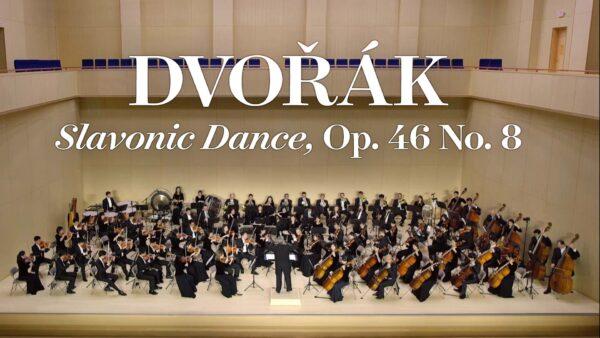
No. 8: Furiant, Presto. As the set began, so does it end, though this Furiant is in a minor key, not the major key of first one. Slightly darker in character than the opener, it nonetheless retains its swagger.
Op. 72, No. 1: Slovakian Odzmet. Molto vivace. A fast, heavy dance for a solo male, with a great deal of jumping. The word derives from a phrase meaning “from the ground.”
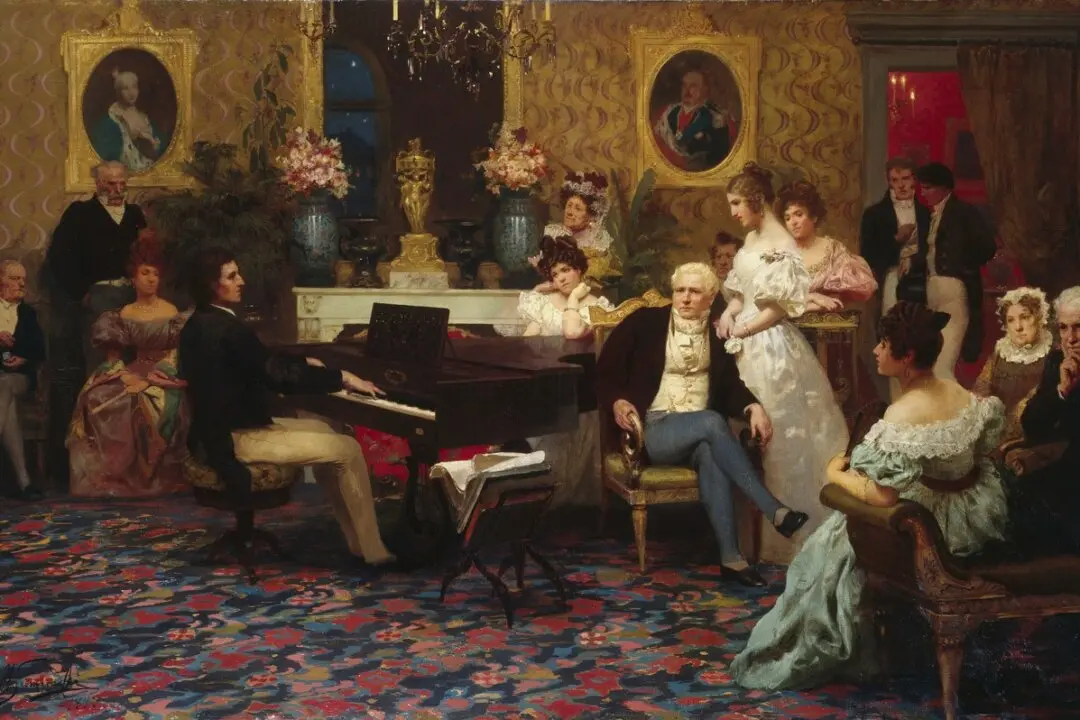
No. 2: Mazurka, Allegretto grazioso. The form will be familiar to fans of Chopin, who wrote dozens of mazurkas. It’s a Polish dance of considerably more grace than some of the other, more peasant-generated forms. The distinctive mazurka rhythm puts emphasis on the second count in a measure of three beats.
No. 3: Skocna, Allegro. The unmistakable emphasis on the downbeat makes it clear: Here is a third essay in this form, and one of unstoppable joy, marked by a mad series of accelerando measures. This dance, it seems, is all about everything always getting faster.
No. 4: Dumka, Allegretto Grazioso. Unlike the example of the form in the first set, this dumka sticks largely to a melancholy feel. The contrasting “happy” section seems almost reluctant.
No. 5: Spasirka, Poco adagio. One of the slower forms at the outset, it picks up speed at length. The shortest piece of the two sets. The word comes from a Czech term for “walking around.”
No. 6: Polonaise, Moderato. Another Polish dance form, also employed frequently by Chopin, the polonaise is a stately, formal dance in moderate three.
No. 7: Serbian Kolo, Presto. A dance of fierce abandon and almost uncontrollable speed. This is a group dance in which dancers hold each other’s hands and whirl in a circle.
No. 8: Sousedska, Lento grazioso. After all the jumping and whirling and accelerations of the previous 15 pieces, Dvorak’s final Slavonic Dance ends the set with a slow, meditative take on the form represented twice in Op. 46. A farewell, perhaps, to naïve nationalism, soon to be supplanted by Dvorak with more sophisticated musical language.