“My beloved wife, this little book that I am starting today has for us a deep significance: It is to be a diary of all that concerns us in our domestic and married life; to be a record of our wishes and our hopes, and the means whereby we may convey to one another any requests we may have to make, for which words may not suffice.”
A Gifted Pianist
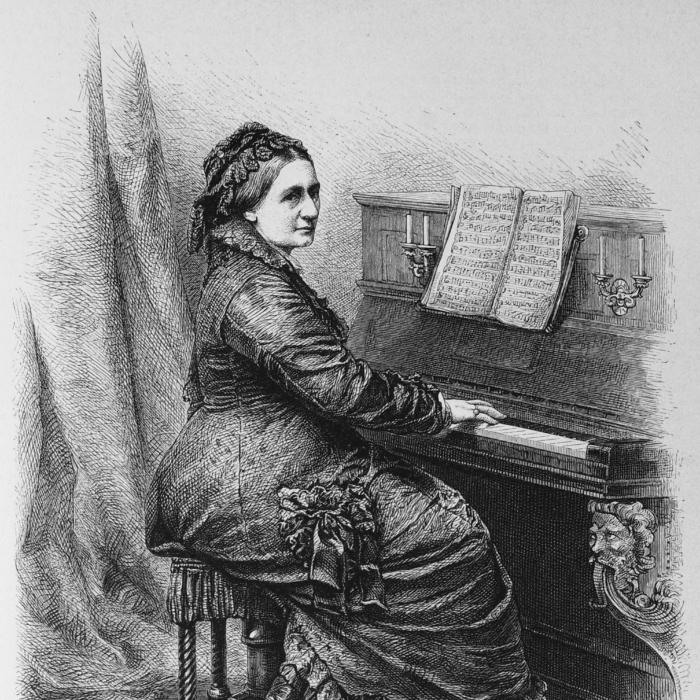
Clara Wieck (1819–1896) was born in Leipzig to a family of pianists. Her talent was nurtured at a young age, leading to her concert debut at 9 years old at the Gewandhaus in Leipzig. Over the course of her career, she helped popularize the works of contemporary composers such as Brahms and Mendelssohn, with over a 1,000 concert programs preserved in documentation.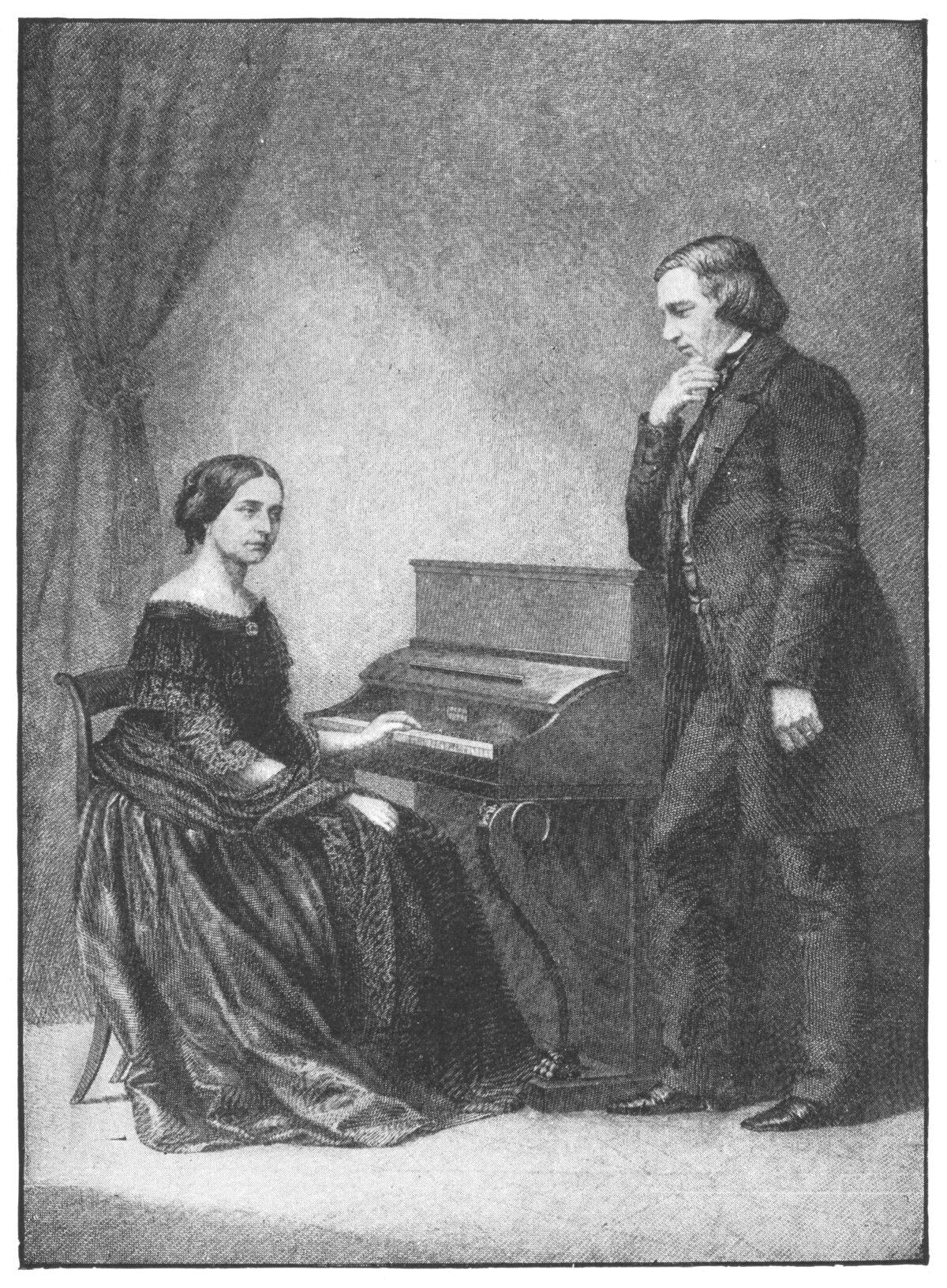
Her First Piano Concerto
Clara Schumann’s Piano Concerto No. 1 in A minor, written over the course of three years, starting at age 13. This performance is by Francesco Nicolosi, with Stephania Rinaldi conducting the Alma Mahler Sinfonietta. The piece consists of three movements, Allegro Maestoso, Romanze, and Finale: Allegro non troppo. (Listen)The piece is youthful and imaginative; the technical skill of the pianist is challenged by the need to maintain grace within even accompaniment passages. Take these sparkling runs at 14:30 of the third movement, where the pianist (seemingly) effortlessly sweeps over the bassoon line.
Beyond pianistic showmanship, the lonely and lyrical nature of the second movement (7:10) is poignant. The orchestra is silent as the pianist plays unaccompanied. Unexpectedly, a solo cello takes over with a reinstatement of the initial melody. As the pianist fades, the timpani enter with a dramatic low rumble. The Romanze is introspective, delicate, and offers a window to the mind of a composer of great imagination.